The digital advertising landscape has undergone a seismic shift over the last decade, evolving from a simple keyword-bidding platform into a complex, AI-driven ecosystem. Yet, despite the introduction of sophisticated automation and machine learning, the fundamental pitfalls that plague beginners remain remarkably consistent. Industry veterans, who have managed portfolios ranging from modest local business spends to multi-million-pound monthly budgets, suggest that the difference between a successful campaign and a "budget bonfire" lies not in secret hacks, but in the rigorous application of foundational principles.
As businesses increasingly rely on Google Ads to drive growth in an era of tightening margins, understanding the "boring" mechanics of the platform has become a prerequisite for survival. The following analysis explores the strategic framework required to launch and scale a Google Ads account effectively, grounded in professional methodology and data-driven insights.
Main Facts: The Google Ads Paradox
Google Ads remains the dominant force in global digital advertising, accounting for a significant portion of Alphabet Inc.’s revenue. For the small-to-medium enterprise (SME), the platform offers an unparalleled opportunity to capture "high-intent" traffic—users actively searching for a specific solution. However, this accessibility masks a steep learning curve.
The central paradox of Google Ads is that while the interface is designed to be user-friendly, the underlying algorithm is a "black box" that requires precise data inputs to function profitably. Without these inputs, the system defaults to broad settings that prioritize Google’s inventory reach over the advertiser’s Return on Ad Spend (ROAS).
According to industry experts, the majority of failed accounts share a common denominator: they prioritize "visibility" over "verifiability." By focusing on vanity metrics like clicks and impressions rather than conversion data, advertisers lose the ability to distinguish between a valuable lead and a wasted penny.
Chronology: The 30-Day Launch Sequence
A professional implementation of a Google Ads account does not happen in a single afternoon. It follows a deliberate, chronological sequence designed to mitigate risk and maximize data acquisition.
Phase 1: The Infrastructure Build (Days 1–7)
Before a single keyword is selected, the "plumbing" must be installed. This involves setting up conversion tracking through Google Tag Manager or direct site integration. The objective is to establish a feedback loop where the platform can "see" when a user submits a form, places a call, or completes a purchase.
Phase 2: The Search-First Strategy (Days 8–14)
The account is launched using a single Search campaign. Unlike "Display" (which shows ads on websites) or "Performance Max" (which automates across all Google properties), Search is based on explicit intent. During this phase, the advertiser focuses on "Exact" and "Phrase" match types to maintain tight control over the queries that trigger their ads.
Phase 3: The Observation and Negation Period (Days 15–21)
Once the ads are live, the focus shifts to the Search Terms Report. This is a chronological audit of what users actually typed. The advertiser identifies irrelevant queries and adds them as "Negative Keywords," effectively carving out a niche of high-quality traffic.
Phase 4: Data Consolidation and Evaluation (Days 22–30)
The final week of the first month is dedicated to evaluation. The advertiser resists the urge to "micro-manage" or make daily changes, allowing the algorithm to move through its initial "Learning Phase." Decisions are made based on the 30-day data set, identifying which ad groups yielded the lowest Cost Per Acquisition (CPA).
Supporting Data: The Cost of Mismanagement
Industry data underscores the necessity of a disciplined approach. Recent benchmarks suggest that the average conversion rate across all industries on the Google Search Network is approximately 4.40%, yet this figure fluctuates wildly depending on account structure.

- The Relevancy Premium: Accounts that achieve a high "Quality Score" (a metric based on the relevance of the keyword, ad, and landing page) can see a 50% reduction in their Cost Per Click (CPC). Conversely, poorly structured accounts pay a "tax" for irrelevance, often paying double the market rate for the same traffic.
- The Automation Gap: While Google’s "Broad Match" allows for wider reach, data shows that without a robust list of negative keywords, up to 20–30% of a beginner’s budget can be spent on "informational" queries (e.g., users searching for "free" or "how to") rather than "transactional" queries.
- Landing Page Impact: Research indicates that a one-second delay in mobile load times can impact conversion rates by up to 20%. This highlights that the Google Ads platform is only half of the equation; the "destination" is equally critical.
Official Responses and Expert Perspectives
The tension between Google’s automated recommendations and practitioner-led strategy is a central theme in modern PPC (Pay-Per-Click) management.
The Platform’s Stance
Google’s official documentation and "Account Strategists" frequently advocate for "Auto-applied recommendations" and "Broad Match" paired with "Smart Bidding." Their argument is that the machine learning algorithm can process millions of signals—such as user location, time of day, and past browsing history—far more efficiently than a human can.
The Practitioner’s Rebuttal
However, high-level account managers argue that Google’s incentives are not always aligned with the advertiser’s. "Google will happily nudge you towards turning everything on at once," notes one veteran consultant. "Search, Display, Performance Max—the lot. But for a beginner, this hides the moving parts. When you are learning, you need to see the mechanics. Search is the cleanest, most honest place to learn how this works."
Experts agree that while automation is powerful, it requires a "warm" account with existing conversion data to be effective. Starting a brand-new account on full automation is akin to "setting fire to your budget in week one."
Implications: The Future of Digital Advertising for SMEs
The implications of these findings are clear: as the cost-per-click continues to rise across most sectors, there is no longer any margin for error. The "amateur era" of Google Ads, where one could simply "throw money at the wall" and see what sticks, is over.
The Rise of the "Tuition Mindset"
Businesses must view their first month of advertising as a "tuition fee." The goal of the initial spend is not just immediate profit, but the acquisition of data. Understanding which keywords convert and which negative keywords to block creates a proprietary asset that competitors cannot easily replicate.
The Integration of CRO and PPC
The divide between "traffic generation" (PPC) and "conversion rate optimization" (CRO) is collapsing. A successful Google Ads strategy now mandates a high-performance landing page. If the ad promises "Manchester Law Firm" but the landing page is a cluttered general homepage, the "message match" is broken, and the investment is squandered.
Privacy and the "Cookieless" Future
As privacy regulations (like GDPR) and browser changes (like the deprecation of third-party cookies) make tracking more difficult, the importance of "first-party data" grows. Advertisers who set up robust conversion tracking now—using advanced methods like "Enhanced Conversions"—will have a significant competitive advantage over those who rely on basic, increasingly inaccurate tracking methods.
Conclusion: The Path to Professionalism
For the beginner, the path to a profitable Google Ads account is paved with "boring" tasks: testing tags, auditing search terms, and refining landing pages. By starting with a single Search campaign, focusing on one or two clear goals, and maintaining a disciplined budget, advertisers can harness the world’s most powerful intent-based engine without falling victim to common pitfalls.
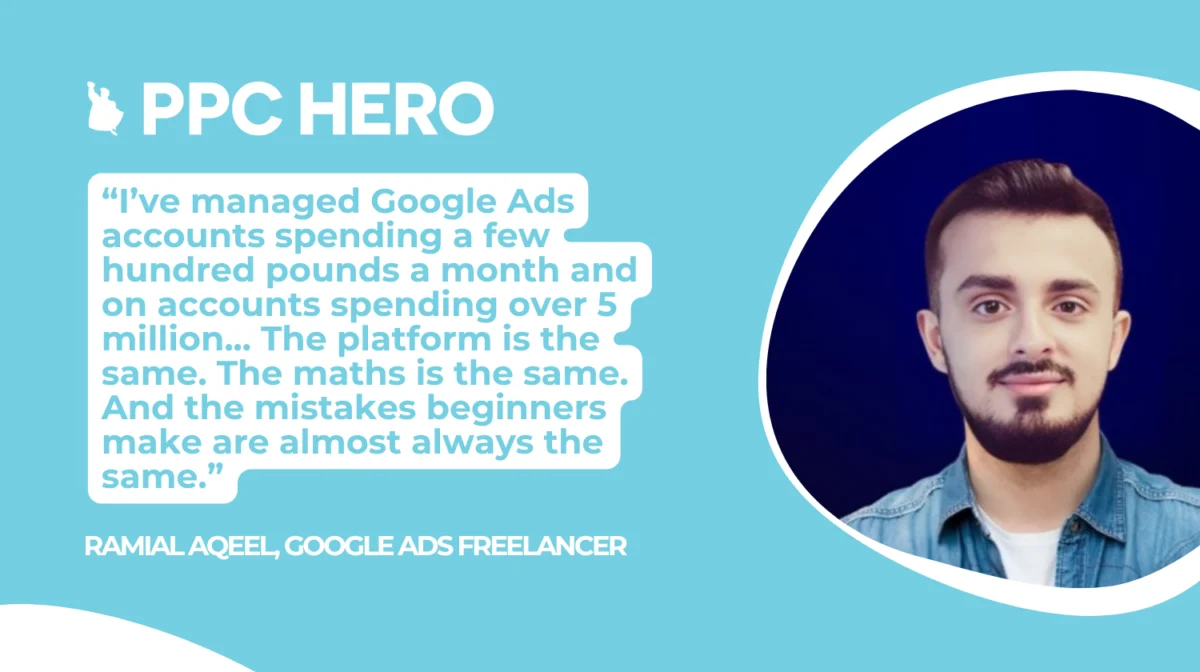
The platform remains the same whether the budget is £500 or £5,000,000. The maths is the same. The difference between success and failure is simply the willingness to do the unglamorous work of building a solid foundation before attempting to scale. As the industry moves further into an AI-dominated future, this "human-led" foundational work will only become more critical in ensuring that the machine is working for the business, rather than the other way around.