In the fast-paced world of digital product development, the industry is perpetually obsessed with the "how"—the frameworks, the stacks, and the rapid deployment cycles. Yet, in this relentless pursuit of technical efficiency, we frequently lose sight of the "why." Digital accessibility is often reduced to a checklist of compliance standards, stripping it of its core mission: to provide an equivalent experience for every user, regardless of their physical or cognitive abilities.
To create an equivalent experience is to build a digital environment that is deliberately designed to be functional, intuitive, and accessible to the widest possible range of people. It requires more than just meeting legal mandates; it demands an empathetic understanding of the diverse ways humans interact with technology and the systemic barriers that currently exclude millions from the digital economy.
The State of Things: A Default Bias
Despite our technological advancements—from AI-driven voice assistants to complex IoT networks—the industry still operates under a "default" user profile. This default is often modeled on the designer or developer themselves: a person with full mobility, standard vision, and a high-speed desktop setup.
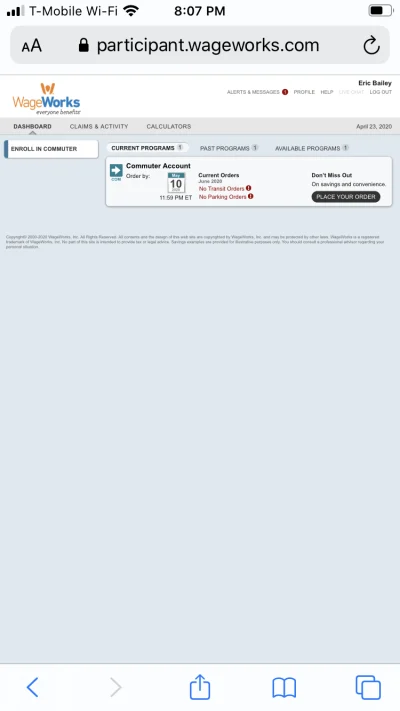
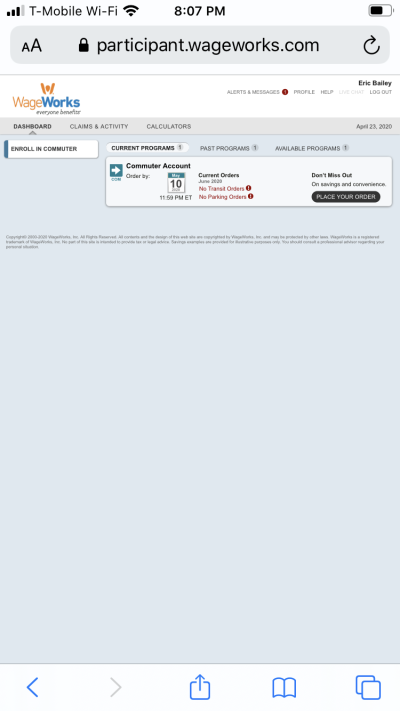
This inherent bias is rarely malicious, but it is deeply systemic. It manifests in "non-responsive" web applications that force mobile users to pinch, pan, and zoom, or in interfaces that lack sufficient color contrast for users with low vision. When a designer claims that a UI element has "enough contrast for my eyes," they are committing the same error as a developer who insists that code "works on my machine." We are not designing for ourselves; we are designing for a global audience with vastly different needs. When we fail to account for this, we implicitly tell a massive segment of the population that they simply do not matter.
Chronology of the Accessibility Movement
The evolution of digital accessibility has transitioned from a niche technical concern to a major civil rights issue.
- Early Days (Pre-2010s): Accessibility was largely viewed through the lens of specialized assistive technology, specifically screen readers. Development was reactive, often triggered by specific complaints or minor legal pressure.
- The Litigious Turning Point (2017–2019): High-profile legal battles changed the landscape permanently. The Winn-Dixie case highlighted the integration between digital interfaces and physical store services, bringing the Americans with Disabilities Act (ADA) into the digital realm.
- Supreme Court Precedent (2019): The Domino’s Pizza case reached the U.S. Supreme Court, which effectively solidified the stance that digital platforms are public accommodations. The ruling established that companies cannot simply ignore accessibility without facing severe legal and financial consequences.
- The Present Era: We are now in a phase where "Inclusive Design" is becoming a standard best practice. Organizations are beginning to recognize that accessibility is not a barrier to innovation, but a catalyst for it.
Supporting Data: The Cost of Exclusion
The "business case" for accessibility is no longer just theoretical; it is backed by staggering economic data. Ignoring the needs of disabled users is, effectively, a decision to turn away revenue.
- The Click Away Pound Survey: Research conducted in both 2016 and 2019 revealed that over 4 million people abandoned retail websites due to accessibility barriers. This resulted in an estimated £17.1 billion (~$21.1 billion USD) in lost revenue.
- The "Hidden Market": A 2018 study by the American Institutes for Research found that working-age adults with disabilities control approximately $490 billion in disposable income. This is a massive, untapped market segment that is currently being alienated by poor design choices.
The data suggests that the "default" user is a myth. By designing for the margins, we actually create a more robust product for everyone. As the adage goes: when you design for the most constrained user, the experience improves for every other user by default.
Official Responses and Industry Accountability
When accessibility issues are reported, the corporate response is often telling. Many companies treat these reports as minor bugs or, worse, ignore them entirely. This lack of responsiveness creates a "chilling effect," where users with disabilities stop reporting issues and simply stop using the service.
Industry leaders are beginning to shift their stance, but the change is slow. The standard for excellence should be a transparent feedback loop. When a user reports an accessibility barrier, the company should:

- Acknowledge the report immediately and professionally.
- Validate the experience by testing it against the specific assistive technology used.
- Prioritize the fix with the same urgency as a critical security flaw or payment system error.
- Communicate progress to the user, ensuring they feel heard and valued.
Assigning a customer support agent to "do things on behalf of" a disabled user is not an equivalent experience; it is an infringement on their autonomy. True inclusion means providing the user with the tools to perform the task themselves.
The Implications: Autonomy and Equality
The goal of an equivalent experience is to foster independence. For someone with a vision impairment, being forced to rely on a sighted person to order groceries or complete a job application is a fundamental loss of dignity.
The Compounding Effect of Friction
Accessibility is not just about whether a button is clickable. It is about the "cognitive load" and the "spoon theory" of digital interaction. If a user has to navigate a Rube Goldberg-style interface of workarounds just to complete a simple transaction, their mental and physical energy is depleted. This leads to user abandonment and, in extreme cases, internalizing the failure of the software as a personal failing.

Legal and Ethical Imperatives
The legal landscape in the U.S., Europe, and parts of Asia is hardening. Regulators are increasingly viewing the web as an essential utility. Companies that fail to provide equivalent access are finding themselves in court, where the costs of litigation and reputation damage far exceed the costs of implementing accessible design from the ground up.
Conclusion: The Path Forward
To achieve true digital equality, we must move beyond the "problem-to-be-solved" mindset. Accessibility is a way of looking at the world—a commitment to empathy and a rejection of the exclusionary status quo.
As we look toward the future, the integration of inclusive design into the early stages of the product lifecycle is mandatory. It is time to stop viewing accessibility as an "add-on" and start viewing it as a foundational principle of quality engineering. The web was built to be an adaptable, universal medium. It is up to us, as the professionals who build it, to stop breaking that promise. By embracing the philosophy of "equivalent experience," we don’t just protect our users’ rights—we unlock a more innovative, profitable, and equitable future for the entire digital ecosystem.