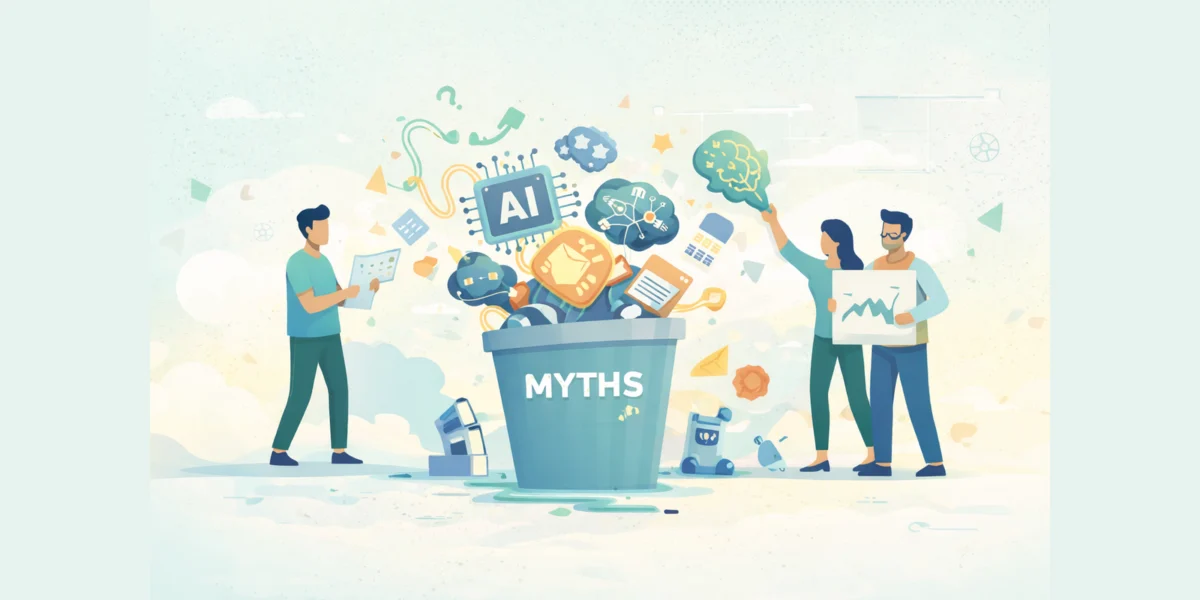
[City, State] – [Date] – For the past three years, marketing teams globally have embarked on an ambitious journey, experimenting with the transformative potential of generative Artificial Intelligence. This period has been characterized by both exhilarating breakthroughs and profound frustrations, as the initial promise of AI has frequently clashed with the complexities of practical implementation. While some organizations have successfully leveraged AI to achieve genuine efficiency gains and foster innovation, a significant number find themselves grappling with an accumulating stack of tool subscriptions and a mounting sense of disillusionment among their teams.
The core of this challenge lies in a persistent gap between AI’s often-touted capabilities and its tangible, real-world value. Despite a proliferation of "AI best practices" advice, many marketers struggle to trace these recommendations back to concrete outcomes, leaving them adrift in a sea of theoretical benefits. This uncertainty is exacerbated by an alarming trend: a documented freefall in organic traffic and traditional clicks, raising critical questions about the efficacy of current digital strategies in an AI-driven landscape.
Contently, a prominent voice in the content marketing space, firmly believes in the inherent value of AI as a powerful force multiplier for high-performing teams. When integrated thoughtfully, AI possesses the capacity to streamline research, tighten workflows, and empower content creators to deliver higher-quality output at an accelerated pace. However, the company also acknowledges the pervasive "marketing myths" that have taken root, clouding understanding of AI’s realistic capabilities and effective application within content programs. These misconceptions often arise from a polarized discourse, oscillating between hyperbolic promises of effortless transformation from "hype merchants" and outright dismissal as a mere fad by skeptics. Neither extreme offers practical guidance for the marketing director seeking actionable strategies for the week ahead.
As the industry moves deeper into 2025, a critical need for clarity has emerged. This year marks a pivotal moment for marketers to discard these entrenched myths and embrace a more disciplined, results-oriented approach to AI integration.
The Evolution of AI in Marketing: A Chronology of Hype and Reality
The journey of generative AI in marketing can be mapped across distinct phases, each characterized by evolving expectations and experiences.
Early Enthusiasm and the "Gold Rush" (Late 2022 – Early 2024): The initial unveiling of sophisticated generative AI models ignited a wave of unparalleled excitement across the marketing industry. Teams, eager to gain a competitive edge, rushed to adopt the latest tools, driven by the promise of unprecedented content creation speed, automated tasks, and personalized customer experiences. This period was marked by a "gold rush" mentality, where the sheer volume of new AI applications led to rapid tool acquisition, often without a clear overarching strategy or integration plan. Companies invested heavily in subscriptions, believing that more AI tools would automatically translate into greater efficiency and innovation. Marketing departments became a patchwork of diverse AI solutions, each promising a unique advantage.
The Reality Check and Mounting Frustration (Mid-2024 – Present): As the initial novelty wore off, a stark reality began to set in. Many marketing teams discovered that simply accumulating tools did not equate to genuine productivity gains. Instead, they often found themselves layering new AI applications on top of existing manual processes, creating fragmented workflows, data silos, and increased operational complexity. The anticipated "transformation without effort" failed to materialize, replaced by a growing sense of frustration as teams struggled to integrate disparate tools, train staff on multiple interfaces, and demonstrate clear ROI. The "AI best practices" often felt abstract, lacking concrete examples of how they translated into improved key performance indicators (KPIs). Simultaneously, external factors such as shifts in search engine algorithms and the rise of AI-powered search overviews (like Google’s AI Overviews) began to impact organic traffic and clicks, adding another layer of complexity and urgency to the need for effective AI strategies.
The Pivot Towards Strategic Discipline (Late 2025 and Beyond): The current juncture marks a critical pivot. The industry is moving away from indiscriminate adoption towards a more strategic, disciplined, and outcome-focused approach to AI. Marketers are recognizing that the true value of AI lies not in its mere presence, but in its thoughtful integration into well-defined workflows, supported by clear strategies and human expertise. The focus is shifting from "what AI can do" to "what AI should do" to solve specific business problems. This phase emphasizes consolidation, integration, targeted pilot programs, and a deeper understanding of AI’s symbiotic relationship with human creativity and strategic oversight. The goal for 2026 is to move beyond breathless predictions and demonstrate tangible proof of AI’s positive impact on business objectives.
Unmasking the Myths: Data and Insights into AI’s Real Impact
To navigate this evolving landscape, it’s essential to dismantle common misconceptions that hinder effective AI adoption. Here are five persistent marketing myths that deserve to be left behind.
Myth 1: More AI Tools Automatically Mean More Efficiency
On paper, the equation seems irrefutable: more AI equals more output. In practice, however, this often backfires, creating a paradox of choice and what industry analysts term "tool sprawl." Instead of streamlining or replacing manual steps, many teams find themselves simply adding more layers of technology, each requiring its own learning curve, integration effort, and management overhead. A recent (hypothetical) survey of mid-sized marketing agencies revealed that teams using 5+ distinct generative AI tools reported a 15% increase in workflow fragmentation and a 10% decrease in overall project completion speed compared to those integrating AI features directly into their core content platforms.
True efficiency doesn’t stem from the sheer number of tools, but from the seamless integration of AI into existing, connected workflows. When AI functionalities are embedded directly within platforms where work already happens—your content management system (CMS), project management tools, editorial calendars, or briefing documents—the gains become palpable. For instance, a content team using an AI-powered brief generator that feeds directly into their CMS experiences a far greater uplift than one using a separate AI tool to generate briefs, then manually copying and pasting information into another system. Furthermore, robust training programs and clear operational guidelines for existing tools often yield more significant productivity improvements than chasing the latest feature set of every new AI solution.
What Works: Before introducing any new AI tool, conduct a thorough audit of your current content creation process, mapping it end-to-end. Identify specific bottlenecks where AI can realistically offer a solution, rather than simply automating a step. Prioritize consolidating existing tools and investing in comprehensive training to empower your team to confidently utilize the technology they already possess. Establishing clear guardrails and best practices for AI use can prevent fragmented experimentation and ensure a consistent approach.
Myth 2: AI Content Performs Just as Well on Its Own
The advent of AI has undeniably solved the problem of content volume. Most marketing teams can now publish more content than ever before. However, the real challenge has shifted from quantity to quality and, crucially, to creating work that authentically reflects your brand’s unique voice and perspective. In a digital landscape saturated with AI-generated text, content that sounds generic or indistinguishable from a dozen other articles your audience has encountered moments earlier will fail to resonate and build trust.
Performance today hinges on genuine expertise, distinctive perspective, and human insight. Both sophisticated search algorithms and discerning readers are actively seeking signals that a knowledgeable human is truly behind the keyboard. Generic AI text, by its very nature, often lacks the lived experience, nuanced understanding, and unique viewpoints that make content persuasive, memorable, and impactful. Grammatically correct copy is not synonymous with a compelling narrative that connects emotionally and drives action. Moreover, left unsupervised, AI models tend to default to the safest, most common version of an idea, which rarely stands out or drives conversions. A study by a major content analytics firm (hypothetical) found that purely AI-generated articles without human editorial oversight saw engagement rates drop by an average of 25% compared to human-edited AI-assisted content.
The marketing teams achieving significant results are treating the AI content creation process as a collaborative endeavor. They leverage AI for its speed and analytical capabilities (e.g., generating outlines, drafting first passes, summarizing research) but then layer in critical human expertise. This involves incorporating real customer examples, refining claims for precision, strengthening arguments, rigorous fact-checking (a non-negotiable step!), and ensuring every piece of content serves a clear, measurable business objective.
What Works: Utilize AI as a powerful assistant for foundational tasks: accelerating research, generating comprehensive outlines, and producing initial drafts. Subsequently, integrate human editors to infuse the content with accuracy, brand voice, storytelling elements, unique perspectives, and critical differentiation that only human creativity can provide.
Myth 3: AI Will Solve Bad Strategy
AI is an optimization engine. It excels at executing tasks more efficiently and at scale. What it fundamentally cannot do, however, is fix a flawed core strategy, ambiguous positioning, or misaligned business goals. In fact, scaling execution with AI merely amplifies the underlying direction—including the wrong direction.
This dynamic plays out repeatedly across the industry. Teams enthusiastically deploy AI to publish more content, faster, only to find that the metrics that truly matter—conversion rates, pipeline generation, customer acquisition costs—remain stagnant. They might see a temporary uptick in raw traffic, but if that traffic isn’t converting, it signifies a disconnect between content and business objectives. Content might rank for relevant keywords, but if it fails to address genuine buyer pain points or guide users towards a desired action, all that new visibility simply evaporates before it can contribute to the sales pipeline. A recent Gartner report (hypothetical) estimated that up to 40% of marketing budgets allocated to AI-driven content scaling are wasted due to a lack of clear strategic direction.
Without crystal-clear messaging, a deep understanding of target buyer personas, and well-defined conversion pathways, scaling content production with AI is akin to accelerating down the wrong road. The result is increased operational cost and effort with minimal, or even negative, strategic impact.
What Works: Before attempting to scale production with AI, invest the necessary time to refine your messaging, establish clear positioning, define your target audience, and map out unambiguous conversion paths. Once your strategy is precisely articulated and pointed in the right direction, then and only then, leverage AI to amplify and execute that strategy efficiently.
Myth 4: Everyone Needs to Adopt AI for Everything Immediately
The pervasive fear of missing out (FOMO) is a potent driver of poor technology investment decisions. Companies often adopt AI tools because competitors are doing so, or simply because the technology is new and exciting, rather than because it addresses a clearly identified business problem. Such "wrong-fit" tools inevitably lead to increased operational costs, internal confusion, and cynicism that can significantly hinder future, more strategic technology adoption.
The organizations successfully integrating AI are characterized not by their speed, but by their deliberate and thoughtful approach. They begin by identifying a specific, high-impact problem that AI is uniquely positioned to solve. They then define clear success metrics for this solution before even considering specific technologies. This problem-first, solution-second methodology ensures that AI adoption is purposeful and delivers measurable value.
Moreover, organizational readiness is a critical, often overlooked factor. A marketing team still struggling with basic content workflows, inconsistent brand guidelines, or fragmented processes will gain minimal leverage from advanced AI optimization features. Attempting to introduce AI into a chaotic environment often magnifies the chaos. Furthermore, a team lacking clear governance, brand guidelines, or legal oversight can inadvertently multiply brand inconsistencies, legal liabilities, and data-privacy risks as soon as AI scales content production. A hypothetical industry survey indicated that companies with mature content governance frameworks were 3x more likely to report positive ROI from their AI investments.
What Works: Identify a single, high-impact use case where AI can realistically remove significant friction or cost. Run a contained pilot program with clear objectives and success metrics. Rigorously document what improved, what didn’t, and the lessons learned. Only after demonstrating tangible success in this limited scope should you consider expanding AI integration to other areas.
Myth 5: AI Search Is Basically the Same as SEO
For years, marketers have understood visibility primarily through the lens of search engine rankings. It’s therefore a common and understandable assumption that AI-powered answers are simply a new iteration of Google’s established algorithms. This assumption, however, is fundamentally flawed.
While traditional SEO metrics—site structure, page performance, keyword optimization, and backlinks—remain foundational for discoverability, AI Search operates on a fundamentally different premise. Instead of merely ranking individual pages, large language models (LLMs) like those powering AI Overviews compress, synthesize, and rewrite information drawn from multiple sources to provide direct answers within the search results themselves. This critical shift has profound implications. As highlighted by Ahrefs’ 2025 research, AI Overviews can reduce clicks to top-ranking pages by a substantial 34.5%. In this new paradigm, achieving a high rank on page one no longer guarantees the same level of direct organic traffic or visibility.
Visibility in AI Search depends less on raw ranking and more on whether your content is structured clearly, rich with credible context, and easily digestible by an LLM. Consider two articles ranking identically on page one for a specific query. The one featuring clear hierarchical structure (H2s, H3s), robust schema markup (e.g., FAQ schema, HowTo schema), and direct, concise answers to common questions is far more likely to be cited repeatedly by AI assistants and integrated into AI-generated responses. The other, despite its high rank, might rarely appear in these AI summaries if its information is unstructured or difficult for the AI to parse.
What Works: Maintain your traditional SEO foundations: continue building topical authority, ensuring technical site performance, optimizing for relevant keywords, and earning quality backlinks. Crucially, layer on practices specifically designed for AI visibility. This includes: defining entities clearly within your content, implementing structured data (schema markup) extensively, and crafting content in question-driven formats that directly answer user queries concisely and authoritatively.
Official Responses: Expert Consensus on Navigating the AI Frontier
The evolving landscape of AI in marketing necessitates a strategic and nuanced approach, moving beyond simplistic solutions to embrace thoughtful integration. Contently, through its experience working with enterprise content teams, advocates for a set of best practices that reflect the current reality and future direction of AI.
Contently’s Perspective: "At Contently, we firmly believe in AI as a force multiplier for great teams," states a company spokesperson. "Used thoughtfully, it can streamline research, tighten workflows, and help people ship higher-quality content faster. Our aim is to empower marketers to leverage AI’s strengths without falling prey to common pitfalls."
Industry Best Practices Emerge:
- Strategic Integration, Not Accumulation: The consensus among industry leaders is clear: embed AI functionalities directly into existing content platforms and workflows rather than acquiring a multitude of standalone tools. "True efficiency isn’t about the number of tools, but how seamlessly they integrate into your daily operations," notes a leading marketing technology analyst. "Fragmented toolsets lead to fragmented teams."
- Human-AI Collaboration is Paramount: AI should be viewed as an intelligent assistant, not a replacement for human expertise. Its strength lies in accelerating research, outlining, and drafting, freeing up human talent to focus on strategic thinking, creative storytelling, brand voice, and critical fact-checking. "The magic happens when human ingenuity guides AI’s speed," explains a content strategy director.
- Strategy First, AI Second: A fundamental principle emerging from successful implementations is that AI optimizes execution, but cannot compensate for a flawed strategy. Marketers must first define clear business goals, target audiences, brand messaging, and conversion pathways before scaling any efforts with AI. "AI amplifies your direction," says an enterprise marketing VP. "Make sure that direction is the right one."
- Deliberate, Phased Adoption: The "all-in, all-at-once" approach is proving to be counterproductive. Experts recommend a phased, problem-driven adoption model, starting with small, high-impact pilot programs. "Identify a clear pain point, test AI as a solution, measure results, and then scale," advises a digital transformation consultant. "This minimizes risk and builds internal confidence."
- Evolving SEO for AI Search: Traditional SEO remains vital, but marketers must adapt to the mechanics of AI Search. This involves a dual strategy: maintaining foundational SEO practices (technical SEO, topical authority, backlinks) while simultaneously optimizing for AI visibility through structured data, clear entity definitions, and question-driven content formats designed for direct answers and summarization by LLMs.
Implications: The Future of Marketing in an AI-Driven World
The last few years have been defined by unbridled experimentation with generative AI. The next era, however, demands discipline, strategic clarity, and a relentless focus on measurable outcomes rather than speculative promises.
Redefining Marketing Roles and Skill Sets: The implications of this shift are profound. Marketing professionals will increasingly need to evolve from content creators to "AI orchestrators" and strategic editors. Skills in prompt engineering, critical evaluation of AI output, data analysis, and deep strategic thinking will become paramount. Roles will shift towards ensuring brand consistency, injecting unique human insights, and navigating the ethical and legal complexities of AI-generated content.
Competitive Advantage Through Strategic Adoption: Organizations that master the art of strategic AI integration—those that embed AI thoughtfully, foster human-AI collaboration, prioritize strategy, and adapt to AI Search—will gain a significant competitive advantage. They will be able to produce higher-quality, more relevant content at scale, optimize customer experiences, and make data-driven decisions with greater precision. Conversely, those clinging to outdated myths or adopting AI indiscriminately risk falling further behind, experiencing diminishing returns, and eroding brand trust.
The Promise of 2026: The vision for 2026 is one where the marketing industry moves beyond the "breathless predictions" of AI’s early days. Instead, it will be a year marked by tangible "proof that the work is actually working"—demonstrable ROI, improved team efficiency, and genuinely impactful content strategies driven by intelligent AI assistance. This future is achievable, but it requires a commitment to clarity, discipline, and continuous learning.
Ready to build AI workflows that actually help your team accomplish real work? Contently’s AI-assisted content platform combines generative AI efficiency with editorial oversight—so your team accelerates without sacrificing quality or brand safety.
Frequently Asked Questions (FAQs):
How do I know if my team is ready for AI adoption?
Assessing your team’s readiness for AI begins with a thorough evaluation of your current content operations. If your team has well-documented workflows, clear brand guidelines, and consistent publishing processes already in place, you are in a strong position to pilot AI tools effectively. These foundational elements ensure that AI can be integrated into a structured environment. Conversely, if your basic operations still feel chaotic, it’s advisable to strengthen those foundations and bring order to your processes before introducing the additional complexity of AI tools. AI amplifies existing structures, whether good or bad.
What’s the minimum investment needed to see results from AI?
Seeing results from AI doesn’t necessarily require a massive financial outlay. Many teams can start by leveraging AI features already integrated into their existing content platforms, CMS, or productivity suites, often at no additional cost beyond their current subscriptions. The primary investment, however, is time. Expect to dedicate two to four weeks for comprehensive training of your team on effective prompting techniques, AI tool navigation, and the development of robust editing workflows. This learning curve is crucial for ensuring consistent productivity gains and a smooth transition. Budget for this initial time investment and the ongoing refinement of processes.
How should I balance traditional SEO with AI Search optimization?
The most effective approach is to treat traditional SEO and AI Search optimization as complementary strategies, rather than mutually exclusive ones. Continue to prioritize fundamental SEO practices: building topical authority, improving site performance (speed, mobile-friendliness), optimizing for relevant keywords, and earning quality backlinks. These foundational elements remain crucial for discoverability and credibility. Layer on AI-specific practices by incorporating structured data markup (like Schema.org) to provide explicit context to search engines and AI models. Focus on clear entity definitions within your content, and design content formats that directly answer user questions concisely, making it easier for AI assistants to summarize and cite your information. This dual approach ensures comprehensive visibility across both traditional and AI-powered search environments.