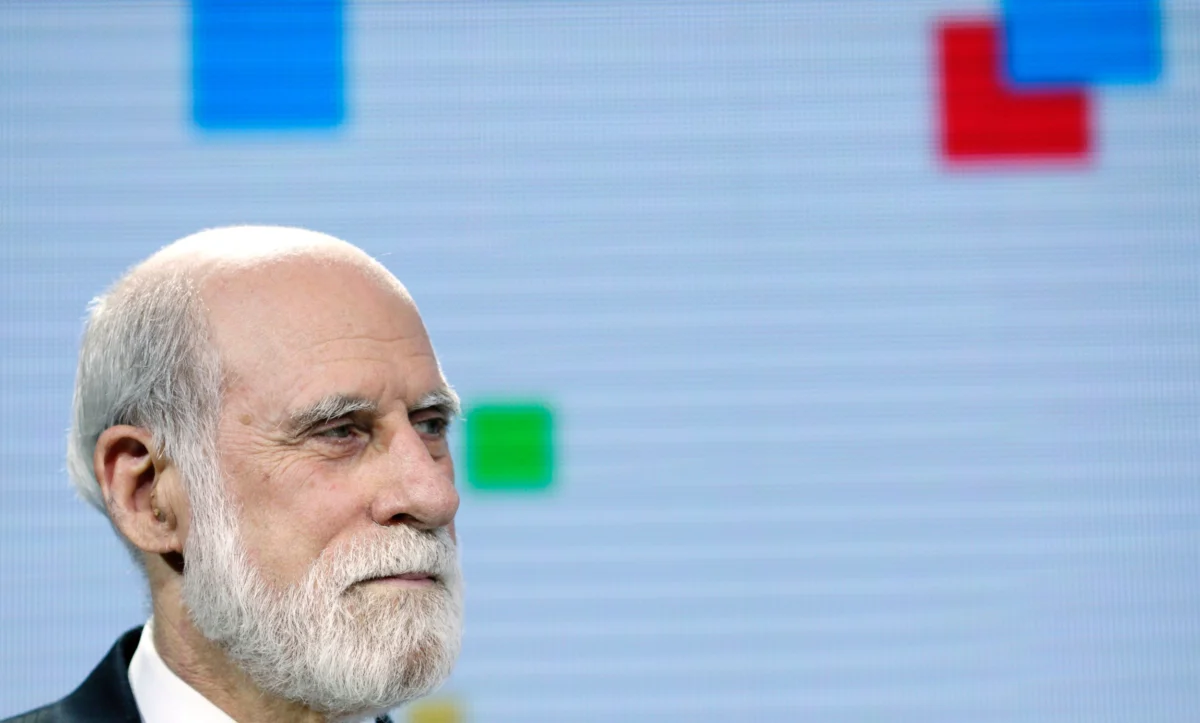
In the fast-paced world of Silicon Valley, where careers are often measured in product cycles and pivot points, Vinton Cerf’s tenure is an anomaly—a multi-decade anchor in a sea of disruption. Next week, the 83-year-old titan of technology will step down from his role as Google’s chief internet evangelist, bringing the curtain down on one of the most consequential careers in the history of computing.
His departure marks more than just a retirement; it signals the end of an era for a generation of engineers who view the internet as a communal, open architecture rather than a walled garden. As the industry grapples with the existential shifts brought on by artificial intelligence, Cerf’s final public warnings—and his optimism regarding standardization—serve as a poignant bookend to a life spent building the digital infrastructure that defines modern existence.
The Architect of the Digital Age: A Chronology
To understand the weight of Cerf’s departure, one must look back at the foundational architecture of the modern world. Alongside his longtime collaborator Robert Kahn, Cerf is universally recognized as one of the "fathers of the internet."
In the 1970s, as the U.S. Department of Defense’s Advanced Research Projects Agency (DARPA) sought ways to link disparate computer networks, Cerf and Kahn developed the Transmission Control Protocol and Internet Protocol (TCP/IP). These protocols acted as the "language" of the internet, a universal set of rules that allowed distinct, incompatible networks to communicate seamlessly. This was not merely a technical breakthrough; it was a philosophical one. By designing the internet to be decentralized and platform-agnostic, they ensured that no single entity could own or control the network.
- 1970s: Development of TCP/IP at DARPA, laying the groundwork for the ARPANET and the future global internet.
- 1980s: Advocacy for the expansion of the network, guiding the transition from academic and military use to the commercial internet.
- 1990s: Playing a pivotal role in the ICANN (Internet Corporation for Assigned Names and Numbers) formation, ensuring the stability and security of the global domain name system.
- 2005: Joins Google as Vice President and Chief Internet Evangelist, tasked with expanding the reach of the internet and helping the company navigate the complexities of global connectivity.
- 2024/2025: Announces retirement from Google, capping a 20-year stint that saw the internet grow from a revolutionary tool into the central nervous system of global civilization.
Recognition Among Peers: The Open Frontier
The news of Cerf’s departure was unveiled at the Open Frontier conference, hosted by the Laude Institute. During a video address, the atmosphere turned from technical discourse to profound reverence when Dave Patterson—the UC Berkeley professor and co-developer of RISC processor architecture—took a moment to acknowledge his friend.
"Vint has been at Google for more than 20 years, and he is retiring a week from today," Patterson announced to a room of luminaries. "I think we ought to give him a round of applause for a relatively good career."
The applause was substantial, reflecting the deep respect held by the engineering community for a man who managed to remain humble despite receiving the Presidential Medal of Freedom, the Turing Award, and countless honorary degrees. For the audience, which included luminaries like Keras creator François Chollet and Databricks co-founder Matei Zaharia, Cerf represented the "old guard" of open source principles—a reminder that the most durable systems are those built on open, collaborative foundations.
The AI Paradox: Standardization vs. Centralization
While the tech industry is currently obsessed with the rapid advancement of Large Language Models (LLMs) and the centralization of computing power within a few deep-pocketed labs, Cerf used his final public appearances to steer the conversation back toward his core expertise: interoperability.
The central tension at the Open Frontier conference was the struggle between the decentralized, "open" internet of the 20th century and the "black box" nature of modern AI. Cerf, however, offered a counter-intuitive prediction. He suggested that as AI agents—software capable of autonomous action and coordination—become more prevalent, they will inevitably force the tech industry to move away from proprietary silos and back toward standardized protocols.
"The agentic model of AI, with multiple agents from multiple sources interacting with each other, is going to force composability, and a requirement for interoperability and standardization," Cerf explained.
He dismissed the notion that natural language (like English) would suffice as the communication layer for these agents. "I don’t think English is going to be the best choice," he warned. "There’s a flexibility in it, but there’s ambiguity, and I think precision for interagent interaction is going to be very, very important. An agent really needs to be sure the other agent understands what it is that they just agreed to do together."
To illustrate his point, he invoked the "telephone game," warning that if agents rely solely on natural language to negotiate, the lack of precision would be "terrifying." This call for formal, rigid standards for AI interaction suggests that the next decade of tech will not be defined by who has the biggest model, but by who sets the standards for how those models talk to one another.
Official Responses and Industry Impact
As of the time of publication, Google has remained quiet regarding the specific details of Cerf’s departure or his succession. However, the lack of an official corporate press release speaks to the unique nature of Cerf’s role. As a "Chief Internet Evangelist," he was less of a corporate executive and more of a global ambassador for the medium itself. His presence provided Google with a layer of intellectual legitimacy and deep-rooted connectivity to the academic and scientific communities.
Industry analysts suggest that Cerf’s retirement leaves a vacuum in leadership that focuses on long-term, structural policy rather than quarterly earnings. His influence reached far beyond Mountain View, touching every corner of the internet’s governance and technical standards.
The Man Behind the Protocol: A Legacy of Style
Beyond the protocols and the patents, those who know Cerf often remark on his personal idiosyncrasies, most notably his signature three-piece suits. In an industry defined by the "hoodie-and-sneaker" uniform of the late-stage startup era, Cerf’s sartorial choices have always been a form of quiet rebellion.
Recalling his time as a graduate student in the 1970s, Patterson joked about Cerf’s penchant for dressing like a banker in the middle of a counter-cultural revolution. Cerf, characteristically charming, confirmed that his attire was a deliberate choice.
"I always wanted to stick out," Cerf remarked. "Instead of having long hair and something in my nose, I thought just dressing differently was one way to do it."
Implications: A New Chapter for the Internet
As Cerf exits the corporate stage, the internet finds itself at a crossroads. The open, interoperable network he helped create is increasingly threatened by fragmentation, surveillance, and the monopolization of data by artificial intelligence giants.
If Cerf is correct, and the rise of autonomous agents necessitates a new era of standardization, the industry is about to witness a repeat of the "protocol wars" that defined the 1980s and 90s. The companies that successfully advocate for—and implement—these standards will possess a level of influence that is difficult to overstate. They will, in effect, become the architects of the next version of the digital world.
Vinton Cerf leaves behind a legacy that is almost impossible to replicate. He proved that technology could be both revolutionary and open, both disruptive and stable. As the tech world looks toward the next frontier of AI, it would do well to remember the lessons of the man who wore a three-piece suit while building the most powerful, decentralized machine in human history. The "internet evangelist" may be retiring, but his gospel of interoperability, precision, and openness has never been more relevant.