For decades, the gospel of cybersecurity was delivered in a simple, repetitive sermon: rotate your passwords, enable multi-factor authentication (MFA), and don’t click on suspicious links. Enterprise security teams built their moats around this perimeter, confident that if they protected the credentials, they protected the kingdom.
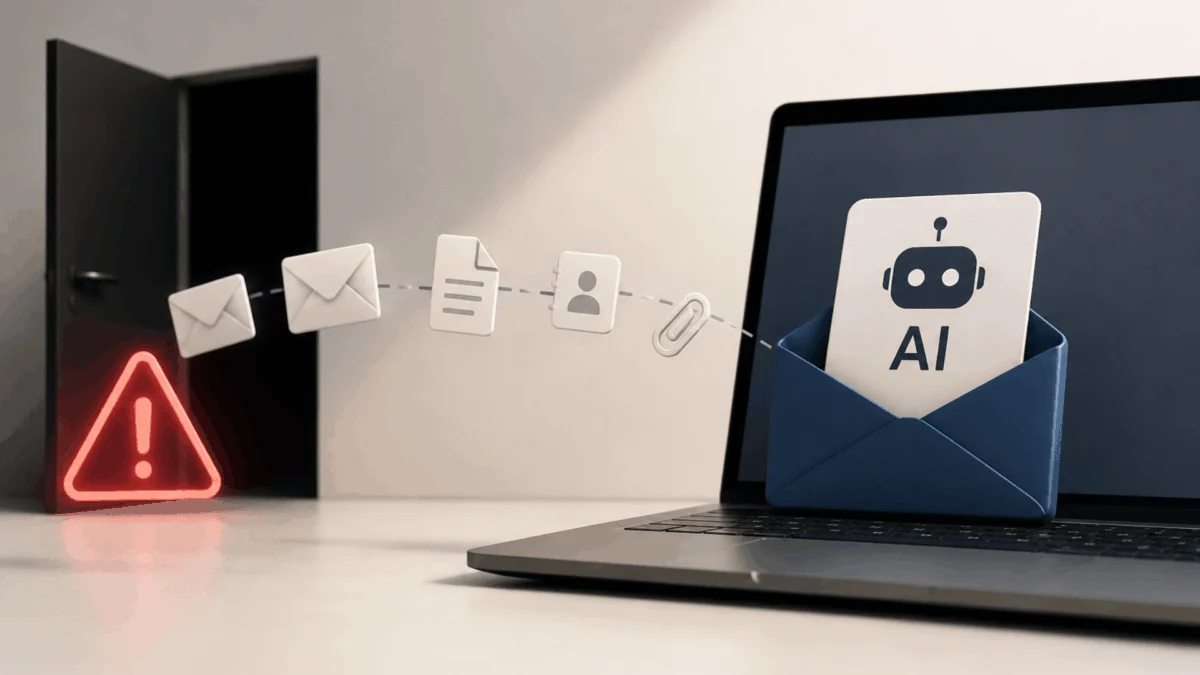
However, the modern workplace has moved beyond the simple username-and-password paradigm. Today’s professional landscape is defined by seamless connectivity—AI assistants, meeting copilots, and relationship intelligence platforms that hum quietly in the background of our inboxes. While these tools offer undeniable productivity gains, they have introduced a silent, structural vulnerability that is fundamentally shifting the threat landscape.
Every application you connect to your Google Workspace or Microsoft 365 environment acts as a digital proxy, inheriting a portion of your organization’s trust. As recent high-profile incidents have demonstrated, the next great security breach may not come from a brute-force attack on your firewall, but from a trusted partner whose credentials have been quietly hijacked.
The Vercel Wake-Up Call: A New Era of Intrusion
In April 2026, the tech world was rattled by a security incident involving Vercel, a leading web infrastructure platform. The breach served as a stark reminder that in the age of SaaS (Software as a Service), the most dangerous threats are often the ones you’ve already invited inside.
According to threat intelligence reports, the intrusion involved "Context.ai," a third-party AI tool that had been granted integration access to Vercel’s systems. Investigators believe the attack did not target Vercel’s core infrastructure directly. Instead, attackers compromised the third-party vendor itself—likely through infostealer malware—and subsequently leveraged the existing, trusted OAuth relationship to pivot into Vercel’s internal resources.
This incident marks a turning point. It highlights a maturing strategy among threat actors: they are no longer just "breaking in"; they are "logging in." By compromising a trusted vendor, attackers inherit the permissions and legitimacy that the target organization has already vetted and approved. As the saying goes in security circles: Trust the application, authorize the application, compromise the application, and inherit the trust.
Chronology of a Growing Threat
The transition from credential theft to authorization abuse has been a gradual, albeit accelerating, trend.
- Pre-2020: The primary focus of enterprise security was account takeover (ATO) via phishing and password reuse. The defense was primarily MFA.
- 2023-2024: The rise of sophisticated Phishing-as-a-Service (PhaaS) platforms began to bypass MFA, leading to a rise in "session hijacking" and token theft.
- May 2026: The FBI’s Internet Crime Complaint Center (IC3) issued a critical warning regarding "Kali365," a PhaaS platform that tricks users into granting legitimate OAuth tokens to malicious applications. This campaign specifically bypassed passwords entirely by exploiting the user’s trust in Microsoft device login workflows.
- Present Day: The integration of Large Language Models (LLMs) into enterprise workflows has created a "blast radius" problem. Because AI tools require broad, contextual access to data to be useful, they have become the primary targets for attackers seeking high-value, centralized intelligence.
Supporting Data: The Anatomy of OAuth Over-Permissioning
The fundamental tension in modern IT is between "usability" and "least-privilege access." OAuth was designed to solve the dangerous practice of sharing passwords by allowing apps to access data through tokens. However, the system is frequently abused by applications that request "scope creep."
When a user connects a calendar-scheduling bot or an AI summarizer, the prompt often asks for permissions such as:
Mail.ReadWrite: Allowing the app to send, modify, and delete emails.Contacts.Read: Accessing the entire organizational directory.Calendars.ReadWrite: Accessing all meeting details and metadata.
Research indicates that the average enterprise employee is currently connected to dozens of third-party applications, most of which were granted access years ago and have never been reviewed. A tool that only requires access to email headers should not have the capability to delete messages or send emails on the user’s behalf. Yet, due to lazy API implementation or user ignorance, these "overprivileged" applications remain active, acting as dormant backdoors for any attacker who manages to compromise the vendor’s infrastructure.
The "Forgotten Apps" Problem
One of the most persistent, yet overlooked, risks is the "legacy integration."
Consider the application you connected three years ago for a one-time project, a marketing plugin that hasn’t been used since the last fiscal year, or a productivity tool from a startup that has since been acquired. These applications represent a massive, unmanaged attack surface.
In many organizations, the "connected applications" dashboard is a graveyard of abandoned permissions. Security teams often lack a centralized inventory of these grants, making it impossible to audit which apps are still in use and which have become security liabilities. As vendors change hands, security postures degrade, and products are abandoned, the tokens remain valid. You aren’t just at risk from the application you connected yesterday; you are at risk from the one you forgot existed.
Implications for Enterprise Security
The proliferation of AI and third-party integrations has created a "blast radius" that exceeds that of any single user account. If an AI vendor with access to the entire company’s email history is breached, the attacker doesn’t just gain access to one inbox—they gain access to a treasure trove of institutional knowledge, strategy, and sensitive communications.
This forces security teams to move beyond identity management and into authorization governance.
The Shift in Strategy
Organizations must adopt a more rigorous, zero-trust approach to third-party integrations:
- Administrative Consent Workflows: Move away from letting individual users grant permissions. Organizations using Microsoft 365 or Google Workspace should force applications through an administrative review process, ensuring that the requested permissions are justified by business need.
- Regular OAuth Audits: Establish a quarterly review cycle to identify and purge unused applications. If an app hasn’t been used in 30 days, it should be revoked by default.
- Vendor Security Assessments: Treat third-party integrations as part of your supply chain. An AI tool that asks for deep integration should be subjected to the same security questionnaires and SOC2 compliance reviews as any other enterprise software provider.
- Monitoring and Detection: Use SIEM (Security Information and Event Management) tools to monitor for anomalous OAuth activity. An application suddenly requesting data from thousands of users, or an application accessing tokens from an unusual geographic location, should trigger an immediate automated response.
Conclusion: The Trust Decision
We are currently in a transition period where the business value of AI and productivity tools is outstripping our ability to secure them. Every "Allow Access" button clicked by an employee is a trust decision—a decision that is rarely communicated to the security team.
The future of email and collaboration is undoubtedly "smarter" and more integrated, but this intelligence comes at a cost. The modern security perimeter is no longer a brick-and-mortar wall; it is a complex web of trust relationships.
To survive in this environment, organizations must stop viewing OAuth grants as trivial, one-time configuration steps. They are, in reality, keys to the kingdom. If security teams continue to manage these relationships with the same laxity that characterized the pre-AI era, the "trusted" integrations we rely on for efficiency will eventually become the primary engine of our undoing.
The question for every CISO today is not, "How do we prevent our users from being phished?" but rather, "How do we govern the digital trust we’ve already handed out?" The answer lies in visibility, rigorous governance, and the fundamental recognition that in the modern enterprise, the most dangerous attacker is the one who is already on your invite list.