In the hyper-competitive landscape of modern eCommerce, many brands find themselves caught in a cycle of diminishing returns. Advertising budgets are spent, clicks are generated, but the anticipated surge in revenue never materializes. According to Sam Piliero, a veteran in the digital advertising space, the problem rarely lies with the platform itself. Instead, it stems from a fundamental misunderstanding of account structure, creative strategy, and the metrics that actually drive business health.
In a comprehensive breakdown of his proprietary "M4 Method," Piliero, alongside Michael Stelzner, outlines a rigorous four-stage system designed to transition brands from stagnant ad spend to predictable, high-profit scaling.
The Core Misconceptions Holding Brands Back
Before implementing any technical strategy, Piliero argues that advertisers must dismantle two common psychological barriers.
1. The Efficiency Trap
Many marketers obsess over metrics like Return on Ad Spend (ROAS) and Cost Per Acquisition (CPA) as if they were the ultimate judges of success. While these are essential guardrails, they are not the true north star. Piliero emphasizes that the ultimate objective is contribution margin.
"Chasing a 10x ROAS might feel impressive on a dashboard, but a 2.2 ROAS that allows you to spend aggressively and acquire a massive customer base is almost always the better business move," Piliero notes. By focusing on customer lifetime value (LTV) and compounding word-of-mouth, brands can achieve sustainable growth that short-term efficiency metrics often stifle.
2. The Illusion of Control
The second barrier is a failure to balance manual input with algorithmic automation. Advertisers often fall into one of two extremes: over-engineering accounts with hundreds of disjointed campaigns or blindly handing the keys to Meta’s algorithm without guardrails. The M4 Method thrives in the "sweet spot" between these two, using structure to guide the algorithm toward the most profitable outcomes.
The M4 Method: A Four-Stage Framework
The M4 Method functions as a holistic system where each stage—Structure, Creative, Deep Dives, and Scale—builds upon the previous one.
Stage 1: Architectural Foundation (Account Structure)
Piliero likens account structure to the foundation of a house. Even the most compelling creative will fail if it is deployed in a chaotic environment.

The M4 structure centers on a Prospecting Campaign using Campaign Budget Optimization (CBO). Within this campaign, the brand utilizes "packs"—a collection of ad sets that house specific creative iterations. This structure allows the algorithm to pivot budget toward top-performing ads in real-time.
To maintain clarity, this is paired with:
- Retention Campaigns: Targeted strictly at existing customers to separate new-customer acquisition costs from repeat business.
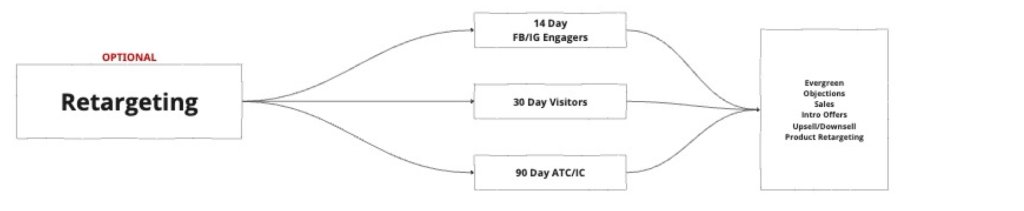
- Optional Retargeting/Scaling Campaigns: Used to re-engage high-intent prospects or force spend toward proven "hit" ads.
Stage 2: The Creative Engine
In the post-Andromeda algorithm era, targeting settings have taken a backseat to content. Today, the creative is the targeting.
Piliero advocates for a problem-solution framework. Rather than running generic ads, brands must identify a specific customer avatar and speak directly to their pain points. For instance, instead of selling a generic back brace, a brand should tailor messaging to a specific demographic—such as construction workers—and show the product solving their specific daily challenges.
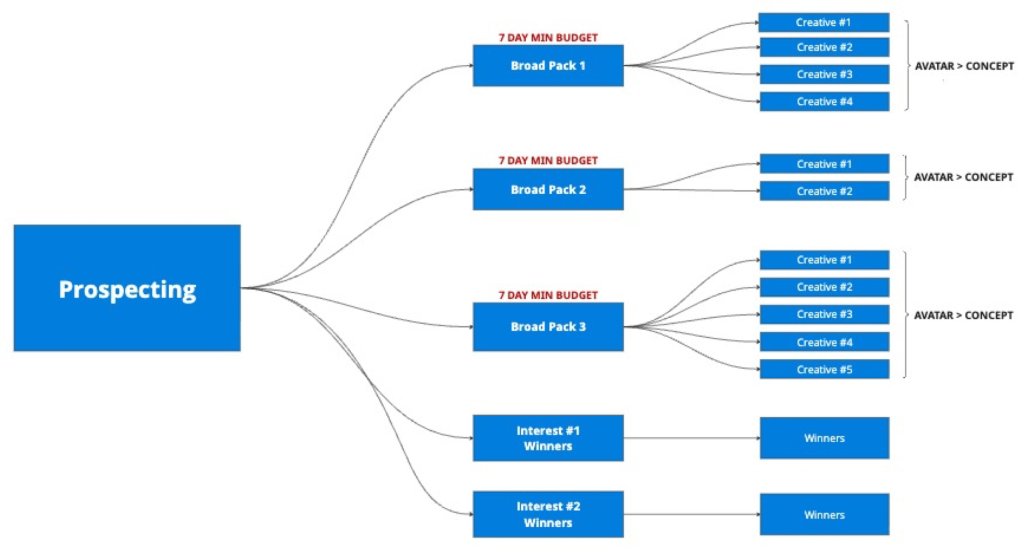
Strategies for Creative Success:
- The "Hit" Threshold: A hit is defined as any ad that exceeds the target ROAS and captures at least 10% of the account spend.
- Iterative Design: Rather than reinventing the wheel, brands should iterate on successful ads. Swap the hook, change the talent, or adjust the headline. This method is significantly more efficient than producing completely new assets from scratch.
- Semi-Professional UGC: Micro-influencers (1k–20k followers) are currently producing the highest-performing content. By providing scripts for key talking points while allowing the creator to maintain their authentic delivery, brands achieve "feed-native" content that resonates with audiences.
Stage 3: Deep Dive Analysis
Most advertisers fail because they treat every day of the week as identical. Piliero’s experience at BarkBox revealed that consumer behavior is rarely static; it follows cyclical patterns.
By analyzing 90 to 180 days of non-promotional data, brands can identify patterns in performance based on day-of-week, placement, and demographic segments. If a brand discovers a 20–30% performance delta on weekends versus weekdays, the strategy should shift accordingly—lowering budgets on "slow" days and aggressively scaling on high-conversion days. This data-driven allocation is the secret to unlocking hidden profitability.
Stage 4: Scaling Strategies
Scaling is only appropriate when the account is healthy. When performance is stable, Piliero suggests three distinct modes of expansion:

- Vertical Scaling: Increasing the budget of an existing campaign in 10–30% increments. This avoids triggering the algorithm’s "learning phase" reset, allowing for steady growth.
- Horizontal Scaling: Creating time-bound, secondary campaigns for specific events like flash sales or product launches, ensuring the primary prospecting campaign remains undisturbed.
- Twin Engine Scaling: The most powerful approach, which involves injecting new iterations of winning ads directly into the existing, high-performing CBO campaign while simultaneously increasing the overall budget.
Supporting Data and Real-World Impact
The efficacy of the M4 Method is evidenced by the performance of The Moonlighters’ client base. Piliero highlights five specific businesses that, within one year of adopting this framework, scaled from under $30,000 in monthly ad spend to generating over $50 million in annual revenue.
While these results are exceptional, they underscore a critical implication: Scaling is a result of operational discipline. These brands did not rely on "hacks." They committed to a rigorous cycle of creative testing, data-backed budget allocation, and a relentless focus on the "King Goal"—the single most important metric for that business (usually CAC or ROAS).
Implications for the Future of eCommerce
The transition from "manual optimization" to "algorithmic guidance" is the current frontier of digital marketing. The M4 Method implies that the future of successful advertising lies in providing the algorithm with the right inputs (creative and structure) rather than trying to micromanage the outputs (bids and placements).
However, Piliero offers a vital warning for supply-constrained businesses. If a company cannot physically fulfill the demand its ads generate, the goal should shift from "scaling revenue" to "maximizing profit per unit." Scaling in a supply-constrained environment is a recipe for operational failure and diminished customer satisfaction.
Ultimately, the M4 Method suggests that Facebook advertising is no longer just a "marketing channel"—it is an integrated business function. By aligning account structure with consumer behavioral data and prioritizing problem-solution creative, brands can move beyond the "click-chasing" cycle and build a predictable, scalable, and highly profitable eCommerce enterprise.
As the digital ecosystem continues to evolve, those who treat their ad account as a precise, iterative engine rather than a "set-it-and-forget-it" tool will be the ones who dominate their respective markets.