In the rapidly evolving landscape of the WordPress ecosystem, the adage "build it and they will come" has become a dangerous relic. As the platform matures into a multi-billion dollar economy, the challenge for plugin developers has shifted from merely writing clean code to mastering the complexities of market penetration, user retention, and sustainable growth.
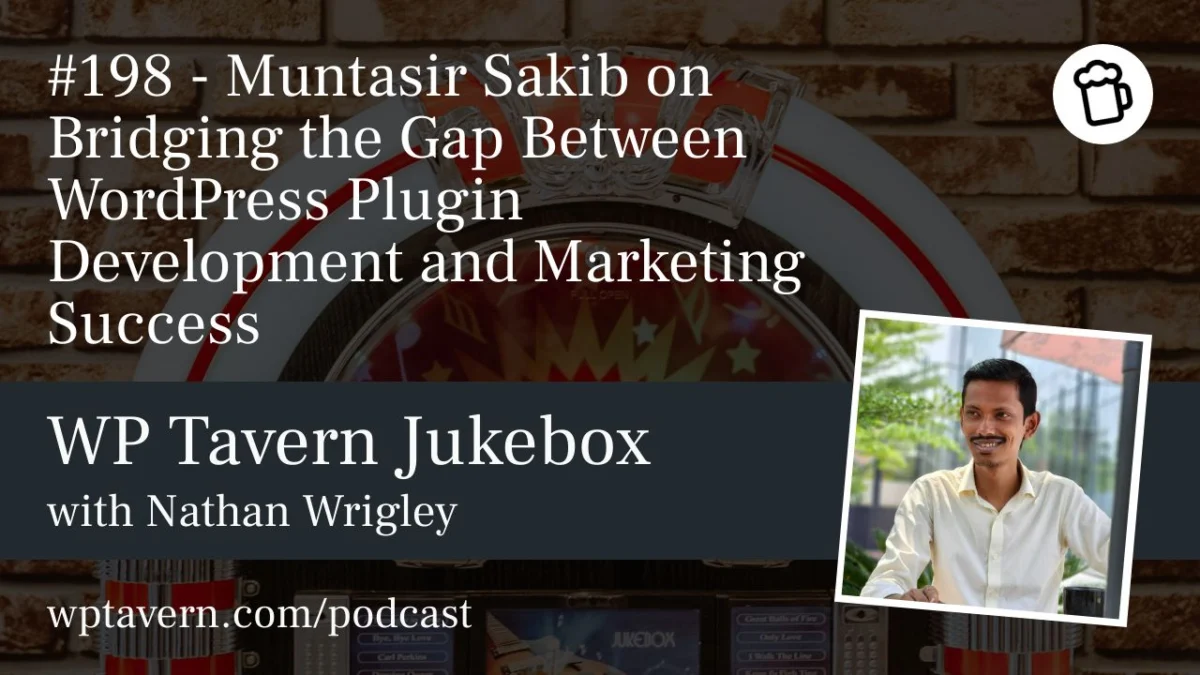
On a recent episode of the Jukebox podcast from WP Tavern, host Nathan Wrigley sat down with Muntasir Sakib, a seasoned veteran of the WordPress product space. Sakib, who has played a pivotal role in scaling prominent products like Tutor LMS and Droip, argues that for many developers, the most critical phase of a product’s lifecycle is the one they often neglect: the transition from development to market success.
The Myth of "Build It and They Will Come"
For many independent developers, the development cycle is a solitary, focused pursuit. The temptation to obsess over feature lists and technical perfection is high, often at the expense of strategic marketing. Sakib points out that with over 59,000 plugins currently listed in the WordPress repository, the market is no longer a "wild west" where a novel idea can succeed on its own merit.
"In the past, maybe 10 or 15 years ago, you could be the prime mover," Sakib explains. "But today, the marketplace is saturated. Simply releasing a product on WordPress.org without a roadmap for marketing, support, and community engagement is essentially setting your product up to be lost in the noise."
Chronology of a Product: From Concept to Community
Sakib highlights a recurring pattern in the lifecycle of failing plugins: the "feature-first" trap. Developers often spend the majority of their budget and time building features they assume the user wants, rather than identifying the specific problems the user is actually facing.
The Development Phase
- Initial Conception: Developers often work in isolation, prioritizing technical standards over user experience.
- The Feature Creep: As developers add "nice-to-have" features, the product becomes bloated, leading to slower performance and increased technical debt.
- The Launch Gap: A common pitfall is waiting until the final 20% of development to involve marketing teams. By this point, the product’s identity and market fit are already locked in, often incorrectly.
The Marketing Transition
Sakib advocates for "founder-led marketing" that begins on day one. This involves identifying the target audience, engaging with influencers for beta testing, and building a feedback loop before the first version hits the repository. "If you are a solo developer, you don’t necessarily need a massive budget," says Sakib. "You need to be vocal. You need to ask the community for help in testing, and most importantly, you need to listen to the feedback."
WordPress vs. SaaS: A Different Ecosystem
One of the most profound insights from the discussion is the fundamental difference between selling a SaaS (Software as a Service) product and a WordPress plugin.
In a traditional SaaS environment, the developer controls the entire stack: hosting, infrastructure, user onboarding, and the environment in which the software runs. In WordPress, the developer is a guest in the user’s house. Users are running dozens of plugins simultaneously, often on varying PHP versions, diverse hosting environments, and with conflicting themes.
"In WordPress, you don’t control the environment," Sakib notes. "Your plugin must be interoperable. If your code breaks because of a conflict with another plugin, the user doesn’t care whose fault it is—they blame your product. This makes community presence, robust documentation, and support not just ‘good to have,’ but essential for survival."
Supporting Data: The Sustainability Equation
A central theme of the discussion is the danger of relying on "one-time revenue" models, specifically Lifetime Deals (LTDs). While LTDs can provide an initial burst of cash flow, they often cripple a company’s long-term ability to support the product.
The Risks of Lifetime Deals
- Fixed Cost Inflation: As a product matures, the cost of servers, support staff, and development increases.
- The Support Burden: Lifetime users frequently require the most support while contributing the least to the ongoing financial health of the business.
- The "Exit" Trap: Many developers use LTDs to fund development, but find themselves trapped in a cycle of providing high-tier support for free for years, eventually rendering the product unsustainable.
Sakib recommends a pivot toward recurring revenue models. "Sustainability comes with recurring revenue. Real WordPress companies that scale focus on renewals, annual plans, and clear, tiered upgrade paths that allow users to scale their licenses seamlessly."
Strategic Partnerships and Community Engagement
The conversation shifted to the role of community events like WordCamps. Rather than viewing these merely as trade shows to pitch customers, Sakib views them as essential networking hubs for strategic partnerships.
"If you have an LMS plugin, your customers will inevitably need hosting, security, and SEO tools," Sakib explains. "WordCamps are where you find the partners who can help you solve those problems for your users. You aren’t just marketing to the end-user; you are building an ecosystem of trust."
Official Perspective: The "Mindset" Shift
When asked how a developer—who may feel "icky" about marketing—can shift their perspective, Sakib offers a clear distinction between the "Builder" mindset and the "Business Owner" mindset:
- Builder vs. Business Owner: Builders obsess over the what (features). Business owners obsess over the why (the outcome for the customer).
- Reactive vs. Strategic Roadmaps: A reactive roadmap is a sign of a failing product. A strategic roadmap is based on user data, pain points, and identified market gaps.
- Customer-Centricity: Successful scaling is defined by how well you solve a specific problem. If you listen to your customers, they essentially perform the marketing for you through word-of-mouth, which remains the most valuable acquisition channel in the WordPress space.
Implications for the Future of Plugin Development
The implications for the WordPress industry are clear: the era of the "hobbyist" developer who can succeed by accident is coming to a close. As the ecosystem becomes more professionalized, the barrier to entry is no longer just the code; it is the business infrastructure surrounding the code.
For current developers, the path forward requires a new level of humility. It requires the willingness to delegate, the foresight to budget for marketing (at least 30% of the total budget, according to Sakib), and the courage to stop building features that no one has asked for.
As Muntasir Sakib concluded in the podcast, the goal of a developer should not be to simply write code, but to build a bridge between their technical solution and the people who need it most. When that bridge is built with clear communication, community involvement, and a focus on long-term sustainability, success becomes a manageable, repeatable process rather than a stroke of luck.
For those looking to deepen their understanding, Sakib’s series of articles on the mechanics of WordPress marketing serves as a foundational guide for navigating these complexities, proving that in the modern WordPress world, the most powerful tool a developer has isn’t their IDE—it’s their ability to connect with the human beings on the other side of the screen.