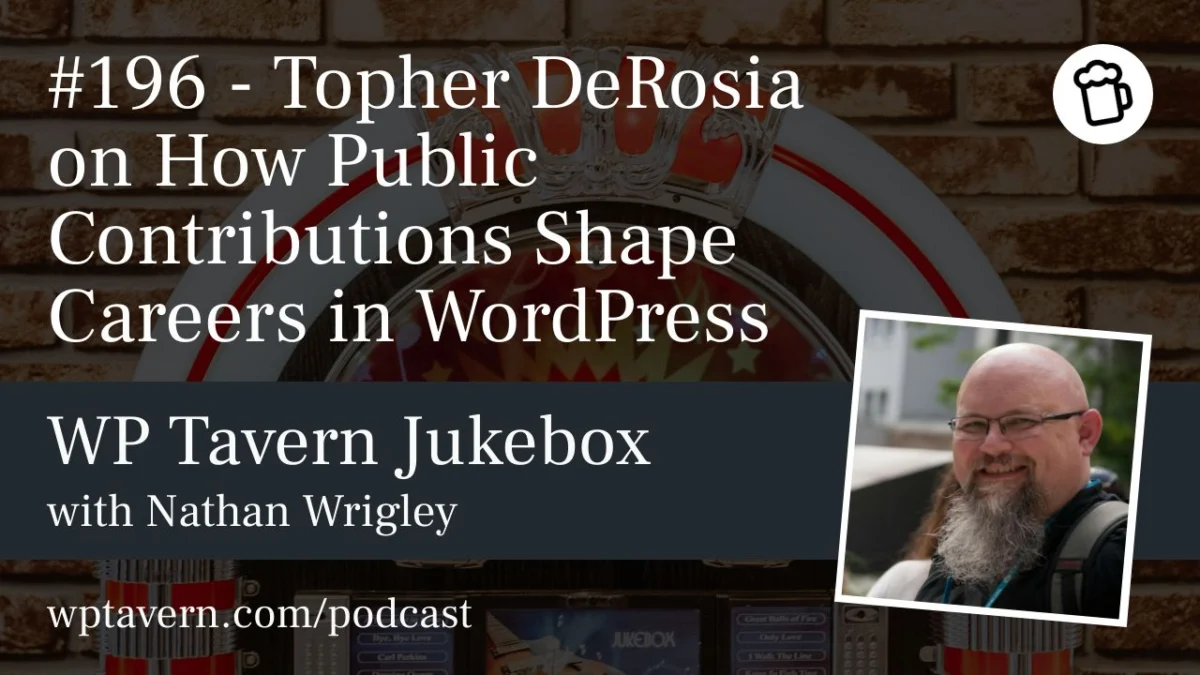
In the rapidly evolving landscape of the digital economy, the traditional "career ladder" is increasingly being replaced by a more organic, reputation-based architecture. For those within the WordPress ecosystem, this shift is best exemplified by the career of Topher DeRosia, a veteran web developer with three decades of experience. In a recent episode of the WP Tavern Jukebox podcast, DeRosia joined host Nathan Wrigley to discuss a concept that has defined his professional trajectory: the profound, often serendipitous impact of "building in public."
For DeRosia, who has attended nearly 80 WordCamps globally, the value of open source is not merely found in the software itself, but in the community it fosters. By sharing work, documentation, and expertise openly—without the immediate expectation of financial return—individuals can build a lasting legacy that transcends standard resumes and traditional job applications.
The Foundations of Community-Led Growth
Topher DeRosia’s journey into the WordPress world began 15 years ago, sparked by an introduction from Brian Richards. What started as a local meetup quickly ballooned into an all-encompassing commitment to the WordPress community. DeRosia notes that the transition from a solitary developer to an active community participant was transformative.
"I did not know there was a community for several years," DeRosia admits. "Once I discovered WordCamps, my life changed forever."
This sentiment is shared by many in the ecosystem. The "secret sauce" of the WordPress community—and similar open source groups—is a blend of remote work accessibility and a philanthropic ethos. By contributing to projects like HeroPress, an initiative that highlights how individuals use WordPress to improve their lives, DeRosia has seen firsthand how the barrier to entry is lowered for developers worldwide, from Malaysia to New York.
Chronology of a Career Built on Contribution
DeRosia’s career did not follow a linear, corporate-defined path. Instead, it was built on a series of "accidental" milestones:
- The Early Years: After discovering the WordPress community through local meetups, DeRosia began documenting his process and sharing his knowledge.
- The Content Era: For years, DeRosia created video tutorials for OS Training. While these were behind a paywall and functioned as standard client work, they served as a public testament to his expertise.
- The "Known" Factor: Years later, these videos led to new opportunities, including a partnership with WinningWP’s Brin Wilson, who approached DeRosia specifically because he had "given evidence to the world" of his technical proficiency.
- The Aggregation Phase: Recognizing the value of his fragmented history, DeRosia launched topher.how, a site that uses WP All Import to consolidate decades of his work—blogs, videos, and projects—into one centralized, searchable repository.
This chronological body of work serves as a living portfolio, proving that in the digital age, a verifiable history of contribution is often more valuable than a static CV.
Supporting Data: Why "Community Known" Matters
During the podcast, the discussion turned to the distinction between "fame" and "notoriety." DeRosia introduced the term "community known." While a developer might be highly influential and respected within the WordPress ecosystem, they may remain entirely anonymous to the general public.
This status provides a unique form of social capital. DeRosia recounts an anecdote involving a client in Bangladesh who sought him out for video production, not because of a cold-call marketing effort, but because of their shared history in the WordPress community.
The Metrics of Meaning
- The 17-Year-Old Benchmark: DeRosia remains committed to the idea that his work should remain accessible to the "17-year-old picking up a computer at the library for the first time." This philosophy drives his decision to keep much of his educational content free.
- The Power of Gratitude: A pivotal moment in DeRosia’s career occurred at WordCamp London, when an attendee approached him to share that his tutorials had helped them secure a job after a period of unemployment. These moments of connection serve as the primary fuel for continued open source contributions.
- The YouTube Pivot: DeRosia recently began a new initiative to provide one-minute, beginner-focused video documentation for WordPress. Despite starting with a modest subscriber count, the project is already gaining traction, demonstrating that long-term, slow-growth strategies remain viable in 2025.
The Tension Between Philanthropy and Commerce
A significant portion of the conversation explored the inherent friction between the philanthropic nature of open source and the inevitable commercial pressures of a multi-billion-dollar ecosystem.
DeRosia acknowledges the "cognitive dissonance" that exists when highly successful, wealthy companies in the WordPress space are forced to make difficult business decisions—such as layoffs—that conflict with the "family-first" culture the community often prides itself on.
"At some point, it has to be about the money," DeRosia notes. "If you’re running a business and people are depending on you for their livelihoods, you have to make the decisions."
However, both host and guest agreed that despite these challenges, WordPress remains a leader in the IT world regarding diversity and inclusivity. While the community is not perfect, its ability to foster collaborative environments—even amidst commercial competition—remains its most enduring asset.
Implications for the Next Generation
For those entering the workforce today, the message from the WP Tavern Jukebox episode is clear: don’t chase "influencer" fame. Instead, cultivate a body of work that provides value to others.
Key Implications for Aspiring Developers:
- Prioritize Utility: Build things that solve actual problems. If you find yourself answering the same question three times, document it.
- Think in Decades: Understand that the return on investment for building in public is rarely immediate. It is a compounding interest model where your past contributions become the bridge to your future opportunities.
- Build Your Own "Hub": As DeRosia’s experience with topher.how suggests, you should maintain ownership of your history. Do not rely solely on third-party platforms to host your legacy.
- Community as a Safety Net: Beyond career advancement, the primary value of the community is the deep, lasting friendships formed. In times of professional crisis, these connections act as a vital support system.
Conclusion
The conversation between Nathan Wrigley and Topher DeRosia underscores a vital truth in the digital era: the most effective way to advance one’s career is to focus on the advancement of others. By working in public, documenting processes, and contributing to the open source commons, developers create a "long tail" of professional opportunity.
As the WordPress ecosystem continues to evolve—navigating new technologies like AI and the ongoing shifts in page-building software—the core philosophy remains unchanged. Success is not found in the pursuit of instant gratification or viral fame, but in the slow, organic process of being "community known."
For those interested in following DeRosia’s work, he can be found at topher.how or by searching for his handle, Topher1Kenobi, across digital platforms. His ongoing project to provide accessible, bite-sized WordPress documentation continues to serve as a beacon for the next generation of developers, proving that the most profound impacts are often the ones made quietly, in the open, for the benefit of all.