The ecommerce landscape is currently undergoing its most significant transformation since the widespread adoption of mobile shopping. A flurry of new service releases this week highlights a decisive shift toward "agentic commerce"—a paradigm where artificial intelligence moves beyond mere content generation to performing complex, autonomous tasks on behalf of merchants. From conversational marketing analytics to automated storefront audits, the infrastructure supporting online retail is becoming increasingly intelligent, integrated, and predictive.
This report summarizes the most critical updates across the industry, ranging from AI-driven marketing and cross-border logistics to the evolution of last-mile delivery and multichannel management.
Main Facts: The Rise of Agentic Commerce
The most prominent theme in this week’s industry updates is the rise of the "agentic" workflow. Merchants are no longer looking for tools that simply provide data; they are demanding platforms that interpret that data and execute actions.

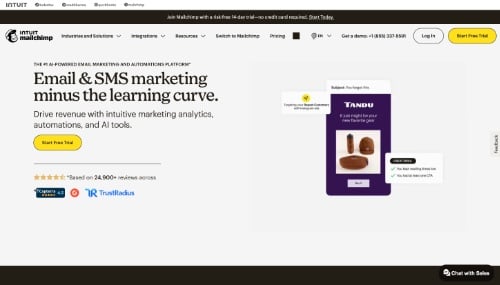
- Intuit Mailchimp has introduced "Analytics AI," a conversational agent that allows marketers to query their performance data using plain language. It doesn’t just show charts; it explains why a dip in sales occurred and suggests actionable fixes.
- Amazon Web Services (AWS) is formalizing this trend by launching an AI retail platform designed to help third-party retailers build their own "agentic shopping assistants," leveraging the same technical architecture that powers Amazon’s Alexa for Shopping.
- Attentive and Selltonomy have both debuted tools focused on this shift. Attentive has updated its marketing platform with advanced agentic AI to manage omnichannel personalization, while Selltonomy’s new "AI Buyability" platform audits storefronts to ensure they are technically optimized for AI agents to complete purchases autonomously.
Chronology of Developments
The rapid succession of these announcements underscores a highly competitive market. Below is the timeline of the key industry movements that have redefined merchant capabilities this month:
- May 26: Attentive unveils the next generation of its agentic AI marketing platform, focusing on predictive analytics and brand-voice consistency.
- May 28: Intuit Mailchimp launches Analytics AI; DHL eCommerce secures a long-term last-mile agreement with the USPS; Alibaba’s Pic Copilot integrates with Google Ads.
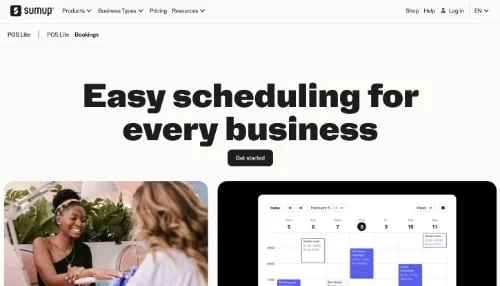
- June (Early): A surge of niche platform launches, including the expansion of Shopopop into the U.K. market and the rollout of SumUp’s new booking services for U.S. small businesses.
- July (Forthcoming): Affirm and Stripe will officially launch their integrated buy-now-pay-later (BNPL) services for U.K. merchants.
Supporting Data and Technical Integrations
The efficacy of these new tools relies on deep, cross-platform integrations. The "siloed" era of ecommerce tools is ending, replaced by ecosystem-based approaches.
Logistics and Supply Chain
- DHL & USPS: The new multi-year contract ensures that DHL will leverage the USPS’s massive footprint—reaching over 170 million delivery points—to stabilize the final-mile delivery experience. This move is critical for merchants looking to mitigate the rising costs of last-mile logistics.
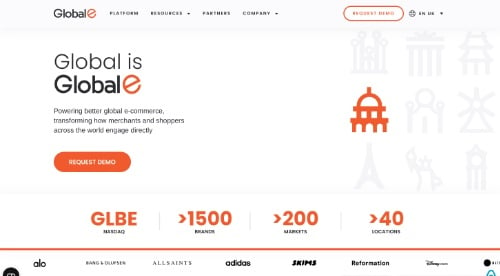
- Global-e & Passport: By acquiring Passport Global, Global-e is positioning itself as a dominant force in cross-border logistics, adding multi-carrier, domestic, and international shipping capabilities that allow brands to reach global markets with local-level efficiency.
Marketing and Design
- Reddit & Shopify: The expansion of the Reddit-Shopify integration allows for automated, real-time catalog syncing. This means product pricing, imagery, and inventory levels are updated across the Reddit Ads environment without manual intervention, drastically reducing the "time-to-market" for social campaigns.
- PixExact & Pic Copilot: These tools represent the democratization of design. By leveraging AI to generate exact-size marketing assets for banners, flyers, and social media, they allow small-to-mid-sized businesses to maintain a high-quality visual presence without the overhead of expensive creative agencies or complex software.
Official Responses and Strategic Perspectives
Industry leaders are framing these updates as essential survival mechanisms in a high-inflation, high-expectation environment.
Regarding the Affirm-Stripe partnership, executives noted that the collaboration is not just about payments; it is a long-term play on "AI-powered commerce." By making payments more seamless and transparent, the companies aim to prepare merchants for a future where consumers may not interact with a checkout page at all, but rather with an AI agent completing the transaction on their behalf.
Shopopop’s entry into the U.K. is perhaps the most ambitious logistical experiment of the season. By utilizing a "crowdshipping" model, they aim to disrupt the traditional grocery delivery model. Their spokesperson noted that discussions with major retailers like Tesco and Morrisons suggest a growing appetite for community-based logistics that reduce the carbon footprint and overhead of traditional delivery fleets.
Implications for the Future of Ecommerce
The aggregation of these tools creates three significant implications for merchants:
1. The Death of the "Manual" Merchant
The release of tools like Goflow’s eBay Listing Publisher and Sellyze.ai’s product intelligence engine suggests that manual product listing and competitor research are becoming obsolete. Sellers can now use AI to scrape thousands of competitor reviews, identify what products to build, and automatically push those products to multiple marketplaces. The barrier to entry for launching a private-label brand has never been lower.
2. The Rise of "Buyability" Audits
As AI agents (like those powered by AWS) begin to shop on behalf of consumers, the technical quality of a website becomes more important than its aesthetic quality. If an AI agent cannot read an inventory state or interpret a pricing signal correctly, the merchant loses the sale. Selltonomy’s "AI Buyability" platform is the first of many tools we expect to see that will audit sites specifically for "bot-readability."
3. Consolidation of the Tech Stack
Small businesses are increasingly moving toward all-in-one ecosystems. SumUp’s new booking service, for example, allows service-based merchants to manage their calendars, customer communications, and payment processing within a single, integrated dashboard. This shift suggests that the "best-of-breed" approach—where a merchant uses ten different tools for ten different tasks—is being challenged by platforms that prioritize seamless, internal data sharing.

Conclusion
As we move through the remainder of 2026, the competitive advantage will no longer lie in who has the most data, but in who has the best agents to act on that data. Merchants who embrace these AI-driven, autonomous tools will likely see a reduction in operational friction, while those who remain reliant on manual management may struggle to keep pace with the hyper-efficient, agentic future of retail.
For those seeking to keep pace with these releases, please continue to submit your ecommerce product news to [email protected].