The WordPress plugin directory, long considered the backbone of the world’s most popular content management system, is currently standing at a critical crossroads. With the rapid proliferation of Artificial Intelligence (AI) tools, the ecosystem is experiencing an unprecedented surge in submissions. This shift is challenging the traditional methods of discovery, quality control, and community management that have sustained WordPress for two decades.
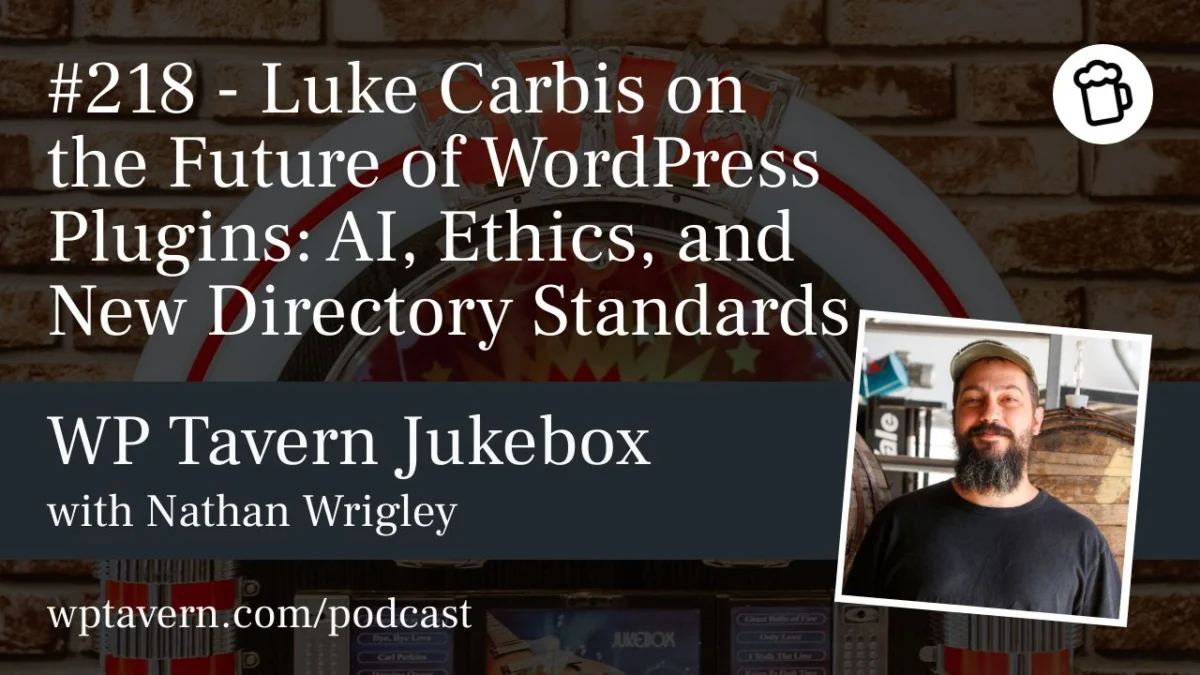
At the center of this conversation is Luke Carbis, a seasoned WordPress veteran with 20 years of experience as a developer, agency lead, and current member of the official Plugin Review Team. In a recent episode of the Jukebox podcast, Carbis discussed the findings of his WordCamp Asia talk, "Beyond the Guidelines: It’s Time to Evolve Our Standards for a Safer Plugin Ecosystem," outlining a roadmap for how the project can adapt to a changing technological landscape.
The Surge: A New Reality for the Directory
For years, the WordPress Plugin Review Team successfully managed the queue, even achieving near-zero wait times in previous cycles. However, the rise of generative AI has fundamentally altered the volume of submissions. Within the last 12 months, the number of new plugin submissions has increased roughly fourfold.
While the Plugin Review Team has responded by scaling their workforce and utilizing internal AI-assisted tools to keep review times hovering around a manageable one-week window, the core issue is no longer just processing speed—it is discoverability. As thousands of AI-generated plugins flood the directory, high-quality, human-crafted products are increasingly buried. This "noise" makes it exponentially more difficult for users to identify reliable solutions, leading some developers to question the efficacy of the directory as a primary distribution platform.
Chronology of a Changing Ecosystem
The evolution of the WordPress plugin space has been marked by several distinct phases:
- The Early Growth Phase: For the first 15 years, WordPress grew through organic, community-driven development. The directory served as a trusted library of tools built by developers for developers.
- The Professionalization Phase: As WordPress gained market share, plugin development shifted toward professional businesses and commercial entities, leading to the "freemium" model that dominates the market today.
- The AI Inflection Point: Starting in 2023, the widespread availability of LLMs (Large Language Models) lowered the barrier to entry for coding. This democratized development but also led to a "deluge" of functional but potentially redundant or low-quality plugins.
- The Current Crisis of Confidence: We are now in a period of uncertainty where the traditional open-source model faces pressure from both the sheer volume of AI content and the need for stronger, more centralized leadership to maintain relevance in a competitive web landscape.
Supporting Data and the "Discovery" Problem
The fundamental issue identified by Carbis is that the current search and ranking algorithms—while transparent and open source—are struggling to surface value. Currently, the directory relies on factors such as active installs, support forum responsiveness, and keyword matching.
However, because these metrics can be gamed, and because the volume of plugins is so high, the "active install" metric acts as a double-edged sword. It favors legacy plugins, creating a barrier to entry for new, innovative products that cannot gain initial traction. If a developer creates a superior tool today, they face the daunting task of surfacing it against thousands of legacy or AI-generated competitors. This has led to a stagnation in new product launches, as many developers feel the ecosystem lacks the excitement and discovery pathways found in modern mobile app stores.
Proposed Remediation: Connecting the Ecosystem
Carbis proposes a series of bold, experimental steps to modernize the directory and improve user experience:
1. The Connector API
Carbis suggests implementing a "Login with WordPress.org" feature for self-hosted sites. This would allow users to sync their accounts across multiple installations, enabling the directory to surface "Favorites" and personalized recommendations directly within the WordPress admin dashboard. This move would mirror the user-centric experience found in platforms like the Apple App Store or Google Play.
2. The "Untrusted Sources" Experiment
To support developers who build custom or premium tools, Carbis advocates for a system where users can link their WordPress.org profiles to external repositories (such as GitHub or private Git servers). This would allow users to install their own custom or premium plugins directly through the familiar "Add New" interface, effectively treating these sources as authorized "untrusted" channels that the user has explicitly vetted.
3. Commercializing the Marketplace
Perhaps the most controversial suggestion is the formal support of a commercial marketplace within the directory. Carbis posits that if WordPress.org were to facilitate sales—with a portion of revenue (e.g., 5-8%) going to the WordPress Foundation to fund core development, WordCamps, and community contributors—it would provide the necessary revenue stream to sustain the project’s future.
Official Responses and Ethical Implications
The leadership at WordPress, specifically Matt Mullenweg, has recently taken a more active, hands-on role in guiding the project’s direction. This shift, while initially causing friction among some community members, is viewed by many as a necessary pivot.
Carbis compares the current leadership style to that of visionary tech figures like Steve Jobs or David Heinemeier Hansson (DHH)—leaders known for being "rough around the edges" but capable of providing the clear, directive vision required to steer a large project away from the precipice of irrelevance. The project is currently facing a "seismic" challenge, and there is a growing consensus that the previous, committee-heavy approach to decision-making may be too slow to address the speed of AI-driven change.
Ethical AI Disclosure: A Path Forward
Addressing the "confusion" surrounding AI, Carbis proposes a transparent "AI Disclosure" system for plugins. By implementing a standardized header that allows developers to declare their level of AI usage—from simple auto-complete assistance to full "vibe-coding"—the directory could provide users with the transparency they need to make informed choices.
While critics argue that such a system relies on the honor system—much like an "honesty box" for farm eggs—Carbis maintains that gathering this metadata is a vital first step. It would allow the community to observe, analyze, and learn from data, rather than reacting out of fear or speculation.
Implications for the Next Generation
A recurring theme in the discussion is the "generational divide." While the tech bubble often assumes AI is an inevitable, universally adopted tool, Carbis notes that younger generations, particularly Gen Z, often express a strong, principled resistance to AI due to environmental and intellectual property concerns.
If WordPress is to remain the platform of choice for the next generation, it must balance its commitment to innovation with its core values of accessibility, inclusion, and human-centric design. The project’s challenge is to ensure that while AI is integrated, it remains an optional add-on, not a mandatory requirement for contribution.
Conclusion: The Need for Visionary Leadership
As WordPress faces the reality of an AI-first world, the consensus emerging from voices like Carbis is that the community cannot afford to remain static. Whether through the professionalization of the marketplace, better discovery tools, or a more direct leadership style, change is on the horizon.
The WordPress project has thrived for 20 years because it was built on a foundation of "Code is Poetry." Preserving that spirit while adapting to the cold, computational efficiency of AI is the ultimate test for the community. The path forward may involve difficult trade-offs, but as Carbis suggests, the risk of inaction is far greater than the risk of experimentation. The future of WordPress depends not on avoiding the AI tide, but on learning how to surf it with purpose, integrity, and a clear, unified direction.