In the early days of WordPress, the path to a successful plugin was relatively straightforward: build a tool that solved a technical problem, host it on the WordPress.org directory, and wait for the community to discover it. This “build it and they will come” philosophy served a generation of developers who were often the first to solve specific pain points. However, as the ecosystem has matured into a multi-billion dollar industry with over 59,000 plugins in the official directory, that era of passive discovery has come to an abrupt end.
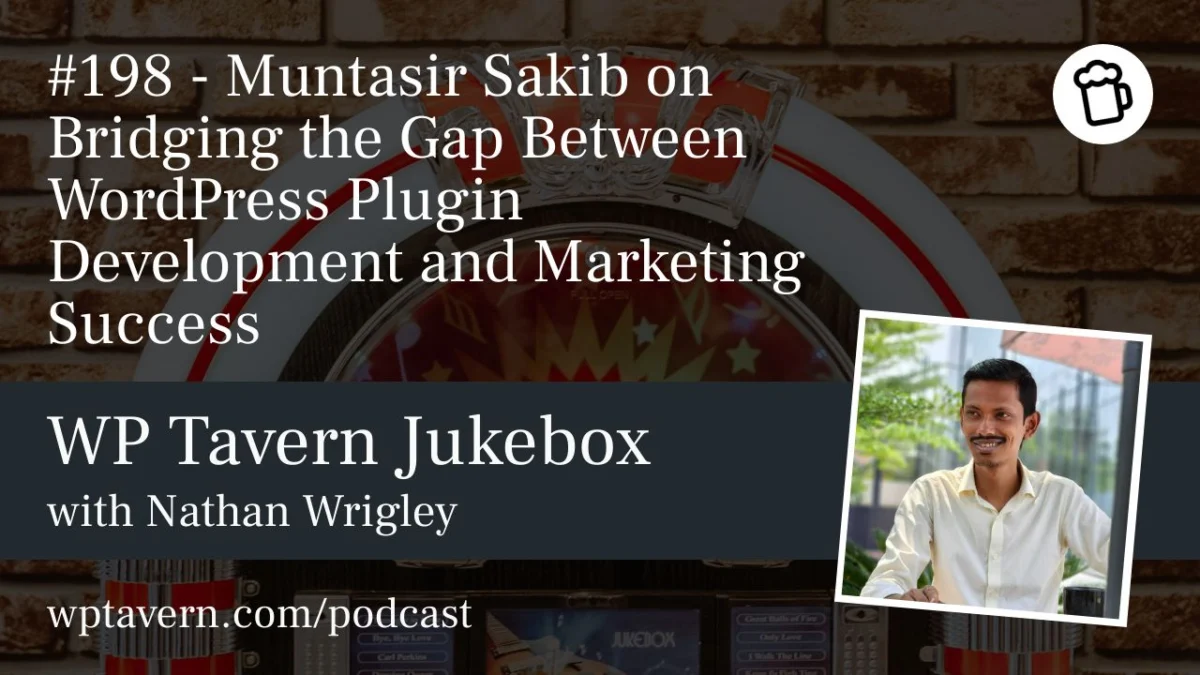
Today, the challenge for plugin developers is no longer just about writing clean code—it is about navigating a saturated marketplace where technical excellence is merely the baseline. In a recent episode of the WP Tavern Jukebox Podcast, guest Muntasir Sakib, a veteran of the WordPress product space, sat down with host Nathan Wrigley to explore the often-ignored chasm between development completion and commercial success.
The Evolution of the WordPress Marketplace
The WordPress ecosystem is unique. Unlike the SaaS (Software as a Service) world, where companies control the entire stack—from hosting and infrastructure to the user journey and analytics—WordPress developers operate in an open, decentralized environment.
“In the SaaS market, you control the environment, your onboarding, and your pricing,” Sakib explains. “But in WordPress, you are selling into an open ecosystem where users run dozens of plugins simultaneously. You don’t control the hosting, the PHP version, or the theme—all of which impact your product experience. Your users expect openness and interoperability, which makes community focus and support not just an extra, but a critical component of your product.”
This fragmentation forces developers to view their product not as a closed, proprietary entity, but as a modular component of a larger, living system. Because users can mix and match tools at will, the responsibility of ensuring stability across thousands of possible configurations falls squarely on the developer’s shoulders.
Chronology of a Product: From Concept to Community
For many solo developers, the lifecycle of a plugin follows a dangerous, linear path: they identify a problem, spend months (or years) coding a solution, and launch with the expectation that users will immediately flock to the product. Sakib argues that this approach is fundamentally flawed because it leaves the most critical phase—marketing—as an afterthought.
Phase 1: The Pre-Launch Preparation
The most successful products are those that integrate marketing into the development roadmap from Day One. This involves identifying specific user personas, establishing partnerships with influencers, and creating a feedback loop before a single line of public code is deployed.
Phase 2: The Beta Phase
Instead of relying on internal testing, developers should utilize the community to refine the product. By releasing beta versions to a select group of users, developers can gather "gold mine" feedback. This ensures that when the product finally reaches the wider market, it is already optimized for real-world usage.
Phase 3: The Launch and Scaling
Once launched, the focus must shift from feature-stacking to customer success. "Early traction is easy," says Sakib, "but it’s not the kicker." The real challenge is retention. Many developers experience a spike in downloads upon release, only to see them drop off within days because they failed to capture the user’s data, solve their immediate problems, or build a relationship with them.
The Fallacy of Feature-First Development
One of the most persistent myths in plugin development is that a larger list of features equals a more successful product. Sakib warns that this "feature-first" mindset often leads to "bloatware" that suffers from slower performance and a higher support burden.
"Founders often think features equal value," Sakib notes. "In reality, clarity, reliability, and use-case fit drive adoption and revenue."
When developers focus exclusively on adding new bells and whistles, they frequently neglect the core functionality that existing users rely on. If an update breaks a critical feature—like a payment gateway or a checkout flow—the business impact on the user is catastrophic. Developers must shift their focus to maintaining the integrity of their current features before attempting to expand the product’s scope.
The Economic Reality: Avoiding the Lifetime Deal Trap
Perhaps the most controversial point raised in the discussion is the reliance on "Lifetime Deals" (LTDs). While these deals can provide a quick influx of cash for a new company, Sakib classifies them as a potential "trap" for long-term sustainability.
The Problem with LTDs:
- Infinite Support Burden: A lifetime customer expects support for the entire lifespan of the product, regardless of whether they pay a recurring fee.
- Rising Costs: As a company grows, fixed costs—including infrastructure, team salaries, and server costs—increase annually. LTD revenue does not scale to meet these rising expenses.
- Value Misalignment: Lifetime buyers often require the most intensive support while contributing the least to the company’s long-term financial health.
The alternative, which Sakib champions, is a robust recurring revenue model. By focusing on annual subscriptions and clear, value-based upgrade paths, developers ensure that the company remains solvent and capable of providing the high-quality support that users deserve.
Strategic Implications: Partnerships and Community
For those who feel that marketing is "icky" or beneath the work of a developer, Sakib suggests a shift in perspective. Marketing is not about manipulation; it is about communicating value and building bridges.
The WordPress community, specifically, offers unique opportunities for growth through networking. Sponsoring events like WordCamps or engaging in "Five for the Future" contributions is not just an act of altruism—it is a strategic business decision. These events provide a venue for building partnerships with other companies.
“If I have an LMS (Learning Management System) plugin, my customers are going to need hosting, security, and SEO,” Sakib explains. “By networking at WordCamps, I can form partnerships with those service providers, creating a mutual ecosystem that helps everyone succeed.”
Summary of Best Practices
To transition from a developer who "builds things" to a founder who "builds businesses," Sakib suggests the following framework:
- Allocate Budget Strategically: At least 30% of a project’s total budget should be earmarked for marketing and customer outreach.
- Listen, Don’t Just Build: Use user feedback to drive the roadmap. If your users aren’t asking for a feature, don’t build it.
- Prioritize QA: A buggy update is worse than no update at all. Quality Assurance must be a non-negotiable part of the development cycle.
- Embrace the Community: WordPress is a community-driven ecosystem. Be visible, be helpful, and build genuine relationships with other players in the space.
- Think Sustainably: Avoid the temptation of short-term cash grabs. Build pricing models that reward long-term users and ensure the company can support its customers for years to come.
Ultimately, the gap between a finished product and a successful one is bridged by the realization that code is only the beginning. Whether you are a solo developer or part of a larger agency, the ability to step away from the keyboard, look at the "messiness" of the real world, and solve actual human problems is what separates a hobby project from a thriving, sustainable business.