You have meticulously crafted your strategy. You have spent hours A/B testing subject lines to ensure they capture attention, written body copy that resonates with the human experience, and fine-tuned your automation workflows to hit the inbox at the precise moment of maximum intent. You hit "send" with the quiet confidence of a founder who knows their craft.
Then, silence.
The campaign doesn’t just underperform—it vanishes. It hasn’t reached your audience, not because your offer was weak, but because an invisible gatekeeper—the spam filter—decided your message was not worth delivering. This is the brutal reality of email deliverability. In an age where digital real estate is the most valuable asset a brand owns, having the best strategy in the world is moot if your emails never see the light of the inbox.
The Anatomy of Deliverability: More Than Just "Sent"
To understand the crisis, one must first distinguish between "delivery" and "deliverability." In industry parlance, if an email is "delivered," it simply means it didn’t bounce; the recipient’s server accepted the message. However, where that message lands—the primary inbox, the cluttered Promotions tab, or the digital graveyard known as the Spam folder—is the true metric of success.
Deliverability is the art and science of ensuring your correspondence reaches the primary inbox. It is a complex ecosystem governed by real-time scoring from major providers like Gmail, Outlook, and Yahoo. These providers evaluate a sender’s technical configuration, sending habits, list hygiene, and content quality. For ecommerce founders, this is not a marginal technical concern; it is a fundamental business risk. If 20% of your emails are diverted to spam, you have effectively lost 20% of your reach overnight. Worse, this damage is invisible, often manifesting as a gradual decline in open rates and revenue that founders misinterpret as a "lack of interest" from their audience.
The Credit Score of the Digital Age: Sender Reputation
Think of your sender reputation as a credit score for your email program. Much like a financial credit score, it is built over time through behavior and accountability. Every time you hit send, ISPs (Internet Service Providers) are watching. They analyze engagement metrics: Are people opening your emails? Are they clicking links? Or, more tellingly, are they marking your messages as spam or simply ignoring them entirely?
The Core Pillars of Reputation
- The Bounce Rate: A high bounce rate is a red flag, indicating that your list is outdated or filled with invalid addresses.
- Spam Complaints: This is the ultimate "vote of no confidence." When a user reports you, it sends an immediate, negative signal to the ISP that your content is unsolicited or unwanted.
- Sending Cadence: Consistency matters. A sudden, massive spike in volume followed by months of silence is a classic signature of a spammer.
A strong reputation acts as a "fast pass" through filters, while a weak one leads to your domain being deprioritized or blacklisted. Protecting this score is the primary job of any modern email marketer.
Authentication: The Non-Negotiable Foundation
If sender reputation is your credit score, authentication is your digital ID. Without the correct technical protocols, you are essentially a stranger knocking on a locked door. Authentication proves to email providers that you are who you claim to be, preventing malicious actors from impersonating your domain.
There are three primary standards that every founder must implement:
- SPF (Sender Policy Framework): A list of IP addresses authorized to send email on your domain’s behalf.
- DKIM (DomainKeys Identified Mail): A digital signature that ensures the content of your email hasn’t been tampered with in transit.
- DMARC (Domain-based Message Authentication, Reporting, and Conformance): The overarching policy that tells receiving servers what to do if an email fails SPF or DKIM checks.
While platforms like Omnisend often automate these configurations, they are not "set and forget" items. A single misconfigured record can derail a launch campaign. If you have not audited your DNS records recently, do it today. It takes less than 15 minutes, but it can save your entire marketing budget.
The Unsexy Science of List Hygiene
In the rush to grow, many founders fall into the trap of "vanity metrics"—prioritizing the size of an email list over the quality of the subscribers. This is a fatal error.
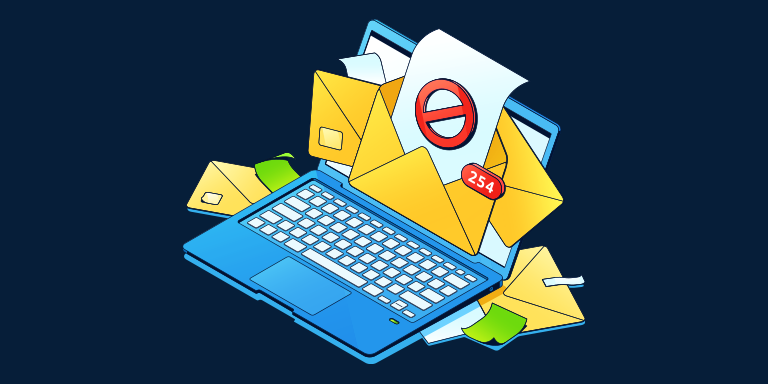
Every list accumulates "dead weight" over time: inactive users, abandoned accounts, and typos. These inactive contacts are not harmless; they are active liabilities. Sending emails to addresses that never open or click lowers your engagement rate, which in turn signals to ISPs that your content is irrelevant.
The Strategy for a Healthy List:
- The 90-180 Day Rule: Identify contacts who have not engaged with your content in the last 3 to 6 months.
- Re-engagement Campaigns: Launch a "We miss you" sequence to give these users one final chance to signal interest.
- The Purge: If they don’t engage after the sequence, remove them. It feels counterintuitive to shrink your list, but a list of 5,000 active, loyal customers will always generate more revenue—and maintain better deliverability—than a list of 50,000 ghosts.
Furthermore, implementing "double opt-in" protocols may slow your growth rate, but it creates a subscriber base that has explicitly confirmed their desire to hear from you, drastically reducing future spam complaints.
Engagement: The Ultimate Deliverability Signal
Modern spam filters are not static; they are learning machines. They look at user behavior to determine what constitutes "spam." When a recipient opens your email, clicks a link, or—crucially—marks your email as "Not Spam," they are providing positive signals to the ISP.
This is why your content strategy is inextricably linked to your technical deliverability. Writing emails that your audience genuinely wants to read is the best defense against the spam folder. This is particularly vital in the "Welcome Series." The first few emails a customer receives set the tone for the entire relationship. If you open with a weak, non-engaging email, the ISP notes that the relationship is likely low-value. If you provide immediate value, you build a "halo effect" that protects your reputation for future campaigns.
The Modern Spam Trigger: What to Avoid
While the days of simple keyword filtering (like blocking the word "Free") are largely behind us, modern filters are hyper-sensitive to structural issues. To stay out of the folder, audit your emails for these common triggers:
- Broken or Hidden Links: Always ensure your links are active and lead to reputable domains.
- Excessive Image-to-Text Ratios: If your email is just one giant image, it is a massive red flag. ISPs cannot "read" images, and spammers often use them to hide text-based content. Aim for a healthy balance.
- URL Shorteners: Avoid using public URL shorteners (like Bitly) in marketing emails, as spammers frequently use these to mask malicious destinations.
- Misleading Subject Lines: "Clickbait" is a deliverability killer. If the subject line promises a 50% discount and the email content delivers nothing of the sort, users will complain, and the ISP will penalize you.
The Future: Building for Resilience
Deliverability is not a project you finish; it is a discipline you maintain. The founders who see the most success are those who treat their email list with the same respect they would a physical storefront. They monitor their bounce rates, they authenticate their domains, and they curate their content to ensure it provides value, not just noise.
The frustration surrounding deliverability is that it remains invisible until it breaks. By the time you notice your revenue dipping, the damage to your sender reputation has already occurred. This is why investing in the right infrastructure is essential. Platforms like Omnisend provide the tools necessary to stay ahead of the curve, offering deliverability monitoring, automated list hygiene, and technical setup support that allows founders to focus on what they do best: building their business.
In the end, email remains the most direct line of communication between you and your customer. It is a privilege to land in someone’s inbox—treat that privilege with the care it deserves, and your audience will reward you with their loyalty and their wallets.
Ready to secure your place in the inbox? Build an email program that is built to last with Omnisend. As a Foundr reader, you can claim 50% off your first three months by using code FOUNDR50 at checkout.