The digital landscape is currently undergoing a tectonic shift. From the vibrant feeds of Instagram to the professional showcases on Behance, the ubiquity of AI-generated imagery has sparked a polarizing debate within the design community. As tools like DALL-E, Midjourney, and Stable Diffusion become increasingly sophisticated, they have moved beyond novelty, forcing practitioners to confront an existential question: Is the era of the human designer drawing to a close?
In this exploration, we analyze the current state of AI-driven design, dissect the myths surrounding these tools, and provide a roadmap for how modern creators can evolve from manual laborers to visionary conductors of synthetic intelligence.
The Evolution of Design: From Craft to Curation
Design has historically been a discipline defined by friction. Mastery of the craft—whether it be typography, 3D rendering, or color theory—requires years of deliberate practice. Traditionally, the gap between a conceptual "spark" and a finished asset is wide, often characterized by a ratio of 95% laborious execution to 5% creative ideation.
For many professionals, this process is fraught with the risk of "the garbage bin"—a scenario where hours of painstaking work fail to resonate with the client or the intended audience. AI promises to collapse this timeline. By acting as a force multiplier, these tools allow designers to bypass the tedious aspects of production, shifting their role toward that of a "visionary"—a director who guides the machine to manifest their specific intent.

Chronology of the AI Surge
- The Early Phase (2020-2021): The release of initial generative models demonstrated potential but lacked the visual fidelity required for professional-grade design.
- The Breakthrough (2022): Public releases of DALL-E 2 and Midjourney transformed the conversation. Suddenly, text-to-image synthesis became accessible to anyone with a browser.
- The Refinement (2023-Present): The integration of fine-tuning, ControlNet, and higher-resolution upscaling has allowed designers to integrate AI into professional workflows, marking the shift from "toy" to "tool."
Supporting Data: Efficiency and the Homogenization Trap
The primary impetus for the adoption of AI in design is simple: efficiency. In a business environment where speed to market is a critical competitive advantage, AI offers a shortcut that cannot be ignored.
However, this efficiency comes with a caveat. When a wide swath of the industry utilizes the same underlying datasets and prompts, the risk of "homogenization"—or the "Dribbblisation of design"—increases. Just as past trends led to a sea of identical UI styles, an over-reliance on default AI models can result in a sterile, repetitive aesthetic.

Yet, history reminds us that the fear of new technology is a recurring theme. Much like the Luddites of the 19th century who feared that textile machinery would render human labor obsolete, modern designers are experiencing a similar anxiety. The reality, however, is that while machines automated the "heavy lifting," they did not replace the need for the human weaver. Similarly, AI will not replace human ingenuity; it will simply redefine the scope of the designer’s responsibility.
Addressing the Hard Questions: Can We Claim Ownership?
A common point of contention is whether a designer can—or should—take credit for work generated by an AI. The current consensus is nuanced: while you can claim ownership of the final output, the lack of granular control in many current models limits the "human touch."

As a designer, your input is currently limited to the prompt. Because you lack full control over the underlying neural network, the resulting work may feel detached from your unique style. However, this is a transitional phase. We are moving toward a future where designers will have the ability to train AI models on their own personal archives, ensuring the final output is a true reflection of their individual creative fingerprint rather than a generic machine-generated average.
Legal and Ethical Implications
The ongoing class-action lawsuits against major AI providers highlight a critical concern: the ethics of training data. Because these models are built upon the backs of billions of internet-scraped images, the question of copyright remains murky. While the legal system catches up, the industry is already self-regulating. Major stock photography platforms, such as Shutterstock, have already begun implementing policies that compensate contributors whose work informs AI models, setting a precedent for a more equitable "co-creation" economy.
The New Chapter: Co-Creation and Augmented Creativity
Steve Jobs famously referred to the computer as a "bicycle for the mind." In the 21st century, AI is the motor added to that bicycle. It does not replace the rider; it allows them to traverse distances that were previously unreachable.
1. Visual Exploration and Mood Boarding
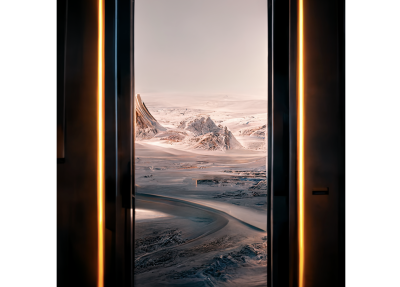
AI has effectively killed the manual mood board. Instead of scouring Pinterest for hours, a designer can now prompt an AI to generate a spectrum of visual directions. By iterating on "image-to-image" scenarios—where an initial sketch or photograph serves as the seed—designers can explore light, texture, and composition in seconds. This allows for a deeper, more exhaustive exploration of concepts during the early stages of a project, where it matters most.
2. Rapid Prototyping and Product Design
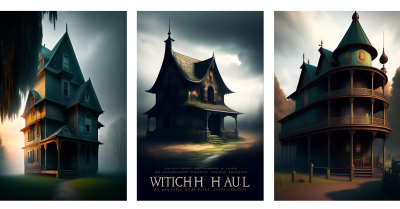
The product design lifecycle is traditionally slow and iterative. AI is changing this by providing high-fidelity visual representations of ideas almost instantly. Using prompts that specify industry-standard contexts—such as "mobile app UI, hotel booking, high-fidelity, Dribbble aesthetic"—designers can present stakeholders with tangible visions during the very first brainstorming session.
While current AI models still struggle with anatomical nuances (like the infamous "extra finger" issue), these are technical hurdles that will be overcome through versioning and improved training data.

3. The Metaverse and Virtual World-Building
As we pivot toward more immersive digital environments, the demand for 3D assets will skyrocket. The role of the designer here will be that of a "World Director." Instead of manually modeling every asset, designers will curate and refine AI-generated environments, focusing on the macro-experience, narrative, and user journey. The "craft" will move from the polygon to the prompt.
Implications: The Future Designer’s Skill Set
The future of design is not a battle of Human vs. Machine, but rather a marriage of the two. To thrive in this new chapter, designers must focus on three core areas:
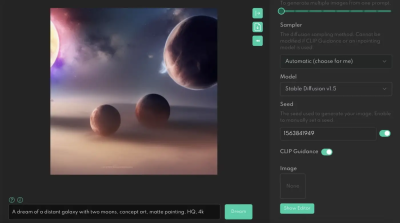
- Prompt Engineering and Logic: The ability to translate abstract human emotions and business requirements into effective machine instructions will become a foundational skill.
- Curation and Editing: As the cost of creating an image drops to near-zero, the value of the designer shifts to their ability to select the right output, edit it for brand consistency, and imbue it with human intent.
- Problem Solving: AI is excellent at generating "the what," but it is still poor at understanding "the why." Understanding user psychology, business objectives, and market context will remain the domain of the human designer.
Conclusion
The rise of AI-generated art is not a signal of the end, but a call to evolve. By embracing AI as a collaborative partner, designers can offload the burden of technical execution, allowing them to focus on the higher-level strategic and creative tasks that truly define human expertise. The tools will change, the workflow will accelerate, and the definition of "craft" will expand—but the need for a visionary mind to guide the machine will remain as essential as it has ever been.
The future of design is not generic; it is amplified. It is time to step into this new chapter with confidence, knowing that the most valuable asset in any creative process remains, as always, the human imagination.