In the modern digital landscape, brand strength is often measured by aesthetics, social media following, and high-profile press mentions. However, as search engines and Large Language Models (LLMs) continue to refine how they curate information, a painful reality has emerged for many companies: Being a famous brand does not automatically grant you topical authority.

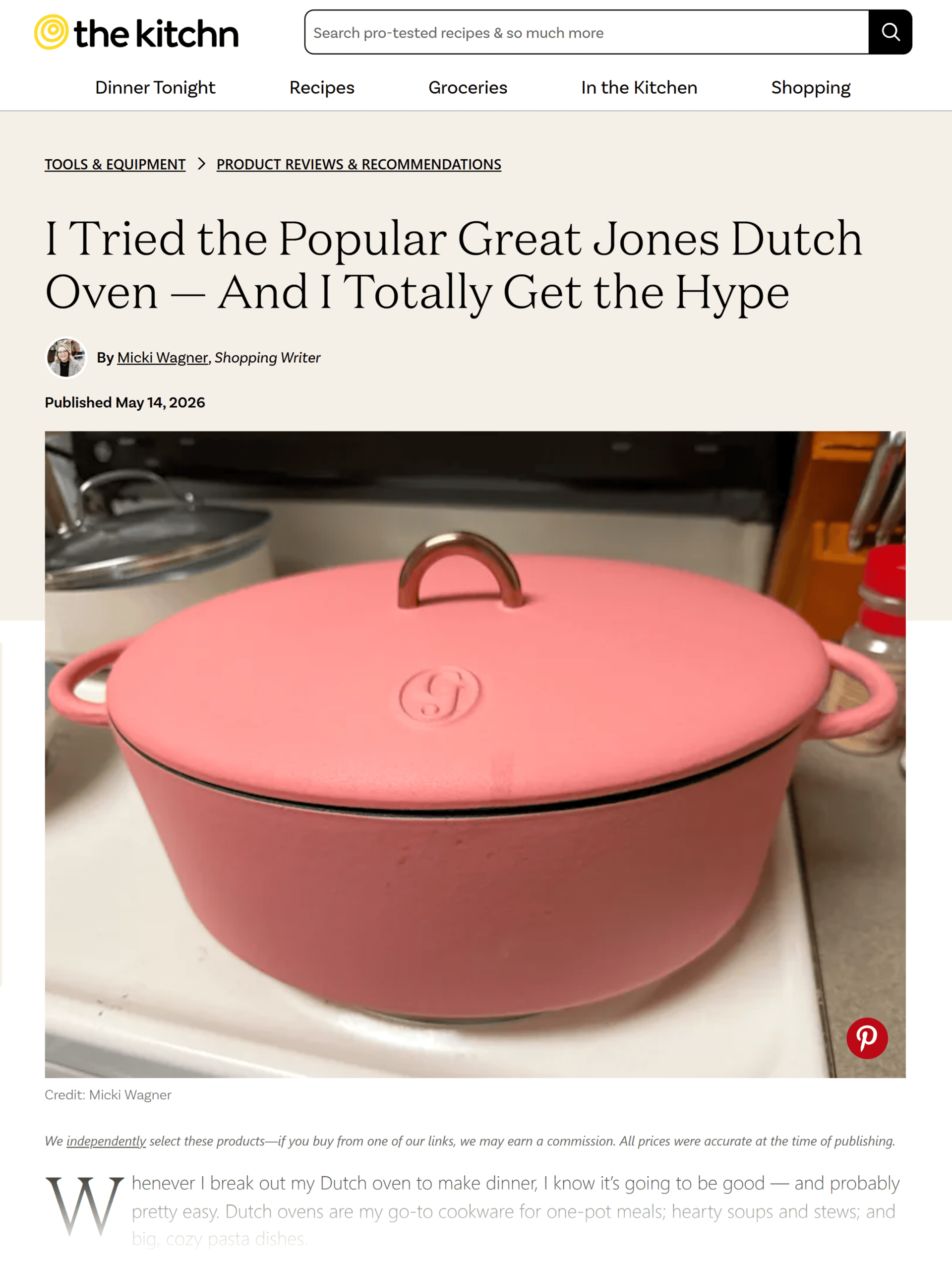
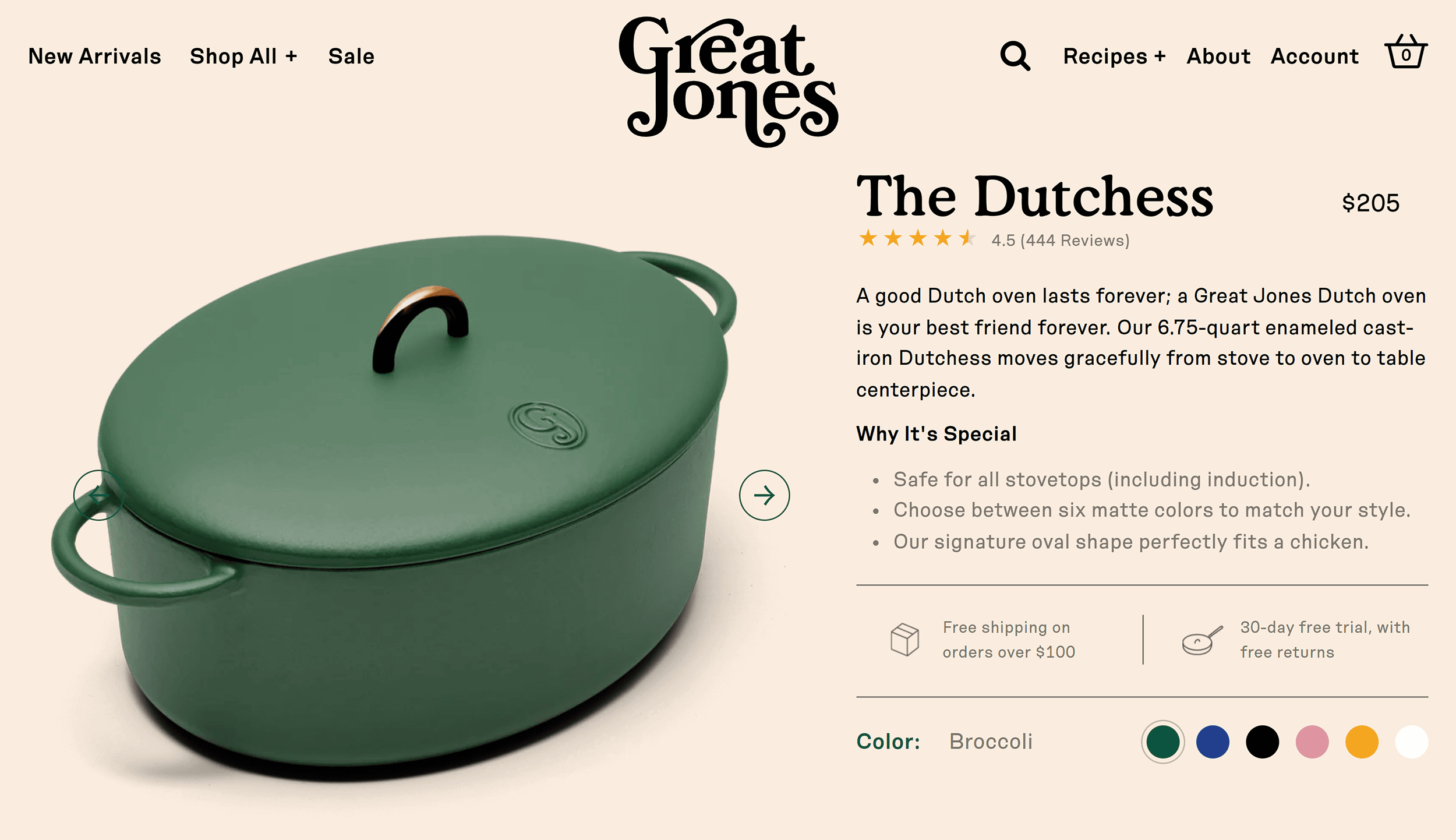
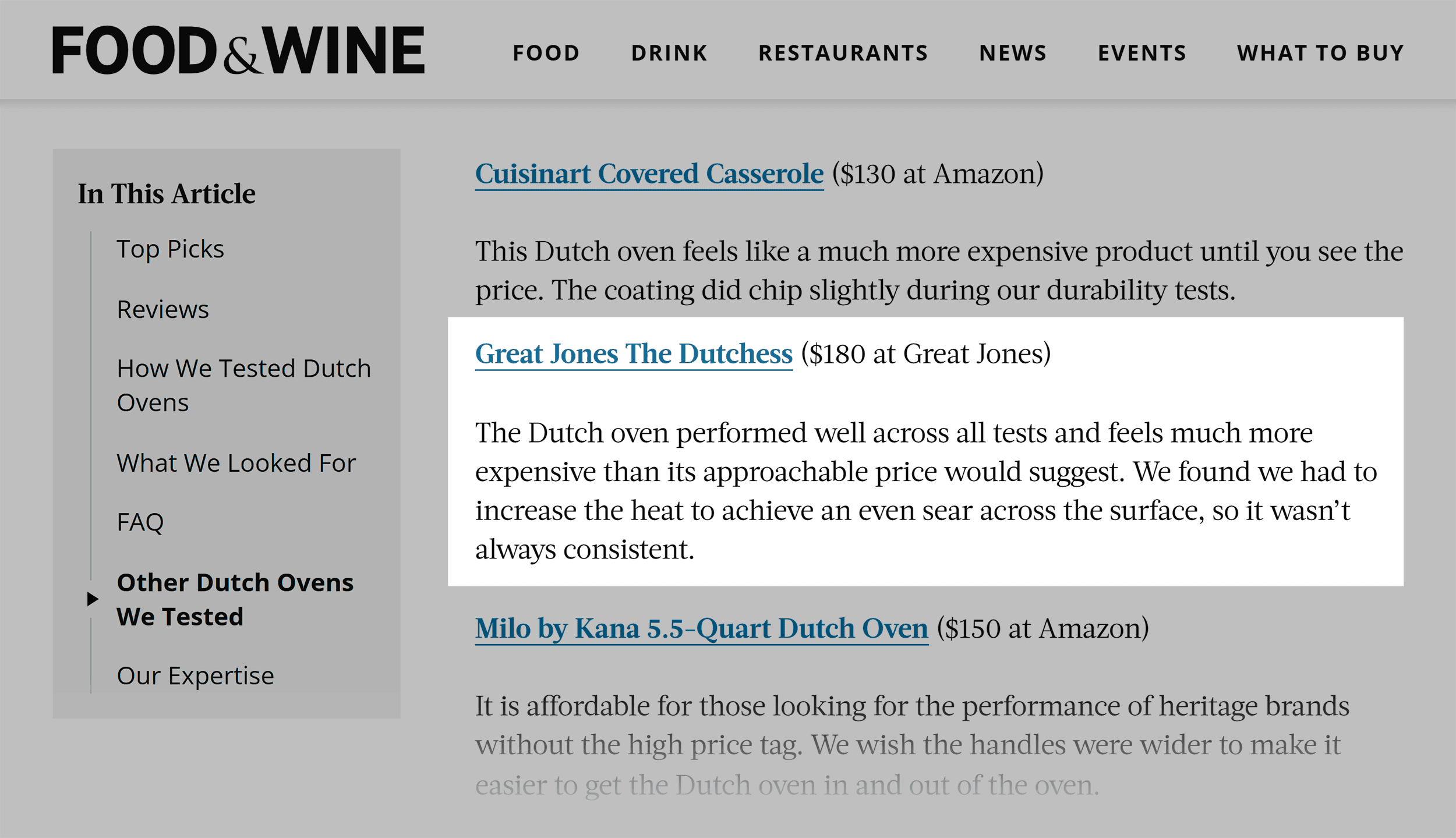
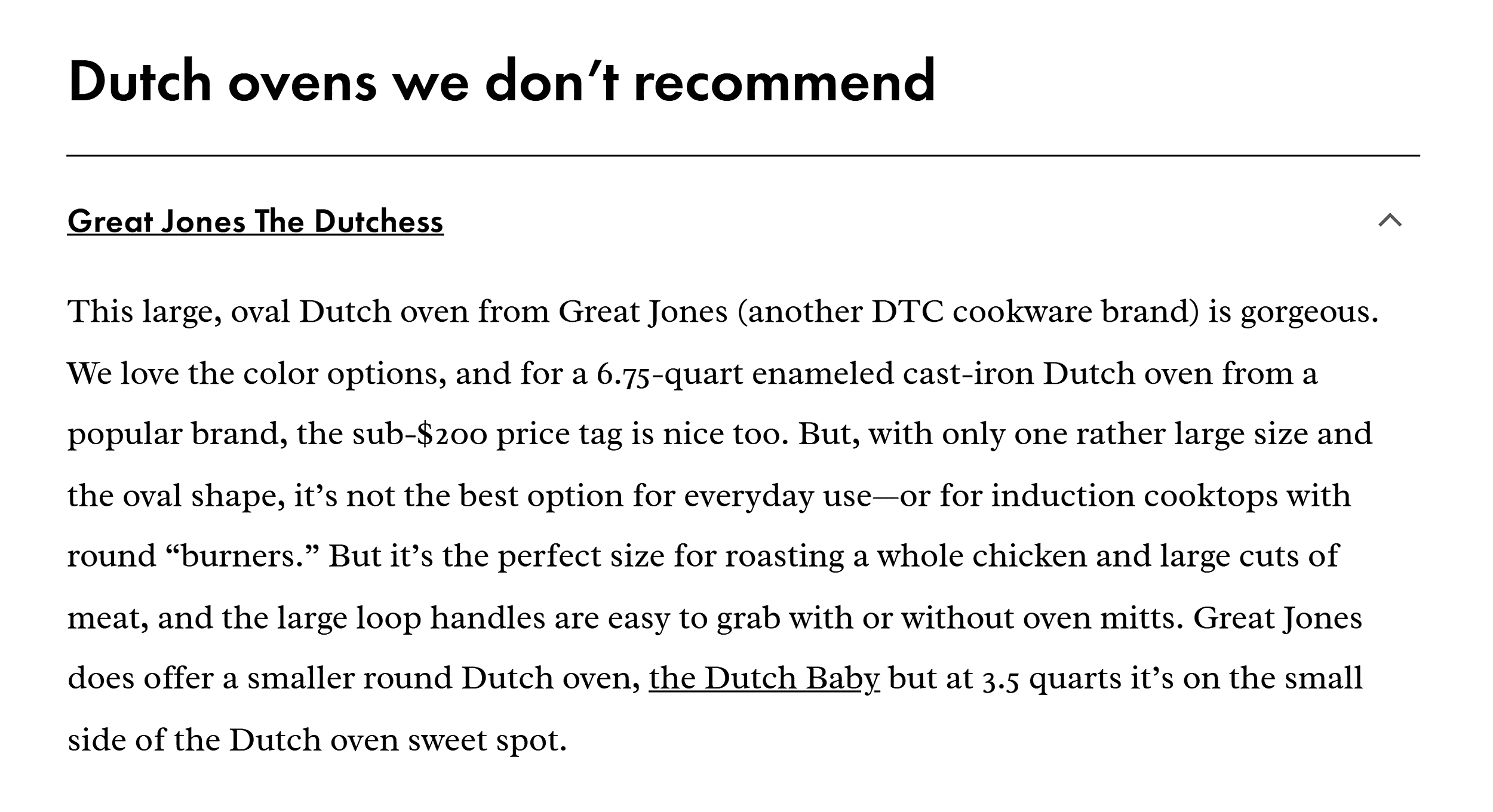
Consider the case of Great Jones, a direct-to-consumer kitchenware company. Their flagship Dutch oven, "The Dutchess," is undeniably stylish, has garnered glowing reviews, and has been featured in high-authority publications like Vogue, The New York Times, and Bon Appétit. By traditional metrics, the brand is a success.
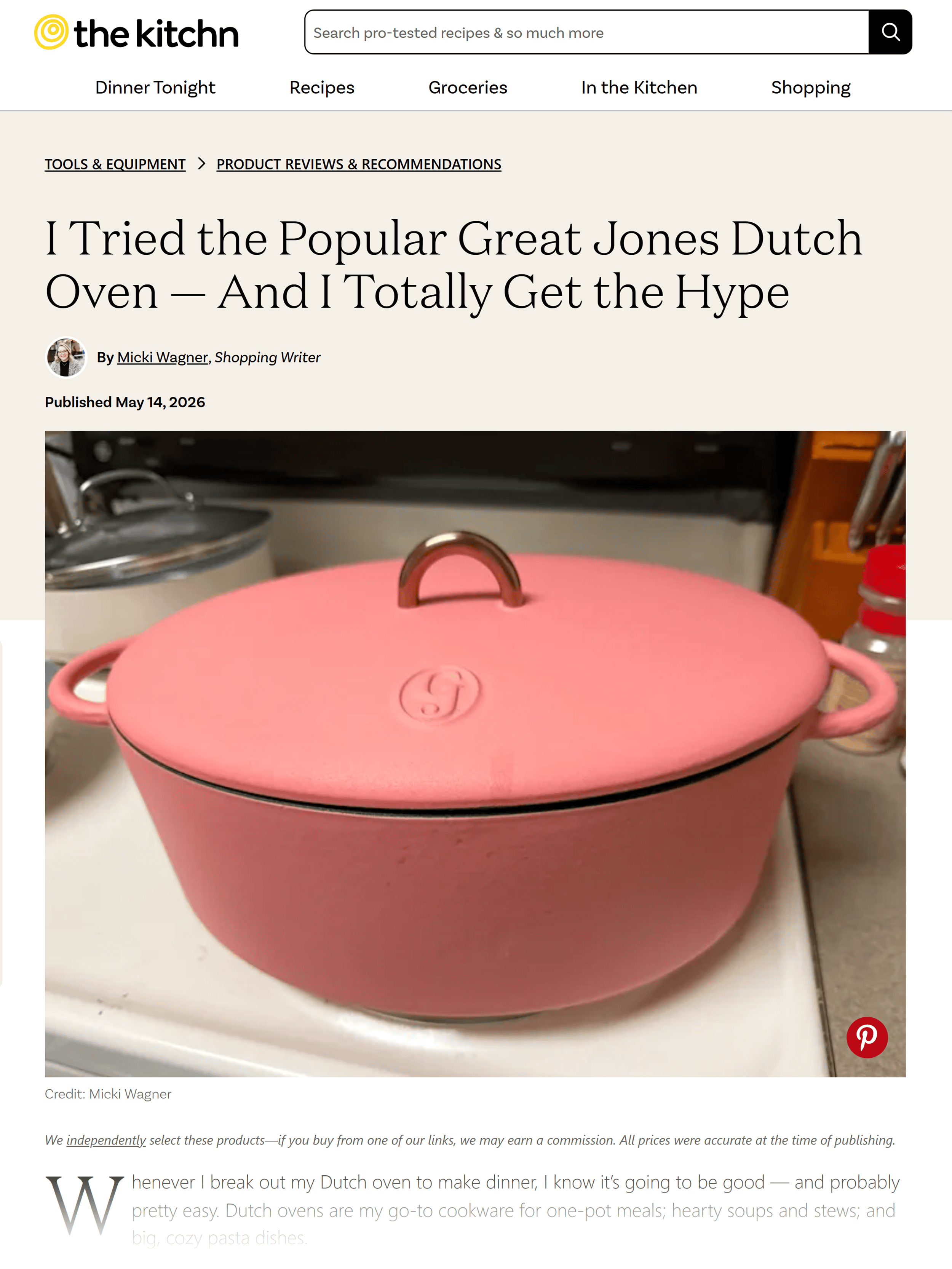
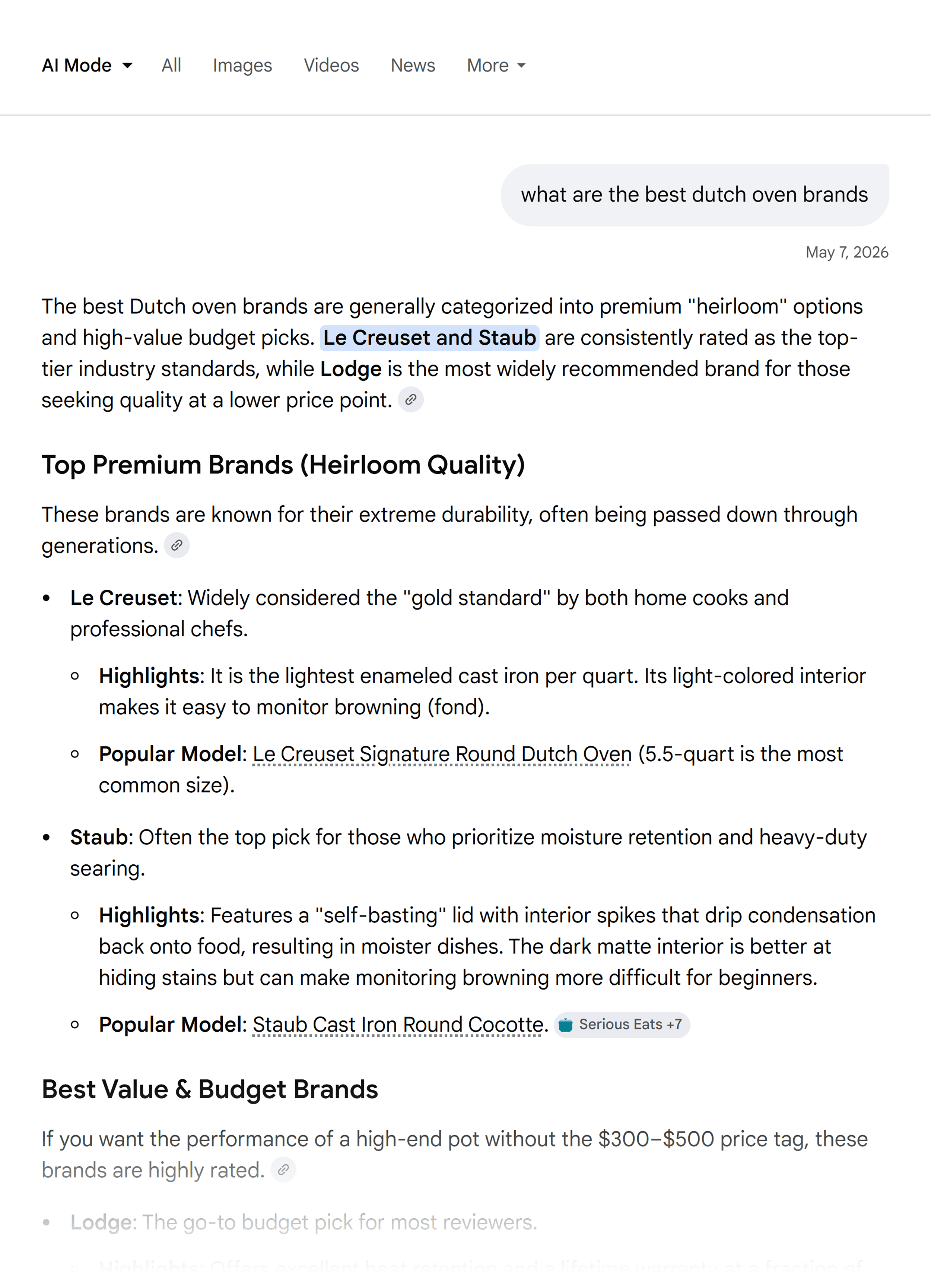
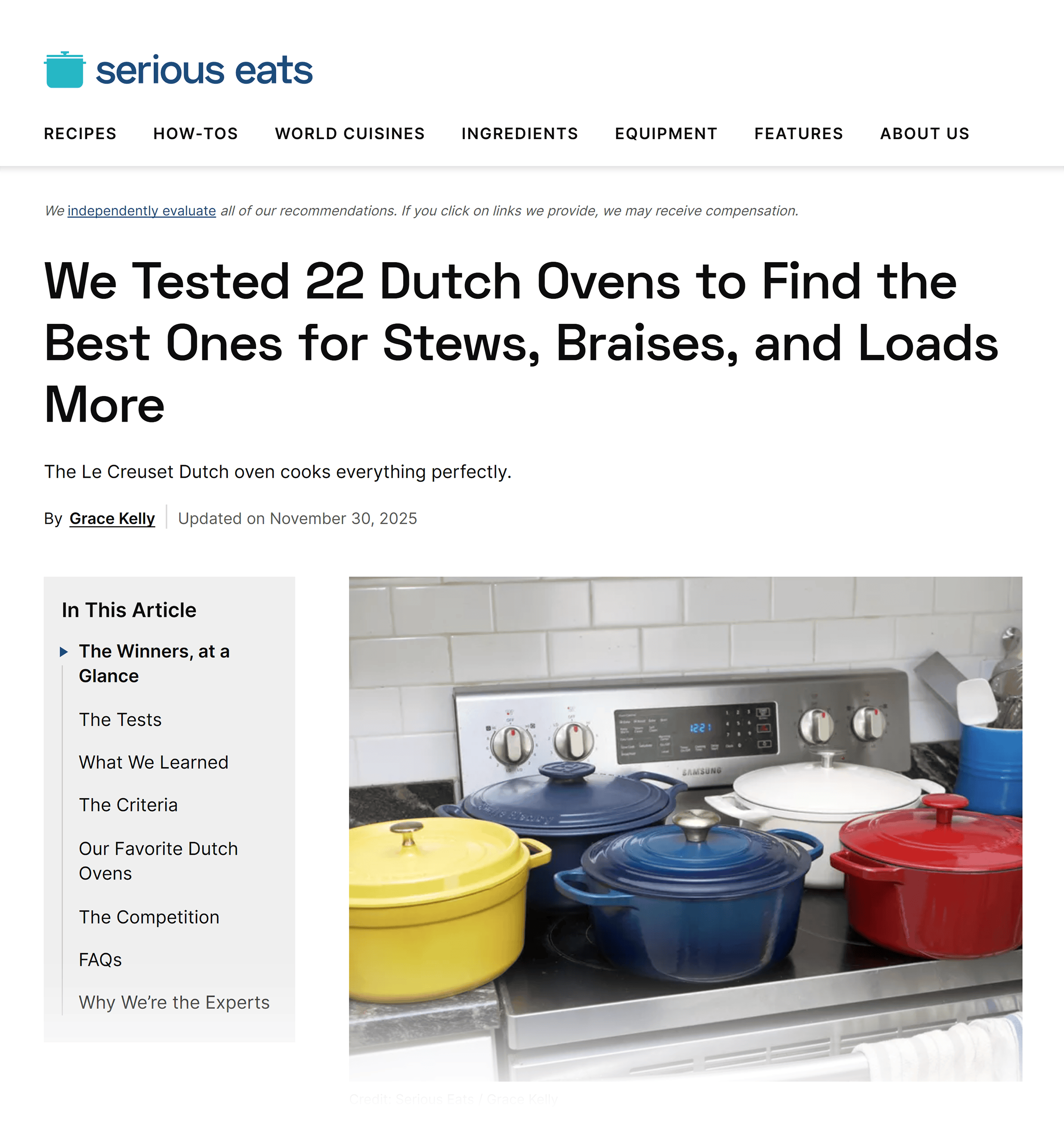
Yet, when a user queries "best Dutch ovens" on Google or asks an LLM for a kitchen recommendation, Great Jones is frequently absent from the conversation. This disconnect highlights a critical gap in contemporary SEO: the absence of a consistent, intentional pattern that anchors a brand to a specific topic across both internal and third-party digital ecosystems. Without this "pattern of authority," search engines and LLMs cannot confidently establish a connection, defaulting instead to established legacy brands that have been signaling their relevance for decades.
The Anatomy of Topical Authority
Topical authority is no longer just about content volume or breadth of coverage. In the era of AI-driven search, it is the earned reputation for deep expertise on a specific subject, formed when your brand and a specific topic appear together consistently across the sources that buyers, search engines, and LLMs trust.
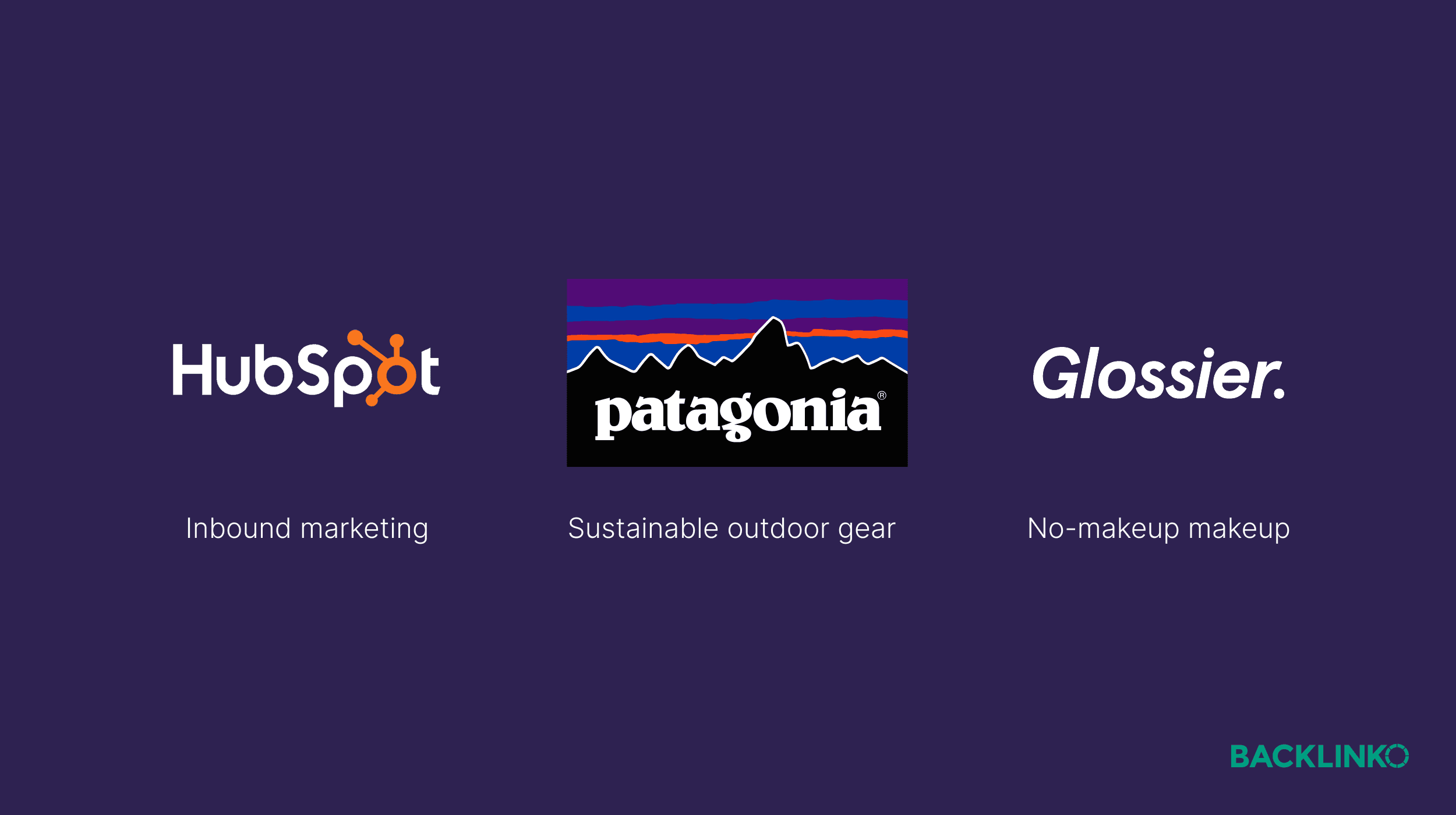
These associations are not accidental; they are the result of a deliberate, repetitive strategy. When you think of a specific problem—like enterprise cloud security or budget travel—you likely immediately think of a specific brand. You did not decide to make that association; it was forged because those brands consistently showed up with the same core message, in the same spaces, and around the same topics.
The Topical Authority Pyramid Framework
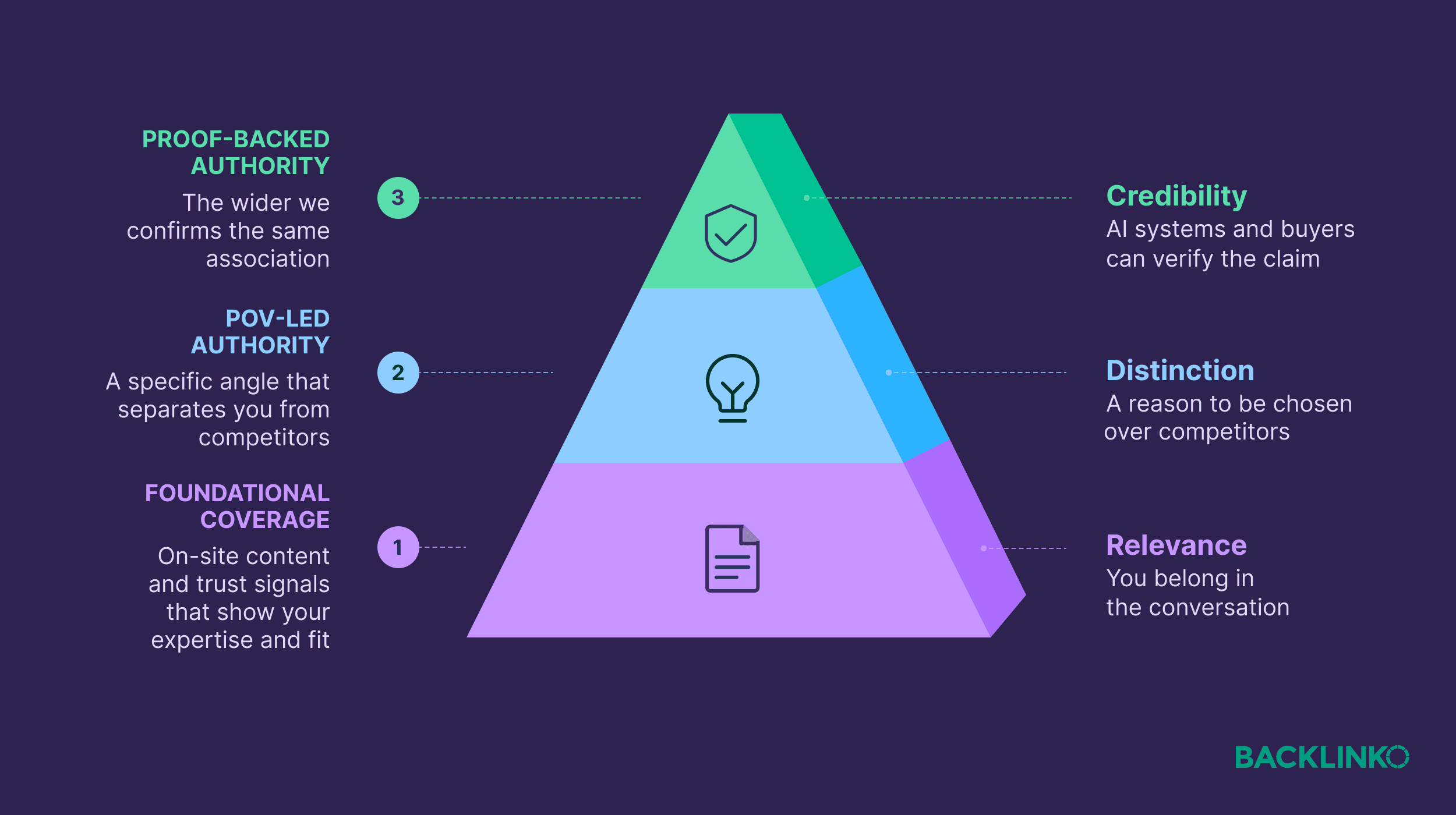
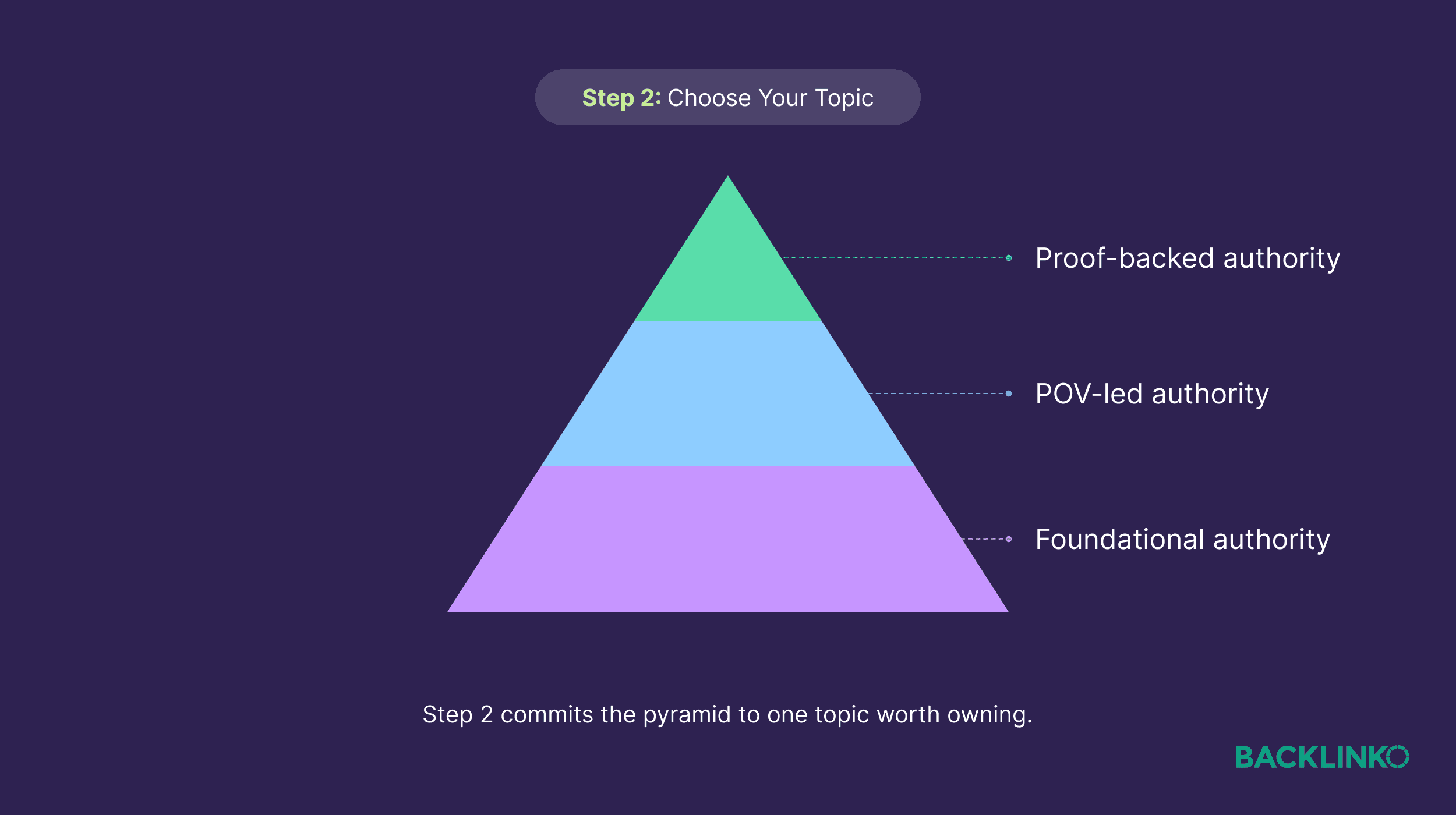
To bridge the gap between mere visibility and true authority, I have developed the Topical Authority Pyramid. This framework moves beyond simple keyword stuffing to address how modern algorithms perceive expertise. The pyramid consists of three distinct layers:
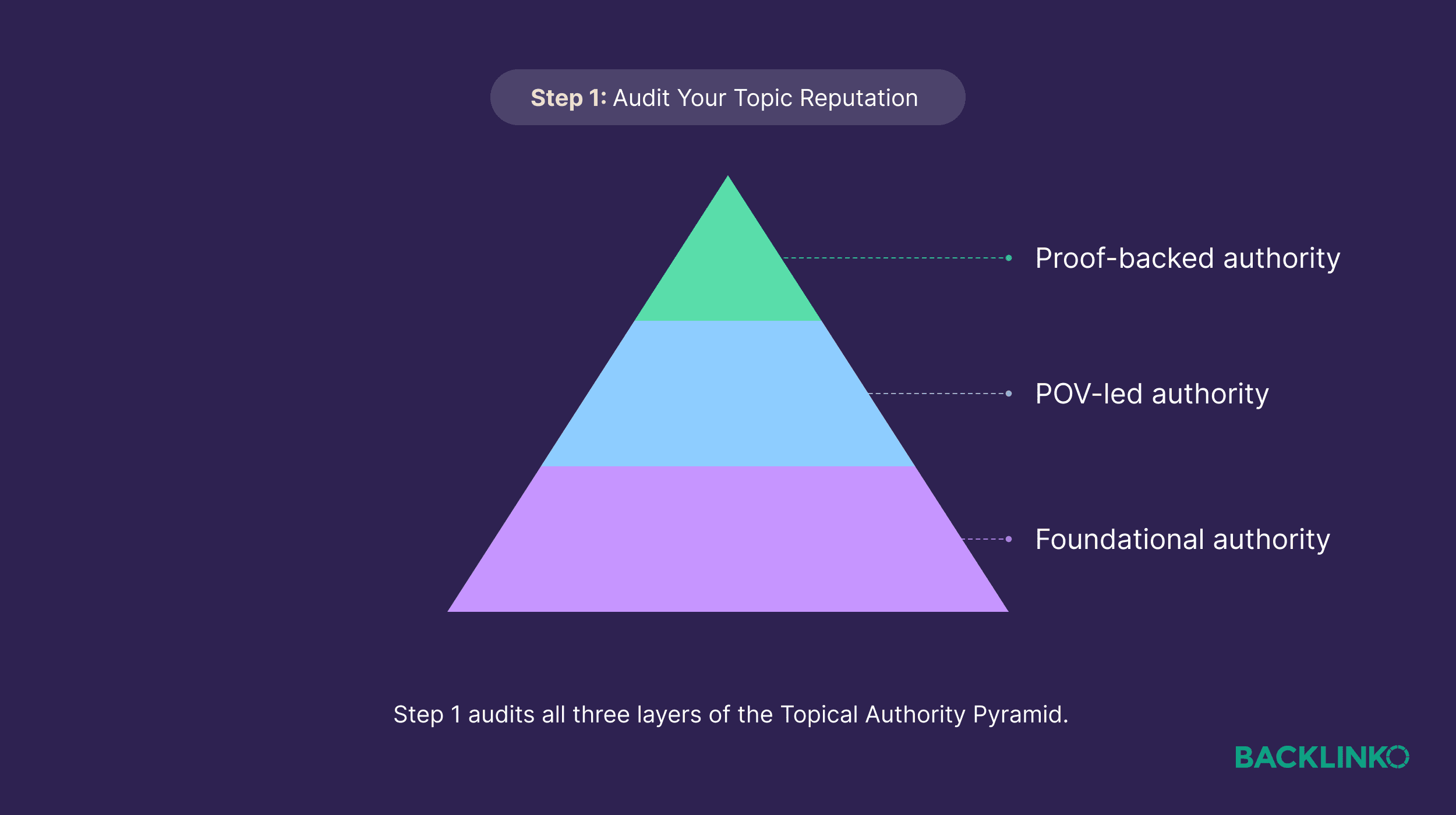
- Foundational Authority: The comprehensive on-site structure that defines your brand’s expertise.
- Point of View (POV): A unique, consistent narrative that differentiates your brand within the niche.
- Proof Systems: External, third-party validation that confirms your expertise to search engines and AI.
Step 1: Auditing Your Current Topic Reputation
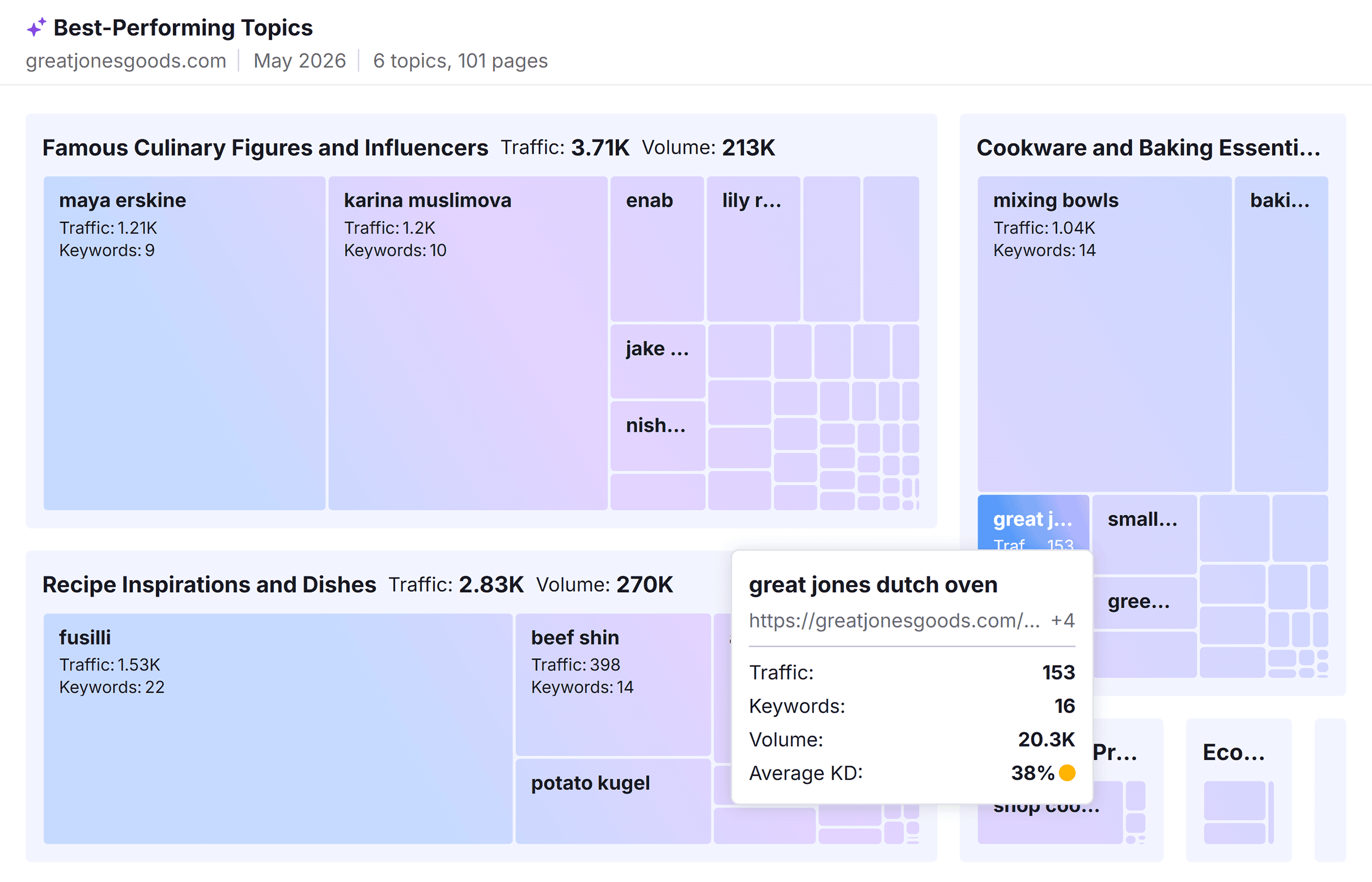
Before you can build, you must assess what you have. Your brand likely possesses a "topical footprint," whether or not you curated it. Using tools like the Semrush Organic Rankings tool, you can visualize which topics your domain currently ranks for.
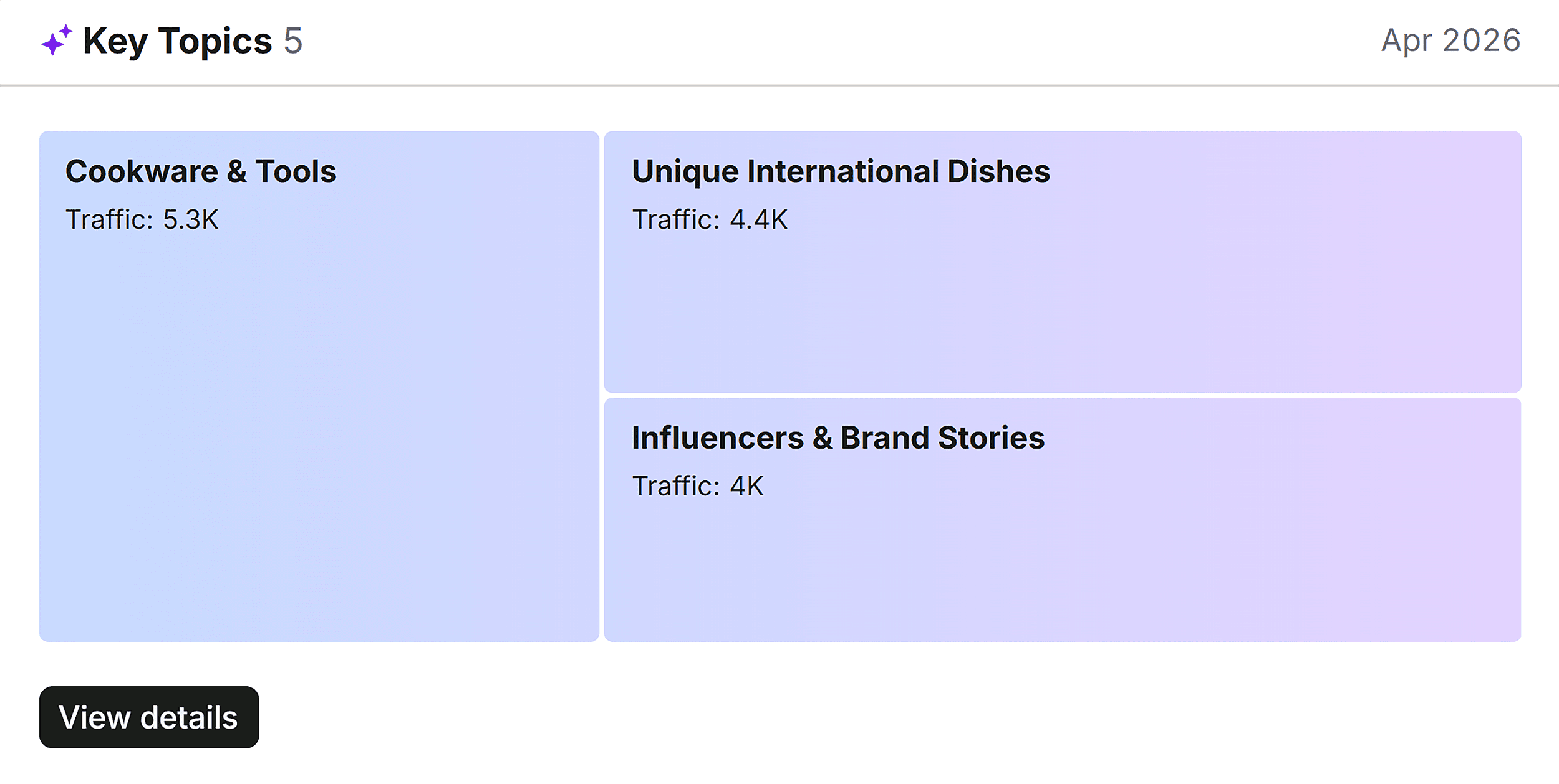
In our audit of Great Jones, we found that their strongest associations were "recipes" and "celebrity chefs." While these are relevant to food, they do not translate to "Dutch oven" authority. Despite the fact that "Dutch oven" generates over 200,000 searches monthly, the brand’s association with that specific product category was weak. This audit is the first step in identifying the "association gap" that is currently costing you potential sales.
Step 2: Choosing the Topic Worth Owning
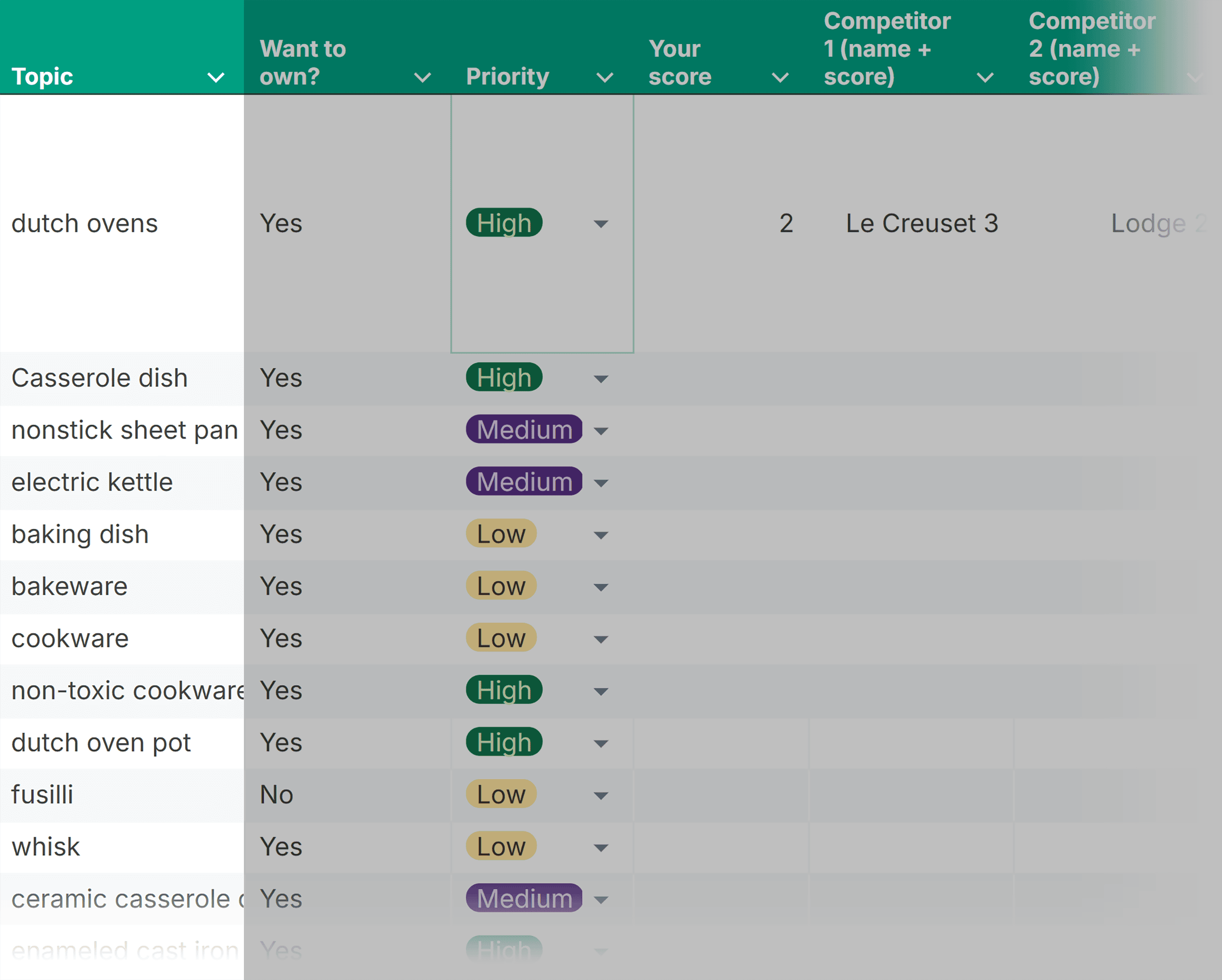
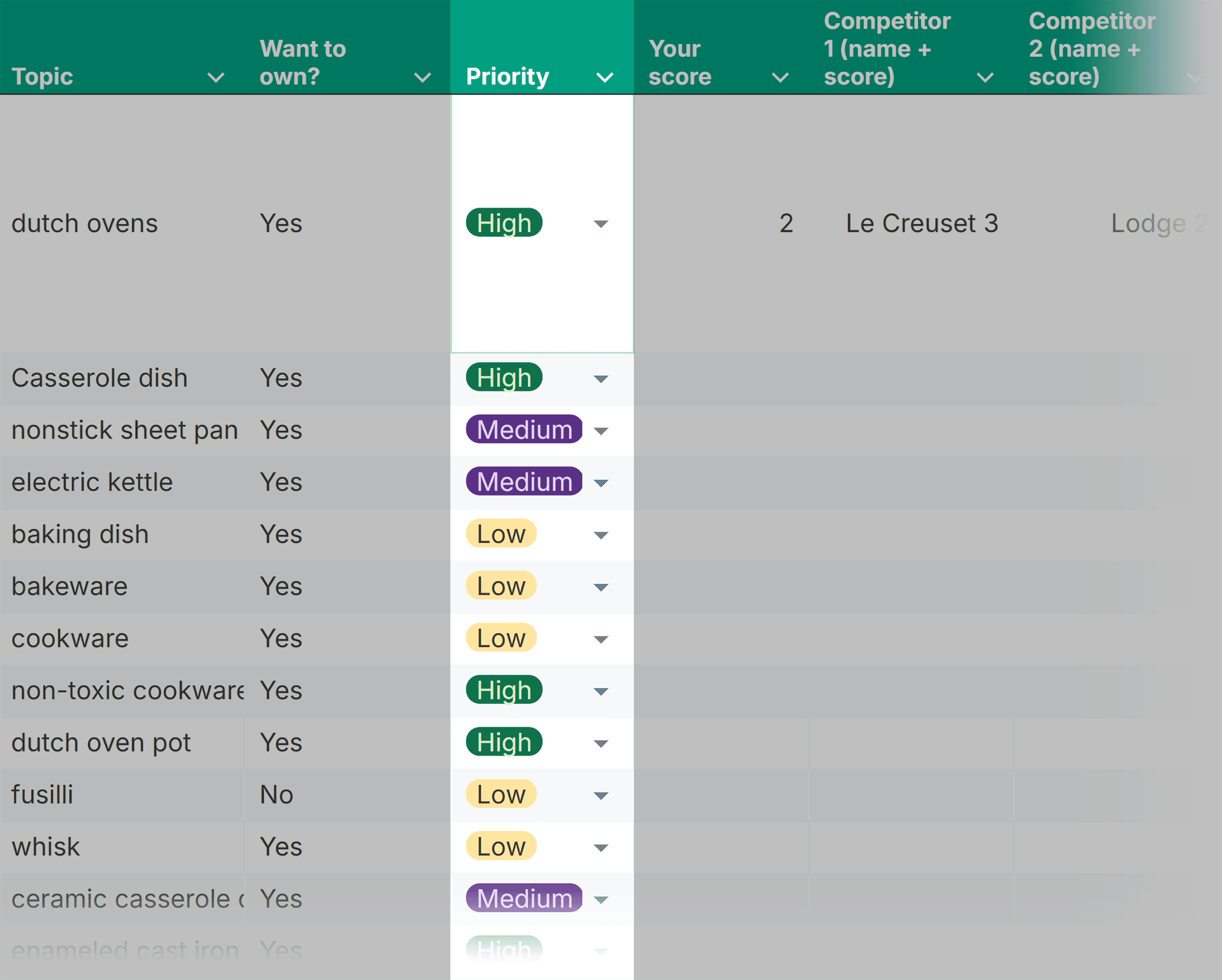
You cannot be an authority on everything. You must prioritize based on three factors: Revenue Impact, Buyer Intent, and Competitive Weakness.
By scoring your topics, you can narrow your focus to three to five high-priority areas. For each, conduct a Query Audit:
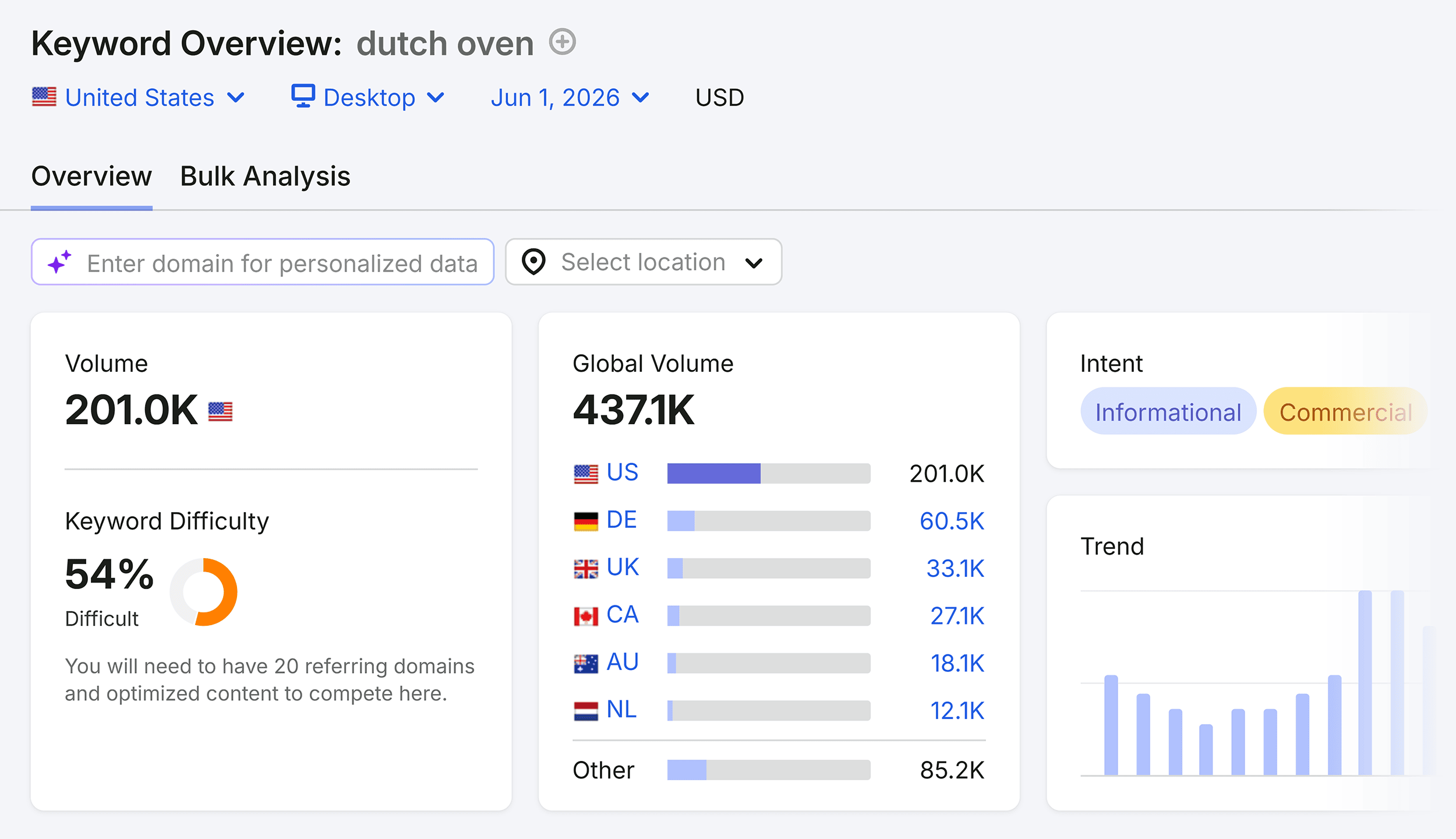
- Head Term Search: Who owns the broad topic?
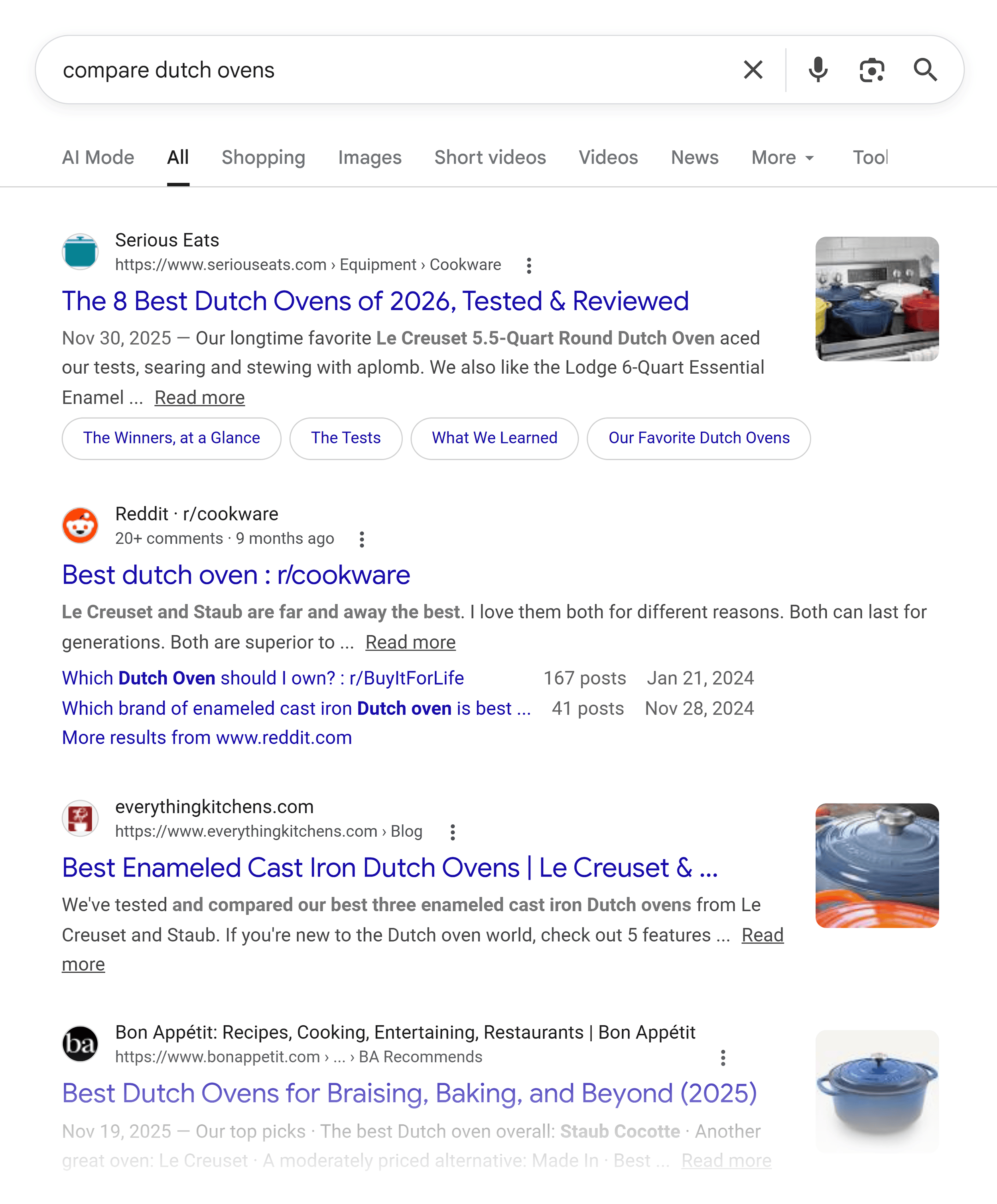
- Best Query Search: Which brands does the AI recommend for "best [product]"?
- Brand Query Search: How do search engines describe your brand when paired with the topic?
- Specific Angle Search: Is there an underserved niche, like "Dutch ovens for gifting," where you can claim a leadership position?
Step 3: Defining Your Unique POV
Your Point of View (POV) is the specific angle you own within a space. It is what makes you distinct to an LLM. To define it, analyze what your competitors are not doing. If the big players are focused on "durability" or "heritage," perhaps your POV should focus on "modern aesthetics" or "beginners’ accessibility."
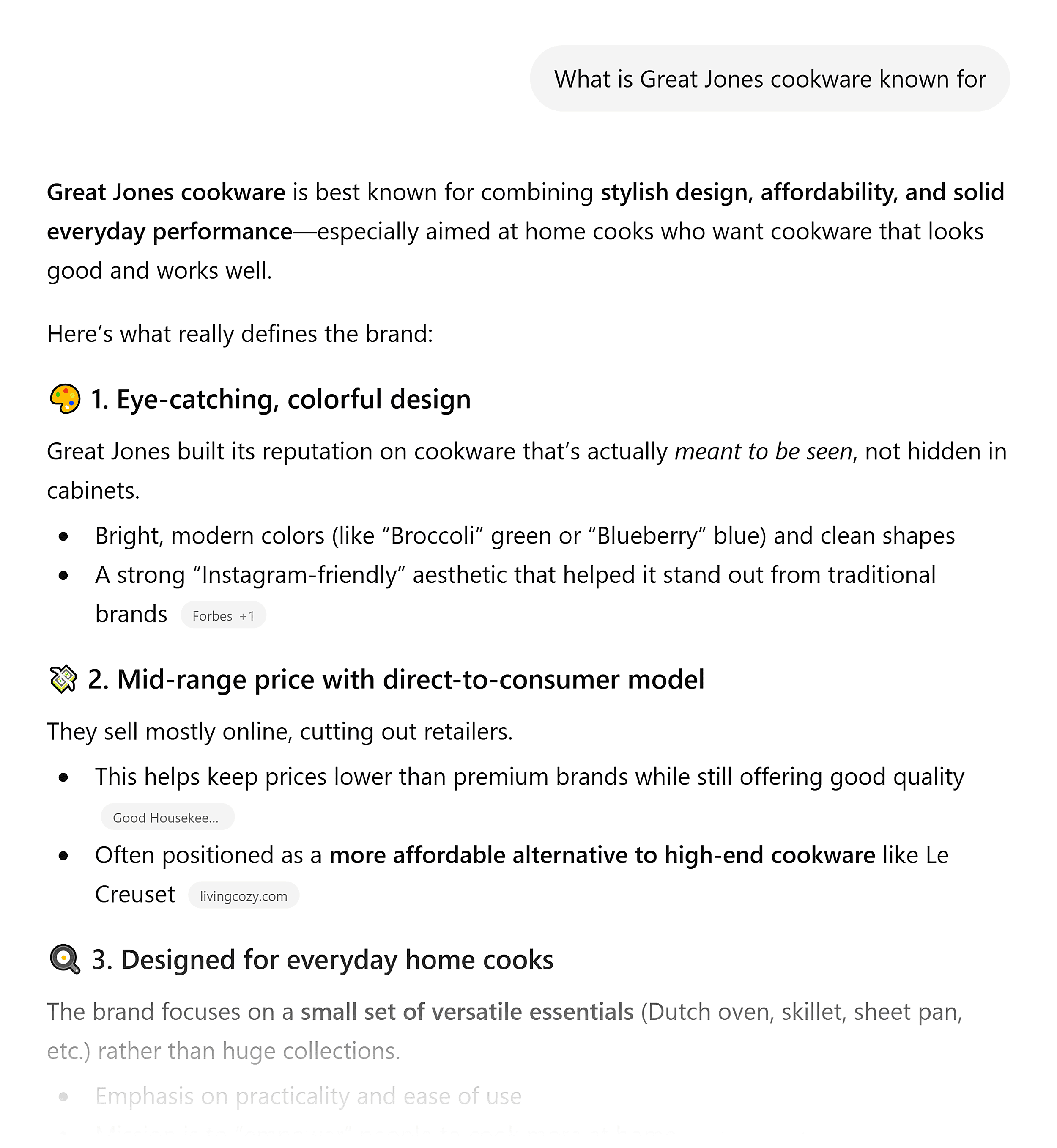
Once defined, your POV must be expressible in a single sentence. If you cannot summarize your authority in one punchy statement, your strategy is likely too diffuse.
Step 4: Mapping the Proof Architecture
A POV without proof is merely a marketing claim. You need a blueprint for evidence that supports your narrative across the entire buyer journey:
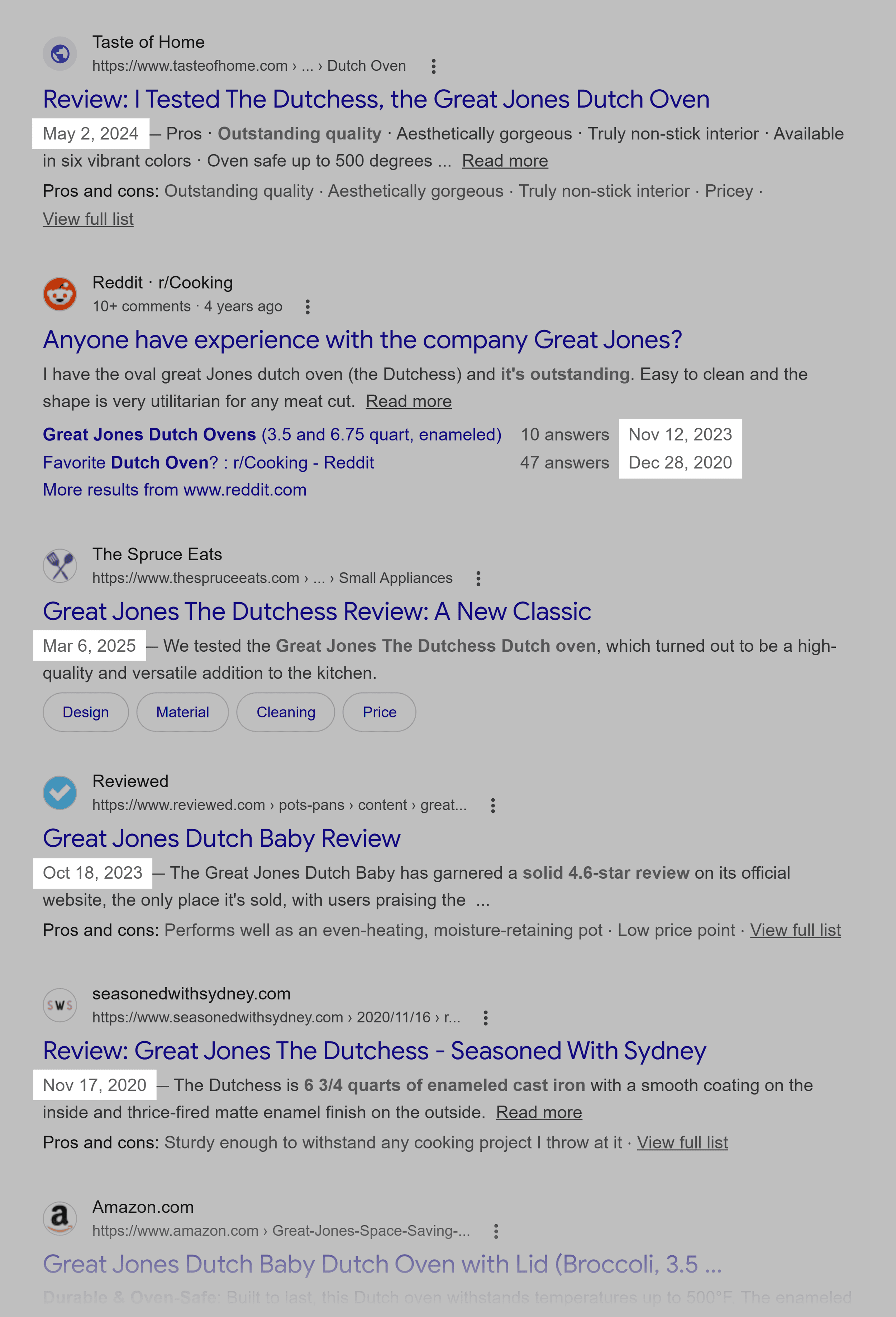
- Awareness Stage: Use industry data and customer statistics.
- Consideration Stage: Leverage expert endorsements and performance certifications.
- Comparison Stage: Utilize independent test results and head-to-head comparisons.
- Decision Stage: Highlight customer numbers, retention rates, and verified purchase data.
For Great Jones, the "gifting" angle is a prime candidate for a proof system. By leveraging their own sales data—such as purchase spikes during holiday windows—they can generate a "State of Gifting" report that serves as primary research, which other sites will want to cite.
Step 5: Building the On-Site Foundation
The hub page is the central authority document for your POV. It should define the topic, explain its significance, and provide a roadmap to supporting pages.
When building these pages, follow the Inverted Pyramid approach: place your most important conclusions at the top. Use semantic HTML headers to ensure that machines can easily parse the relationship between your main hub and the supporting sub-pages. Every internal link should serve a purpose, using descriptive anchor text rather than generic phrases like "click here."
Step 6: Creating an Off-Site Proof System
This is the most critical shift in modern SEO. You must reinforce your POV in places that search engines and LLMs already trust.
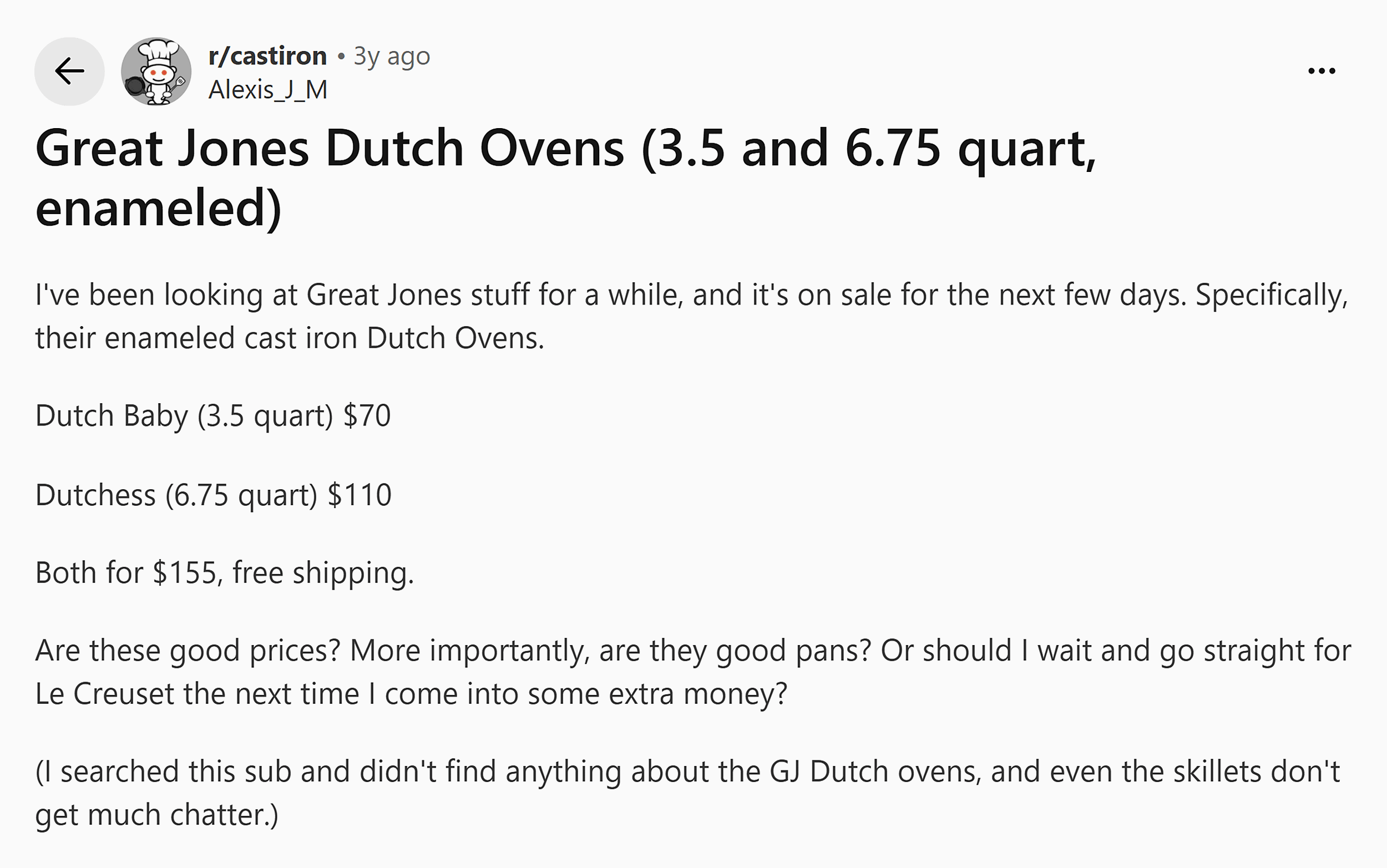
Amanda Milligan, Content and Growth Manager at Semrush, notes that search engines are increasingly looking for external evidence to verify the claims made on your own domain. If your hub page claims you are the "best gift," but no other credible sites corroborate that, the AI will disregard your claim. You must distribute your "signature proof point"—your data, your stories, and your findings—across industry publications, social media, and niche communities like Reddit.
Step 7: Tracking Progress
Building authority is a marathon, not a sprint. Record your status at 30, 60, and 90-day intervals.
- Foundational Layer: Are you showing up for more unprompted queries?
- POV Layer: Are you being described using the language of your POV?
- Proof Layer: Are third-party sources and communities confirming your claims?
The Path Forward
Great Jones is a cautionary tale of a brand with all the right components—great product, great PR—but a missing link in their digital architecture. By systematically implementing the Topical Authority Pyramid, you can transform your brand from a "known name" into the definitive, trusted authority in your niche.
In the age of AI, you no longer wait for the market to decide what you are known for. You build the pattern, provide the proof, and let the algorithms do the rest.