
In the modern digital landscape, the distinction between a User Interface (UI) designer and a User Experience (UX) designer is often blurred, leading to a fundamental misunderstanding of what it means to build a product. While UI designers are the architects of the digital surface—the buttons, typography, and visual hierarchy—UX designers are the architects of the entirety of a user’s interaction with a business. Nowhere is this distinction more critical, or more frequently ignored, than in the complex, long-cycle world of Business-to-Business (B2B) sales.
To improve user experience, one cannot simply polish an interface. As veteran designer Paul Boag argues, true UX design requires a holistic view that transcends the screen, accounting for the messy, human, and often disjointed reality of the B2B customer journey.
The Complexity of the B2B Ecosystem
To understand why B2B requires a more comprehensive approach than Business-to-Consumer (B2C), one must first look at the nature of the transaction. While a B2C interaction might be a quick, transactional purchase, B2B involves long-term relationship building, multiple stakeholders, and significant financial risk.

Key Characteristics of B2B Transactions:
- Extended Sales Cycles: The time from initial contact to contract signing can span months or even years.
- Multiple Stakeholders: B2B decisions often involve committees, where the person using the tool may not be the one signing the check.
- Complex Decision-Making: Procurement processes, technical evaluations, and internal consensus-building all act as hurdles in the journey.
- High-Touch Interactions: Because of the complexity, there is a heavy reliance on direct, person-to-person communication alongside digital touchpoints.
For a UX designer, this creates a challenge: how do you design for a journey that involves a website visit, a LinkedIn exchange, a whitepaper download, a discovery call, a formal pitch, and a legal contract review? If the designer focuses only on the website, they miss 90% of the friction points where the lead is likely to be lost.
Mapping the Journey: A Chronological View
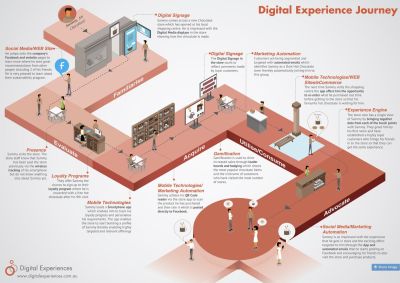
The most effective tool for navigating this complexity is Customer Journey Mapping. Regardless of whether a client requests a website redesign or a conversion optimization project, the first step must be to visualize the user’s trajectory from discovery to conversion.
The Typical B2B Funnel
- Awareness: The prospective client encounters the brand via organic search, social media, or professional networking. At this stage, they are looking for solutions, not a sales pitch.
- Consideration: The client begins to evaluate the business against competitors. They download resources, attend webinars, and compare features.
- Decision: The client moves into the evaluation phase. This involves direct communication with sales teams, demonstrations, and perhaps a pilot program.
- Retention & Advocacy: Once the contract is signed, the experience shifts from "sales" to "onboarding" and "customer success."
By mapping these stages, designers can identify where the digital experience fails to support the user. For instance, if a user lands on a page from a high-intent search but is greeted by a generic "Contact Sales" button, the experience is disconnected. If that same user is then forced to re-identify themselves when a salesperson finally calls, the "digital" and "human" channels are failing to communicate.
Bridging the Gaps: Data and Implementation
The most dangerous moments in a B2B journey are the "gaps"—the spaces between interactions. These gaps occur when a user switches devices, moves from an online portal to an email thread, or is handed off from a marketing team to a sales representative.
The Cost of Fragmentation
Industry data consistently shows that lead attrition is highest at these transition points. When a customer is put on hold while being transferred between departments, or when they have to re-enter data after switching from a mobile browser to a desktop, the perception of professional competence plummets.
Strategic UX design involves "plugging the gaps." This is where integration becomes a design responsibility. Modern CRM systems and sales pipeline software—like Gong.io or Salesforce—are not just administrative tools; they are essential components of the user experience. By ensuring that context is carried over from the web form to the sales call, the designer ensures the user feels "known" by the company at every stage.

The Human Factor: The "Invisible" Interface
A significant oversight in traditional UX design is the failure to account for human-to-human interaction. In B2B, the most impactful "interface" is often a human being.
When a salesperson sends an automated, impersonal email or a customer support representative provides a dismissive, canned response, the UX is broken. Because these interactions are mediated through digital technology, they fall squarely under the umbrella of UX design.
A holistic UX approach should encompass:

- Communication Training: Providing templates or scripts for sales teams that align with the brand’s tone of voice.
- Coaching Protocols: Implementing sales coaching frameworks that ensure human interactions remain empathetic and solution-oriented.
- Consistency Audits: Checking that the language used on the website matches the language used by the sales team in live meetings.
Implications for the Modern Designer
The misconception that a UX designer is merely a "senior UI designer" has significant professional implications. When organizations relegate designers to wireframing and pixel-pushing, they lose the ability to impact the most critical parts of the business funnel.
Strategic Recommendations:
- Demand a Seat at the Table: UX designers must advocate for their involvement in the broader customer journey, not just the product screen.
- Adopt a Service Design Mindset: Start thinking of the organization as a service provider. Every touchpoint—whether it is an email, a phone call, or a login screen—is an opportunity to design the experience.
- Audit the Handoffs: Conduct a rigorous audit of where the user transitions between systems. If the user experiences friction at these points, the UX design is fundamentally incomplete.
- Influence, Don’t Just Build: Use data from user testing and journey mapping to influence how marketing and sales teams communicate with prospects.
Conclusion: Expanding the Scope
The future of B2B success lies in the integration of digital interfaces with human-centric processes. When a designer refuses to be boxed into the role of an interface creator and instead takes responsibility for the end-to-end journey, they become a vital strategic asset.
It is time for the design industry to move beyond the screen. By addressing the gaps, honoring the human element, and mapping the full complexity of the B2B landscape, designers can create experiences that are not only usable but truly transformative. You cannot improve the user experience if you only look at half the journey; the true work begins where the screen ends.