In the fast-paced digital landscape, website owners often treat accessibility—the practice of ensuring digital content is usable by people with disabilities—as a secondary, "nice-to-have" feature or a checkbox exercise for legal compliance. However, a growing body of evidence suggests that this perspective is fundamentally flawed. Accessibility is not merely a moral imperative or a regulatory hurdle; it is a powerful strategic advantage. By failing to optimize for inclusivity, businesses are inadvertently leaving significant revenue, search engine authority, and user engagement on the table.
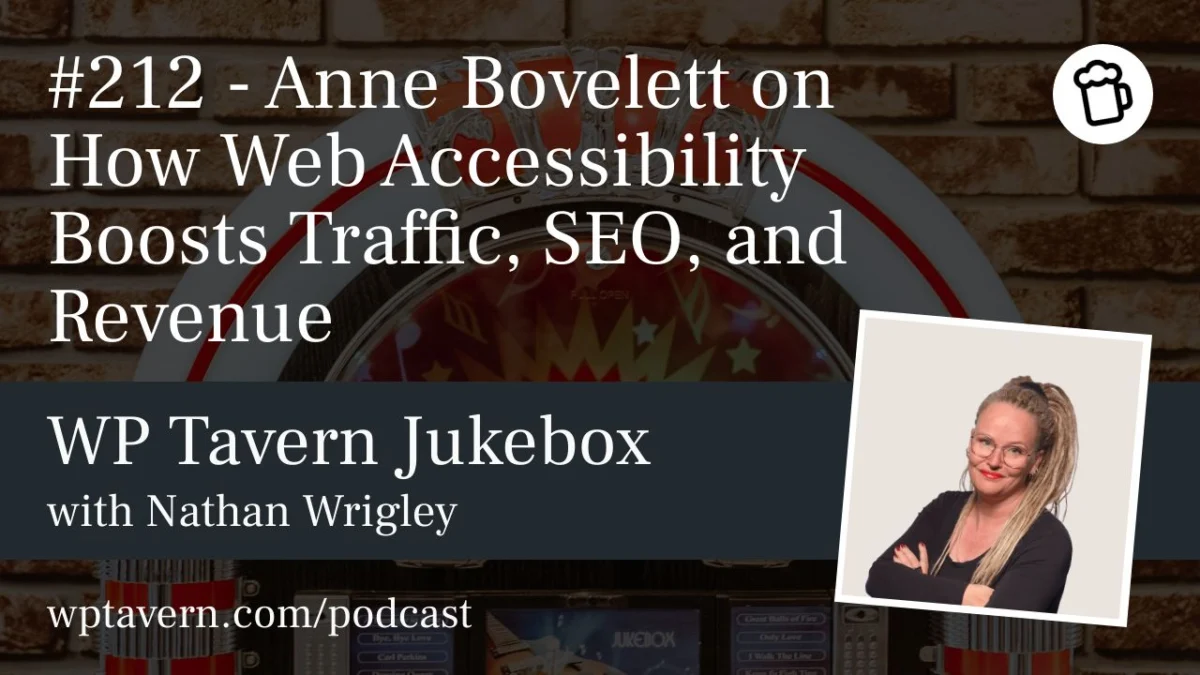
In a recent episode of the WP Tavern Jukebox Podcast, host Nathan Wrigley sat down with Anne Bovelett, a seasoned accessibility strategist, to dismantle the myths surrounding inclusive design. The conversation shifted the focus away from the "compliance-only" narrative and toward the hard, bottom-line benefits of creating a web that works for everyone.
The Evolution of the Web: From Semantic Roots to Over-Engineered Walls
To understand why the internet is so frequently inaccessible, one must look at the historical trajectory of web development. In the early days of the web, developers relied heavily on semantic HTML. While the aesthetic capabilities were limited—often described as "ugly" by modern standards—this reliance on native elements made websites inherently more navigable for assistive technologies like screen readers.
However, as the industry matured, a desire for complex, custom design led to what Bovelett calls verschlimmbesserung—a German term describing the act of making something worse by trying to improve it. Designers and developers began prioritizing visual flair over structural integrity, moving away from semantic elements toward "div" and "span" containers. These elements, when stripped of semantic meaning, act like "useless chameleons" that require excessive JavaScript to function.
"Semantic HTML was not a thing anymore because people were coding with div and span," Bovelett explains. "A div is like tofu without seasoning. You can make it look like something, but you can’t make it behave like something without a ton of JavaScript."
This shift created a "digital wall." While a physical building with stairs is an obvious barrier to someone in a wheelchair, a website built with inaccessible code is a "hidden wall." Because most users browse in the privacy of their own homes, developers and business owners remain blind to the user experience (UX) failures occurring on their own platforms. The problem persists because, unlike a physical storefront where a customer can simply point to a set of stairs and demand a ramp, the digital user often silently exits the site, never to return.
The Economic Imperative: Why Data Trumps Sentiment
The argument for accessibility has historically been rooted in social responsibility. While valid, this approach has often failed to resonate with the C-suite. To bridge this gap, advocates are now turning to data—specifically, the undeniable link between compliance and profitability.
A landmark study conducted by Semrush in collaboration with AccessibilityChecker.org analyzed 10,000 websites to determine the correlation between accessibility and performance metrics. The findings were staggering:
- Traffic Growth: Sites with higher accessibility compliance saw an average 23% increase in organic traffic.
- Keyword Rankings: Compliant websites ranked for 27% more organic keywords than their inaccessible counterparts.
- Domain Authority: There was a 90% boost in authority scores for sites that prioritized accessibility.
These statistics shatter the misconception that accessibility is a technical burden. Instead, they suggest that search engines, in their quest to serve the best possible experience to users, favor websites that are well-structured, semantic, and logically organized. When a site is accessible, it is "cleaner" for search crawlers, which directly translates to better visibility.
The "Click Away" Reality: The Cost of Inaction
The financial cost of neglecting accessibility is perhaps best illustrated by the "Click Away Pound" research. This report highlights that disabled consumers are not just a niche demographic—they represent a massive, underserved market.
In 2019, the amount of revenue lost by businesses due to inaccessible digital storefronts in the UK was estimated at £17 billion. The trend has only accelerated since then. In a competitive market, users will not tolerate friction. Research shows that 75% of disabled customers are willing to pay more for a product from an accessible, easy-to-use website rather than endure the frustration of struggling with a cheaper, inaccessible one.
"You are stealing from your own wallet if you aren’t doing it," Bovelett notes. She is currently developing a calculator that estimates the potential revenue lost by e-commerce businesses based on their annual turnover. For a major supermarket chain, even a 0.94% increase in conversion through accessibility could translate to 350 million Swiss Francs in additional revenue.
Bridging the Gap: Organizational Change
Beyond the code, the primary obstacle to accessibility is often organizational culture. Large companies are frequently siloed, with design, development, and content teams operating in vacuums. When these departments do not communicate, accessibility is treated as a "bug" to be fixed at the end of the project rather than a foundational requirement.
Bovelett proposes a new type of professional role: the Accessibility Strategist who acts as a bridge. This person does not necessarily need to be a master coder, but they must possess the authority to "kick the shins of the C-suite" while simultaneously speaking the language of developers and designers.
"You need to raise a culture where people go to the designer and say, ‘I noticed this, what is your thought behind this?’" Bovelett argues. By fostering communication, companies can prevent accessibility issues from being baked into the product, thereby reducing the high costs of future remediation and, crucially, reducing support requests.
When users can solve their own problems—whether it’s finding a product, checking nutritional info, or managing their own tax forms—the load on support teams drops significantly. One Dutch tax office saw support requests plummet by 30% after a full accessibility redesign, proving that empowerment is not just a moral goal, but a cost-saving mechanism.
The Human-Centric Future of SEO
As AI continues to dominate the tech conversation, the importance of accessibility has only increased. Many AI tools and Large Language Models (LLMs) are trained on existing web data. If that data is poorly structured or locked behind inaccessible JavaScript, the AI cannot "see" it, and by extension, the business will not be recommended by the AI.
"You are leaving your fate in the hands of something that is going to interpret what you are doing," Bovelett warns. "If you are using JavaScript-invested monsters for your website, the AI cannot read it. What do you think that does to your visibility?"
The future of search and AI favor "humanity." This means content that is easy to navigate, links that are clearly described (moving away from generic "click here" text), and a structure that respects the user’s cognitive load.
Conclusion: A Shift in Perspective
The evidence is clear: accessibility is a massive driver of business performance. It is a catalyst for higher organic traffic, improved SEO rankings, and increased customer loyalty. For website owners and digital leaders, the message is not just about avoiding lawsuits—it’s about seizing a multi-billion-dollar opportunity.
By shifting the conversation from "compliance" to "strategy," businesses can stop ignoring a significant portion of their potential customer base. As Bovelett concludes, the businesses that succeed in the coming years will be those that realize the "common sense" approach to business is to make their products and services available to everyone. Accessibility is not an expense; it is an investment in a more profitable, inclusive, and sustainable digital future.