In the high-stakes world of digital marketing, there is a pervasive myth that growth is synonymous with traffic. Businesses spend thousands—sometimes millions—of dollars on paid search, social media advertising, and search engine optimization (SEO) to drive eyeballs to their websites. Yet, for many, those efforts lead to a frustrating reality: a high volume of visitors who arrive, look around, and leave without ever engaging.
If you are pouring money into traffic acquisition while your conversion rate remains stagnant, you are essentially pouring fuel into a car with a leak in the gas tank. This is where conversion marketing—the strategic, data-backed practice of optimizing the visitor experience—becomes the ultimate game-changer for sustainable business growth.
The Core Mandate: What Conversion Marketing Really Means
At its simplest, conversion marketing is the systematic process of turning website visitors into leads or customers. It moves beyond the vanity metrics of "hits" and "page views" to focus exclusively on the percentage of users who take a specific, desired action. Whether that action is signing up for a newsletter, booking a product demo, or completing an e-commerce purchase, the goal remains the same: maximizing the value of the traffic you already have.
Unlike top-of-funnel acquisition, which seeks to widen the net, conversion marketing focuses on the depth of the net. It is the practice of refining every touchpoint—landing pages, headlines, call-to-action (CTA) buttons, and form layouts—to ensure that the user journey is as frictionless as possible.
Why Companies Are Shifting Focus Toward Conversions
The economic climate for digital marketing has shifted. As ad costs rise and organic reach becomes harder to capture, companies are realizing that acquiring new traffic is becoming exponentially more expensive.
The Mathematics of Efficiency
Consider the following scenario: A company drives 20,000 monthly visitors to its site at a 2% conversion rate, resulting in 400 conversions. If that same company chooses to double its ad budget to gain 40,000 visitors, it might see 800 conversions, but its customer acquisition cost (CAC) remains high. Conversely, if the company invests in conversion rate optimization (CRO) to lift its conversion rate from 2% to 4%, it nets 800 conversions without spending a single extra dollar on traffic.
This is the "hidden" profit lever. While traditional brand awareness campaigns can take months to yield measurable ROI, conversion experiments can provide immediate, compounding results.
Defining Success: The Metrics That Matter
To master conversion marketing, one must first master the art of measurement. Without clear benchmarks, optimization becomes nothing more than guesswork.
Setting Macro and Micro Goals
A "conversion" is not a one-size-fits-all metric. It must be defined by your unique business model:
- Macro Conversions: These are your primary objectives, such as a completed checkout or a signed enterprise contract.
- Micro Conversions: These are the small, positive steps a user takes toward a macro goal, such as signing up for a webinar, adding an item to a wishlist, or spending a certain amount of time on a pricing page.
The Industry Benchmark Trap
While it is helpful to look at industry averages—which might range from 1% to 5% depending on the sector—the most important benchmark is your own historical data. A "good" conversion rate is one that is higher today than it was yesterday. By focusing on incremental, iterative growth, marketers can create a trajectory of sustained performance improvement.
The Psychology of the Click: What Actually Drives Action?
People do not convert because a website is "pretty." They convert because a website provides a solution that resonates with their specific pain points.
The Value Proposition
The value proposition is the heartbeat of your digital presence. It is the immediate answer to the user’s subconscious question: "What is in it for me?" A powerful value proposition is not about clever wordplay; it is about absolute clarity. If a visitor cannot understand your offer in under ten seconds, they will leave.
Usability as a Catalyst
Design is not just an aesthetic choice; it is a functional requirement. Modern users are impatient. Research consistently shows that even a one-second delay in page load time can result in a significant drop in conversion rates. Beyond speed, the usability of your forms is critical. Studies have shown that reducing the number of fields in a lead-generation form can increase completion rates by as much as 27%. Every unnecessary field is an opportunity for a potential customer to abandon the process.
Trust Signals: The Modern Social Currency
In an era of skepticism, trust is the currency of conversion. Customers look for "proof" before they commit. This includes:
- Case Studies: Detailed, data-backed accounts of how your product solved a specific problem.
- Social Proof: Reviews, testimonials, and "as seen in" logos.
- Security Badges: Trust seals that assure users their data is handled with integrity.
High-Impact Tactics for Conversion Optimization
Once the psychological foundations are set, the execution relies on specific, high-impact tactics that can be tested and measured.
The Power of Dedicated Landing Pages
Never send traffic from an advertisement to your homepage. Your homepage is a navigational hub; a landing page is a conversion destination. By creating dedicated landing pages for specific campaigns, you can ensure that the messaging on the page perfectly matches the intent of the ad the user clicked. This consistency reduces cognitive friction and increases the likelihood of a conversion.

The Necessity of A/B Testing
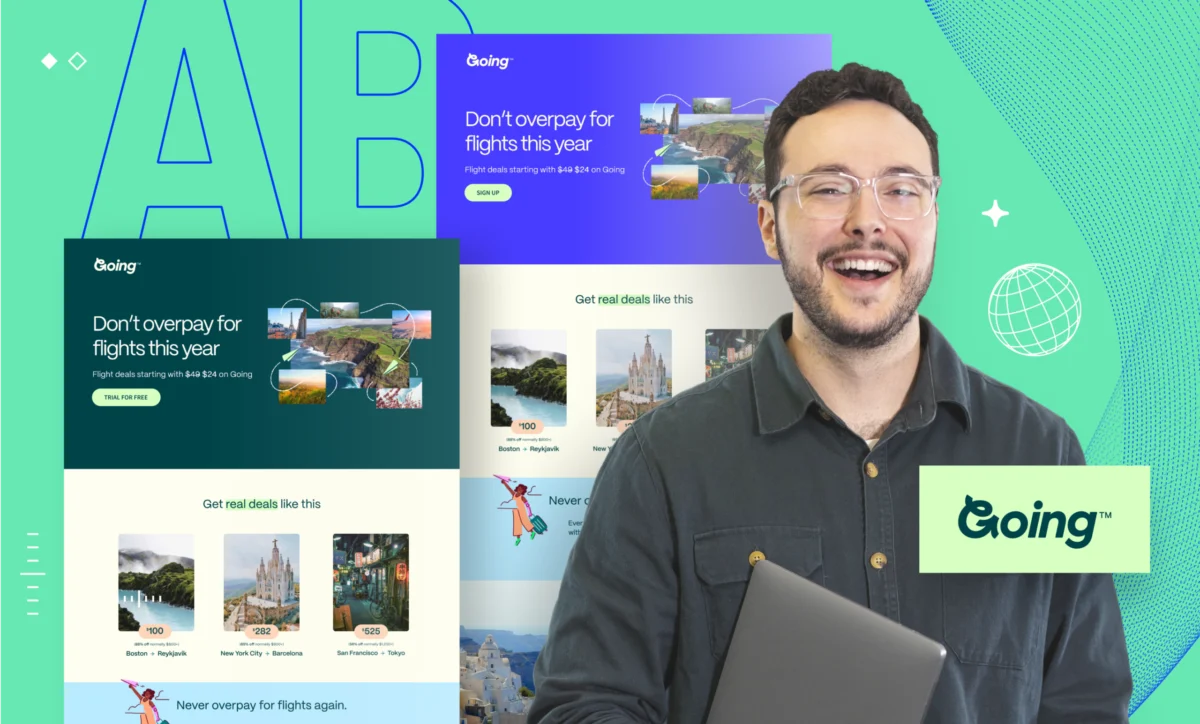
Even the most experienced marketers cannot predict user behavior with 100% accuracy. A/B testing—the process of comparing two versions of a page to see which performs better—removes the bias from decision-making. Whether testing a headline, a button color, or an image, the rule is to change only one variable at a time. This ensures that you can definitively identify what caused the shift in performance.
Utilizing Smart Popups and Sticky Bars
When deployed at the right time, popups can be highly effective. The key is to move away from intrusive, generic popups and toward "smart" interventions. A sticky bar that offers a resource related to the specific content a user is currently reading is an example of an intervention that feels helpful rather than disruptive.
Turning Data Into Action: The Feedback Loop
The most successful companies treat conversion marketing as a living process rather than a static project.
Mining the Frontlines
Your sales and support teams are your greatest untapped data resource. They talk to your customers all day and hear the exact objections that are stopping people from buying. If your support team is constantly answering questions about pricing transparency, that is a clear signal that your pricing page needs a redesign. By creating a feedback loop between customer-facing teams and the marketing department, you can proactively address the friction points in the customer journey.
The Analytical Workflow
- Analyze: Use tools like Google Analytics, Hotjar, or heatmaps to identify where users are dropping off.
- Hypothesize: Create a theory (e.g., "Changing the headline will increase click-throughs because it addresses the user’s pain point more directly").
- Test: Run an A/B test to see if the hypothesis holds true.
- Implement: Roll out the winning variant.
- Repeat: Return to the data to find the next area for improvement.
The Bigger Picture: Integration in the Marketing Ecosystem
Conversion marketing does not exist in a vacuum. It is the anchor that holds your entire digital ecosystem together. Whether your traffic comes from social media, email campaigns, or organic search, every single channel leads to a point of conversion.
When you optimize those points, every dollar spent on every channel becomes more efficient. You aren’t just working harder to get more people into the funnel; you are working smarter to ensure that the people already there actually move through it.
Conclusion: Start Where You Are
The beauty of conversion marketing is that you do not need a massive budget or a team of developers to see results. By focusing on the fundamentals—clear value propositions, simplified user experiences, and rigorous A/B testing—any business, regardless of size, can begin to see immediate improvements in their bottom line.
In a world where traffic is getting more expensive, the companies that succeed will be the ones that stop obsessing over the "how many" and start obsessing over the "what now." By optimizing your conversion points today, you are not just improving a website; you are building a more resilient, efficient, and profitable business for the long term.