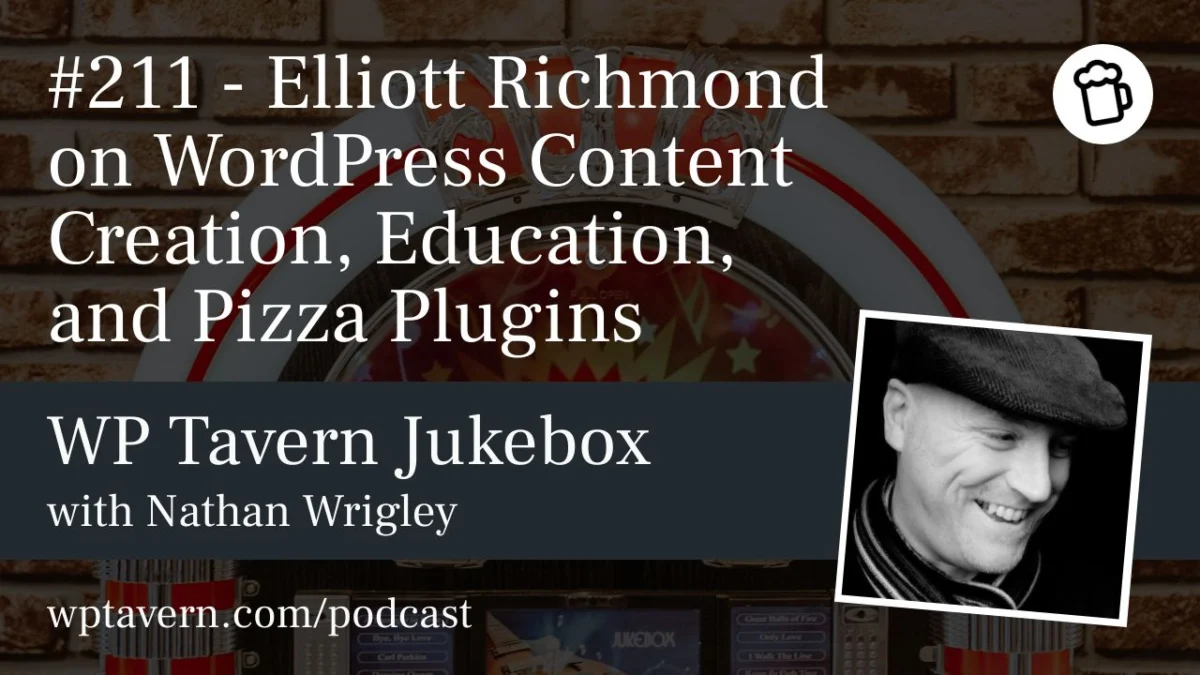
In the sprawling, interconnected ecosystem of WordPress, few individuals embody the platform’s evolution as thoroughly as developer and content creator Elliott Richmond. With a career spanning over two decades—dating back to the pre-fork era of the b2 blogging platform—Richmond has witnessed the transformation of WordPress from a humble script into the backbone of the modern web. However, his latest chapter is perhaps his most unconventional: leveraging WordPress to scale a thriving artisanal pizza business while simultaneously stepping into a new role as a featured content creator for WordPress.com.
The Architect of the Unexpected
For the uninitiated, Richmond is a seasoned developer who cut his teeth in the early 2000s, building sites for bands and creative agencies before transitioning into the WordPress community. His history is deeply rooted in the "wild west" days of web development, where he relied on manual category manipulation and custom code snippets to force WordPress into roles it wasn’t originally designed for, such as product databases and complex portfolios.
This technical background proved invaluable during the global pandemic. When local delivery options in his village dwindled, Richmond and his wife, Rachel, pivoted to a hyperlocal pizza delivery service. What began as a stop-gap measure to support his community quickly morphed into a sophisticated enterprise. Today, that business employs five people and serves as a testing ground for Richmond’s own proprietary WordPress-based solutions.
"It’s all because of WordPress that has allowed me to do this," Richmond notes. By utilizing WooCommerce, Jetpack, and custom-built plugins, he created a bespoke infrastructure that handles everything from time-based ordering slots to geolocation-restricted delivery radiuses.
Chronology: A Journey Through the WordPress Stack
Richmond’s trajectory within the community has been marked by a blend of technical curiosity and community engagement.
- The Early 2000s: Development begins on early CMS platforms, eventually leading to the adoption of b2, the precursor to WordPress.
- 2013: Richmond cements his status as a community contributor by releasing a popular WordPress advent calendar, aggregating code snippets from over 30 developers.
- 2020: The "Pizza Pilot" project launches during the UK lockdown. The business model is built entirely on the WordPress stack, integrating complex business logic into a user-friendly frontend.
- 2025–2026: Richmond formalizes his role as a content creator, securing a partnership with Automattic to produce educational content centered on the capabilities of WordPress.com.
Supporting Data: The Power of the "Glue"
The success of Richmond’s pizza venture is a testament to the versatility of the WordPress ecosystem. The plugin he developed for his business—now moving toward a commercial model—is designed to solve real-world logistical problems.
Key features include:
- Time-Slot Management: Allowing businesses to control order volume by restricting intake to specific windows.
- Radius-Based Geofencing: Using postcode data to limit deliveries to a sustainable geographic range, while still allowing for collection.
- The "Licensee" Model: Richmond is currently packaging his entire business model—including the custom plugin and marketing workflows—to be sold as a turnkey solution for other entrepreneurs.
This "dogfooding" approach—where the developer uses their own software to run a high-stakes, real-world business—has provided Richmond with insights that few purely theoretical developers possess. His ability to bridge the gap between back-end technical complexity and front-end user simplicity is what has caught the attention of Automattic’s leadership team.
Official Collaboration: The New Content Era
Richmond’s transition into an official WordPress.com partner came about through a series of community-led introductions. After connecting with Michelle Frechette, Richmond was introduced to Stacey Carlson, Automattic’s Affiliate and Influencer Director. The goal: to elevate the quality and accessibility of educational content surrounding the WordPress.com ecosystem.
This partnership represents a strategic shift in how Automattic approaches community engagement. Rather than producing sterile, corporate-led tutorials, the company is betting on the authentic, lived experience of community members like Richmond.
"There’s no guardrails in that sense," Richmond explains regarding his creative freedom. "It feels very fluid and flexible. The products being talked about are products that I use every day, so it has synergy."
His content strategy focuses on "demystifying" complex topics. Whether it is explaining the nuances of the Block Editor, deep-diving into Xdebug for local development, or simplifying the integration of AI-driven tools, Richmond aims to lower the barrier to entry for users of all skill levels.
Implications for the WordPress Ecosystem
The implications of this collaboration are twofold: they reflect a maturation of the WordPress "influencer" space and a recognition that video is now the primary medium for technical education.
The Rise of Video as the "New Manual"
For many users, the days of scouring text-based forums for solutions are fading. Richmond observes that when users have a problem—be it coding or cooking—they head to YouTube. By investing in creators who can synthesize technical documentation into digestible, high-quality video content, WordPress is effectively updating its "instruction manual" for a generation that prioritizes visual and interactive learning.
The Feedback Loop
Perhaps the most significant implication is the focus on the "feedback loop." Richmond emphasizes that the comments section of his videos acts as a diagnostic tool. When he presents a new feature or workflow, the audience’s reaction—whether positive or negative—is fed back into his development process. This creates a circular economy of information where the creator, the platform, and the users are constantly iterating on one another’s ideas.
A Model for Future Creators
Richmond’s "low-tech" production philosophy serves as a blueprint for aspiring creators. He advocates for focusing on the substance of the message rather than the glamour of the production. His desk setup, famously featuring a DIY light diffuser made from a cat-food box, stands in stark contrast to the high-budget, over-produced aesthetics common in modern digital media.
"You don’t need much kit," he insists. "You need a script, a structure, and the willingness to learn something new every day."
Conclusion: The Future of WordPress Content
As we move further into 2026, the partnership between WordPress.com and creators like Elliott Richmond signals a move toward a more community-centric, authentic brand identity. Richmond remains a developer at heart—someone who is happiest when he is "fingering around a fretboard" or debugging a complex plugin—but he has embraced his role as an educator with equal fervor.
By treating his content as a living project, Richmond is helping to ensure that as WordPress continues to evolve—moving through versions, adapting to AI, and integrating new technologies—the community is not left behind. For the WordPress user, the takeaway is clear: the platform is no longer just a way to build a website; it is a way to build a business, a brand, and a career. And with creators like Richmond leading the way, the path to learning how to do it has never been clearer.
For those interested in following Richmond’s work, his technical content can be found on his YouTube channel, elliottrichmondwp, while his personal and professional musings are documented at elliottrichmond.co.uk.