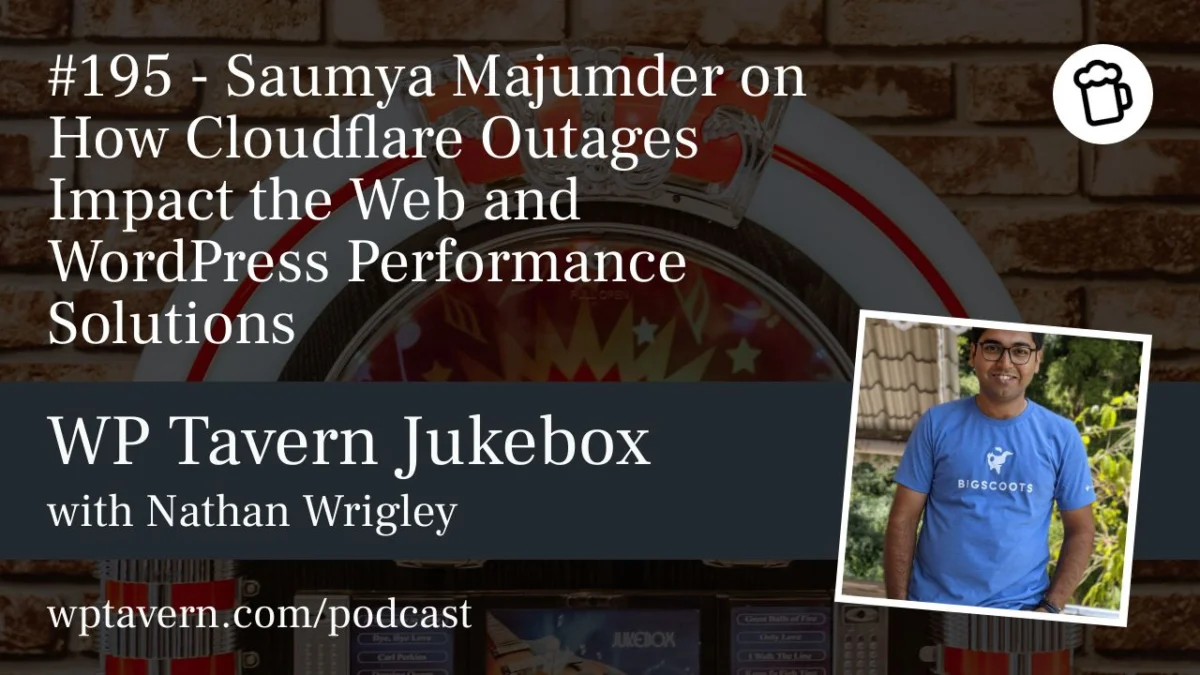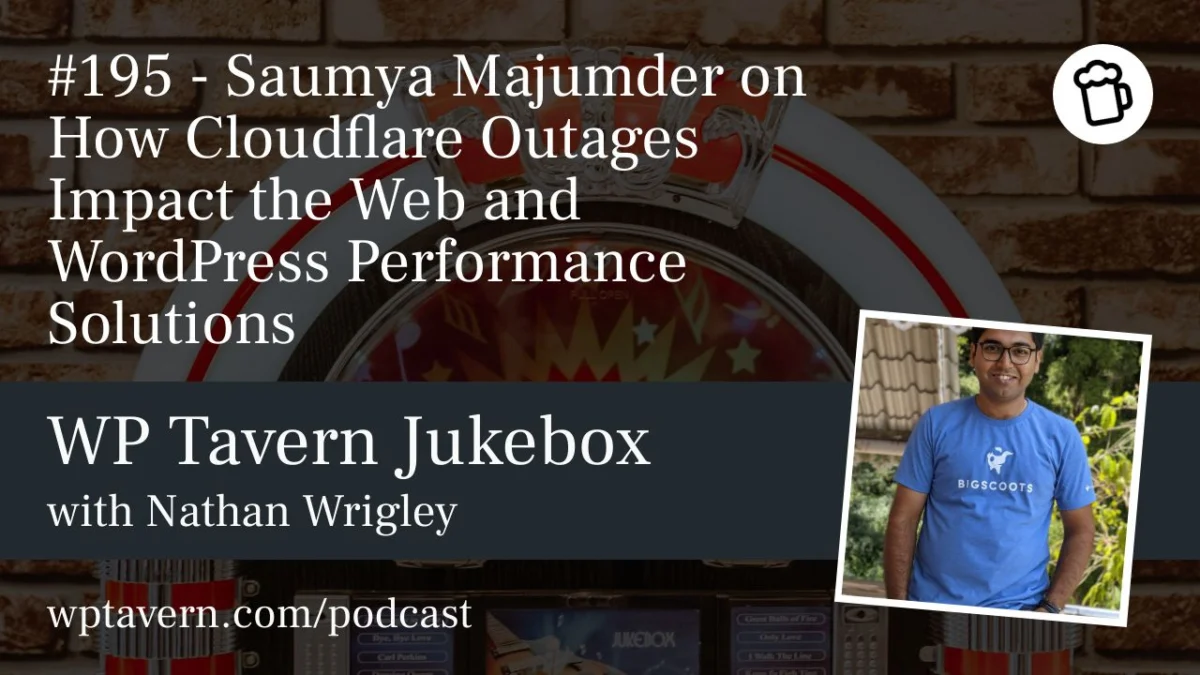
The modern internet is a complex, fragile web of interconnected systems that we often take for granted. When we type a URL into our browser, we expect near-instant gratification—a seamless delivery of content, images, and interactive elements. However, the recent global disruption of Cloudflare’s infrastructure served as a stark reminder of how deeply integrated these services are into the fabric of the web.
To understand the architecture of the web, the reality of high-scale infrastructure, and how specialized hosting providers are redefining performance, we sat down with Saumya Majumder, Lead Software Engineer at BigScoots and a specialist in advanced, Cloudflare-powered architectures.
The Anatomy of a Global Outage: When the "Lego Tower" Shakes
In the world of high-performance engineering, there is a recurring analogy: the internet is like a massive tower built of Lego bricks. Most of the time, it stands firm, but occasionally, the failure of one critical "base brick"—often a foundational provider like Cloudflare, AWS, or GCP—can cause the entire structure to tremble.
When the recent Cloudflare outage rippled across the globe, it wasn’t just a minor glitch. For a significant window of time, access to major platforms, news organizations, and critical business tools vanished. According to Majumder, the incident highlights a fundamental truth: "There is no such thing in the world of the internet that just works. Everything is supposed to break at some point."
The "Code Red" Scenario
Behind the scenes, a major provider outage is a "code red" scenario. Contrary to popular belief, these events are rarely the result of a single "bad push." Instead, they are usually the result of complex, nested dependencies. In this instance, a configuration file that unexpectedly doubled in size caused a ripple effect that mimicked a Distributed Denial of Service (DDoS) attack.
Because Cloudflare’s systems are designed to aggressively defend against malicious traffic, the security layer began "defending" the network against itself. This triggered a cascading failure where engineers were initially forced to hunt for a phantom malicious actor, adding precious hours to the mitigation process. As Majumder explains, "You have to understand that all of these companies are dealing with enterprise customers to whom they have promised 99.99% SLA. It is not just the downtime and bad reputation; it is literal money being bled out of the company."
Engineering Resilience: The Role of Edge Computing
Despite the occasional collapse, the consensus among infrastructure experts is that the reliance on platforms like Cloudflare is a net positive. The sheer scale of their global PoPs (Points of Presence) allows for localized content delivery that would be impossible for smaller providers to replicate.
Majumder emphasizes that transparency is key to building trust. Cloudflare’s practice of publishing detailed post-mortems—taking full ownership of failures rather than engaging in a "blame game"—is a hallmark of professional infrastructure management. "They learn from their mistakes to make sure that particular mistake never happens again," Majumder notes.
For hosting providers like BigScoots, the goal is not to avoid using such large-scale providers, but to build fail-safes around them. During the recent outage, BigScoots leveraged its API-driven architecture to dynamically toggle proxying off for its clients, effectively bypassing the bottleneck and keeping sites online while the rest of the web struggled.
Advanced Caching: Moving Beyond the Server
For the average WordPress user, "caching" is often limited to a simple plugin that stores HTML files on a local server. However, at the enterprise level, the strategy shifts toward "CDN-level page caching."
The Evolution of Caching
Historically, a request from a user in Australia to a server in the United States faced significant latency. The request had to travel across the ocean, hit the server, wait for the PHP to process, and then travel all the way back.
Majumder and his colleagues pioneered a leap forward in this space by moving the HTML generation to the edge. By utilizing Cloudflare Enterprise, the content is cached globally. If a user in Sydney requests a page, the response is delivered from a local Sydney data center in under 100ms.
"The main leapfrog forward is if we can move the page—literally serving the page HTML from the CDN itself," Majumder explains. "If it’s cached, it’s coming from your neighborhood."
Tiered Caching Architectures
The innovation doesn’t stop at simple edge storage. Modern enterprise architectures now utilize "tiered caching." In this setup, if a local PoP doesn’t have the requested data, it doesn’t immediately burden the origin server. Instead, it queries a "middle tier" or "upper tier" within Cloudflare’s private intranet. This internal, high-speed network bypasses the public internet entirely, ensuring that cache hit ratios remain exceptionally high and origin servers are protected from traffic spikes.
The "Direct Connect" Paradigm
Perhaps the most exclusive piece of modern infrastructure is the physical integration between hosting providers and the CDN backbone. Most hosting companies lease hardware from cloud providers, meaning they have no physical control over the network.
BigScoots distinguishes itself by running its own data centers. This allows for a "Cloudflare Network Interconnect" (CNI)—a literal physical fiber-optic connection between the hosting origin and the Cloudflare edge. "Anytime Cloudflare has to fetch something from our origin, instead of sending that request via the open internet, it sends via that private channel," says Majumder. This removes the risk of public internet congestion and ensures that the "handshake" between the cache and the origin is as fast as physics allows.
Implications for WordPress Agencies
For agencies managing hundreds of client websites, the challenge is balancing performance with complexity. The modern WordPress ecosystem requires more than just a fast server; it requires:
- Intelligent Purging: The system must recognize that when a post is updated, it shouldn’t just clear that single page, but also the relevant archive, taxonomy, and author pages.
- Security Hardening: Implementing sophisticated, toggle-based controls to block bad bots, challenge specific geographic traffic, and protect login pages from brute force attacks.
- API Accessibility: Advanced users now expect to manage their infrastructure via REST APIs, allowing for programmatic cache clearing during complex deployment cycles.
Looking Ahead: The Future of Web Performance
The internet continues to grow in complexity, and the tools we use to manage it must evolve in kind. While the recent Cloudflare outage was a painful reminder of our digital fragility, it also highlighted the importance of robust, multi-layered, and transparent infrastructure.
As we move toward 2026, the focus for top-tier engineers like Majumder remains the same: reducing the distance between the user and the data. Whether it is through proprietary caching plugins, direct fiber interconnections, or advanced edge-computing logic, the goal is a web that is not only fast but resilient enough to withstand the inevitable hiccups of global scale.
For the WordPress professional, the takeaway is clear: infrastructure is no longer a "set it and forget it" utility. It is an active, evolving component of the user experience. By leveraging enterprise-grade tools and demanding higher levels of visibility and control from hosting providers, agencies can ensure that when the internet does have one of its "fun" days, their clients remain unaffected.
For more insights into WordPress performance, infrastructure, and the latest in hosting technology, stay tuned to the WP Tavern Jukebox podcast.