The ecommerce landscape is undergoing a tectonic shift. As we navigate the midpoint of the year, the focus for merchants has pivoted from simple digital transformation to the adoption of "agentic" commerce—a new paradigm where artificial intelligence doesn’t just assist with tasks but actively manages complex workflows, customer interactions, and logistical decision-making.
This week’s industry update highlights a surge in AI-driven tools, significant logistical consolidation, and the emergence of new platforms designed to help brands remain visible in an era of AI-powered product discovery.
Main Facts: The New Era of Merchant Tools
The current market environment is characterized by three distinct trends: the maturation of AI as an operational layer, the consolidation of global logistics infrastructure, and the expansion of conversational commerce.
- Operational AI: Platforms like Text, AllyHub, and Knowband are moving beyond basic chatbots. They are now providing "AI operating layers" that unify fragmented dashboards, automate repetitive data tasks, and manage social proof in real-time.
- Logistics Consolidation: The $1.4 billion acquisition of FedEx Supply Chain by the CMA CGM Group signals a major move toward end-to-end global supply chain control, aiming to integrate ocean freight with North American warehousing and distribution.
- AI Discovery & Visibility: As consumers increasingly turn to ChatGPT, Claude, and specialized voice assistants for shopping, new players like Lantern and Alli AI are helping merchants optimize their data for AI crawlers, ensuring that brands appear in the "answer" rather than just the search results.
Chronology: Key Industry Developments
- Monday: Pie announced a $19.5 million Series A round to bring sophisticated AI growth tools to Main Street retailers, launching its "Front Desk" product to handle 24/7 customer inquiries and bookings.
- Tuesday: Moburst expanded its influence in the Amazon ecosystem by acquiring Hyperzon, creating a specialized unit to manage full-funnel Amazon marketing, from listing creation to performance media buying.
- Wednesday: Hostinger disrupted the barrier-to-entry for small sellers by launching a platform that converts simple product photos into functional checkout links, effectively bypassing the need for a full website build.
- Thursday: Zen.com rolled out Mastercard Click to Pay across its 33 markets, emphasizing the industry’s push toward frictionless, tokenized one-click checkout experiences.
- Friday: NielsenIQ finalized the acquisition of Flywheel’s China and Southeast Asia data business, bolstering its digital shelf and social commerce intelligence capabilities in one of the world’s fastest-growing retail markets.
Supporting Data and Market Intelligence
The rapid adoption of these technologies is not merely a reaction to trends; it is driven by hard data regarding customer behavior and operational efficiency.
AI-Powered Efficiency Gains
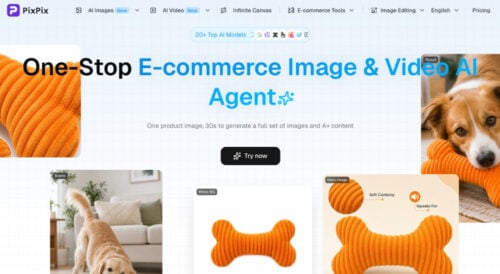
The launch of PixPix’s integration with Google’s Nano Banana 2 Lite model reflects a broader shift toward "generative efficiency." For ecommerce teams, this means the turnaround time for lifestyle scenes, product photography, and social media ad concepts has dropped from hours to seconds.
Logistics and Market Reach
The acquisition of FedEx Supply Chain by the CMA CGM Group is set to nearly triple the operational footprint of CEVA Logistics. The combined entity will manage approximately 150 warehouses. This scale is critical for enterprise retailers who are struggling with the "last mile" cost inflation that has plagued the industry for the past three years.

The Rise of Agentic Commerce
The announcement from WPP regarding its Enterprise Solutions highlights a growing demand for "agentic" commerce—where AI agents are tasked with end-to-end execution of marketing campaigns across diverse platforms like Adobe, AWS, and Salesforce. This indicates that businesses are moving away from siloed marketing tools toward unified, intelligence-driven ecosystems.
Official Responses and Strategic Vision
Leadership at these firms has been vocal about the "why" behind their recent product launches and acquisitions.
On AI-Driven Growth:
The team at Pie emphasized that the biggest hurdle for local businesses is not a lack of product, but a lack of time. "By automating the ‘front desk’ experience—calls, bookings, and customer FAQs—we are allowing small business owners to focus on their craft rather than their inbox," a spokesperson stated.
On Logistics Integration:
Regarding the CMA CGM/FedEx deal, the leadership at CMA CGM noted that the integration is about resilience. By aligning air and ocean freight with land-based warehousing, they aim to offer a "seamless flow of goods" that protects merchants from the volatility of global shipping lanes.
On AI Visibility:
Lantern’s debut addresses a growing concern among CMOs: The Black Box Problem. If an AI shopping assistant recommends a product, why that product? "Our platform provides the necessary bridge between a brand’s catalog and the logic used by AI shopping portals," said the CEO of Lantern. "We are effectively giving merchants a seat at the table in the AI discovery process."
Implications for the Future of Ecommerce
The implications of this week’s developments are profound for merchants of all sizes.

1. The Death of the Static Website?
With tools like Hostinger’s photo-to-checkout links, the traditional "website" is being replaced by the "transactional object." Merchants who focus on creating high-quality, shareable product assets may soon find that their "storefront" is wherever the customer happens to be, rather than a destination URL.
2. Search Engine Optimization vs. AI Optimization
The launch of the Alli AI WordPress plugin is a harbinger of the "Post-SEO" world. As search behaviors shift from Google queries to AI-generated answers via Perplexity, Claude, and ChatGPT, merchants must prioritize structured data and pre-rendered HTML. If an AI cannot easily "read" a product page, that product effectively ceases to exist for a growing segment of tech-forward consumers.
3. Consolidation of the Tech Stack
We are seeing a move toward "Platform-as-a-Service" (PaaS) bundles. Knowband’s suite for PrestaShop and Lightspeed’s integration with Klaviyo show that merchants are tired of "app fatigue." They want a single, cohesive dashboard where marketing, inventory, and customer support data flow without manual input.
4. The Human-in-the-Loop Requirement
Despite the surge in automation, the human element remains vital. The acquisition of Hyperzon by Moburst and the expansion of WPP’s enterprise services prove that while AI can generate content and analyze data, the strategy—the how and why of brand growth—still requires deep human expertise.
Conclusion
As we look toward the remainder of the year, the winners in the ecommerce space will be those who successfully transition from being "manual operators" to "AI orchestrators." The tools released this week provide the infrastructure for this transition, enabling faster product discovery, more efficient logistics, and more meaningful customer relationships. Whether you are a local Main Street shop using Pie or an enterprise retailer integrating WPP’s agentic tools, the message is clear: the future of commerce is fast, intelligent, and increasingly invisible to the end user.
If you have an ecommerce product release or news update, please email our editorial desk at [email protected].