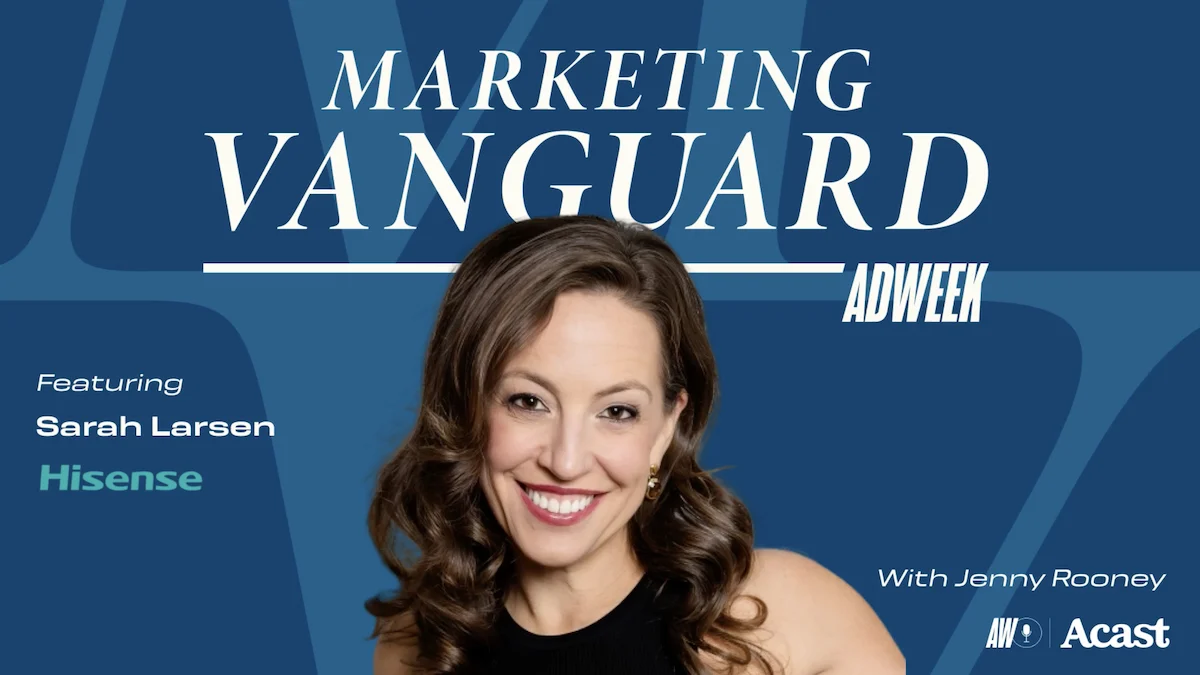
The consumer electronics industry has long been trapped in a “feature-first” feedback loop. For decades, marketing departments have operated under the assumption that if they shout loud enough about pixel counts, refresh rates, and processor speeds, the consumer will eventually succumb. Sarah Larsen, the first-ever overarching Chief Marketing Officer at Hisense USA, believes this approach is not just outdated—it is a fundamental misreading of the modern shopper.
In a recent episode of Marketing Vanguard with Jenny Rooney, Larsen detailed her mission to dismantle the "tech-speak" status quo. By merging product management, retail strategy, and brand communications under one unified umbrella, she is shifting the narrative from what a device is to how a device lives within the user’s home.
The Modern CMO: More Than Just Brand Awareness
When Sarah Larsen stepped into the newly created role of CMO at Hisense USA, she wasn’t just inheriting a department; she was tasked with building an engine. Her background, spanning three decades across industry giants like LG, Samsung, and Motorola, gave her a front-row seat to the evolution of the category. However, at Hisense, she saw an opportunity to move beyond the traditional siloes that often plague large electronics firms.
"The role of the CMO is no longer about managing a brand campaign," Larsen noted. "It is about connecting every single gear in the go-to-market engine to tangible business outcomes."
Her mandate is clear: Marketing must drive "sell-out." In this context, sell-out refers to the actual movement of products from retail shelves into the hands of the end consumer, rather than simply measuring wholesale shipments or "softer" metrics like brand sentiment or ad impressions. For Larsen, if a marketing initiative cannot be traced back to a purchase decision, it is an incomplete strategy.
The Chronology of a Shift: From Features to Feelings
The evolution of Larsen’s strategy at Hisense can be broken down into three core phases:
- Structural Integration: The first phase involved breaking down the walls between product marketing and retail strategy. By aligning these departments, Larsen ensured that the product’s narrative was not being crafted in a vacuum, but was informed by real-time retail insights and consumer behavior data.
- The Humanization of Technology: Phase two involved the total abandonment of jargon-heavy marketing. Larsen identified that consumers were becoming paralyzed by the technical complexity of modern appliances and televisions. Her strategy shifted to "utility-first" messaging: How does this product make life easier, more convenient, or more enjoyable?
- Cultural Contextualization: The current phase centers on global sponsorship activation. Instead of treating high-profile sponsorships like the FIFA World Cup as mere "logo soup," Larsen is leveraging them to tap into human behaviors—specifically, the act of hosting and gathering—to integrate Hisense products into the natural rhythms of daily life.
The Data Behind the Decision: Why Tech-Speak Fails
The electronics market is notoriously crowded. In a world where every brand claims to have the "brightest display" or the "fastest interface," the noise level is deafening. Data suggests that when consumers are overwhelmed with technical jargon, they tend to defer to price as the primary differentiator, leading to a "race to the bottom" in terms of brand loyalty.
Larsen’s philosophy is backed by a shift in consumer behavior. Modern buyers, particularly Gen Z and Millennials, are increasingly looking for brands that align with their lifestyle and values. A television is no longer just a hardware box; it is the centerpiece of an entertainment ecosystem. By focusing on the "why" rather than the "what," Hisense aims to increase the perceived value of their products, moving them away from being treated as commodities and toward being viewed as lifestyle essentials.
Global Sponsorships: Moving Beyond the "Logo Soup"
One of the most significant hurdles for any global brand is the effective utilization of massive sponsorship deals. Often, these partnerships devolve into "logo soup"—where the brand’s name appears on every banner and digital board, but the consumer feels no emotional connection to the brand itself.
Larsen is taking a surgical approach to the FIFA World Cup 2026. Rather than focusing on the "superfan" who already knows the technical specs of every device, she is leaning into the cultural phenomenon of "hosting." By positioning Hisense products as the enablers of social connection—the hub around which friends and family gather for the big game—she creates a narrative that is far more resonant than a spec-heavy advertisement. This turns the sponsorship into a bridge between the product and the consumer’s actual life experience.
Future-Proofing: The Danger of Demographic Myopia
Perhaps the most critical warning Larsen offers to her peers is the danger of "demographic myopia." Many brands make the mistake of focusing exclusively on their current, most profitable customer. While this is sound for short-term revenue, it is a recipe for long-term irrelevance.
"Your target demographic will not stay your target demographic forever," Larsen warns.
Her strategy involves "dual targeting." This is the practice of serving the current buyer—who may be looking for specific reliability and price points—while simultaneously building brand affinity with the next generation of consumers. By the time a younger cohort enters the market as a primary buyer, they should already feel that the brand is a part of their cultural landscape. Waiting until a customer is ready to buy to start building a relationship is, according to Larsen, "already too late."
Implications for the Industry
The shift in strategy at Hisense has profound implications for the broader consumer electronics sector. It suggests a move away from the traditional, top-down approach of "educating" the consumer and toward a more collaborative, insight-driven model.
Key Takeaways for Marketing Leaders:
- Unified Leadership: The modern CMO must have a seat at the table for product management and retail strategy. Marketing in isolation is ineffective.
- Metrics that Matter: Move away from vanity metrics. If marketing cannot directly link to sell-out, the strategy needs to be re-evaluated.
- Cultural Relevance: Sponsorships should not be about visibility; they should be about utility and connection. How does the sponsorship help the brand solve a consumer problem or enhance a consumer moment?
- Long-Term Vision: Brand building is a generational game. If you aren’t building affinity with the next generation today, you are essentially planning for your brand’s obsolescence.
A New Era of Electronics Marketing
Sarah Larsen’s tenure at Hisense USA represents a significant pivot in how consumer electronics brands interact with the public. By prioritizing the human experience over the technical specification, she is not only driving immediate business results but is also laying the groundwork for a more sustainable, customer-centric brand identity.
As the industry continues to struggle with commoditization and intense competition, the "Hisense model" offers a compelling blueprint. It proves that in a world of increasingly advanced technology, the most sophisticated thing a brand can do is keep it simple, focus on the person, and ensure that every action taken in the name of "marketing" serves the ultimate goal of driving value for the consumer.
Whether it is through strategic retail partnerships, smarter sponsorship activations, or a more human-centered communication strategy, the goal remains the same: to move the product by first moving the person. In the high-stakes world of consumer electronics, this is not just good marketing—it is the only way to survive the future.