As the sweltering heat of mid-summer settles over the United States, the retail calendar tells a different story. For millions of American families, the "dog days of summer" are no longer synonymous with leisure; they are a tactical countdown to the academic year. However, the 2026 back-to-school season is distinguished by a tectonic shift in consumer behavior: the integration of artificial intelligence into the household budgeting and procurement process.
Driven by persistent inflationary pressures and a rapidly maturing technological landscape, shoppers are pivoting away from traditional browsing toward AI-assisted strategic planning. According to recent data from Coresight Research, the synergy between economic necessity and generative technology is defining the current retail landscape, marking a pivotal moment in how American families prepare for the classroom.
Main Facts: The New Shopping Paradigm
The fundamental reality of the 2026 back-to-school season is one of early urgency. Nearly 62% of shoppers surveyed by Coresight Research confirmed they intend to complete their back-to-school shopping before the month of August begins. This represents a significant deviation from historical norms, where the final two weeks of August traditionally served as the primary window for school supply procurement.
The catalyst for this shift is twofold. First, the ongoing burden of inflation has forced a more disciplined approach to family finances. Second, the democratization of AI tools—ranging from sophisticated price-comparison bots to generative shopping assistants—has empowered parents to hunt for early-bird deals with unprecedented efficiency.
Perhaps the most striking metric to emerge this season is the adoption rate of artificial intelligence. More than half (56.3%) of all surveyed respondents indicated they are currently utilizing or actively planning to utilize AI tools to navigate their back-to-school shopping lists. While Coresight Research did not track AI adoption for this specific segment in 2025, the sheer volume of this year’s figure serves as a clear indicator that AI has transitioned from a Silicon Valley novelty to a practical household utility.
Chronology: The Evolution of the Back-to-School Season
To understand the current state of the market, one must look at the timeline of the "Back-to-School" phenomenon over the last decade.
The Traditional Era (2015–2020)
For years, the back-to-school cycle was defined by physical retail migration. Families waited for "tax-free weekends" in late August, and shopping was an exercise in physical endurance—visiting big-box retailers with printed lists in hand. Sales were driven by circulars, store-wide coupons, and impulsive in-aisle decisions.
The Digital Acceleration (2021–2024)
The pandemic accelerated the migration to e-commerce, but it also introduced the "supply chain anxiety" factor. Parents began shopping earlier to ensure that essential items—laptops, tablets, and specific stationery—were in stock. During this period, shopping became a digital endeavor, with families using browser extensions and price-tracking websites to monitor inventory and costs.
The AI-Integrated Present (2025–2026)
We are now in the third phase: the era of the "Smart Consumer." By 2026, AI has become the invisible concierge. Parents are using LLM-based assistants to synthesize school supply lists, compare prices across dozens of retailers simultaneously, and predict the best times to buy specific goods. The timeline has collapsed; the shopping season now begins as soon as the final bell rings in June, fueled by algorithms that identify when retailers are attempting to clear inventory.
Supporting Data: The Economic Drivers
The numbers provided by Coresight Research offer a granular look at the motivations behind this year’s shopping trends.
Inflationary Pressure
While headline inflation has fluctuated, the "hidden" inflation of school supplies—paper, electronics, and apparel—remains a significant line item for households. The study highlights that 62% of shoppers are prioritizing early purchasing to mitigate the risk of price hikes as the season progresses. This behavior is a defensive response to the volatility of supply chain costs that often peak in late August.
AI Utility Breakdown
The 56.3% of shoppers using AI are utilizing these tools in four primary ways:
- Budget Optimization: AI models scan historical price data to advise users whether to buy a product today or wait for a projected discount.
- List Consolidation: Generative AI tools are being used to upload various teacher-provided lists and map them to the most cost-effective retailers.
- Product Research: AI agents summarize product reviews, helping parents bypass low-quality items that don’t meet the durability requirements of a full school year.
- Inventory Tracking: Real-time bots alert shoppers the moment specific "must-have" items come back in stock.
Official Responses and Expert Analysis
Market analysts suggest that the adoption of AI is not merely a convenience but a survival mechanism for the middle-class shopper.
"We are witnessing the emergence of the ‘Algorithmic Shopper,’" notes a senior analyst at a leading retail consultancy. "These consumers no longer trust the sticker price. They view the retail landscape as a data set to be optimized. When 56% of your customer base is using AI, the retailer is no longer competing against other retailers; they are competing against the consumer’s AI agent."
Retailers have responded in kind. Major e-commerce platforms have launched their own internal AI shopping assistants, designed to keep the user within their ecosystem. The goal is to provide enough value through the AI tool to prevent the user from cross-referencing competitors, essentially creating a "walled garden" of automated commerce.
Implications for the Future of Retail
The integration of AI into the shopping experience has profound implications for the future of the brand-consumer relationship.
1. The Decline of Brand Loyalty
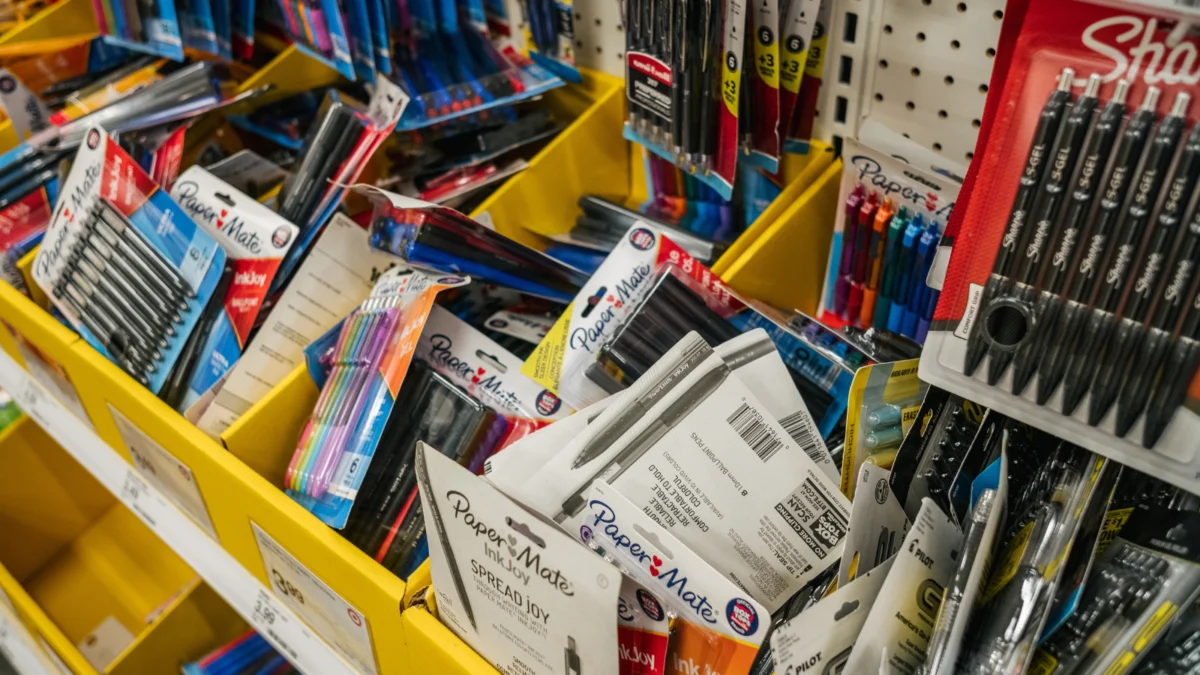
When an AI assistant is tasked with finding the "best value" for a box of pens or a backpack, it is programmed to prioritize price and performance metrics over brand heritage. This presents a massive challenge for established brands. If a household’s AI agent identifies a private-label item that meets all technical specifications at a lower price point, the brand equity of legacy companies may be bypassed entirely.
2. The Compression of Retail Margins
As shoppers use AI to hunt for the absolute lowest price, retailers face a "race to the bottom." To win the algorithmic bid, companies are forced to slash margins earlier in the season. This creates a feedback loop: retailers start promotions earlier to get ahead of the AI crawlers, which in turn trains the AI to expect earlier deals.
3. Hyper-Personalization
Conversely, the data collected by these AI tools provides retailers with a goldmine of information. By observing how parents aggregate their lists, retailers can offer hyper-personalized bundles. The future of back-to-school marketing will likely involve retailers pushing customized "AI-curated" carts directly to parents, pre-filled with the items their specific school district requires.
Conclusion: A New Era of Preparedness
The 2026 back-to-school season serves as a microcosm for the broader digital transformation of the American economy. The convergence of inflation-driven caution and AI-enabled efficiency has permanently altered the shopping timeline.
For parents, the stress of the back-to-school scramble is being mitigated by technology, allowing them to secure necessary supplies with greater financial precision than ever before. For retailers, the shift represents a high-stakes evolution where only those who can master the algorithmic interface will survive. As the industry looks toward the next academic cycle, one thing is certain: the most important school supply for 2026 is the intelligence—both human and artificial—applied to the act of purchasing.
As the retail world continues to iterate and adapt, the influence of AI will only deepen. Whether this trend leads to a more efficient marketplace or a more fragmented retail landscape remains to be seen, but the "dog days of summer" will never be the same again. They are now the "data days," where the future of the academic year is decided by the click of a button and the logic of a machine.