In the hyper-competitive landscape of digital commerce, there is a cold, hard truth that separates thriving brands from those destined for obscurity: what worked yesterday will not always work tomorrow.
Consumer attention spans are shrinking, inboxes are becoming increasingly saturated, and the subjective “gut feeling” of a marketing manager is rarely a match for the objective behavior of a customer. In this environment, A/B testing—the practice of comparing two versions of a digital asset to see which performs better—has transitioned from a “nice-to-have” experiment to a foundational, non-negotiable pillar of business strategy.
Smart entrepreneurs no longer rely on intuition. They treat every email subject line, call-to-action (CTA), and send time as a data point to be optimized. This article explores why consistent experimentation is the most efficient way to scale revenue without increasing your advertising spend.
The Strategic Imperative: Why Testing Isn’t Optional
Most founders are obsessed with the top of the funnel—acquiring new customers through paid ads or viral content. However, the most immediate and cost-effective growth often lies in the "conversion optimization" of the audience you already have.
The Mathematics of Compounding Wins
Small wins compound with devastating efficiency. A 5% lift in open rates paired with a 10% bump in click-through rates (CTR) may seem marginal in isolation. However, when these improvements ripple through an entire email sequence, they can generate 30% more revenue from the same list size. This is "free" growth—achieved by extracting more value from the assets you have already paid to acquire.
Supporting Data: The Omnisend Analysis
Recent industry data underscores the tangible impact of rigorous testing. According to analysis from Omnisend, average open rates among their merchants climbed from 22.9% in 2022 to 25.1% in 2023. This upward trend is not an accident of the algorithm; it is the direct result of brands adopting sophisticated segmentation and persistent testing cycles.
Furthermore, automated workflows—the backbone of modern ecommerce—showed even more dramatic results. Triggered emails (such as abandoned cart reminders or welcome sequences) outperformed regular campaigns with 52% higher open rates, 332% higher click rates, and an astonishing 2,361% better conversion rate. These automated flows are gold mines, but they are only as effective as the data-driven iterations applied to them.
Chronology of Optimization: Building a Testing Culture
To understand how A/B testing evolves, one must look at the lifecycle of a maturing brand.
Phase 1: The Intuition Era
Most startups begin by sending "batch and blast" emails. The focus is purely on volume. During this stage, the business relies on general industry best practices, such as "send on Tuesday mornings."
Phase 2: The Baseline Discovery
The brand begins to track performance. They notice that certain subject lines perform better than others. They start experimenting with simple variables, such as length or the use of emojis. This is where the foundation of an "Optimization Log" is built.
Phase 3: The Systematic Feedback Loop
The brand stops "testing when they are stuck" and begins "testing because it is the process." Every campaign has a control group and a variant. Data is documented, learnings are applied to future campaigns, and the brand builds an internal "intelligence library" regarding their audience’s preferences.
What You Should Be Testing: A High-Impact Checklist
A/B testing is not about aesthetic changes; it is about uncovering the psychological drivers of your customer base. Here are the five high-leverage elements every founder should be testing today.
1. Subject Lines (The Gatekeeper)
The subject line is the most important element of any email. If the email isn’t opened, the contents are irrelevant.
- What to test: Questions vs. statements, urgent vs. value-driven language, personalization vs. generic hooks, and short (3–5 words) vs. long (10+ words) formats.
- The stakes: 43% of consumers decide whether to open an email based solely on the subject line. Worse, 69% of users mark an email as junk based on the subject line alone, which permanently harms your domain reputation and deliverability.
2. Call-to-Action (The Conversion Bridge)
If your subject line gets them in the door, your CTA gets them to act.
- What to test: Button color, button placement, and, most importantly, the copy. Test "Shop Now" versus "Claim My 20% Off," or "Join the Community" versus "Get Started."
- Goal: To align the action with the reader’s current intent.
3. Send Time and Frequency
Even the most compelling content will fail if it lands at 3:00 AM on a Sunday.
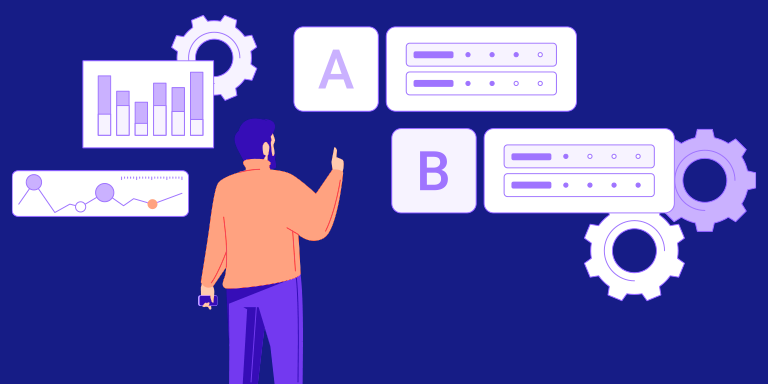
- What to test: Different days of the week and different time zones. Also, test the interval between emails in a welcome sequence—does a 24-hour delay work better than an immediate follow-up?
4. Sender Name and Preheader
The "from" field is a matter of trust.
- What to test: A company name versus an individual’s name (e.g., "Foundr" vs. "Nathan from Foundr"). Pair this with the preheader—the snippet of text visible after the subject line—to see if it adds necessary context or builds curiosity.
5. Audience Segmentation
Blanket emails are a relic of the past.
- What to test: Split your audience by purchase history, engagement level, or geographic location. Test whether a "VIP" segment responds better to a different tone of voice than a "New Subscriber" segment.
Official Perspective: The Expert Stance on Testing
Industry leaders, including the team at Omnisend, emphasize that the primary barrier to effective A/B testing is not technology, but the absence of a clear hypothesis.
"Testing without a hypothesis is just guessing," says one marketing lead. "A good test must start with a question: ‘We believe that by changing X, we will see an increase in Y, because of Z.’"
This perspective shifts the focus from "trying things" to "building intelligence." When you document these tests, you create a proprietary asset—a roadmap of your customers’ desires that your competitors do not have.
Implications: Moving Fast Without Burning Out
Many founders fear that A/B testing is a "dev-heavy" or "time-consuming" task. This is a misconception. Modern marketing automation platforms have removed the technical friction from the process.
The "One-Variable" Rule
To run a smart test, you must isolate a single variable. If you change the subject line, the button color, and the image in the same test, you will never know which element drove the result. By changing one thing at a time, you gain clean, actionable data.
Statistical Significance
Avoid the trap of "false positives." Testing on a list of 50 people will give you unreliable results. Most experts recommend a sample size of at least 1,000 recipients per version. If your list is smaller, consider a 20/20/60 split: test your two versions on 20% of your audience each, and automatically send the winner to the remaining 60%.
The Cumulative Competitive Advantage
The ultimate implication of a robust testing strategy is a widening gap between you and your competitors. As you collect data, your emails become more relevant, your engagement rates rise, and your domain authority strengthens. This creates a "flywheel effect" where your marketing becomes easier and more effective the longer you do it.
Conclusion: The Path to Smarter Conversions
You do not need to overhaul your entire business model to see a dramatic improvement in your bottom line. You simply need to adopt a philosophy of continuous, intentional improvement.
By systematically testing your communications, you stop guessing and start leading. You learn exactly what triggers your customers to click, buy, and advocate for your brand.
For those looking to accelerate this process, platforms like Omnisend are built to handle the heavy lifting. By automating your flows, segmenting your lists, and managing your A/B tests in one unified environment, you can spend less time juggling tools and more time analyzing the insights that drive growth.
Ready to start? The most successful brands aren’t the ones with the largest budgets; they are the ones that test the most. Start your first experiment today, track the results, and watch your conversion rates climb.
Foundr readers can get 50% off their first three months of Omnisend using code FOUNDR50. It is time to stop guessing and start converting.