
In the rapidly evolving digital economy of 2025, the mechanism by which a business collects revenue is as critical as the product or service itself. For small business owners and startups, selecting a payment system is no longer just a technical checkbox—it is a strategic decision that impacts cash flow, customer retention, and brand perception. With an overwhelming array of options available, choosing the right provider can feel like navigating a labyrinth.
This guide explores the essential criteria for selecting a payment processor, analyzes the top six contenders for 2025, and examines the broader implications of these financial tools on your bottom line.
Understanding the Financial Infrastructure: What is a Payment System?
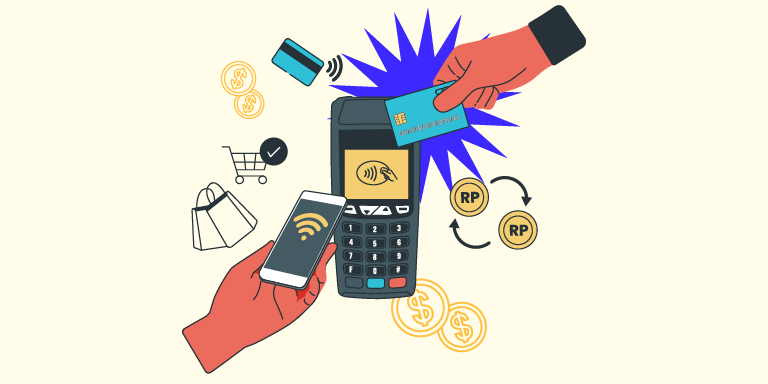
To make an informed choice, one must first demystify the terminology. A payment system acts as the digital bridge between a buyer and a seller. It is a sophisticated network of technologies—including payment gateways, processors, and merchant accounts—that facilitates the secure transfer of funds.
When a customer enters their credit card details or taps their smartphone at your checkout, the payment system verifies the transaction, ensures sufficient funds, and orchestrates the movement of capital from the customer’s bank to your business account. Crucially, these systems must remain PCI-DSS compliant, adhering to global security standards to protect sensitive financial data.
Critical Selection Criteria: How to Vet Your Processor
Before committing to a provider, entrepreneurs should evaluate potential partners against five core performance pillars:
1. Payout Velocity
Cash flow is the lifeblood of any small enterprise. While traditional banking systems may hold funds for several days, modern fintech solutions often offer "next-day" or even "instant" payouts. For founders operating with tight margins, the speed at which funds move from the gateway to your operating account is non-negotiable.
2. Frictionless User Experience (UX)
High bounce rates are the silent killer of eCommerce profits. If a payment portal is clunky, redirects the user to a third-party site, or fails to support preferred local payment methods, customers will abandon their carts. A superior system keeps the transaction flow seamless and branded to your site.
3. Global Accessibility
Is your business restricted to your local region, or are you targeting international markets? Some processors are geographically limited, while others excel at cross-border transactions, automatically handling currency conversions and international tax compliance.

4. Pricing Transparency
The industry is notorious for "hidden" fees. Beyond the standard per-transaction percentage, businesses must scrutinize monthly subscription fees, hardware costs, chargeback penalties, and potential volume-based tiered pricing. A system that looks cheap on the surface can become expensive as your transaction volume scales.
5. Security and Fraud Mitigation
With cyber threats evolving, your payment partner must offer robust, AI-driven fraud protection. Features like 3D Secure, address verification (AVS), and real-time monitoring are essential to protecting your business from the costly impact of fraudulent chargebacks.
The Top 6 Payment Systems for 2025: A Comparative Analysis
1. Stripe: The Developer’s Choice
Stripe has cemented its reputation as the gold standard for online-first businesses. Its API-first architecture allows for deep customization, making it the preferred choice for those who want a branded, seamless checkout experience.
- The Advantage: It keeps customers on your site, significantly reducing conversion friction.
- The Caveat: It is highly technical. While a basic setup is straightforward, leveraging its full potential often requires access to a developer.
2. PayPal: The Trusted Household Name
PayPal remains a titan of the industry due to its ubiquity and consumer trust. When a customer sees the PayPal button, their anxiety regarding site security often vanishes, which can directly increase conversion rates.
- The Advantage: Global brand recognition and ease of use for customers who don’t want to input card details manually.
- The Caveat: It often directs users away from your site to complete the checkout, which can break the professional aesthetic of a specialized brand.
3. Authorize.net: The Security Specialist
A legacy player that has evolved with the times, Authorize.net is renowned for its enterprise-grade security and robust fraud detection suites. It is ideal for established small businesses that handle high volumes and require high-touch, reliable service.
- The Advantage: Advanced fraud management filters that can be tailored to your specific industry risks.
- The Caveat: The interface is less "modern" than newer fintech startups, and the setup process is more rigorous.
4. Amazon Pay: The Trust Accelerator
Amazon Pay leverages the existing trust of millions of Amazon users. By allowing customers to pay using the information already stored in their Amazon accounts, it streamlines the checkout process to just a few clicks.
- The Advantage: Significantly faster checkouts and the "Amazon halo effect," which makes smaller, lesser-known brands feel more secure to the shopper.
- The Caveat: Pricing can be higher than competitors, and you are inherently tied to Amazon’s ecosystem.
5. Square: The In-Person Champion
If your business operates primarily through a physical storefront, pop-up market, or mobile service, Square is the industry leader. Its hardware ecosystem—from card readers to full POS systems—is best-in-class.
- The Advantage: An intuitive virtual terminal and excellent offline-to-online integration.
- The Caveat: While it handles online sales well, it is fundamentally built for retail and service-based businesses rather than purely digital enterprises.
6. SecurePay: The Versatile Contender
SecurePay provides a comprehensive suite of payment options, including direct debit and credit cards, with a focus on simplicity. It is an excellent middle-ground for businesses that want a wide range of features without the complexity of Stripe.
- The Advantage: Strong API integrations and a user-friendly trial process.
- The Caveat: Lack of brand recognition can occasionally lead to hesitation from first-time customers who are unfamiliar with the platform.
Strategic Implications: Scaling Beyond the Checkout
Selecting a payment system is not a "set it and forget it" task. As your business grows, your requirements will change. A system that served you well in the "startup" phase may prove inefficient when you hit enterprise-level transaction volumes.
The Chronology of Growth
- Phase 1 (The Launch): Prioritize ease of integration and low upfront costs (e.g., Stripe or Square).
- Phase 2 (The Scale): Focus on reliability and security as volume increases (e.g., Authorize.net).
- Phase 3 (The Optimization): Integrate omnichannel solutions and leverage data analytics to reduce churn (e.g., advanced PayPal or Stripe integrations).
The Role of Data
The most sophisticated business owners treat their payment processors as data engines. By analyzing transaction patterns, you can identify which regions are buying more, which products have higher return rates, and where in the funnel you are losing customers. This data should inform your marketing strategy and inventory management.
Frequently Asked Questions (FAQ)
Q: What is the absolute "best" system for a new startup?
A: There is no universal "best." However, for most modern online startups, Stripe is the default choice due to its developer-friendly nature and scalability. For local retail, Square is unrivaled.
Q: How do I handle global payments?
A: Look for providers that support multi-currency processing and have a global banking infrastructure. Stripe and PayPal are currently the leaders in simplifying cross-border commerce for small businesses.
Q: Will these systems charge me monthly?
A: It depends. Some, like Stripe and Square, operate primarily on a "pay-as-you-go" per-transaction model. Others may charge a monthly gateway fee for added security features or advanced reporting tools. Always check the fine print for "platform fees."
Q: What happens if I want to switch providers later?
A: It is common to migrate systems. However, ensure your data (customer profiles and payment tokens) is portable. Most modern systems use "data portability" standards, but you should verify this before locking in a multi-year contract.
Final Thoughts for 2025
The technology powering payments is moving faster than ever. As we look ahead, the integration of AI, decentralized finance, and instant-settlement networks will continue to reshape the landscape. The winning businesses of 2025 will be those that view their payment infrastructure not as a utility, but as a competitive advantage.
By prioritizing security, user experience, and financial flexibility, you can ensure that your payment system remains a catalyst for growth rather than a bottleneck. Start by auditing your current processing costs and customer drop-off rates, and don’t be afraid to pivot if your current solution is no longer serving your long-term vision.
Disclaimer: The pricing and feature sets mentioned are based on available data as of early 2025. Payment processors frequently update their terms, fee structures, and compliance requirements. Always conduct your own due diligence and consult with the provider’s official documentation before finalizing your decision.