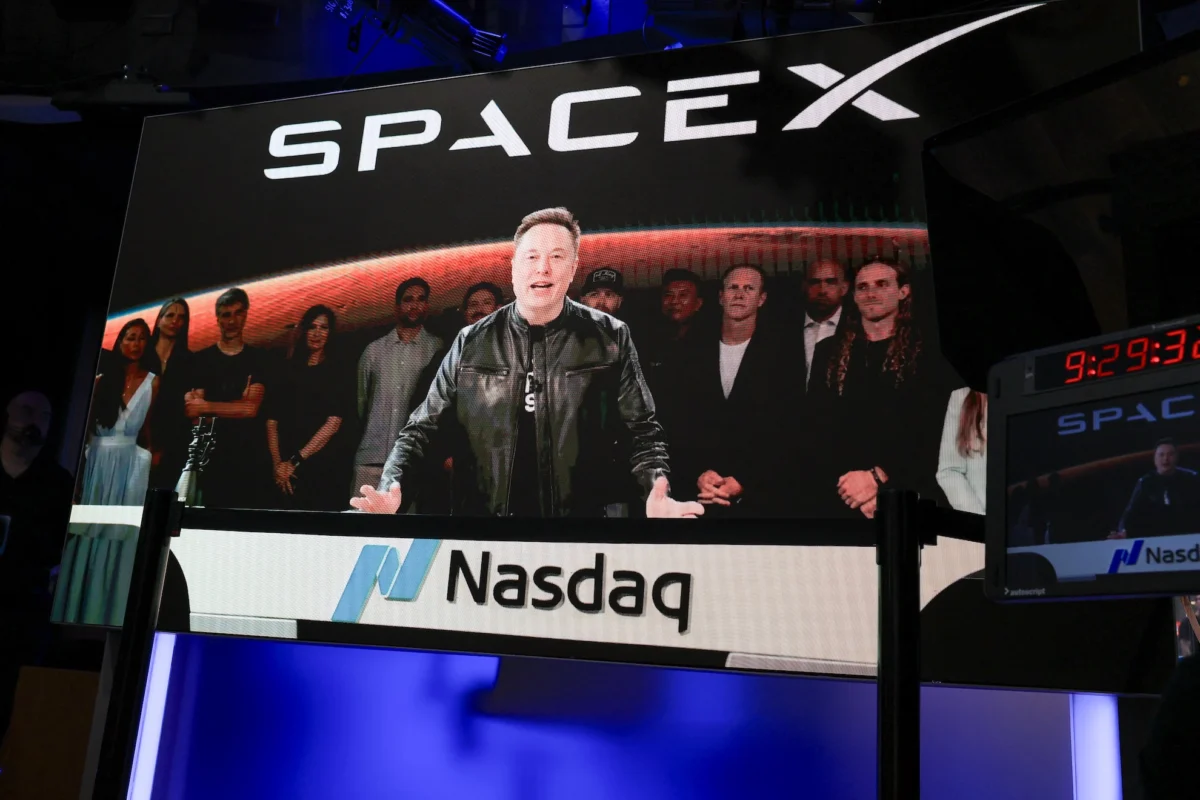
In the volatile landscape of modern equity markets, few figures polarize public opinion quite like Elon Musk. While the lead-up to the SpaceX IPO generated widespread fervor among investors eager to capitalize on the billionaire’s orbit, a growing segment of the market is signaling a different preference: total exclusion. A new financial vehicle, pioneered by the provocateurs at Subversive Capital, is transforming this social and political friction into a tradable asset class. By launching two new exchange-traded funds (ETFs) specifically designed to strip Musk-affiliated companies from their holdings, the firm is providing a path for investors to vote with their wallets.
Main Facts: The Rise of the "Ex-Elon" ETFs
Subversive Capital, operating under the Tidal Trust I banner as Subversive Markets Lab LLC, has filed for two distinct ETFs: the Nasdaq-100 Ex-Elon Enterprises ETF (ticker: QQNE) and the S&P 500 Ex-Elon Enterprises ETF (ticker: SPNE). These funds are not mere social statements; they are engineered to replicate the performance of major benchmarks while surgically excising specific entities.
The prospectus is explicit in its methodology. At launch, the funds will systematically exclude Tesla (TSLA) and Space Exploration Technologies Corp. (SPCX). This exclusion is not limited to the current roster; the fund’s mandate allows for the removal of any future company founded, controlled, or led by Musk, or any entity with which he is "otherwise primarily associated." This open-ended definition provides a buffer against the expansion of his conglomerate, covering private interests like Neuralink or The Boring Company should they ever enter public markets or become subject to index inclusion.
Chronology: From Innovation Icon to Political Lightning Rod
To understand the necessity of these funds, one must track the evolution of Elon Musk’s public image over the last decade.
The Era of Unquestioned Growth (2015–2021)
During this period, Musk was largely viewed through the lens of a visionary. Tesla’s ascendancy and SpaceX’s successful reusability milestones made his companies staples in almost every growth-oriented mutual fund. Investors viewed his eccentricities as the "cost of doing business" with a genius.
The Shift in Sentiment (2022–2026)
The turning point for many institutional and retail investors began with Musk’s acquisition of the social media platform X (formerly Twitter). The subsequent pivot toward outspoken political activism, his role in the Department of Government Efficiency (DOGE), and his increasingly visible alignment with Donald Trump changed the narrative.
The tipping point for the broader market arguably arrived at the 2026 presidential inauguration. An infamous gesture made by Musk—widely interpreted by critics as a Nazi salute—triggered a swift reaction among investors who prioritize environmental, social, and governance (ESG) criteria. For many, this was the final signal that their capital could no longer be passively funneled into his corporate interests.
Supporting Data: The Difficulty of "Opting Out"
For the average retail investor, avoiding Musk is significantly harder than it appears. The modern investment landscape is dominated by passive index funds. Because Tesla and SpaceX have become massive components of the S&P 500 and Nasdaq 100, they are "locked in" to the portfolios of millions of Americans who own broad-market ETFs or 401(k) target-date funds.
The Index Problem
- Tesla’s Dominance: As a "Magnificent Seven" stock, Tesla’s market capitalization forces it into almost every large-cap growth fund.
- SpaceX’s Inclusion: With SpaceX recently joining the Nasdaq 100, the "Musk footprint" in retail portfolios has only grown.
Investors attempting to manually "unbundle" their portfolios often find themselves incurring significant tax liabilities or commission costs. Subversive Capital’s new ETFs solve this by providing a "plug-and-play" alternative that maintains exposure to the broader American economy while acting as a filter for Musk-led entities.
The Strategy Behind Subversive Capital
Subversive Capital is no stranger to "niche" finance. The firm has carved out a reputation for creating funds that mirror the political landscape. By launching ETFs that track the disclosed stock trades of Democratic and Republican members of Congress, the firm has already demonstrated an appetite for politicized investing.
The "Ex-Elon" ETFs are a logical, if more aggressive, extension of this philosophy. By targeting the world’s richest individual, the firm is tapping into a specific psychological market: the investor who feels a sense of cognitive dissonance when their retirement savings are tied to the successes of a man they fundamentally oppose.
Official Responses and Regulatory Filings
The SEC filings for QQNE and SPNE reflect a sophisticated approach to fund construction. The legal documentation highlights the fund’s objective: "to provide capital appreciation through exposure to a broad universe of large-capitalization U.S. equity securities, while excluding the equity securities of companies that are founded, controlled, or led by Elon Musk."
Industry analysts remain divided on the viability of such funds. While some argue that "divestment funds" usually suffer from tracking error (the difference between the fund’s performance and the benchmark it attempts to mimic), others suggest that in a market driven by ideological alignment, these funds could see significant inflows from institutional asset managers who are increasingly sensitive to client demands for "values-based" portfolios.
Implications: The Future of Values-Based Investing
The launch of the Ex-Elon ETFs signals a shift in the power dynamic between corporate leaders and their shareholders.
1. The Weaponization of Divestment
If these funds gain traction, it sets a precedent. If a company leader becomes too toxic to a specific segment of the population, a niche ETF can be spun up to provide an "exit hatch." This could force boards of directors to pay closer attention to the public conduct of their CEOs, as personal brand risk now carries a direct threat of capital flight.
2. The "Short-Seller" Dynamic
Elon Musk has famously sparred with short-sellers, often expressing disdain for those betting against his companies. While the Ex-Elon ETFs are not traditional "short" funds, they represent a form of long-term divestment that serves the same purpose: it deprives the company of the buying pressure it would otherwise receive from passive index flows.
3. Market Performance and Tracking Error
The ultimate test for QQNE and SPNE will be their performance. If the exclusion of Tesla and SpaceX results in significant underperformance, the funds will likely be dismissed as "performative." However, if they manage to provide competitive returns, they could validate the strategy of "socially conscious exclusion" as a permanent fixture of the wealth management industry.
Conclusion: A Barometer for Public Sentiment
Whether or not the Ex-Elon ETFs become a dominant force in the market, they serve as a fascinating barometer of the current cultural moment. They represent the intersection of high finance and deep-seated social frustration.
For the average investor, the choice to buy into these funds may be less about technical financial analysis and more about personal alignment. In an era where the boundary between public persona and corporate performance has become blurred, Subversive Capital is betting that for many investors, the price of "avoiding" Elon Musk is one they are willing to pay. As these tickers—QQNE and SPNE—begin trading, the market will soon see if the appetite for "Anti-Musk" capital is as large as the man himself.
Disclaimer: This article is for informational purposes only and does not constitute financial advice. The launch of any exchange-traded fund involves risk, and investors should consult their financial advisors before making any decisions based on political or social sentiment.