In the high-stakes world of eCommerce, the difference between a failing store and a $50 million powerhouse often comes down to a single, misunderstood variable: the ad account architecture. While many marketers find themselves trapped in a cycle of fluctuating Return on Ad Spend (ROAS) and wasted budgets, a new framework known as the "M4 Method" is providing a roadmap for sustainable, predictable growth.
Co-created by industry expert Sam Piliero and Michael Stelzner, the M4 Method challenges conventional wisdom, urging advertisers to abandon the "efficiency trap" in favor of long-term profit and strategic scalability. By focusing on account structure, creative ingenuity, deep-dive analytics, and calculated scaling, this four-stage system has been credited with helping businesses transition from modest monthly spends to high-revenue enterprises.
The Core Philosophy: Moving Beyond ROAS
The primary obstacle keeping most eCommerce advertisers from scaling is an obsession with vanity metrics. While ROAS and Cost Per Acquisition (CPA) serve as necessary guardrails, they are not the end-all-be-all of business health.
Piliero argues that the true metric for success is contribution margin. A brand with a 2.2 ROAS that spends aggressively to acquire a massive, loyal customer base is often better positioned for long-term success than a brand chasing a 10x ROAS that limits its own reach and growth. By prioritizing lifetime value and compound word-of-mouth growth over short-term efficiency, brands can build more resilient business models.
The second barrier is the "illusion of control." Many advertisers either over-engineer their accounts into a state of paralysis or surrender entirely to Meta’s algorithm, hoping for the best. The M4 Method identifies a "sweet spot" between these extremes, providing the structure required for the algorithm to thrive while keeping the human element in control of strategy.
The Four Pillars of the M4 Method
The M4 Method is structured as a hierarchical system where each stage builds upon the last. It is designed to be the foundational "house" for your marketing efforts.

1. Account Structure: The Foundation
An account structure is the engine of your ad performance. Without a clean, logical setup, even the most compelling creative will fail. The M4 approach utilizes a specific configuration to prevent ad fatigue and ensure budget flows toward winners.
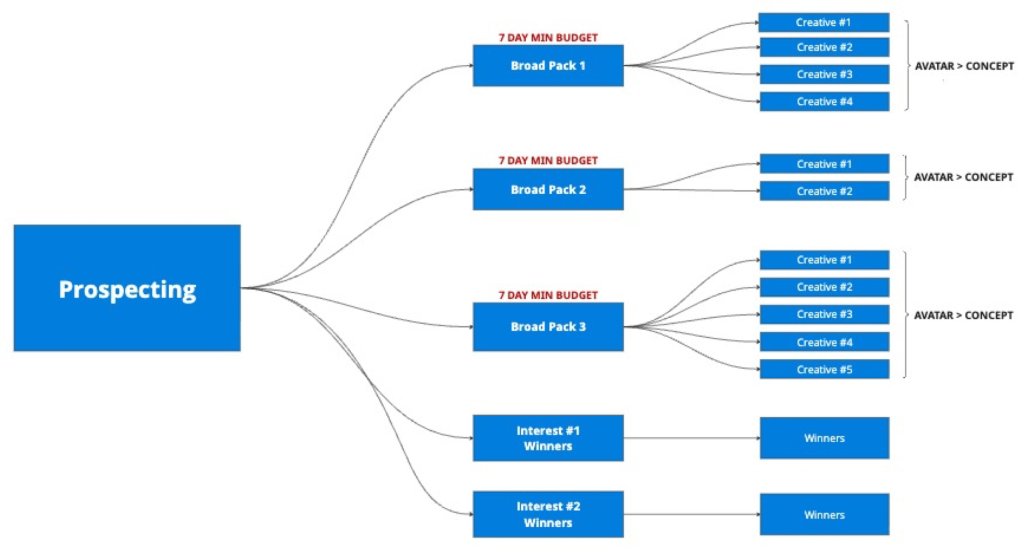
- The Prospecting CBO: A single prospecting campaign utilizing Campaign Budget Optimization (CBO) serves as the primary driver. This campaign contains multiple "packs" (ad sets), each representing a specific batch of creative. CBO allows the algorithm to dynamically allocate budget to the best-performing assets at any given moment.
- Retention Campaigns: By separating existing customers from new prospects, you gain total clarity on where your capital is being deployed.
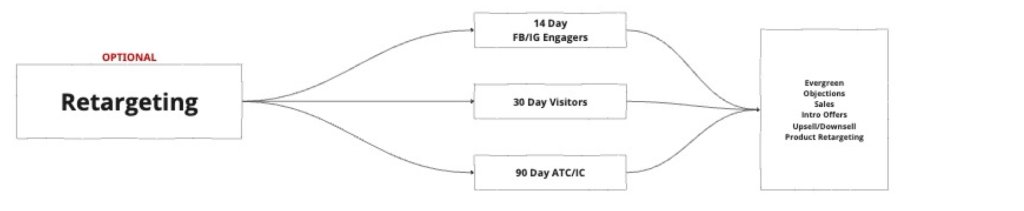
- Optional Enhancements: Advanced users may add a retargeting campaign for engaged non-purchasers or a dedicated scaling campaign to force spend toward top-performing ads.
2. Creative: The Body of the Vehicle
If structure is the engine, creative is the body of the vehicle. In the post-Andromeda algorithm era, targeting is largely dictated by the content of the ad itself. Generic, "one-size-fits-all" creative is a relic of the past.
The M4 Method emphasizes Problem-Solution creative. By identifying a specific customer avatar and speaking directly to their unique pain points, you signal to the algorithm exactly who should see your ad.
Tips for Creative Success:
- Volume is Key: Manufacture "hits"—ads that exceed your ROAS target while capturing at least 10% of your account spend.
- Iterative Design: Don’t reinvent the wheel. If an ad works, create slight variations—change the headline, the background, or the talent—rather than starting from scratch.
- UGC Mastery: Use semi-professional User Generated Content (UGC). Partner with micro-influencers who can speak to your product’s benefits in a way that feels native to the user’s feed.
3. Deep Dive Analysis: Uncovering Hidden Patterns
Most advertisers make the mistake of maintaining a flat daily budget. This ignores the natural rhythms of consumer behavior.
Through retrospective analysis—looking at 90 to 180 days of non-sale data—brands can identify exactly when their customers are most likely to convert. For instance, pet brands often see weekend spikes, while gift-oriented products may peak early in the week.

By identifying these trends, advertisers can adjust their budgets to lean into high-performing days. This doesn’t mean cutting low-performing days entirely, but rather optimizing the budget to capture more volume when the market is most receptive. This simple analytical shift has been shown to improve ROAS by up to 20%.
4. Scaling: The Art of Growth
Scaling should only occur when the conditions are perfect. The M4 Method defines three distinct modes of scaling:
- Vertical Scaling: Gradually increasing budget on existing campaigns by 10–30% every few days to avoid triggering the "learning phase."
- Horizontal Scaling: Launching temporary, separate campaigns for specific events like flash sales or product launches.
- Twin Engine Scaling: The gold standard of growth. This involves increasing the budget on your primary prospecting CBO while simultaneously feeding it new iterations of your "hit" ads. This keeps the algorithm optimized while expanding reach.
Supporting Data and Real-World Impact
The efficacy of the M4 Method is best demonstrated by the trajectory of current clients under The Moonlighters’ guidance. Five distinct businesses that began roughly a year ago—each spending under $30,000 monthly—have since scaled to exceed $50 million in annual revenue.
While these results are exceptional, they highlight the compounding power of the system. The common denominator among these success stories is a commitment to the process, a consistent investment in high-quality creative, and an unwavering focus on the "King Goal."
The "King Goal" Concept
Borrowing from the philosophy of BarkBox, the M4 Method advocates for the "King Goal." Every business must define one, and only one, North Star metric. Whether it is CAC (Cost Per Acquisition), ROAS, or a specific profit threshold, this number should dictate all decision-making. If the King Goal is being met, minor fluctuations in proxy metrics (like CPM or CPC) should be ignored.
Implications for Future Strategy
As AI continues to reshape the digital advertising landscape, the shift toward algorithmic-driven platforms is irreversible. Advertisers who cling to manual targeting and short-term efficiency metrics are increasingly finding themselves at a disadvantage.

The implications for the modern marketer are clear:
- Automation requires structure: The algorithm is a powerful tool, but it needs a clean, well-organized environment to function.
- Creative is the new targeting: The way you craft your message determines your audience.
- Data is a diagnostic tool: Move away from daily spreadsheet maintenance and toward identifying long-term behavioral patterns.
For brands struggling with stagnant growth, the M4 Method offers a way to move past the noise. By treating ad management as a systematic discipline rather than a series of guesses, businesses can move toward a model of predictable, scalable, and—most importantly—profitable growth.
A Note on Constraints
It is vital to acknowledge that no system can solve a lack of inventory or infrastructure. For businesses that are supply-constrained, the scaling portion of the M4 Method must be inverted. If you cannot fulfill the demand you create, your priority must shift to maximizing efficiency per order rather than chasing raw growth. The M4 Method provides the tools to manage this delicate balance, ensuring that marketing efforts remain aligned with the operational realities of the business.