Is your LinkedIn reach plummeting despite your best efforts? You are not alone. LinkedIn has quietly undergone the most significant technological transformation in its history. The platform has dismantled its legacy architecture—previously a patchwork of five disparate systems—and replaced it with a single, unified, AI-driven engine.
This is not a minor update; it is a fundamental shift in the platform’s DNA. To succeed in this new environment, content creators and marketers must move beyond traditional "hacks" and align their strategies with the logic of a machine that prioritizes semantic understanding over simple keyword matching.
The Evolution: From Social Graphs to Interest-Based Distribution
For years, LinkedIn’s reach was dictated by your "social graph"—the network of connections and followers you had cultivated. In the old model, the algorithm prioritized showing your posts to people who were directly connected to you.
The new system has pivoted toward an interest-based model, mirroring the content discovery engines of TikTok, YouTube, and Facebook. LinkedIn now tracks a user’s "professional journey," building a dynamic profile of their interests rather than simply reacting to their most recent engagement.
Understanding Meaning Over Keywords
The most revolutionary change is the move to semantic understanding. The algorithm no longer looks for exact keyword matches. If you write about "customer retention," the AI is intelligent enough to know that your content is highly relevant to a user searching for "reducing churn."
This shift has profound implications: your content no longer needs to be "keyword-stuffed" to be found. Instead, it needs to be substantively relevant to the professional challenges your audience faces.
The Rise of the Specialist
Under the new algorithm, generalists are at a distinct disadvantage. When you publish a post about AI, followed by a post about pet care, and then a post about marketing strategy, you send fragmented signals to the AI. The algorithm struggles to categorize your "brand" or "authority," treating each post as an isolated, unrelated data point.
Conversely, specialists who consistently publish content within a specific niche train the algorithm to associate them with that topic. This creates a "compounding effect": the more you write on a specific subject, the more reliably the AI surfaces your content to your target audience. In this new ecosystem, consistency in topic is just as important as consistency in frequency.

The Shift to Invisible Engagement
Perhaps the most surprising finding from an analysis of over 600,000 LinkedIn posts is the declining value of "vanity metrics." While likes, shares, and public comments still provide social proof, they are no longer the primary drivers of reach.
The algorithm is now heavily weighted toward "invisible engagement"—behaviors that don’t trigger a public notification. These include:
- "See More" Clicks: Expanding a truncated post.
- Carousel Swipes: Engaging with multi-page document posts.
- Video Dwell Time: How long a user spends watching a clip.
- Direct Clicks: Following links or opening profiles.
Data suggests that these invisible interactions contribute to a nearly 14% increase in overall distribution. To thrive, creators must engineer their content to encourage these specific, private actions.
Engineering Engagement: A Strategic Roadmap
1. Master the "See More" Click
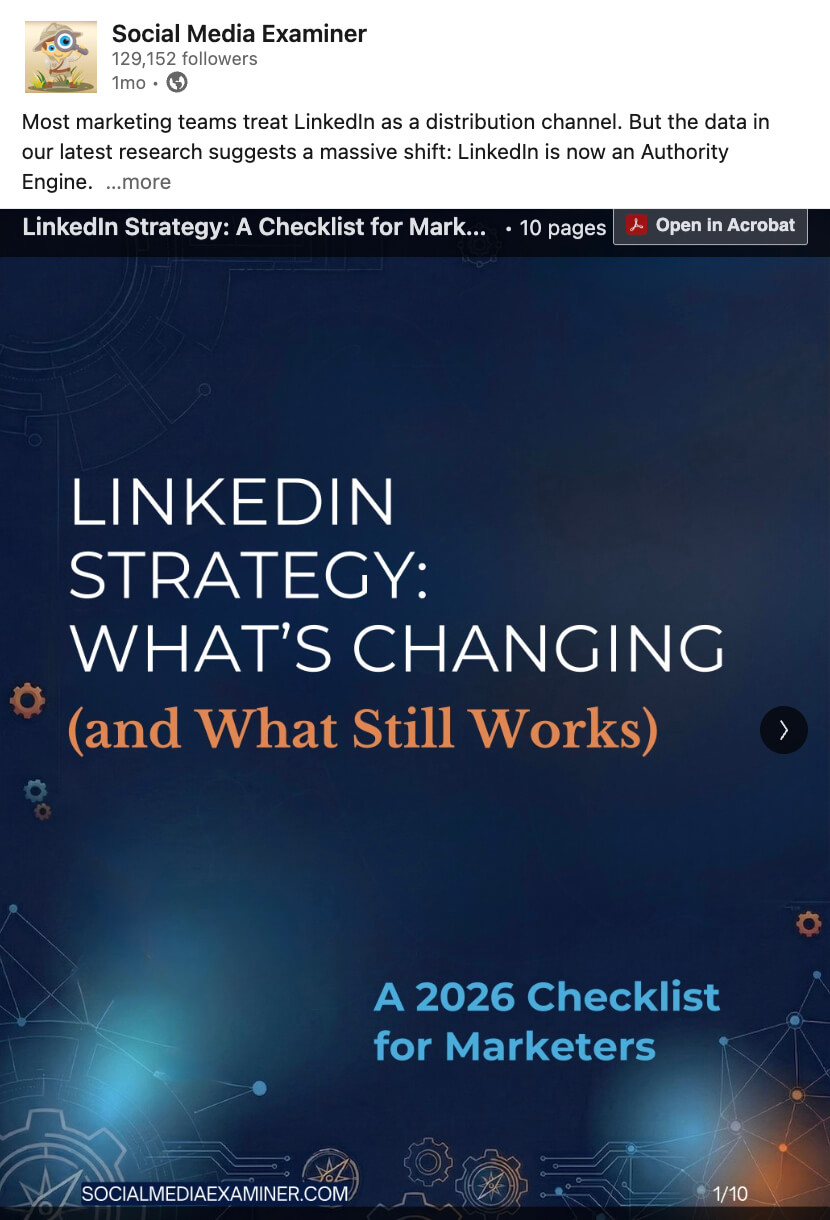
Because nearly half of all impressions occur in the first 48 hours, the "hook" of your post is now your most valuable real estate. You must write an opening that creates enough curiosity to force a click on the "…see more" button.
Avoid giving away the punchline in the first two lines. Instead, use a provocative question, a counter-intuitive fact, or a "story-gap" that can only be resolved by clicking to read the full post.
2. Leverage Document Posts and Carousels
Document posts—PDFs that users can swipe through—are currently outperforming static images by a factor of eleven. This format is a "gold mine" for the algorithm because every swipe is an invisible engagement signal. By transforming your step-by-step guides or tip lists into a slide deck, you force the reader to interact with the post multiple times, signaling to LinkedIn that your content is high-value.
3. Cultivate Comment Density
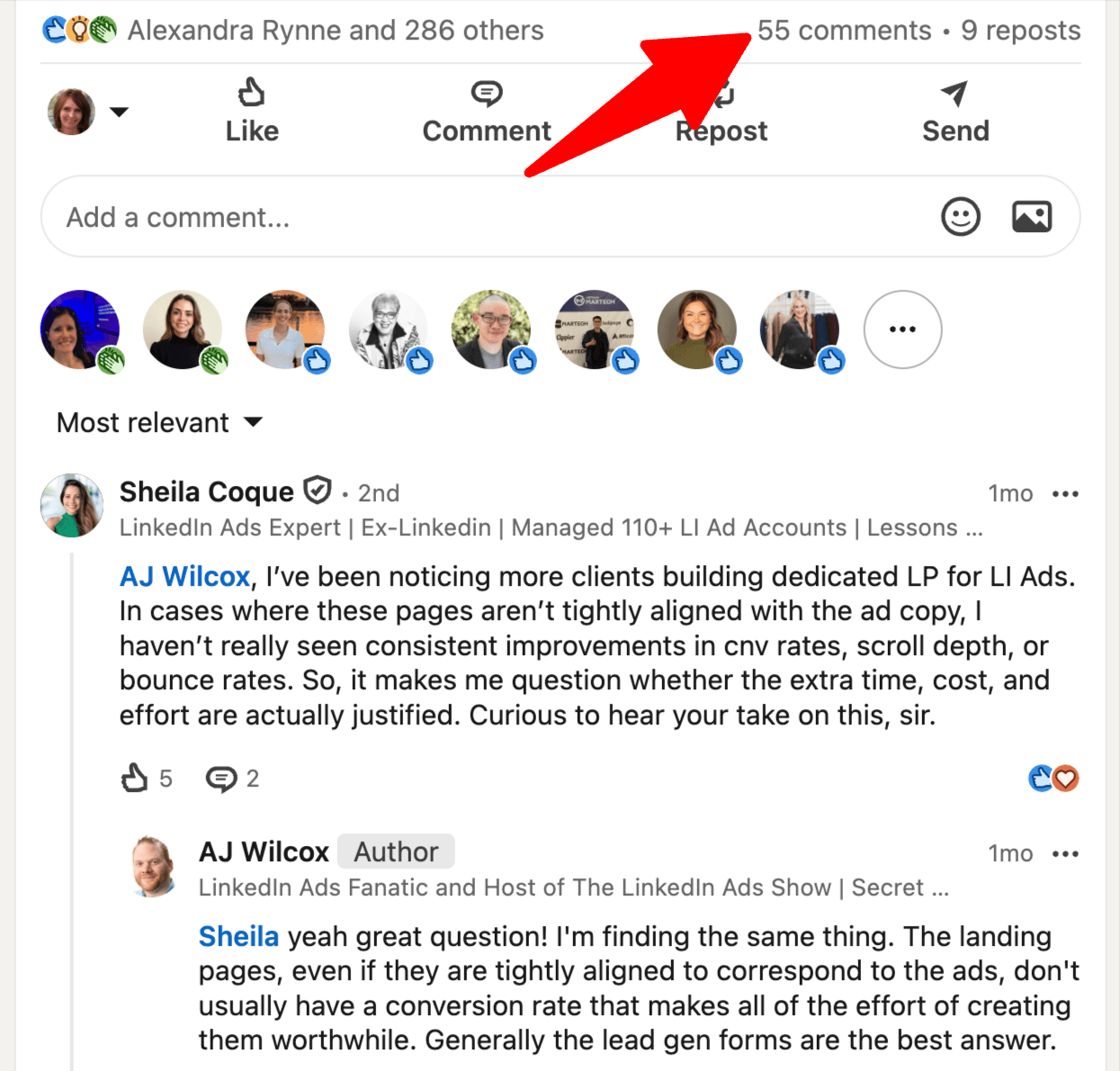
The algorithm has evolved beyond counting comments; it now measures the depth of the dialogue. A post with 50 one-word comments (e.g., "Great post!") is now viewed as less valuable than a post with 10 deep, threaded conversations.
To maximize this:
- The "Call to Action" (CTA) must be specific: Avoid generic pleas like "What do you think?" Instead, ask targeted questions based on the specific content of your post (e.g., "Have you found that the shift toward video has hurt your text-based reach?").
- Respond with velocity: The first hour after posting is critical. Responding to comments as quickly as possible signals that your post is a hub of active, valuable conversation.
- Ignore the bots: Use your energy to reply to genuine inquiries. AI-generated spam is easily detected by the platform, and engaging with it adds no value to your authority score.
Fighting Content Fatigue
A common refrain from marketers is the fear of repetition. If you have been writing about your niche for years, how do you keep it fresh?
First, remember that your audience is constantly rotating. A significant portion of your followers is encountering your core concepts for the first time. You do not need to invent new topics; you need to invent new perspectives.
AJ Wilcox, a leading authority on LinkedIn strategy, suggests that the "creative challenge" is to approach the same subject from a different metaphor, a different format, or a different angle. If you feel you are repeating yourself, it is time to pivot the lens—not the subject.
Implications for Future Strategy
The "New LinkedIn" is a platform that rewards original thought. Because the algorithm is now capable of identifying recycled or derivative content, creators who prioritize fresh insights will continue to see their reach expand.
Key takeaways for your 2025 strategy:
- Niche Down: Choose a lane and stay in it to build topical authority.
- Prioritize Interaction Design: Build your posts around swipes, clicks, and deep comments.
- Audit Your Hooks: If your opening lines are boring, your content will not be distributed.
- Build Community: Treat your comments section as a collaborative space, not a broadcast channel.
Conclusion: The Path Forward
LinkedIn has transitioned from a professional rolodex to a high-intent content discovery engine. While the transition may feel daunting for those accustomed to legacy tactics, the move toward an AI-driven, interest-based system is a boon for creators who provide genuine value.
By focusing on deep, meaningful interactions and committing to a specific, well-researched topic, you can transform your LinkedIn presence from a passive profile into a powerful, automated engine for professional authority. The algorithm is now an ally, provided you speak its language.