The promise of generative AI is seductive: type a prompt, press a button, and watch as a high-fidelity video clip appears, ready for a multi-million dollar advertising campaign. However, for most marketers, the reality is far more frustrating. The results often look flat, inconsistent, or uncanny—lacking the polish seen in viral AI-generated demos.
According to AI educator and content strategist Jerrod Lew, the "magic button" misconception is the primary hurdle preventing brands from achieving professional-grade output. In reality, the stunning clips showcased by AI labs are the product of teams of professionals with deep film backgrounds, hours of meticulous iteration, and—most importantly—a clear creative vision established before opening the software.
To transform AI from a novelty into a reliable content system, marketers must stop treating these tools as "generators" and start treating them as a modern creative suite, akin to the evolution from analog film editing to Adobe Premiere Pro.
The Strategic Shift: From Generation to Direction
The fundamental error most marketing teams make is attempting to force an AI model to "figure out" the creative direction. AI, in its current state, acts as a force multiplier for intent. If the input is vague, the output will be chaotic.
For creators who possess a story but lack traditional technical skills, this is a golden age. You no longer need to be a master of lighting or cinematography to produce professional content. You simply need to be a director. The human element—understanding the brand, the target audience, and the desired emotional outcome—remains the most valuable asset in the room.
The New Toolkit: A Landscape of Capability
The AI landscape is shifting from single-purpose tools to multimodal ecosystems. As of mid-2026, four platforms have emerged as essential for the professional marketer:
- Google Flow: Now a project-based environment, Flow allows for the centralization of brand assets, character references, and guidelines. Its new conversational interface allows marketers to act as creative directors, refining output through natural language adjustments.
- Google Omni Flash: This multimodal model represents a quantum leap for editing. Rather than regenerating scenes from scratch, Omni Flash accepts scripts and existing footage, allowing for surgical edits—such as changing a background, swapping an object, or adjusting a style—without sacrificing consistency.
- Seedance 2.0: Currently standing as a leader in video generation, Seedance differentiates itself by processing audio, dialogue, and background soundscapes alongside visual imagery, resulting in "production-ready" assets.
- Kling 3.0: The gold standard for character consistency. Kling excels at rendering realistic human subjects from reference photos, supporting up to 4K resolution, making it the preferred choice for brand-specific human-centric storytelling.
The Infrastructure of Consistency
Consistency is the hallmark of a professional brand. Without a structured workflow, AI-generated content often suffers from "drift"—where characters, lighting, and style evolve uncontrollably across different pieces of content.
Establishing the Brand Foundation
Before interacting with any AI model, marketers must digitize their "Brand DNA." Tools like CoreDesigner have become essential for this phase. By inputting existing brand materials—logo files, website screenshots, and color palettes—these tools synthesize a cohesive style guide. This guide acts as the "North Star" for all subsequent AI generations, ensuring that every image or video adheres to the brand’s visual identity.

Building the Reference Library
Preparation is the secret weapon of the high-end creator. Jerrod Lew suggests two primary categories of reference assets:
- Product References: You do not need professional studio photography. A composite "product sheet" created in an AI chat session, featuring the product from multiple angles and in varied use cases, provides the model with the necessary spatial context. Once this sheet is established in a session, all future generations inherit that visual logic.
- Human Character Sheets: This is where most projects fail. To avoid the "uncanny valley," you must provide the model with a diverse set of reference photos: front-facing, profile, and back-of-head shots. Crucially, you must include a range of expressions—determined, curious, shocked—to ensure the AI does not distort facial features when attempting to render emotion.
The Workflow: A Multi-Stage Architecture
To build a scalable, professional system, marketers should adopt a "Storyboard-First" methodology.
Phase 1: Storyboarding (The Image Phase)
Video generation is resource-intensive and expensive. By contrast, image generation is fast and scalable. A professional workflow generates roughly 100 images for every 40 videos. By using the character sheet to place your subject in various scenes and environments, you can finalize the visual direction, composition, and lighting before a single second of video is rendered. This acts as a low-cost, high-speed sandbox for creative experimentation.
Phase 2: Video Synthesis
With a solid storyboard of images, the video generation prompt becomes remarkably simple. Because the AI already "knows" the character and environment from the reference images, the prompt can focus exclusively on cinematic movement: camera pans, pacing, and subject interaction.
Phase 3: The Aggregator Advantage
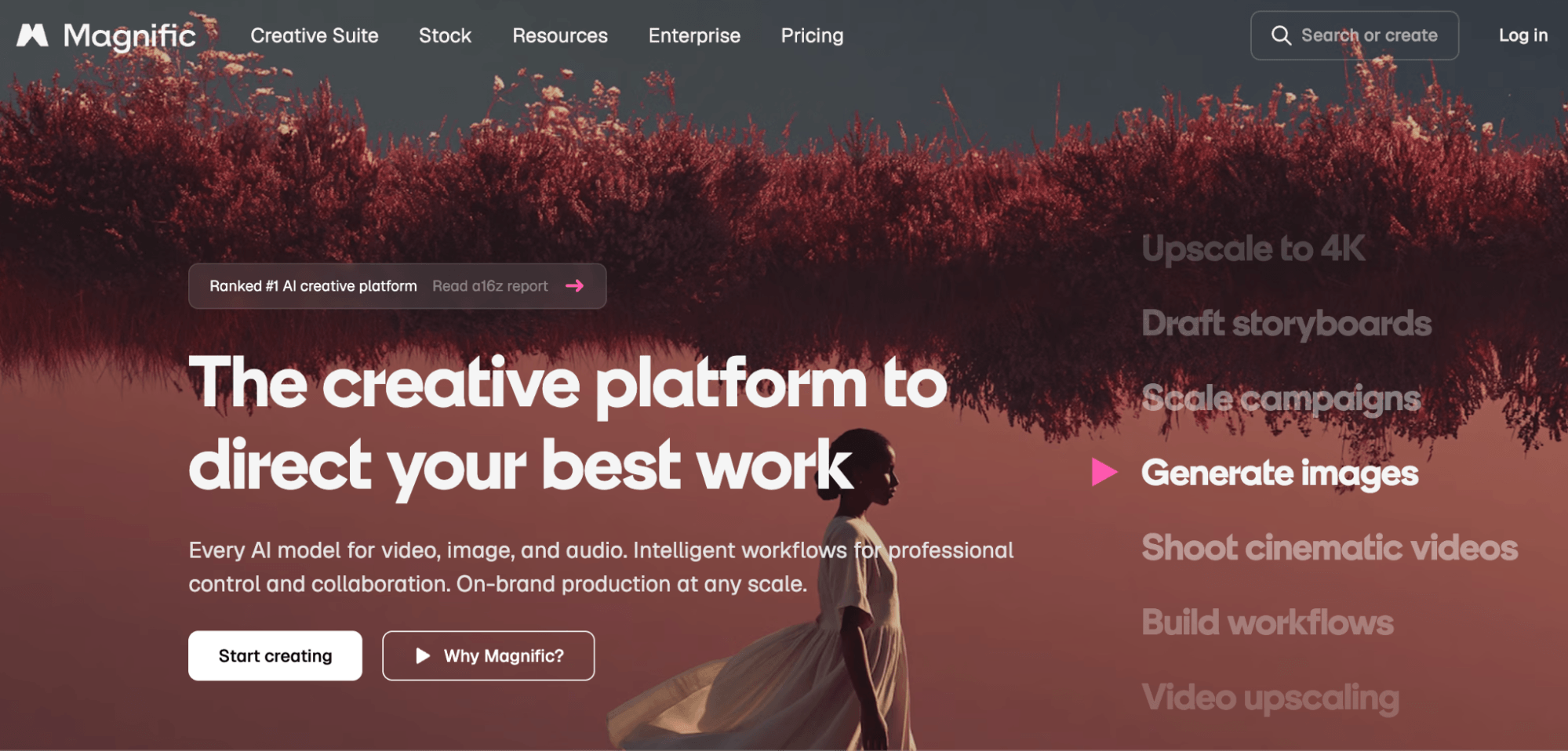
To stay ahead, avoid tethering your budget to a single tool. Using an AI platform aggregator, such as Magnific, allows teams to access a dozen different models under a single subscription. Magnific’s "Spaces" feature is particularly potent: it uses a node-based interface to automate workflows. For instance, a user can batch-generate 30 variations of a YouTube thumbnail, identify the top five, and set those as the visual reference for all future brand content.
Implications for the Future of Marketing
The shift toward these sophisticated workflows carries profound implications for the industry.
1. The Death of the "Stock" Look:
As brands gain the ability to build custom, consistent visual systems, the reliance on generic stock photography and templated video will plummet. Brands will no longer look like their competitors because they will be training their AI models on their own proprietary visual assets.
2. Democratization of High-End Production:
Small businesses with limited budgets can now achieve a level of visual polish previously reserved for agencies with massive production budgets. The barrier to entry has moved from "who has the most expensive camera" to "who has the best creative direction."
3. The Rise of the "AI Creative Director":
The role of the marketer is evolving. Technical execution—operating cameras, editing software, or complex prompt engineering—is becoming secondary to the ability to synthesize brand strategy into actionable, visual directives. The most successful marketers will be those who can guide the machine with a firm, clear creative hand.
Expert Insights and Practical Application
The journey to AI-driven success is not found in a single tool, but in the discipline of the process. Whether you are building a product sheet, creating a character model, or generating a 30-second campaign spot, the rules remain the same:
- Define the vision: What is the story?
- Standardize the assets: Use reference sheets to ensure consistency.
- Storyboard first: Iterate in images to save time and resources.
- Iterate surgically: Use tools like Omni Flash to fix specific elements rather than starting over.
By treating AI as an extension of the creative team rather than a replacement for it, marketers can produce content that is not only "polished" but truly resonant. The tools are ready—the question is whether your team is ready to provide the direction they require.
This article is derived from insights provided by Jerrod Lew, an AI educator and strategist specializing in scalable creative workflows. For more in-depth training on AI for business, follow the AI Explored podcast or explore professional workshops designed for modern marketing teams.