SAN FRANCISCO — In the high-stakes ecosystem of venture-backed technology startups, hiring a C-suite executive or a Vice President is often heralded as a milestone of maturity. It signals that a founder is transitioning from a scrappy operator into a true CEO who can delegate, scale, and build institutions. Yet, beneath the celebratory LinkedIn announcements and polished press releases lies a brutal reality: executive train wrecks are devastatingly common, and they happen much faster than most founders care to admit.
Having worked with or invested in roughly 30 successful startups beyond his own ventures, seasoned tech veteran and SaaStr founder Jason Lemkin has observed a graveyard of executive missteps. While hiring the wrong Vice President of Sales or Chief Revenue Officer (CRO)—someone mismatched for the company’s current growth stage, Average Contract Value (ACV), or deal size—remains the leading cause of friction, a close second threatens leadership teams daily.
It is not a lack of general competence, nor is it a deficiency in professional charm. The number two mistake in VP hiring—and arguably the leading catalyst for executive pink slips—is priority dis-alignment.
Main Facts: The Anatomy of Executive Attrition
The disconnect between startup CEOs and newly minted VPs rarely stems from personal animosity. More often, it is a fundamental disagreement over what matters right now.
While priority misalignments can happen in engineering, product, or customer success, they reach epidemic proportions in marketing departments. This vulnerability is structural. Marketing possesses the most heterogeneous responsibilities of any corporate function, encompassing demand generation, field marketing, corporate communications, content creation, and product marketing. Because the domain is so vast, the gap between a CEO’s expectations and a VP’s execution strategy is frequently wide enough to swallow a company whole.
To understand why this happens, one must look at the evolutionary timeline of a startup. By the time a company reaches $10k to $20k in Monthly Recurring Revenue (MRR), the CEO has already effectively served as the VP of Sales, Marketing, Product, and Customer Success. In the earliest days, founders are forced to wear every hat. Consequently, they develop intensely pragmatic, battle-tested opinions about what works, what does not, and what has already proven to be a waste of capital.
When a newly hired VP arrives with a rigid playbook imported directly from their previous employer—unaware or unconcerned with the idiosyncratic realities of their new home—conflict is mathematically guaranteed. If a VP’s top five priorities run counter to the foundational lessons a CEO has learned from their first 100 customers, that executive’s tenure will be measured in months, not years.
Chronology: The Lifecycle of a VP Mishire
To grasp how priority dis-alignment destroys executive tenures, it helps to trace the typical timeline of a high-level startup hire from recruitment to exit.
Phase 1: The Honeymoon and the Resume Playbook (Days 1–30)
The executive is recruited through a high-end search firm or mutual network. They arrive with immaculate credentials, often boasting tenure at a well-known tech giant or a hyper-growth unicorn. During the interview loop, they articulate a compelling vision of how they scaled marketing or sales at their previous organization. The CEO is charmed, exhausted by wearing too many hats, and eager to hand over the reins.
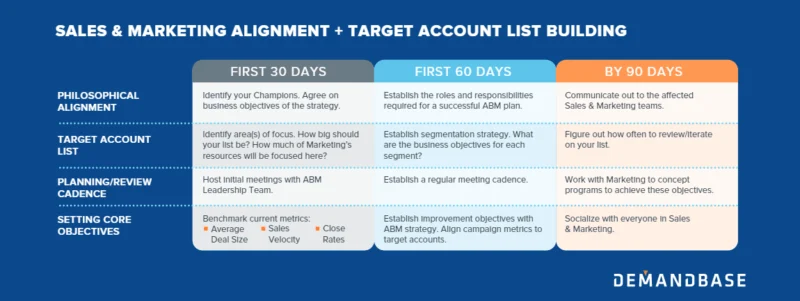
During the first month, the new VP spends time listening, auditing, and building their internal reputation. However, they are already formulating their strategic blueprint. Because they believe their past success is universally applicable, they design a 90-day plan centered on strategies that worked elsewhere—whether that means launching massive brand campaigns, shifting entirely to Account-Based Marketing (ABM), or overhauling the tech stack.
Phase 2: The Silent Fracture (Days 31–60)
As the VP begins presenting their strategic initiatives, subtle cracks appear. The CEO listens to the proposed top priorities and experiences a visceral sense of déjà vu—not of success, but of failure.
- “We tried agency-led demand gen at seed stage; it bled cash and produced zero qualified leads.”
- “Field events don’t convert for our ACV; our buyers are entirely remote.”
- “Paid social is a black hole for our enterprise motion.”
The CEO pushes back, urging caution or a pivot. The VP, viewing themselves as the domain expert hired precisely to "fix" marketing or sales, interprets the founder’s feedback as micromanagement or a lack of trust. Both parties nod politely in meetings, assuming the other will eventually come around. They do not.
Phase 3: The Execution Gap and the Collision (Days 61–90)
The VP executes their plan. Money is spent, campaigns launch, and channels are activated. But because the initiatives bypass the hard-won customer truths the CEO discovered during the first 100 sales, the metrics flatline or head in the wrong direction.
To the VP, the issue is execution speed, budget constraints, or a lack of organizational support. To the CEO, the issue is fundamentally strategic: the executive is fighting the market dynamics that the company spent years understanding.
Phase 4: The Inevitable Departure
Trust evaporates. The CEO feels the executive "just doesn’t get it," while the VP feels undermined and set up for failure. By month four or five, a mutual parting of ways occurs. Another executive search begins, setting the startup back quarters of momentum.
Supporting Data: Why the First 100 Customers Dictate Strategy
To prevent this destructive cycle, startups must recognize an immutable law of early-stage commerce: the patterns established by the first 100 customers rule supreme.
By the time a company hires its first dedicated functional VP, it is no longer a blank slate. Even if the product is innovative, the market has already provided definitive feedback on how it prefers to buy, onboard, and derive value.
- The Channel Reality: If the first 100 customers were acquired entirely through organic referral, inbound search, and direct founder outreach, attempting to immediately pivot the company into expensive outbound trade shows or complex partner ecosystems is catastrophic.
- The Economic Threshold: If enterprise deals require high-touch, consultative sales cycles lasting six months, a newly hired marketing leader cannot force a low-touch, product-led growth (PLG) motion simply because it trended on LinkedIn.
Founders have internalized these lessons through the pain of rejection, lost deals, and burned capital. When a new executive arrives, their mandate is not to reinvent the wheel, discard institutional knowledge, and start from scratch. Their mandate is to optimize and accelerate what is already working. Reinventing the wheel is a luxury reserved for companies with massive war chests that have outgrown their initial product-market fit—not for early-to-mid-stage startups fighting for predictable repeatability.
Official Recommendations and Best Practices: The 60-Day Alignment Exercise
To eliminate priority dis-alignment before it claims another executive career, leaders must implement a rigorous alignment framework during the onboarding window.
According to advisory frameworks utilized across the SaaS and venture capital community, the solution is deceptively simple yet rarely executed with discipline: The Top 5 Force-Ranked Priority Agreement.
1. Draft a Real, Actionable Plan
A 30-60-90 day plan cannot be a generic slide deck filled with management buzzwords like "synergy," "optimization," and "paradigm shift." It must explicitly address the operational realities of the business.
2. Force-Rank the Top 5 Priorities
Both the CEO and the incoming VP must independently, and then collaboratively, define the absolute Top 5 priorities for the functional area. They cannot be ten priorities; they must be narrowed down to five. If everything is a priority, nothing is.
3. Sign Off in Writing
This is not merely a verbal agreement made over coffee or during a celebratory dinner. The CEO and the VP must formally document these five priorities and, metaphorically or literally, "e-sign" them.
By forcing this exercise, both parties confront their assumptions head-on:
- The VP discovers what the CEO’s red lines are—the strategies that have already failed and will not be tolerated.
- The CEO discovers whether the VP actually understands the business model or is simply trying to paste a generic corporate playbook onto a unique early-stage environment.
When these priorities are locked down in writing, ambiguity vanishes. If the VP executes against those agreed-upon top five priorities and encounters resistance, the CEO is contractually and professionally bound to support them. Conversely, if the VP deviates to pursue pet projects or unverified strategies from their past, the performance failure is clear, measurable, and objective.
Broader Implications for the Tech Ecosystem
The friction of executive hiring extends far beyond individual corporate dramas; it speaks to the broader maturation challenges facing the modern tech economy.
As venture capital funding has normalized following the hyper-inflationary peaks of the pandemic era, startups no longer have the luxury of burning through executive talent. Capital efficiency is paramount. Every time a VP of Marketing or Sales is misaligned, dismissed, and replaced, the startup burns months of runway, loses institutional memory, demoralizes middle management, and squanders precious market momentum.
Furthermore, this dynamic highlights a structural flaw in how executive search is conducted. Too often, recruiters prioritize "pedigree"—hiring candidates from Fortune 500 companies or mega-unicorns—without evaluating whether those candidates possess the humility and adaptability required to respect an early-stage company’s foundational customer data. Big-company executives are frequently trained to manage massive budgets and scale established engines, not to respect the delicate, organic mechanics of product-market fit discovery.
Ultimately, bridging the gap between founder intuition and executive expertise requires a cultural shift. Founders must learn to articulate their hard-won market truths explicitly, rather than assuming new hires will absorb them through osmosis. At the same time, incoming executives must check their egos at the door, recognizing that their primary job upon arrival is not to prove how smart they were at their last company, but to understand why this company’s first 100 customers bought what they did.
By aligning on priorities before the ink on the employment contract is dry, startups can transform executive hires from high-risk gambles into predictable engines of enduring growth.