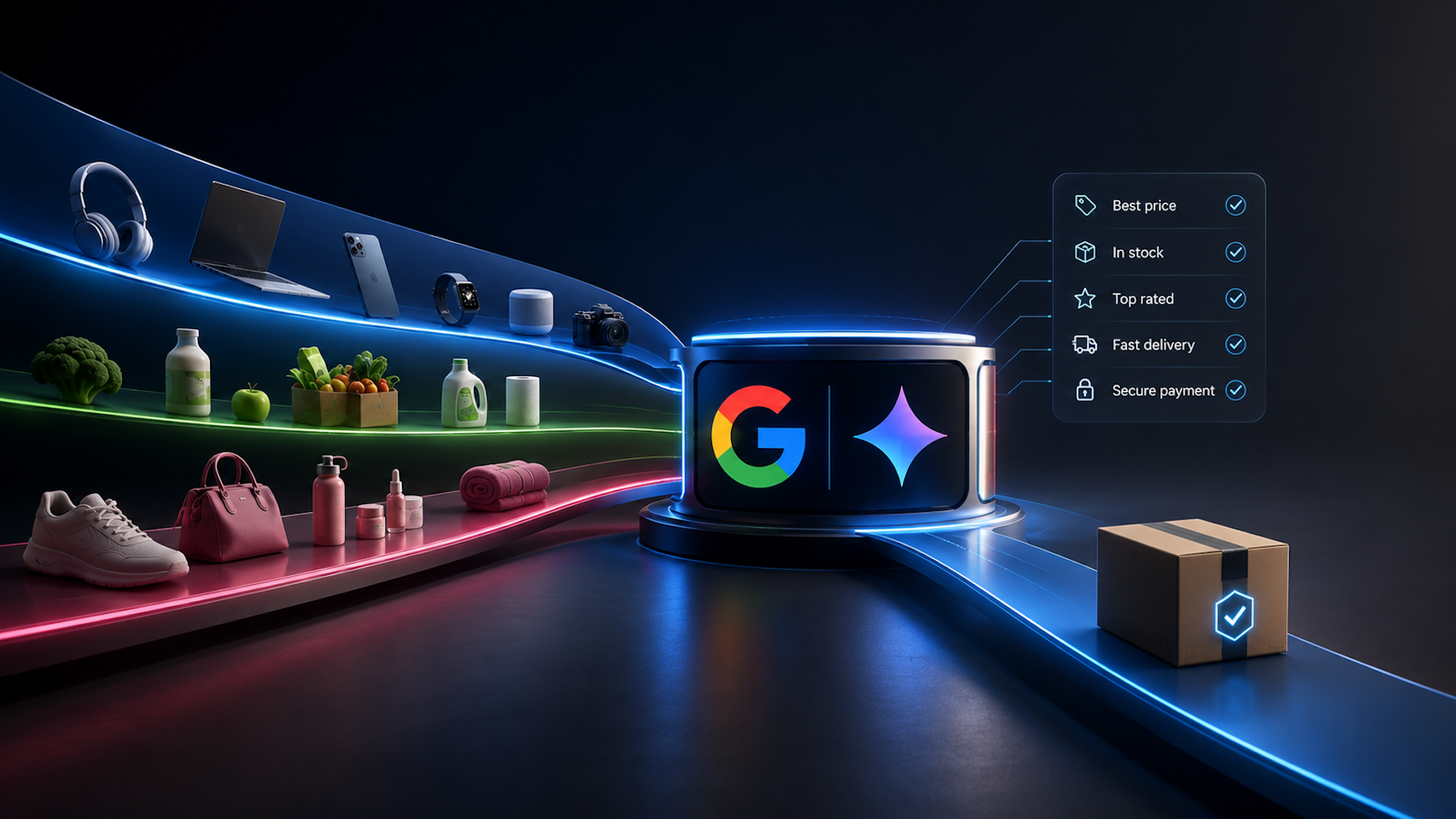
In a move that further blurs the line between search engine and creative workstation, Google has announced the integration of direct, text-to-image generation capabilities within its AI Overviews. Revealed alongside a comprehensive redesign of Google Image Search—which is celebrating its 25th anniversary—this update represents a fundamental shift in how users interact with search results. Instead of merely indexing and retrieving existing assets from the open web, Google Search is now capable of synthesizing entirely new visual media on demand.
The integration leverages Google’s latest lightweight AI technology to allow users to input natural language prompts and receive high-quality, custom visuals directly within the Search Generative Experience (SGE) interface. While the update promises to streamline creative workflows for everyday users, it raises significant concerns among publishers, digital marketers, and SEO professionals regarding the future of web traffic and organic click-through rates.
1. Main Facts: The Evolution of AI Overviews
The core of Google’s announcement is the deployment of real-time, generative AI image creation directly inside the AI Overviews box at the top of search engine results pages (SERPs). Rather than navigating to dedicated generative art platforms or third-party applications, searchers can now initiate, refine, and finalize custom graphics without leaving the Google Search ecosystem.
Key Features of the Update:
- Direct Prompting: Users can type a descriptive text prompt into the search bar or directly within an active AI Overview. The system then processes the query and generates a corresponding high-quality visual from scratch.
- Under the Hood: The feature is powered by Google’s latest Nano Banana AI model, a highly optimized, low-latency iteration of Google’s neural network suite designed specifically for rapid asset generation and edge-style processing within search environments.
- Seamless UI Integration: Generated images appear as interactive elements within the AI Overview module. Users can click on these visuals to expand, edit, download, or further modify them using sequential prompts.
- Geographic and Language Rollout: Google is launching the feature in English over the coming weeks. It will be accessible across all regions and territories that currently support generative image creation within Google’s AI-enabled search modes.
Concurrently, Google announced a dramatic visual overhaul of its legacy Google Image Search platform. Marking 25 years since the service’s inception, the redesign drops the traditional, clean, minimalist search box in favor of a dynamic gallery format designed to prioritize immersive discovery and curated visual feeds.
2. Chronology: From Visual Indexing to Synthetic Creation
To understand the gravity of this update, it is essential to trace the historical trajectory of Google’s visual search capabilities. The transition from indexing human-made photos to generating synthetic media in real time has been decades in the making.
[2001] Google Image Search Launches (Inspired by Jennifer Lopez's Versace Dress)
   │
[2011] Reverse Image Search Introduced (Search by uploading an image)
   │
[2017] Google Lens Debuts (Real-time visual analysis and OCR)
   │
[2023] Search Generative Experience (SGE) Beta begins testing AI-generated text
   │
[2024] AI Overviews officially roll out globally to standard Search
   │
[2026] Google Image Search turns 25; Direct Image Generation via "Nano Banana" model integrates into AI Overviews
The Milestones:
- July 2001 – The Birth of Image Search: Google officially launched Google Image Search. The feature was famously inspired by the massive volume of search queries for Jennifer Lopez’s green Versace dress worn at the 2000 Grammy Awards, which proved to Google’s engineering team that users wanted visual answers, not just blue text links. At launch, the index contained roughly 250 million images.
- 2011 to 2017 – Search by Image and Google Lens: Google moved beyond metadata-based search, introducing computer vision technologies. Users could upload images to find their sources, and eventually, Google Lens allowed mobile devices to identify real-world objects, translate text on the fly, and search via camera feeds.
- May 2023 – The SGE Experiment: Google introduced the Search Generative Experience at its annual I/O conference, testing conversational, AI-generated text responses at the top of search results.
- May 2024 – Global Launch of AI Overviews: Google rebranded SGE as "AI Overviews" and pushed the feature to hundreds of millions of users globally, fundamentally altering the real estate of the SERP.
- Mid-2026 – The Anniversary Update: Celebrating 25 years of Google Image Search, Google completes the transition from indexing the visual web to generating it, introducing the Nano Banana-powered image creator within AI Overviews.
3. Supporting Data and Technical Architecture
The technical execution of real-time image generation within a search engine requires immense computational efficiency. Generating an image from a text prompt typically requires substantial GPU power and can introduce latency—a critical issue for a search engine that measures response times in milliseconds.
The "Nano Banana" Model
While Google has historically relied on its massive Imagen models for high-fidelity studio generation, the integration into AI Overviews utilizes the Nano Banana AI model. This model is engineered to balance visual quality with rapid rendering speeds.
+-------------------------------------------------------------------------+
|                       Google Search Query Infrastructure                |
+-------------------------------------------------------------------------+
                                     │
                                     ▼
                      +-----------------------------+
                      |      AI Overviews Engine    |
                      +-----------------------------+
                                     │
                                     ▼
                      +-----------------------------+
                      |    Nano Banana AI Model     |
                      +-----------------------------+
                                     │
                 ┌───────────────────┴───────────────────┐
                 ▼                                       ▼
    [Low-Latency Asset Synthesis]           [Direct UI Render on SERP]
By utilizing highly distilled weights and optimized inference pipelines, the Nano Banana model can deliver custom graphics directly to the SERP in seconds, minimizing the latency penalty that usually accompanies text-to-image generation.
The Scale of Visual Search
To put the necessity of this optimization into perspective, consider the scale at which Google operates:
- Google processes an estimated 8.5 billion searches per day.
- Visual searches make up a significant percentage of these queries, with billions of images viewed daily.
- Even if only 1% of daily searches utilize the new image generation feature, Google’s infrastructure must handle 85 million image synthesis requests per day.
The introduction of the Nano Banana model is a direct response to this scaling challenge, allowing Google to offload massive server costs while maintaining the snappy user experience expected of modern search.
4. Official Responses and Industry Positioning
Google’s official announcements position this update as a natural evolution of human-computer interaction, framing it as a tool that bridges creative intent with immediate execution.

"To help bring those unique ideas to life, we’re bringing image generation directly into AI Overviews in Search," Google stated in its official product blog. The company emphasized the seamless nature of the tool, noting:
"This update transforms a simple text prompt into a high-quality, custom visual made completely from scratch, seamlessly bridging the gap between imagination and reality."
Regarding the 25th anniversary of Google Image Search and the accompanying redesign, Google officials expressed pride in the legacy of the platform while underscoring that the future of search is inherently conversational and generative. By dropping the classic search box on the image landing page and shifting to a curated gallery format, Google is encouraging users to think of search as an open canvas rather than a rigid directory.
5. Implications for Publishers, SEO, and the Web Ecosystem
While the feature is a technical milestone for Google, it has sent shockwaves through the digital publishing, photography, and search engine optimization (SEO) industries. The integration of synthetic media into AI Overviews presents several disruptive challenges to the traditional web ecosystem.
+-------------------------------------------------------------------------------+
|                       The Zero-Click Search Cycle                             |
+-------------------------------------------------------------------------------+
|                                                                               |
|   [User enters prompt] -> [AI Overview generates image] -> [User downloads]   |
|                                                                               |
|   Result: Zero traffic directed to original creators, photographers, or blogs |
+-------------------------------------------------------------------------------+
The Rise of "Zero-Click" Searches
For years, publishers and SEO strategists have warned of the rise of "zero-click" searches—queries where the user finds their answer directly on the Google results page without ever clicking through to an external website.
By generating custom images directly inside the AI Overview, Google eliminates the need for users to click on stock photography websites, digital art portfolios, or educational blogs. For example, a user looking for a "minimalist blue and gold graphic for a slide deck" no longer needs to visit stock photo platforms like Shutterstock, Getty Images, or Unsplash. Instead, they can generate the exact asset they need, download it, and exit the search engine.
Threat to Stock Photography and Independent Creators
The economic model of stock photography and digital art relies heavily on search engine visibility. If Google’s AI Overviews can instantly synthesize tailored images, organic search traffic to these platforms could decline dramatically. Furthermore, because these generative models were trained on billions of existing images across the web, creators face a double standard: their original intellectual property has been used to train a system that now actively diverts traffic away from their portfolios.
Impact on SEO and Tracking AI Visibility
For digital marketers, tracking performance in this new landscape will require sophisticated tools. As search engines shift from indexers to creators, measuring visibility is no longer just about tracking keyword rankings. SEO tools, such as those provided by Semrush, are adapting to help brands monitor their footprint within AI-generated summaries and conversational search. Marketers will need to understand how often their brand assets are cited by AI models and how synthetic search features affect their organic traffic funnels.
A Paradigm Shift in User Behavior
Ultimately, this update marks a pivot in Google’s identity. By integrating generative design directly into its search interface, Google is transitioning from an information retrieval system to an asset creation utility.
As users grow accustomed to generating custom visuals instantly, the demand for traditional search directories may decline. Whether this shift will enrich the web or starve the very content creators who trained these systems remains one of the most critical questions facing the digital media industry today.