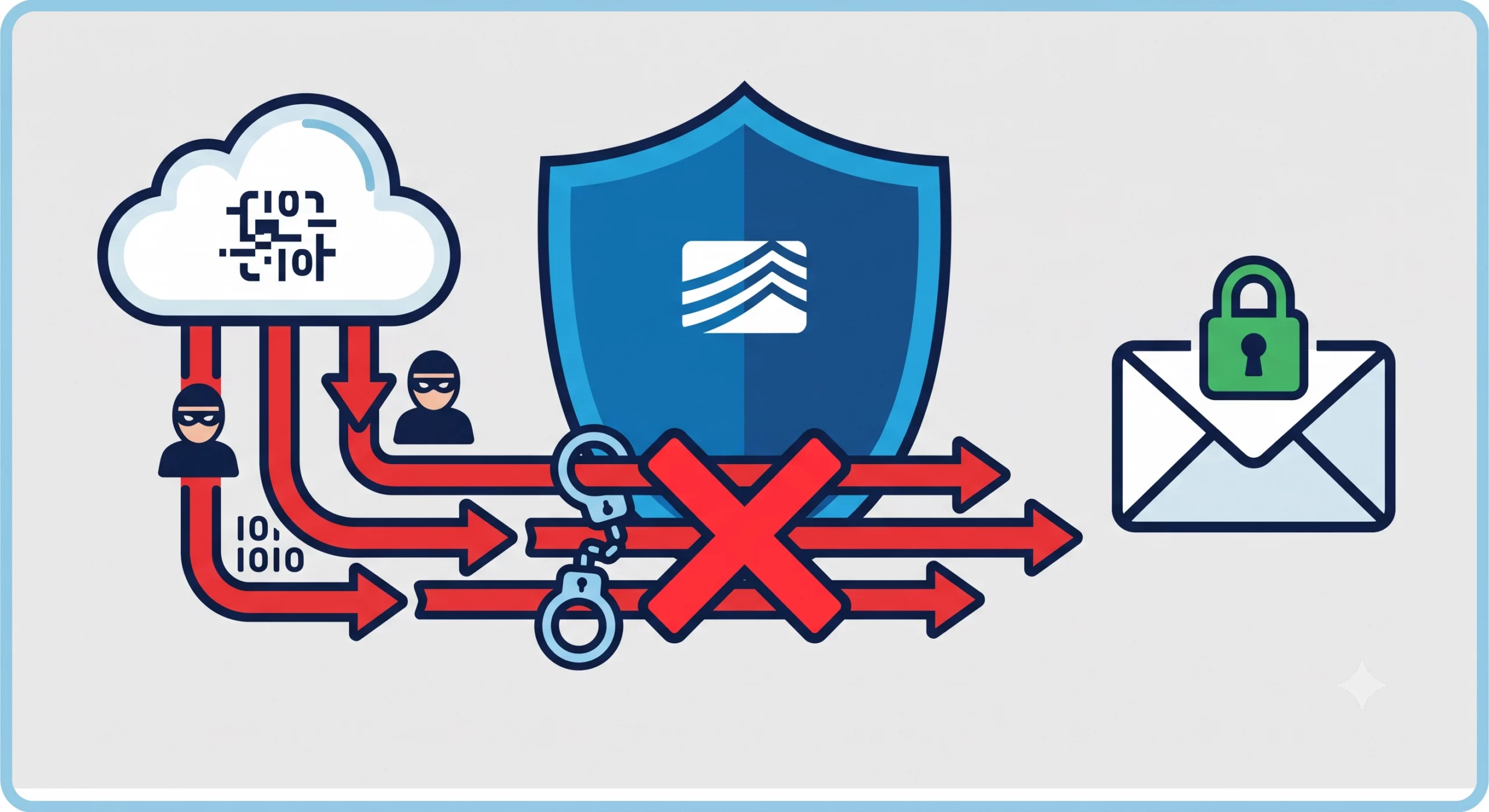
In a landmark victory for international law enforcement, a sprawling, multi-jurisdictional crackdown known as "Operation Endgame" has dealt a severe blow to the digital machinery that powers the modern ransomware and cyber-fraud economy. Announced by Europol on June 24, 2026, this latest phase of the campaign successfully dismantled the sophisticated infrastructure behind the Amadey loader and the StealC infostealer—two of the most prolific threats currently plaguing the global digital landscape.
The operation, which spanned a coordinated two-week window, resulted in the seizure of 326 servers and 142 domains, the freezing of approximately USD 47 million in illicit cryptocurrency assets, and the recovery of 27 million stolen credentials. By targeting the "assembly lines" of cybercrime, authorities have successfully disrupted the critical transition point where a simple infected device is transformed into a gateway for high-stakes fraud and enterprise-level ransomware attacks.
The Anatomy of the Strike: What Was Dismantled
To understand the scale of this operation, one must first understand the symbiotic relationship between Amadey and StealC. Amadey, which has functioned as a "dropper-as-a-service" since 2018, serves as the initial breach mechanism. Distributed primarily through phishing campaigns and malspam, it establishes a persistent foothold on a victim’s machine. Once the door is opened, it executes its payload—typically StealC.
StealC, a highly efficient infostealer that emerged in early 2023, acts as the harvesting layer. It is specifically designed to scrape browser-stored passwords, session tokens, cookies, and sensitive financial credentials. These stolen data packets are then funneled to underground marketplaces and initial access brokers, who sell them to the highest bidder.
According to data provided by Microsoft’s Digital Crimes Unit (DCU), the potency of this pair cannot be overstated. In the first two weeks of May 2026 alone, the duo was responsible for more than 140,000 confirmed system infections worldwide. By dismantling the command-and-control (C2) servers and domains used to manage these infections, law enforcement has effectively severed the "lifeline" between the threat actors and their victim machines.
Chronology of the Action
The June 2026 operation was not an isolated event but rather the latest, most aggressive iteration of Operation Endgame. The momentum for this phase began to build in mid-June, with Dutch police announcing the takedown of SocGholish—a notorious fake browser update operation linked to the infamous "Evil Corp" cybercrime syndicate—on June 18.
By June 24, Europol formalized the announcement of the broader crackdown. The operation was a masterpiece of international cooperation, involving law enforcement agencies from the United Kingdom, the United States, Germany, the Netherlands, Denmark, and Canada. These efforts were meticulously coordinated through Europol’s European Cybercrime Centre (EC3) and the Joint Cybercrime Action Taskforce (J-CAT), with critical legal oversight and evidentiary support provided by Eurojust.
The success of the mission relied heavily on a public-private partnership model. While government agencies provided the legal authority and tactical enforcement, private sector cybersecurity giants—including Microsoft, Proofpoint, IBM X-Force, ESET, Bitdefender, Lumen, the Shadowserver Foundation, and Have I Been Pwned—provided the telemetry, threat intelligence, and technical analysis necessary to map and neutralize the infrastructure in real-time.
Supporting Data: The Scale of the Impact
The statistical footprint of this operation serves as a stark reminder of the massive scale of contemporary cybercrime.
- Infrastructure Neutralized: 326 servers seized; 142 domains taken offline.
- Financial Disruption: Over EUR 41 million (approx. USD 47 million) in criminal crypto-assets identified and frozen.
- Credential Recovery: 27 million stolen login credentials retrieved from more than 385,000 compromised systems.
This data represents a significant disruption to the underground economy. By forcing these operations offline, law enforcement has not only prevented current attacks but has also caused a massive "data liquidity crisis" for the threat actors, who rely on the rapid monetization of stolen credentials to fund their ongoing operations.
The Strategic Importance for Email Senders and ESPs
For professionals in the email marketing and communications industry, this takedown is particularly significant. Infostealers are positioned at the very top of the account takeover (ATO) funnel. When a StealC infection occurs on an employee’s machine, it does not just steal personal emails; it harvests the session cookies of ESP (Email Service Provider) dashboards, marketing automation platforms, and internal sending infrastructure.
The theft of session cookies is arguably more dangerous than the theft of a password, as these cookies can often bypass multi-factor authentication (MFA) entirely. Once a threat actor possesses a valid session cookie, they can impersonate a legitimate user, gain access to an ESP’s sending reputation, and inject malicious content into high-volume, trusted mailing lists.
By removing 27 million credentials from circulation and shuttering the infrastructure that harvested them, Operation Endgame provides a temporary but meaningful reduction in the risk of sender-side compromise. Security researchers are now urging all organizations—especially those managing high-volume mailing infrastructure—to cross-reference their user accounts against the databases held by Have I Been Pwned. If a compromise is detected, an immediate, forced password and session reset is the only viable path to remediation.
Official Responses and Industry Sentiment
Europol’s official stance emphasizes that the objective of Operation Endgame is not necessarily the permanent extinction of these threats—which often prove to be hydra-like in their ability to rebrand and resurface—but rather the imposition of "friction and cost."
"The goal is to disrupt the assembly lines," a Europol spokesperson stated, highlighting that by increasing the cost of operations for cyber-criminals, law enforcement can force them to migrate to less efficient, more expensive, and less reliable tactics.
Private partners involved in the operation have echoed this sentiment. Microsoft’s DCU, in a statement accompanying the announcement, noted that the takedown represents a "significant blow to the upstream supply chain of mailbox and ESP account takeover." However, industry analysts remain cautious. Previous iterations of Operation Endgame have targeted heavyweights like IcedID, Smokeloader, Bumblebee, DanaBot, and Rhadamanthys. In almost every instance, the underlying criminal networks have attempted to rebuild.
Implications: The New Normal of Cyber-Resilience
The reality of the current threat landscape is that extinction is rarely the outcome of a single operation. The rapid regrowth of phishing-as-a-service kits, such as the recently observed Tycoon 2FA, demonstrates that the demand for "off-the-shelf" cybercrime tools remains high.
For the broader cybersecurity community, the takeaway from Operation Endgame is twofold:
- Collaboration is the only viable defense. The speed and scale of modern cybercrime can no longer be addressed by national police forces acting in isolation. The integration of private sector telemetry with public sector enforcement is the new gold standard for digital policing.
- Hygiene is the frontline. While law enforcement can strike the infrastructure, the ultimate security of the email ecosystem depends on the hygiene of the users within it. Organizations that fail to enforce rigorous credential management, implement robust endpoint protection, and monitor for unauthorized session activity will remain the primary targets for the next generation of infostealers.
As of late June 2026, researchers are closely monitoring global malspam volumes to see if the removal of Amadey’s distribution infrastructure results in a sustained dip in malicious activity. While the immediate results are positive, the industry waits with bated breath to see how quickly these syndicates can adapt to the new, more expensive reality imposed upon them by Operation Endgame. For now, the "assembly lines" are quiet, but in the volatile world of global cybercrime, the silence is rarely permanent.