For years, the gold standard for digital visibility was simple: rank in the top ten of Google’s blue links, and the traffic would follow. SEO professionals built entire careers around deciphering the algorithms that governed those results. However, the rise of Generative AI (GenAI) and Large Language Model (LLM)-powered search engines has disrupted this paradigm. In this new landscape, users aren’t just searching for links; they are searching for direct answers, summaries, and synthesized insights.
The transition to an "answer-first" internet has created a "black box" problem. Traditional search metrics are failing to capture the nuance of how AI platforms utilize web content, leaving site owners and marketers effectively flying blind. As we enter a new phase of search engine evolution, the industry is grappling with a profound lack of transparency—until now.
The Performance Paradox: Why Traditional SEO Tools Are Falling Behind
Optimizing for visibility in generative AI answers remains a notoriously difficult endeavor. Unlike traditional organic search, where metrics like impressions, clicks, and average position provide a clear roadmap, the AI ecosystem offers little in the way of native performance reporting.
Currently, Google’s Search Console—the industry’s most vital tool—combines AI Overviews with traditional organic listings in its "Performance" tab. For marketers, this is a significant hurdle; there is no clear way to distinguish between traffic driven by a standard link and visibility earned through an AI-generated summary. This ambiguity forces optimizers to guess which channels are truly driving their growth.
The situation is even more opaque with platforms like OpenAI’s ChatGPT. Unless a publisher has a formal licensing agreement to provide content for model training or real-time searching, access to traffic data is non-existent. Publishers are essentially contributing to the AI’s knowledge base with no visibility into how often their content is cited or if it is driving any measurable value.

A New Benchmark: Bing’s Path Toward Transparency
In a move that distinguishes it from its competitors, Microsoft’s Bing has emerged as the first major platform to address this transparency deficit. Earlier this year, Microsoft published its "Guide to AEO (Answer Engine Optimization) and GEO (Generative Engine Optimization)," signaling a shift in how they intend to communicate with webmasters. Shortly thereafter, the company launched its "AI Performance Report" within Bing Webmaster Tools.
Recently, Microsoft significantly improved this report, moving it from a basic tracking tool to a genuinely actionable resource. This evolution represents a critical milestone in the relationship between AI developers and the publishers who power their models.
Understanding the AI Performance Report
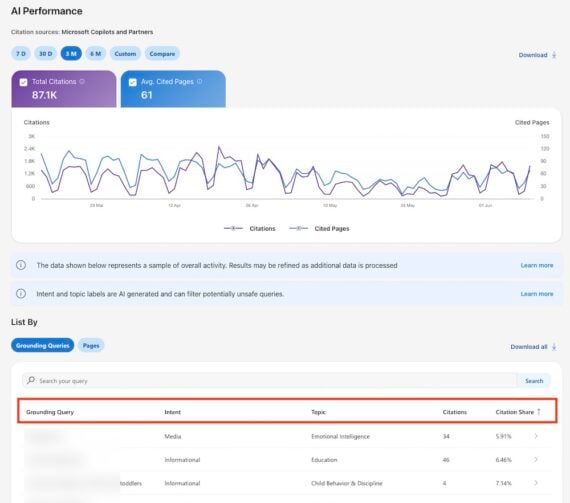
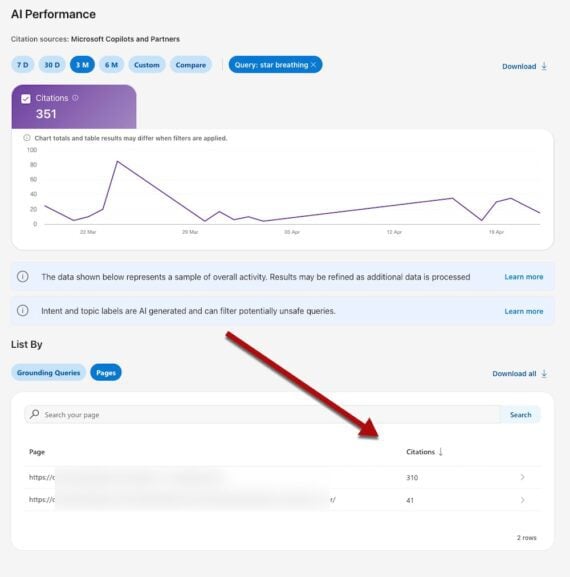
The Bing report is designed to track citations in Microsoft Copilot, AI-generated summaries in Bing, and select AI partner integrations. While the current iteration does not allow users to filter by specific channels or identify the exact partners involved in a citation, it provides an unprecedented look at how content is being utilized by LLMs.
The report is bifurcated into two core sections: Grounding Queries and Pages.
- Grounding Queries: This section identifies the specific search phrases that trigger the AI to synthesize a response. By understanding which queries result in AI-generated answers, publishers can begin to tailor their content to meet the specific informational needs of the AI.
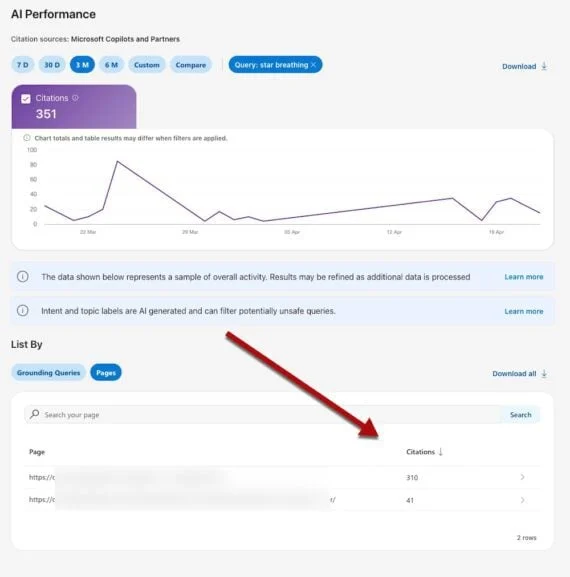
- Pages: This section tracks which of the publisher’s URLs are being cited as sources within those AI responses.
For every "Grounding Query," the updated report now offers a granular breakdown, including the intent behind the search, the broader topic, the total number of citations, and the "citation share." Users have the ability to sort these columns and export the data into spreadsheets, allowing for deeper offline analysis and cross-referencing with internal site data.
The Mechanics of AI Citations
The utility of the Bing AI Performance Report lies in its ability to reveal the "why" and "how" behind a citation. When a user clicks on a specific Grounding Query, they are presented with a list of the pages that the AI deemed relevant enough to cite.
It is important to note that the report tracks the frequency of a citation—how often a URL appears in a response—but it does not currently offer direct data on "views" or "clicks" that resulted from those citations. While this may seem like a limitation, it is a significant improvement over the total lack of data previously available. By seeing which pages are frequently cited, publishers can analyze the underlying content strategy that led to that visibility. Are the cited pages high-authority articles? Do they contain structured data that the AI finds easier to parse? These are the questions that the new report allows webmasters to answer.
Using the Data: A Strategic Pivot for Marketers
The expanded metrics provided by Bing enable a more data-driven approach to content creation. To leverage this data, SEO professionals should focus on:
- Identifying High-Intent Queries: By reviewing the "Grounding Queries" list, marketers can isolate topics where their content is already serving as an authority. If your site is frequently cited for a specific high-intent query, it suggests that your content aligns well with the AI’s requirements for accuracy and relevance.
- Content Gap Analysis: Conversely, by seeing which queries lead to citations for competitors but not for your site, you can identify "content gaps." You can then prioritize updating existing pages or creating new content to fill those specific information voids.
- Monitoring Citation Velocity: Tracking how often your pages are cited over time can indicate whether your content strategy is gaining momentum with the AI, or if you are losing relevance as the model updates its sources.
Official Responses and Industry Implications
The industry reaction to Bing’s transparency efforts has been largely positive, though cautious. Microsoft’s leadership has framed this initiative as part of a broader commitment to the health of the open web. By providing these metrics, they are acknowledging that the AI ecosystem cannot survive without a healthy, incentivized publishing community.
However, the lack of click-through data remains a point of contention. Industry analysts argue that while knowing you were "cited" is helpful for brand awareness, it does not solve the underlying economic problem: if AI provides the answer directly to the user, the incentive for that user to click through to the publisher’s website vanishes.
"Transparency is a necessary first step," says one industry consultant. "But until we can measure the ROI of an AI citation in terms of traffic or lead generation, publishers will continue to view GenAI as a potential threat to their bottom line rather than a partner."
How to Get Started
For site owners looking to tap into this data, the setup process is intentionally streamlined for those already utilizing Google Search Console.
- Log in to Bing Webmaster Tools: Use your existing Microsoft account credentials.
- Add Your Site: If you haven’t already, click "Add site."
- Import from GSC: Choose the option to "Import your sites from GSC." This feature automatically verifies your ownership, saving the time-consuming process of manual DNS or meta-tag verification.
- Wait for Data: Once connected, allow roughly 24 hours for the platform to crawl your site and begin reporting on your AI performance.
The Road Ahead
As we look toward the future of search, the divide between "traditional" and "generative" search will continue to blur. Google will likely be forced to follow Microsoft’s lead, eventually offering more granular reporting on how AI Overviews utilize web content to remain competitive with Bing.
For now, the Bing AI Performance Report stands as the most robust tool available for publishers to peek inside the engine room of modern search. The companies that learn to adapt their content strategies to this new, citation-heavy environment will be the ones that survive the transition. While the metrics are not yet perfect, they represent a vital shift from a philosophy of "traffic at all costs" to one of "relevance and authority." In an era where AI is the gatekeeper of information, becoming a trusted source is no longer just a goal—it is a necessity for survival.