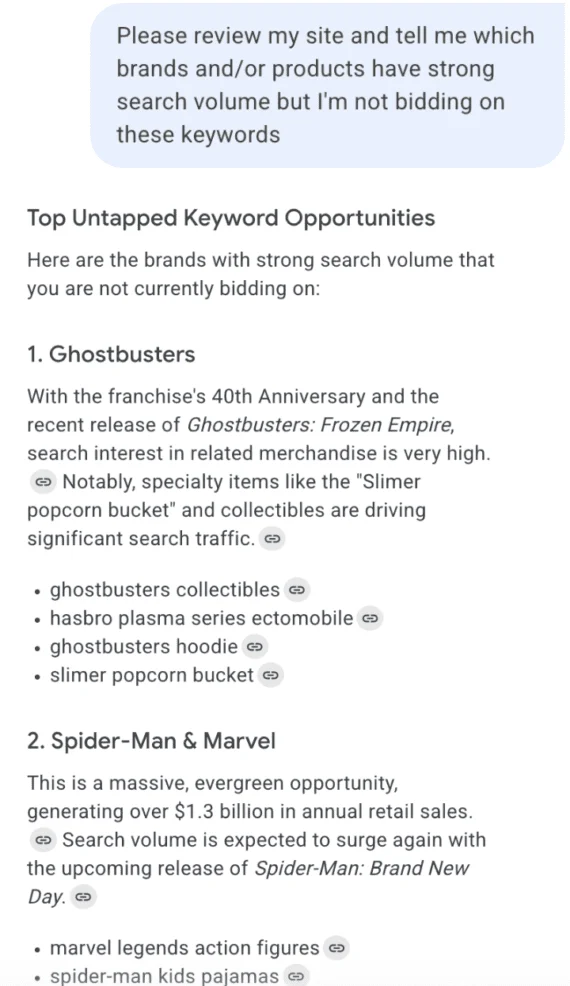
The emergence of generative AI (genAI) search—represented by platforms like ChatGPT, Perplexity, and Google’s AI Overviews—has triggered a gold rush among digital marketers. In an effort to quantify their presence in this new landscape, businesses have turned to AI visibility-tracking tools such as Profound and Peec AI. These platforms promise to measure a brand’s footprint by assigning "visibility scores" based on specific prompts.
However, a growing consensus among SEO experts suggests that these metrics are often misleading, frequently manipulated, and fundamentally disconnected from actual consumer behavior. As brands pour resources into optimizing for AI, the industry must pivot from superficial "visibility" to a more nuanced understanding of how AI platforms actually synthesize information and influence purchase decisions.
The Myth of the Visibility Score
At the heart of the current tracking frenzy is the visibility score—a percentage-based metric that purports to tell a business how often it appears in AI-generated responses. While intuitively appealing, these scores are inherently flawed.
Visibility-tracking tools operate by feeding specific, often leading, prompts into AI models and monitoring the output. The problem lies in the prompt design. If a marketer uses a prompt that explicitly includes their brand name, the AI is virtually guaranteed to include that brand in its response. This results in a "visibility score" of 100%, which artificially inflates the brand’s overall average and creates a false sense of security.
Some agencies have been accused of leveraging these manipulated metrics to justify their retainers, showing clients high visibility scores that do not translate into organic traffic or brand awareness. These scores reflect the prompt’s constraints rather than the AI’s objective utility or organic retrieval patterns. To build a sustainable strategy, marketers must look past these vanity metrics and focus on how consumers naturally interact with generative search engines.
A Chronology of the Shift in Search Optimization
The evolution of search optimization has moved through three distinct phases:

- The Keyword Era (2000–2015): SEO focused on density, link building, and meta-tag optimization to satisfy traditional search engine algorithms.
- The Intent Era (2015–2022): Algorithms became sophisticated enough to understand user intent, leading to the rise of semantic search and the dominance of content hubs.
- The Generative Era (2023–Present): Search is no longer a list of blue links but a synthesis of information. The focus has shifted from ranking for keywords to becoming a reliable, cited source for AI models.
As generative AI adoption accelerated in 2023, marketers initially treated it as a new form of SEO. However, early attempts to "game" the system—such as spamming keywords within long-form content—proved ineffective against the reasoning capabilities of modern LLMs (Large Language Models). Today, the focus has shifted toward "Generative Engine Optimization" (GEO), which emphasizes authority, factual accuracy, and the ability to answer complex user queries.
Supporting Data: Why Citation Matters More Than Rank
Data suggests that not all citations are created equal. In the context of genAI, there is a stark divide between "visible" and "invisible" citations.
- Invisible Citations: These occur when an AI model pulls data from a source but does not explicitly name the brand, instead providing a subtle, often obscured, inline link. Analytics suggest these links generate negligible traffic—often cited as less than 0.2% in various industry tests.
- Visible Citations: These are the gold standard. A visible citation occurs when the AI explicitly names the business in the body of the response. Testing indicates that these mentions are significantly more likely to drive consumer trust and subsequent buying decisions.
The challenge for modern marketers is to transition their content from being "retrieved" by AI to being "referenced" by AI. This requires a fundamental shift in on-site strategy. Instead of focusing solely on search volume, brands must audit the content that competitors are using to capture these visible citations.
Content Gaps and Competitor Benchmarking
The most effective way to improve AI visibility is to perform a content gap analysis that focuses on utility rather than keywords. If a business fails to address the specific, granular concerns of its target audience, AI platforms will simply ignore that site in favor of competitors that do.
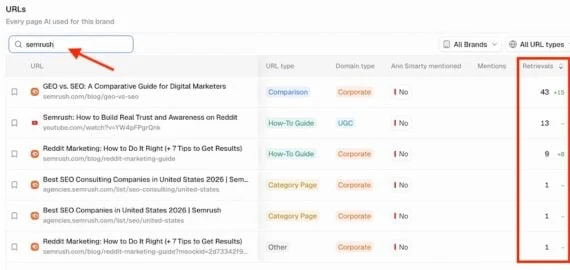
By analyzing competitors who consistently appear in AI responses, marketers can identify the "content types" that LLMs prefer. For instance, if an AI consistently pulls information from a specific "Comparison Guide" or "How-To Manual," it is a signal that the AI perceives that format as authoritative. Brands should then look to replicate this value—not by copying content, but by providing more accurate, up-to-date, and comprehensive information that the AI can easily parse and verify.
Implications: The Move Toward Branded Prompts
The ultimate litmus test for any brand’s AI strategy is the "branded prompt." A branded prompt asks the AI directly about a company’s services, products, or reputation. If a brand is failing to appear accurately in its own branded queries, its broader AI strategy is likely failing.
To optimize for this, brands must:
- Standardize Business Information: Ensure that all major platforms and data aggregators have consistent, accurate, and structured data regarding the company.
- Focus on On-Site Authority: Use blog posts and knowledge bases to answer the "why" and "how" of their industry. AI models favor sites that act as comprehensive resources rather than sales-heavy landing pages.
- Monitor Retrieval Patterns: Utilize tools like Peec AI to track not just "visibility," but which specific URLs are being retrieved and why. A spike in retrievals for a specific educational guide is a signal that the content is hitting the right note for the AI’s training and retrieval logic.
The Future of AI Search Visibility
The shift toward AI-driven discovery is not a temporary trend; it is a fundamental transformation of the web. As AI models become more integrated into browsers and operating systems, the "search bar" as we know it will become a "knowledge assistant."
For businesses, the implication is clear: the era of manipulating metrics to look good in reports is coming to an end. The brands that succeed will be those that provide genuine, high-value information that the AI can cite with confidence. This requires a move away from the "SEO hack" mentality and toward a strategy rooted in brand authority, clear communication, and the consistent delivery of high-quality, answer-oriented content.
Summary of Recommendations for Marketers:
- Audit Your Metrics: Stop prioritizing aggregate visibility scores. Start tracking "Visible Citations" and traffic quality.
- Embrace Branded Queries: Test your brand’s presence in AI responses regularly. If the response is outdated or inaccurate, update your on-site content immediately.
- Focus on the "Why": Shift content strategy toward answering complex, multi-layered questions rather than chasing high-volume, low-intent keywords.
- Transparency over Tactics: Generative AI is built on trust and coherence. Sites that demonstrate expertise and provide clear, structured information will naturally become the sources that AI models prefer.
As we look toward the future, the goal remains the same as it has always been in digital marketing: to be found by the right customer at the right time. The tools have changed, and the metrics must evolve with them. By focusing on quality, relevance, and the nuances of how AI synthesizes information, businesses can ensure they remain visible in an increasingly automated world.