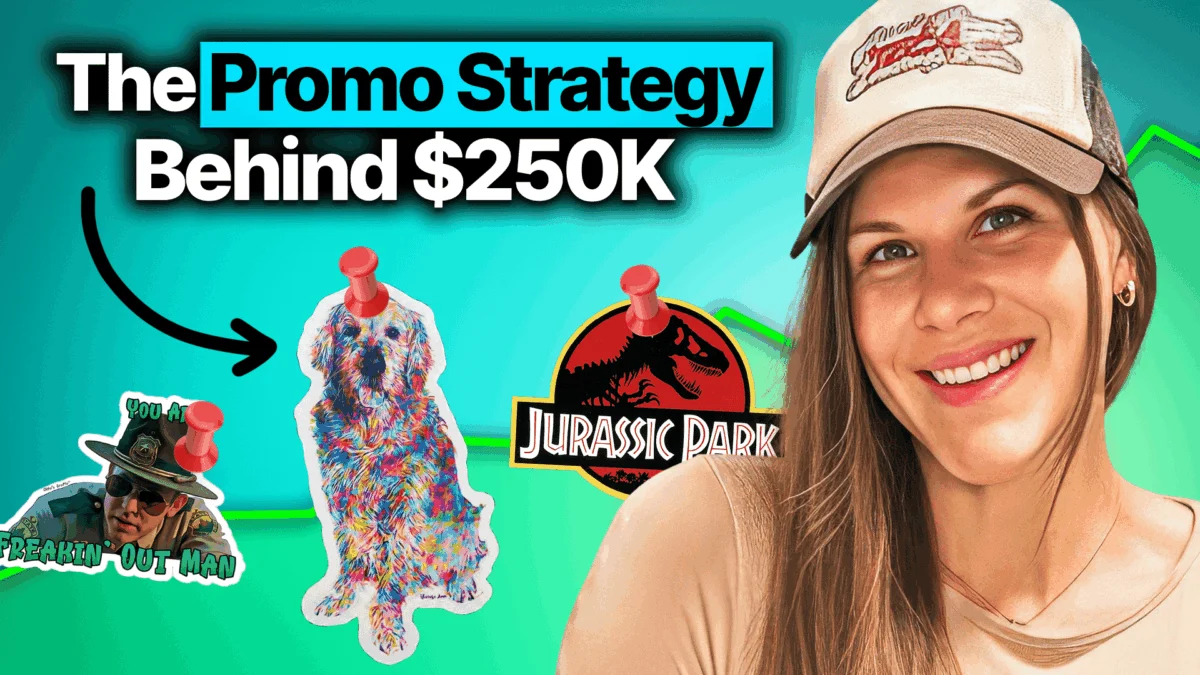
In the rapidly evolving landscape of digital entrepreneurship, few success stories are as illustrative of modern "lean startup" principles as that of Therese Waechter. As the founder of Otto’s Grotto, Waechter has transformed a simple, accidental sticker design into a thriving e-commerce engine generating $250,000 in annual revenue. Her journey, recently detailed on the Niche Pursuits Podcast, offers a masterclass in platform diversification, supply chain optimization, and the art of the pivot.
For aspiring entrepreneurs and seasoned e-commerce veterans alike, Waechter’s trajectory serves as a blueprint for turning creative output into a sustainable, scalable business model.
The Genesis of an Accidental Empire
Every major enterprise often begins with a modest experiment. For Waechter, the birth of Otto’s Grotto was not the result of a meticulously crafted business plan, but rather a series of iterative tests. Having previously experimented with Amazon FBA (Fulfillment by Amazon) and general merchandise flipping, she found herself with a single, high-performing design that resonated with a specific audience.
When she decided to translate that digital asset into a physical sticker, the response was instantaneous. What began as a supplemental item bundled with custom t-shirts quickly outperformed the clothing line itself. This early success taught her the first lesson of modern e-commerce: listen to the data, not your ego. When a product shows organic traction, double down.
However, the path was not without its obstacles. Early on, Waechter faced a significant existential threat when a platform—Facebook—suddenly shut down her primary sales channel without warning or explanation. This "black swan" event proved to be a turning point. Instead of folding, she pivoted toward platforms that rewarded long-term brand building and search engine optimization, namely Etsy and Amazon. This forced diversification laid the foundation for the resilient, four-platform machine her business is today.
Chronology: From Garage Startup to Automated Scaling
The growth of Otto’s Grotto can be categorized into three distinct phases of operational maturity:
- The Scrappy Launch: The early days were defined by manual labor. Waechter focused on design, printing, laminating, and cutting stickers in-house. While grueling, this phase provided her with total control over product quality and, more importantly, provided the margins necessary to survive before she had the volume to negotiate with professional manufacturers.
- The In-House Optimization Phase: By bringing production entirely in-house, Waechter eliminated the "middleman" tax. This allowed her to fulfill wholesale orders with a speed that larger, outsourced competitors could not match. It was during this period that she began to treat her small business like a manufacturing plant, fine-tuning her workflow to maximize output per hour.
- The Automation and Outsourcing Pivot: Recognizing that manual production was a bottleneck to growth, Waechter has recently transitioned to using vetted trade printers. By moving to remote fulfillment, she is effectively removing herself from the "grunt work" of the business, shifting her focus toward high-level strategy, marketing, and the "vibe coding" of her digital storefronts.
The Four-Pillar Strategy: Diversification as Risk Mitigation
Waechter’s business relies on a four-platform ecosystem, each serving a unique function in the sales funnel. By spreading her presence across Etsy, Amazon, Faire, and her own Shopify site, she ensures that no single platform’s algorithm update can jeopardize her livelihood.
Etsy: The Discovery Engine
Etsy serves as the primary discovery platform for Otto’s Grotto. Its audience is primed for unique, artisan-style goods, making it the ideal place to test new designs. Waechter emphasizes that success on Etsy is not about luck; it is about rigorous keyword optimization and understanding the platform’s search intent.
Amazon: The Volume Driver
If Etsy is for discovery, Amazon is for scale. The barrier to entry on Amazon is higher, requiring strict adherence to their shipping and performance metrics, but the sheer volume of traffic makes it an indispensable channel for any brand aiming for a six-figure run rate.

Faire: The Wholesale Powerhouse
For B2B growth, Waechter leverages Faire. This platform allows her to reach boutique retailers who stock her stickers in physical shops across the country. While Faire takes a commission, the trade-off for access to high-volume wholesale orders is well worth the cost. For direct-to-retailer leads, she funnels them to her Shopify site to avoid platform fees, maximizing her margins.
Shopify: The Brand Home
Her standalone website is the final piece of the puzzle. It serves as the "source of truth" for the brand, allowing her to capture customer data, build email lists, and maintain total control over the brand experience without the constraints of marketplace algorithms.
Supporting Data: Strategies for Platform-Specific Scaling
During her discussion on the Niche Pursuits Podcast, Waechter provided concrete, tactical advice for sellers looking to replicate her success:
- Amazon Tactics: Success on Amazon is predicated on "searchability." Waechter advises sellers to focus heavily on keyword density in titles and bullet points. She also highlights the importance of Amazon Ads, which, while costly, are essential for driving the initial velocity needed to climb the organic search rankings.
- Etsy Tactics: On Etsy, visual appeal and social proof are paramount. She suggests using promotional sales to trigger the algorithm’s "urgency" signal. When a product is on sale, it sees a bump in visibility, which leads to more sales, which in turn leads to higher organic rankings.
- Faire Tactics: For wholesale, it is about professional presentation. Retailers want to see that you are ready for scale. Having a polished catalog and a clear, reliable shipping timeline is the key to winning wholesale accounts.
The Integration of AI and "Vibe Coding"
Perhaps the most modern aspect of Waechter’s success is her adoption of Artificial Intelligence. While she maintains that AI should not be the core of a business, she uses it as a force multiplier. Her methodology, which she playfully calls "vibe coding," involves using tools like ChatGPT to mimic complex website features or troubleshoot code that she would otherwise have to hire a developer to build.
This approach allows her to iterate on her website’s functionality in real-time. Whether it is optimizing a landing page or automating a repetitive task, Waechter treats AI as a "junior employee" that never sleeps. However, she warns against the "side quest" trap: the tendency for entrepreneurs to spend more time playing with new AI tools than actually selling products.
Implications: The Future of the Creator Economy
The story of Otto’s Grotto has significant implications for the future of the creator economy. It highlights a shift away from the "influencer" model—which relies on temporary social media trends—toward the "micro-brand" model, which relies on high-quality product fulfillment and technical platform mastery.
Furthermore, Waechter’s transition toward remote, outsourced production represents the "holy grail" of the modern entrepreneur: the move from being a self-employed business owner to a business operator. By outsourcing the manufacturing, she has freed up the mental bandwidth required to pursue earned media opportunities. By leveraging platforms like Qwoted and Cision, she is effectively using public relations to build the brand authority that protects her against future competitors.
Final Thoughts: Lessons for the Aspiring Mogul
Therese Waechter’s rise to a $250,000-per-year sticker business is a testament to the power of persistence and adaptability. Her journey suggests that:
- Start Small, But Think Big: Begin with a product that has proven market fit, but design your systems to handle growth from day one.
- Control Your Channels: Never rely on a single marketplace. Diversify your revenue streams to ensure business continuity.
- Optimize for the Algorithm: Every platform has a "game." If you want to win, you must understand the rules—whether that is keyword density on Amazon or promotional cycles on Etsy.
- Automate to Elevate: Use technology, including AI, to remove yourself from the manual labor of the business so you can focus on strategy and growth.
For those looking to build their own niche empire, the message is clear: the tools to build a six-figure business are available to anyone willing to put in the work. Whether it’s stickers, digital assets, or niche goods, the process remains the same: test, refine, scale, and repeat.