For years, Synthesia has been the poster child for the generative AI video revolution. By allowing enterprises to create lifelike, multilingual avatars that deliver corporate training and internal communications in minutes, the British startup transformed how companies produce educational content. However, the company is now signaling a fundamental shift in its value proposition. Recognizing that passive content consumption—even when delivered by hyper-realistic AI—rarely leads to long-term behavioral change, Synthesia is moving beyond mere video generation.
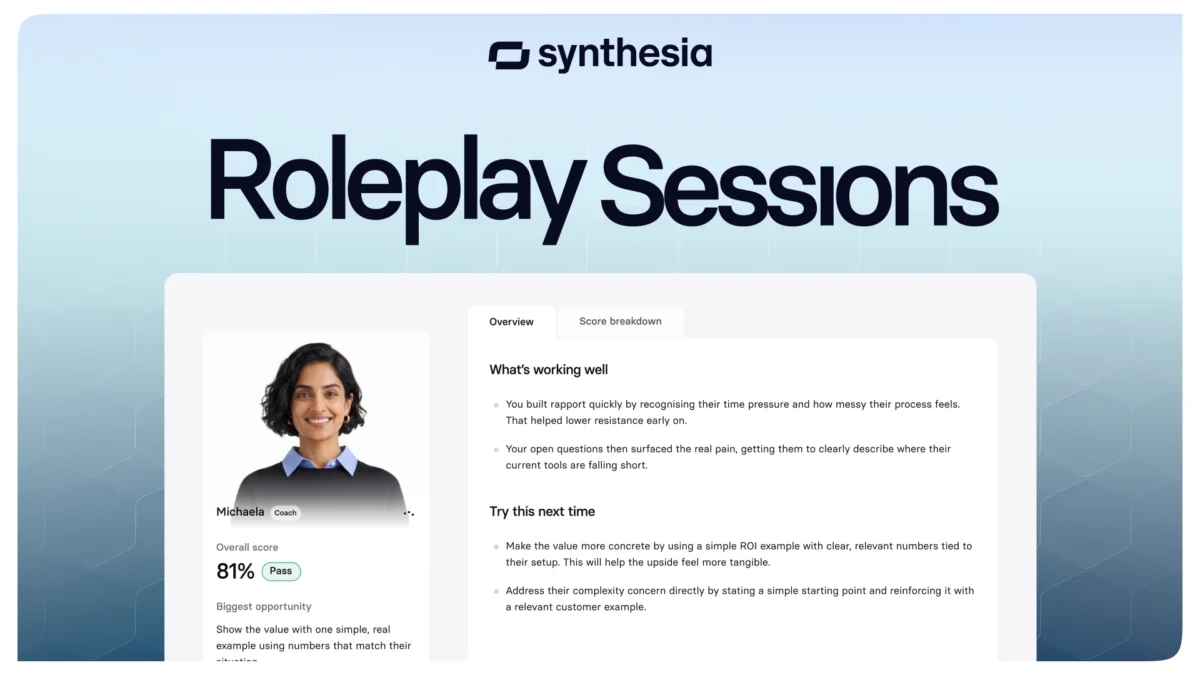
On Wednesday, the company launched "Roleplay Sessions," an interactive, AI-driven training platform. This new product allows employees to engage in high-stakes simulations—ranging from complex sales pitches and difficult performance reviews to sensitive customer complaints—with an AI avatar that actively listens, pushes back, and provides real-time performance scoring. This launch represents more than just a new feature; it marks Synthesia’s evolution into a performance-management powerhouse, aimed at proving that AI can deliver concrete, measurable business outcomes.
The Core Facts: What is Roleplay Sessions?
At its heart, Roleplay Sessions is designed to bridge the gap between "learning" and "doing." While traditional corporate training modules—often consisting of slides or pre-recorded videos—excel at information dissemination, they often fail to prepare employees for the unpredictable nature of human interaction.
The new platform utilizes Synthesia’s proprietary avatar and voice synthesis technology, powered by the reasoning capabilities of OpenAI’s large language models. When an employee engages in a session, the AI doesn’t just read a script; it reacts to the user’s input. If a salesperson fumbles a price objection, the AI avatar can press them for further clarification or express hesitation, mimicking a real-world client.
Once the interaction concludes, the system evaluates the user’s performance against a pre-defined rubric. This feedback loop is designed to cultivate soft skills—empathy, negotiation, and conflict resolution—in a low-risk, private environment. The product is the first iteration of a broader "Sessions" platform, which Synthesia intends to expand into areas such as automated candidate screening and structured job interviews in the near future.
Chronology: The Evolution of a Unicorn
To understand the significance of this pivot, one must look at Synthesia’s trajectory since its founding.
- The Early Days: Synthesia initially gained traction by solving a logistical nightmare for global enterprises: the cost and time associated with recording, editing, and localizing training videos. Its technology allowed HR and L&D departments to update content instantly without re-hiring actors or booking studios.
- The Valuation Surge: As generative AI exploded into the public consciousness, Synthesia’s valuation soared, reaching $4 billion by early 2026. This period cemented the company as a leader in the "enterprise video" space.
- The "So What?" Phase: As the novelty of AI-generated avatars wore off, enterprise customers began asking tougher questions about Return on Investment (ROI). Companies were no longer satisfied with "cool" tech; they wanted to see a direct correlation between their AI spend and improved employee productivity.
- The Pivot to Performance: Recognizing that the market was shifting toward efficacy, Synthesia began shifting its internal R&D toward interactivity. The development of Roleplay Sessions marks the culmination of this internal shift, moving the company from a "content creation tool" to a "human capital development platform."
Supporting Data: The Science of Behavioral Change
Synthesia’s shift is backed by a growing body of learning science that suggests passive training is fundamentally insufficient. The company cites a meta-analysis of leadership training design, which argues that effective learning requires deliberate practice and iterative feedback—elements that are notoriously difficult to scale in a corporate setting.
Historically, providing one-on-one roleplay practice required a human manager or a peer to step away from their work to act as a partner. This is not only expensive but often inconsistent; one manager might be an excellent coach, while another might be ill-equipped to provide constructive criticism.
Synthesia’s platform solves this through scale and standardization. Because the AI evaluates every employee against the same rubric, the company can generate granular data on the collective competency of its workforce. For an executive team, this provides a bird’s-eye view of organizational capability. For instance, a firm might discover that 70% of its sales force struggles with the same specific objection, allowing for immediate, targeted adjustments to the overall sales strategy.
Official Responses: Insights from Victor Riparbelli
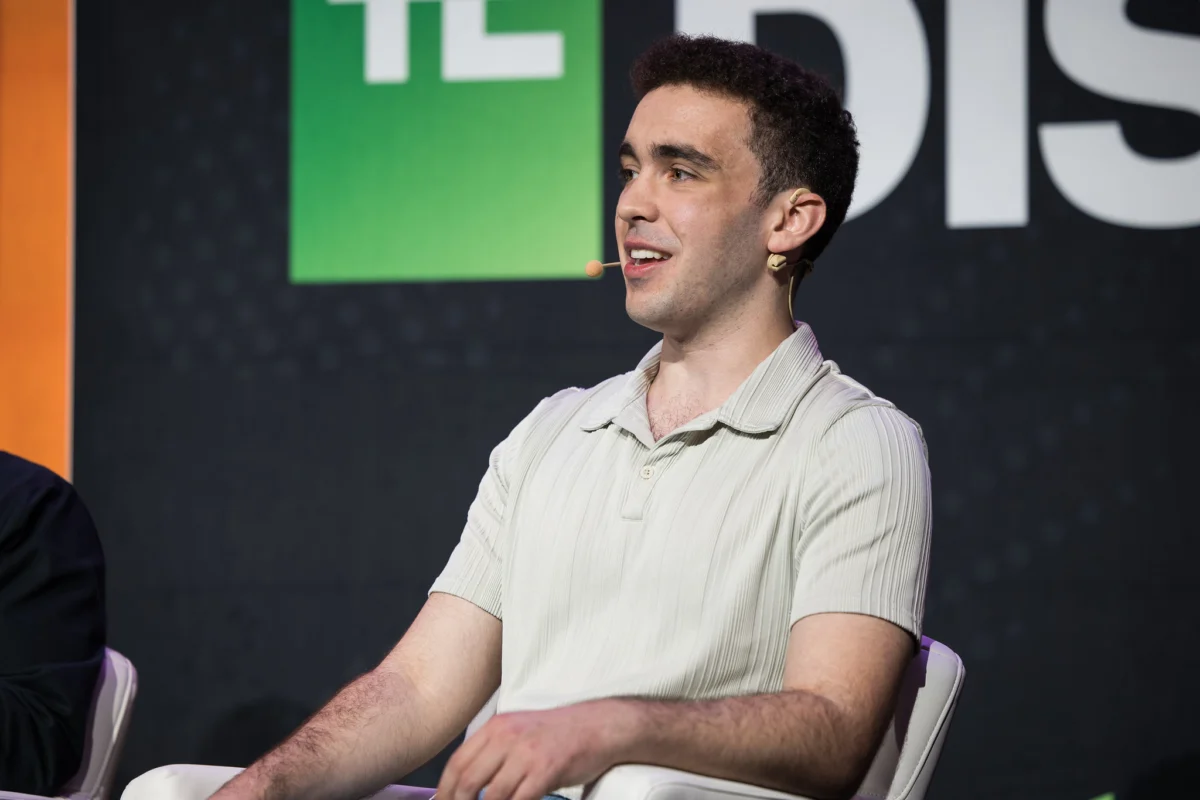
In an exclusive interview with TechCrunch, Synthesia CEO and co-founder Victor Riparbelli emphasized that the company is no longer just selling "video."
"Video performs way better than text or sending out a document," Riparbelli noted. "But for most things, we learn the best by actually practicing something rather than just reading it."
Riparbelli’s perspective reflects a broader industry realization: the "wow" factor of AI is not enough to sustain long-term enterprise adoption. By integrating performance analytics into the video interface, Synthesia is essentially creating a feedback loop that was previously impossible to digitize.
"From a managerial executive layer, we’re seeing huge interest in mapping out the talent in their company in a way that’s been really difficult to do before," Riparbelli added. "If you have your entire sales team practice with an AI role player, you can get very granular data on how your sales force is doing overall."
Implications: The Future of Enterprise AI
The implications of this move are twofold: competitive positioning and the broader maturation of the AI sector.
A More Defensible Moat
By evolving into a performance-management platform, Synthesia is distancing itself from the crowded field of "avatar-only" startups. While many companies can generate realistic AI faces, few have integrated the backend logic, performance rubrics, and analytics necessary to prove that the technology is actually improving a business. By becoming the system of record for employee soft-skills training, Synthesia creates a much higher barrier to entry for competitors.
The Shift Toward Measurable Outcomes
The launch of Roleplay Sessions serves as a bellwether for the next phase of enterprise AI adoption. We are moving away from the era of "AI demos"—where companies buy tools because they look good on a screen—and toward the era of "AI utility."
Enterprises are now applying the same rigorous scrutiny to their AI stack as they do to their ERP or CRM systems. They want to know: Does this save money? Does this reduce turnover? Does this increase sales? By focusing on measurable outcomes, Synthesia is positioning itself to be a permanent fixture in the enterprise software stack rather than a passing trend.
Scaling to the Masses
While currently limited to large enterprise clients—including, according to the company, one of Europe’s top three companies by market cap and a major Fortune 100 firm—the roadmap is clear. As inference costs for large language models continue to plummet, Synthesia plans to bring these capabilities to small businesses, prosumers, and even educational institutions.
If successful, this could democratize high-quality, personalized coaching. Imagine a student practicing for their first job interview with an AI trained on the nuances of their industry, or a small business owner practicing a pitch with an AI programmed to simulate a skeptical investor.
Conclusion
Synthesia’s transition from a content-creation tool to a behavioral-training platform is a calculated move toward relevance in a maturing market. By acknowledging that the real value of AI lies not in the "show" of the avatar, but in the "substance" of the interaction, the company is setting a new standard for corporate training.
As enterprises continue to evaluate their AI investments through the lens of productivity and ROI, tools like Roleplay Sessions will likely become the benchmark. Synthesia has successfully bet that in the future of work, the most valuable AI won’t be the one that talks the most—it will be the one that listens, evaluates, and helps us get better at our jobs.