In an era where the average digital consumer is bombarded with hundreds of communications daily, the inbox has transformed from a simple correspondence tool into a sprawling, often chaotic digital archive. Recognizing the mounting frustration of users struggling to manage years of accumulated newsletters, notifications, and promotional clutter, Czech tech giant Seznam has introduced a significant new feature for its email service. Announced in June 2026, this tool allows users to set automated retention periods for specific folders, effectively enabling a “set-it-and-forget-it” approach to digital housekeeping.
This development marks a shift in how mailbox providers view the lifecycle of an email. By empowering users to dictate exactly how long messages persist in their accounts, Seznam is not merely offering a convenience feature; it is signaling a broader industry trend toward user-centric data management.
The Mechanics of Automatic Cleanup
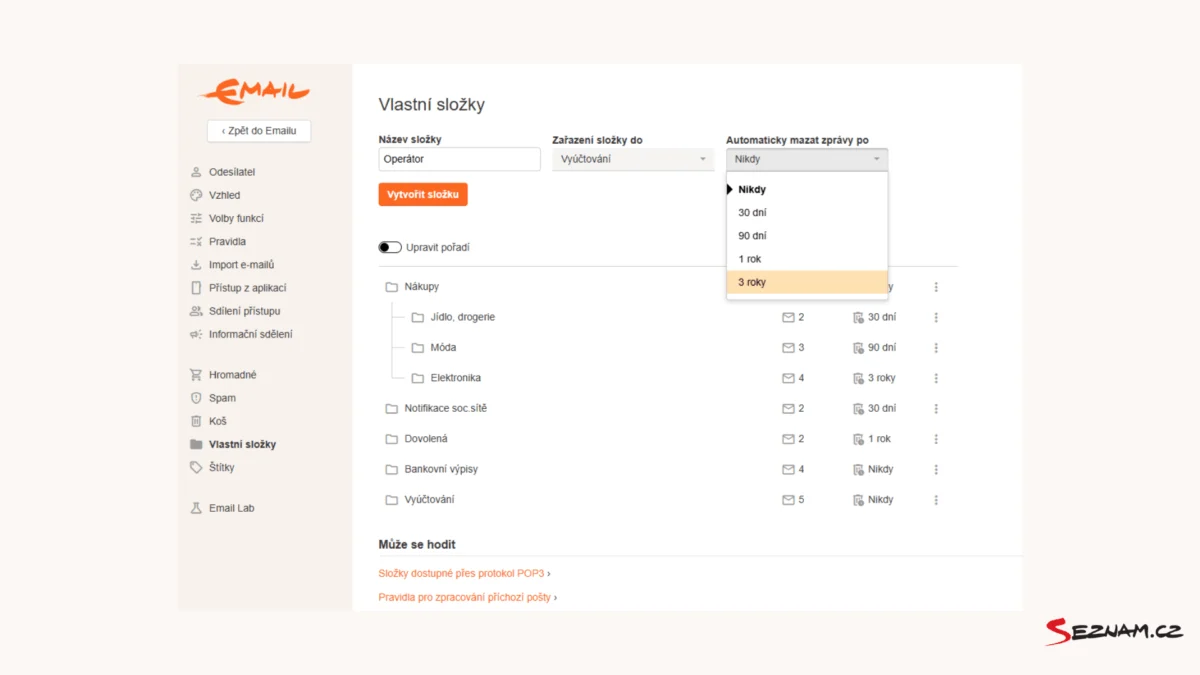
The core of Seznam’s new functionality lies in its simplicity and granular control. Rather than forcing a global deletion policy—which would be catastrophic for users trying to keep important tax documents or sentimental correspondence—Seznam has implemented a folder-specific logic.
Users can navigate to their settings and configure rules for individual folders. For instance, a user might set a rule for a "Newsletters" folder to purge any content older than 30 days, while keeping the "Inbox" or "Work" folders untouched. Once a message reaches the pre-defined age threshold, the system automatically routes it to the trash or deletes it permanently, depending on user preference.
This feature addresses the "digital hoarding" phenomenon. Many users suffer from decision paralysis when faced with thousands of unread promotional emails. By automating the cleanup process, Seznam reduces the cognitive load on the user, ensuring that the inbox remains a space for current, relevant communication rather than a stagnant graveyard of expired offers.
A Chronology of Inbox Management
To understand the significance of this update, one must look at the evolution of email management:
- The Early Days (1990s–2000s): Email was defined by scarcity. Storage limits were tight, forcing users to delete messages manually just to continue receiving mail.
- The Era of Abundance (2004–2015): With the arrival of services like Gmail offering "gigabytes of free storage," the pressure to delete vanished. This led to the "keep everything" mentality, resulting in the massive, unmanaged inboxes we see today.
- The Rise of Clutter (2016–2025): The explosion of e-commerce, social media notifications, and automated alerts turned the inbox into a firehose of data. Manual organization tools like labels and filters became insufficient for the sheer volume of incoming mail.
- The Current Phase (2026 and beyond): We are entering the age of "Active Lifecycle Management." Providers like Seznam are acknowledging that storage is cheap, but user attention is expensive. The goal has shifted from "how do we store this?" to "how do we keep the user’s experience focused?"
Supporting Data: The Cost of Digital Clutter
While Seznam has not released internal usage data for the new feature, industry analysts point to clear trends justifying the move. According to recent surveys on digital wellness, the average professional spends approximately 2.5 hours per day managing email, with a significant portion of that time dedicated to searching for relevant information buried under layers of obsolete content.
Furthermore, from a sustainability and infrastructure perspective, the "keep everything" model is becoming increasingly energy-intensive. While a single email has a negligible carbon footprint, the storage of billions of redundant, never-read promotional emails across global data centers represents a non-trivial environmental cost. By incentivizing the deletion of expired content, Seznam is inadvertently promoting a more efficient digital ecosystem.
Implications for Email Marketers and Senders
The introduction of automated deletion rules presents a new variable for email marketers. Traditionally, marketers have operated under the assumption that once an email reaches the inbox, it has a permanent "shelf life."
The "Long-Tail" Engagement Risk
Many marketing campaigns benefit from the "long tail"—a newsletter sent today might be opened by a subscriber three months from now when they finally decide to browse their archives. If users begin adopting aggressive automated deletion policies, this long-tail engagement will inevitably shrink. Marketers will need to adjust their expectations, focusing on high-velocity engagement in the first 48 to 72 hours of a campaign, as the window of opportunity for a "late open" will likely close for many users.
The Rise of the ‘Expires’ Header
Seznam’s move coincides with ongoing discussions within the Internet Engineering Task Force (IETF). A working group is currently drafting a proposal to standardize the use of an Expires header for ordinary email.
This is not a command to delete, but a signal. If a retailer sends a coupon valid only for 24 hours, the Expires header allows the mailbox provider to understand the nature of the content. In the future, this could lead to smarter inbox UIs where expired content is automatically moved to a "Deals Archive" or visually dimmed to signify that the offer is no longer valid.
As the IETF draft explicitly states, the mailbox provider must not act on this header without explicit user permission. The power remains with the user, but the sender is now being invited to participate in the conversation about the relevance of their own content.
Official Stance and Technical Integrity
Seznam has been careful to emphasize that this new feature is purely a user-side tool. It does not alter SPF, DKIM, or DMARC authentication protocols, nor does it impact deliverability metrics. Seznam remains committed to maintaining an open and interoperable email environment.
"Our priority is the user experience," a Seznam spokesperson noted during the announcement. "We are not changing how email is delivered; we are changing how it is lived with. By providing these tools, we are helping our users reclaim their digital space without compromising the security or reliability of the mail delivery process."
Looking Toward the Future: The Intelligent Inbox
The move by Seznam suggests that the next generation of email services will be defined by "intelligent curation." Rather than being passive containers for data, inboxes will likely become active agents that help users manage their attention.
We can anticipate several future developments:
- Context-Aware Retention: AI-driven suggestions that ask users, "You haven’t opened emails from this brand in six months; would you like to set an automatic delete rule for their future messages?"
- Sender-Recipient Partnerships: A world where reputable senders use the
Expiresheader to ensure their content is only displayed when it is still actionable, improving overall engagement rates. - Privacy-First Purging: Automated tools that help users maintain privacy by ensuring that sensitive transactional emails are purged once their purpose—such as a warranty period or a return window—has expired.
Conclusion
Seznam’s new retention feature is a testament to the maturation of the email ecosystem. After decades of focusing on the challenges of delivery and storage, the industry is finally turning its attention to the challenge of relevance.
By providing users with the tools to define the lifecycle of their messages, Seznam is fostering a more deliberate approach to digital consumption. Whether this leads to a permanent decline in the "long-tail" engagement that marketers have come to rely on remains to be seen. However, one thing is certain: the era of the stagnant, bottomless inbox is coming to an end. Users now have the power to decide when a message has served its purpose, and in doing so, they are taking the first step toward a more focused, efficient, and intentional digital life.
As we look toward the potential standardization of the Expires header, it is clear that the conversation between the mailbox and the mailbox owner is only just beginning. The future of email is not just about sending and receiving—it is about knowing when to let go.