AMSTERDAM — In an era dominated by mega-cloud providers, venture capital overfunding, and opaque data-sharing frameworks, a tiny two-person operation in the Netherlands has quietly achieved what many enterprise software companies claim is impossible. They built a fully functioning, high-performance transactional email service provider (ESP) from scratch on European soil, relying entirely on open-source software, bootstrapped with zero outside investors, and operating completely outside the legal reach of foreign data subpoenas.
Meet Lettermint, a transactional email provider designed specifically for developers who need assurance that critical operations—such as password resets, two-factor authentication (2FA) tokens, and e-commerce order confirmations—never leave the strict legal boundaries of the European Union.
While its vendors—high-performance Mail Transfer Agent (MTA) creator KumoMTA and deliverability monitor Postmastery Console—have published glowing corporate case studies detailing Lettermint’s rapid growth, the human story behind the code reveals a classic bootstrapping tale born out of community frustration, geopolitical shifts, and a stubborn refusal to compromise on data sovereignty.
Main Facts: What is Lettermint and How Does It Work?
At its core, Lettermint provides API- and SMTP-driven transactional email services. However, its architectural philosophy separates it from mainstream US-dominated competitors like Postmark or Resend.
The Sovereign Stack
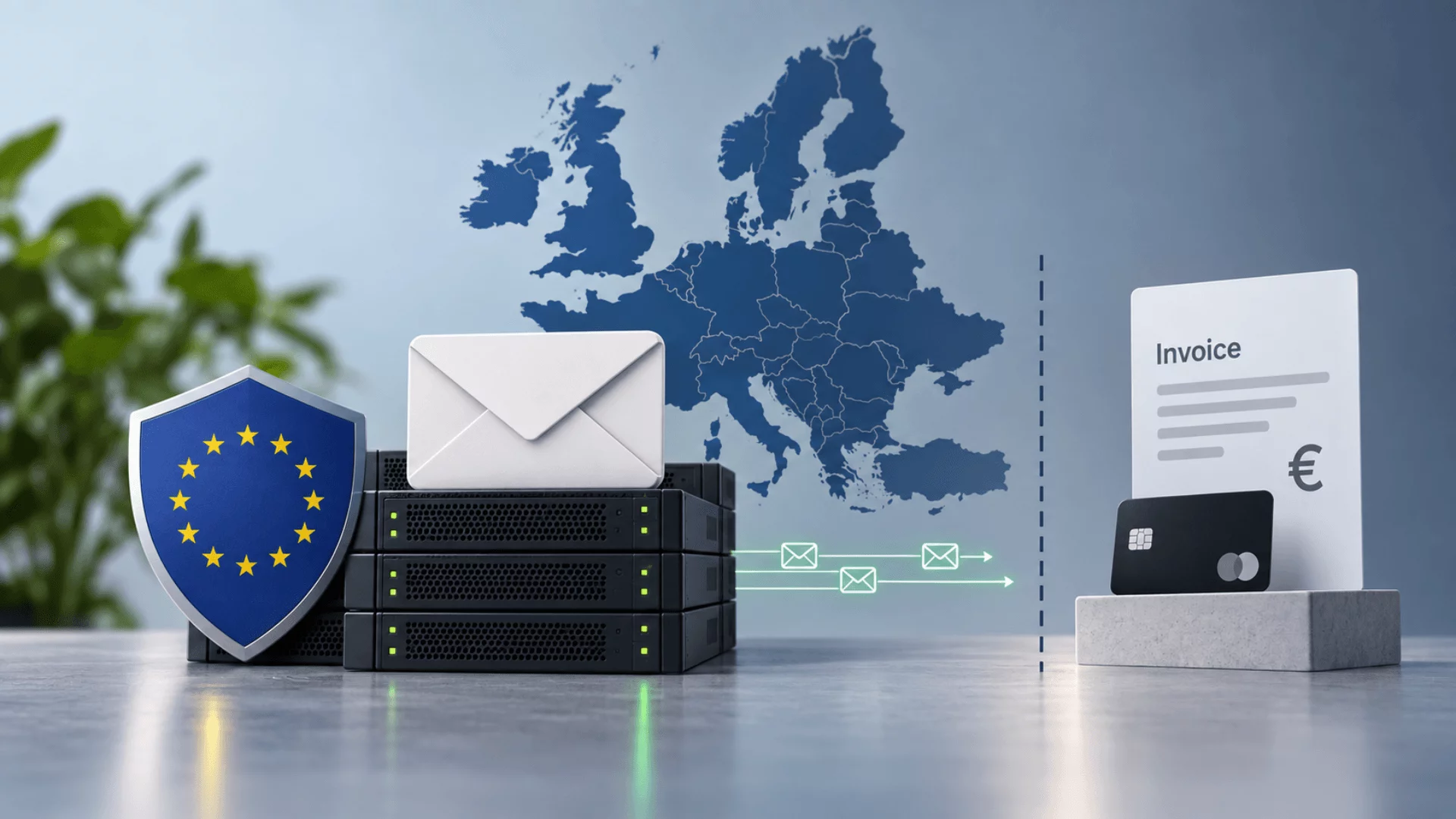
To achieve true European data sovereignty, Lettermint carefully curated a technology stack that avoids foreign jurisdiction entanglements at every layer:
- The MTA Engine: Powered by KumoMTA, an enterprise-grade, scriptable mail transfer agent.
- Deliverability & Monitoring: Managed via the Postmastery Console, providing real-time oversight of bounces, spam complaints, and reputation metrics.
- Compute Infrastructure: Hosted by UpCloud, a Finnish cloud provider operating data centers physically located in the Netherlands.
- Backups & Storage: Handled by OVHcloud, a prominent French cloud provider operating out of German data centers.
- Network Independence: Lettermint holds its own IP space and runs an autonomous network, ensuring that sender reputation stays entirely within its direct control.
The Lone American Exception
In an industry where total purity is nearly impossible, Lettermint makes one deliberate compromise: Stripe handles its billing.
Co-founder Bjarn Bronsveld openly acknowledges this exception, noting that there is currently no comparable European card-billing alternative with the same level of developer integration and reliability. However, Lettermint isolates this risk strictly: Stripe receives nothing beyond basic billing contacts and invoices. No customer email data, payload content, or recipient metadata ever crosses that boundary.
Chronology: From an Incidental Joke to Production Reality
Lettermint’s journey from concept to a production-ready European infrastructure reads like a modern indie-hacking playbook. It evolved rapidly against a backdrop of shifting transatlantic political winds.
Phase 1: The Incidental Joke (Post-Acquisition Discontent)
The seed for Lettermint was planted when Postmark was acquired by ActiveCampaign. The acquisition left a distinct sour taste in the mouths of many European developers who relied on the platform for mission-critical messaging. Within developer circles in Bronsveld’s community, a running joke emerged: “We should just build our own.”
As Bronsveld notes, building an email infrastructure is vastly more complex than developers initially assume. For months, the idea remained safely parked as a casual pipedream.
Phase 2: Geopolitics and the Push for Sovereignty
The concept regained momentum as the 2024 US presidential election approached. Conversations regarding European digital sovereignty—accelerated by worries over extraterritorial data laws like the US CLOUD Act—grew increasingly urgent.
By November 2024, Bronsveld and his co-founder decided to move from venting to execution. “When the inauguration took place in January [2025],” Bronsveld recalls, “we were like, well, there’s really something for this.”
While other European email competitors existed, Bronsveld observed a critical flaw in their architectures: most were simply running on top of US-owned infrastructure giants like AWS or Google Cloud, exposing their users to foreign legal frameworks regardless of where their offices were registered. Lettermint officially launched at the end of May 2025.
Phase 3: The Postfix Pivot and KumoMTA Adoption
With zero external budget and a tight timeline, the founders initially deployed Postfix as their foundational MTA. It lasted roughly two months. Postfix simply could not scale to their needs, and debugging it actively slowed down product development.
In early 2025, Bronsveld discovered KumoMTA. In a rare testament to technical documentation, he claims to have read the entire site from cover to cover. Impressed, he and his co-founder dedicated a single day in the office to spinning up KumoMTA, establishing feedback loops, and successfully dispatching their first live message. They launched on Kumo on day one and have continuously expanded their integration since.
Phase 4: Integrating Postmastery
Until September 2025, Lettermint operated without automated deliverability dashboards. Bounces and spam complaints were reviewed manually by hand—a grueling, low-tech approach that Bronsveld credits as the ultimate way to launch because it forced the founders to understand every single signal moving through their network.
Assuming an enterprise-grade monitoring suite would be prohibitively expensive, they delayed adopting Postmastery. When they finally investigated, they found the pricing accessible. The Postmastery Console now automates bounce processing and reputation tracking, allowing the two teams to sync up periodically.
Supporting Data and Technical Architecture
Operating a high-throughput mail server without venture capital backing requires extreme operational efficiency. Lettermint achieves this by leveraging modern, lightweight tooling and adhering strictly to privacy-first engineering principles.
The Power of Lua and Open Source
KumoMTA relies heavily on Lua for policy scripting—a language Bronsveld was already familiar with from years of building video game mods. This lowered the barrier to entry significantly.
Because KumoMTA is open source, Bronsveld’s relationship with the software goes beyond simple utilization. He regularly reads the source code, files bug reports, and contributes back to the community. He maintains a personal monthly donation to the project via its Discord channel, with plans to scale financial contributions once Lettermint’s revenues comfortably support two full-time salaries. (Currently, neither founder draws a salary; both maintain separate day jobs.)
Privacy by Design: The Opt-Out Tracking Model
One of Lettermint’s most distinguishing features is its approach to email tracking. Following strict guidance from French and Italian data protection regulators regarding the privacy implications of tracking pixels, Lettermint made open and click tracking switched off by default.
Furthermore, they implemented a granular, per-message toggle accessible via API or custom SMTP headers. Senders can disable tracking for individual recipients who demand strict privacy while maintaining analytics for others. Bronsveld compares this user-controlled flexibility to modern website cookie banners.
Infrastructure Isolation
Lettermint structurally separates transactional traffic (time-sensitive alerts, password resets) from broadcast traffic (newsletters, marketing campaigns) at the infrastructure level. This isolation protects the deliverability reputation of critical system messages from being tainted by bulk senders.
Furthermore, because their compute layer sits on UpCloud (Finnish jurisdiction, Dutch hardware) and backups sit on OVHcloud (German data centers), any legal subpoena served to their cloud providers must navigate European Union law, entirely bypassing extra-judicial foreign data demands.
Official Responses and Industry Context
Independent verification of a bootstrap startup’s exact financial and volume metrics is notoriously difficult, as Lettermint is a privately held micro-company. However, official case studies published by their key technology partners offer a window into their operational scale.
KumoMTA’s official enterprise case study reports that Lettermint scaled its email volume a hundredfold shortly after launch, reaching a sustained baseline of approximately 200,000 messages per day.
When asked how Lettermint would survive if KumoMTA were to disappear overnight, Bronsveld remains remarkably unphased.
"The software wouldn’t vanish with it, because it’s open source," he notes.
Having deeply audited the source code and worked hands-on with its internals, the founders understand the MTA down to the metal. If they were ever forced to migrate to a commercial alternative like PowerMTA, the decision would simply come down to evaluating prohibitive license fees—a reality check that reinforces their commitment to open-source foundations.
Implications: Trust, Sovereignty, and the Future of Indie Infrastructure
Lettermint’s existence highlights a broader, uncomfortable truth for modern enterprise buyers: In the tech industry, convenience has systematically won out over sovereignty.
The Hard Part is Trust
While writing Lua scripts, configuring MTAs, and provisioning servers can be accomplished in days or weeks, trust takes years.
Bronsveld points out the stark reality of B2B sales in critical infrastructure: nobody hands the keys to their authentication system over to a brand-new company with a short track record. Transactional email is the invisible glue of the modern web; if a "magic link" authentication email fails to arrive, user engagement instantly grinds to a halt.
Initially, Lettermint’s customer base consisted almost entirely of nimble freelancers and small digital agencies willing to take a chance on an indie project. Over time, larger organizations began migrating over—some driven by exhaustive compliance questionnaires and strict corporate mandates for true EU data sovereignty, though Bronsveld admits that most clients ultimately just want a platform that runs reliably without friction.
A Blueprint for Bootstrapped Sovereignty
Lettermint proves that building robust, resilient cloud infrastructure in Europe without venture capital is entirely possible. It bypasses the traditional Silicon Valley playbook of hyper-growth, massive burn rates, and eventual monetization pressure.
Would Lettermint have launched without the escalating geopolitical and data-sovereignty debates of 2024 and 2025? Bronsveld expresses sincere doubt. The timing was catalyzed by external anxieties over foreign cloud dependency. Yet, looking forward, he confirms he would build it all over again simply for the sheer satisfaction of the engineering challenge.
In an industry addicted to hyper-funded hyper-scale, Lettermint stands as a quiet reminder that sometimes the most secure infrastructure is built by two people, an open-source MTA, and a refusal to hand over user data to foreign jurisdictions.