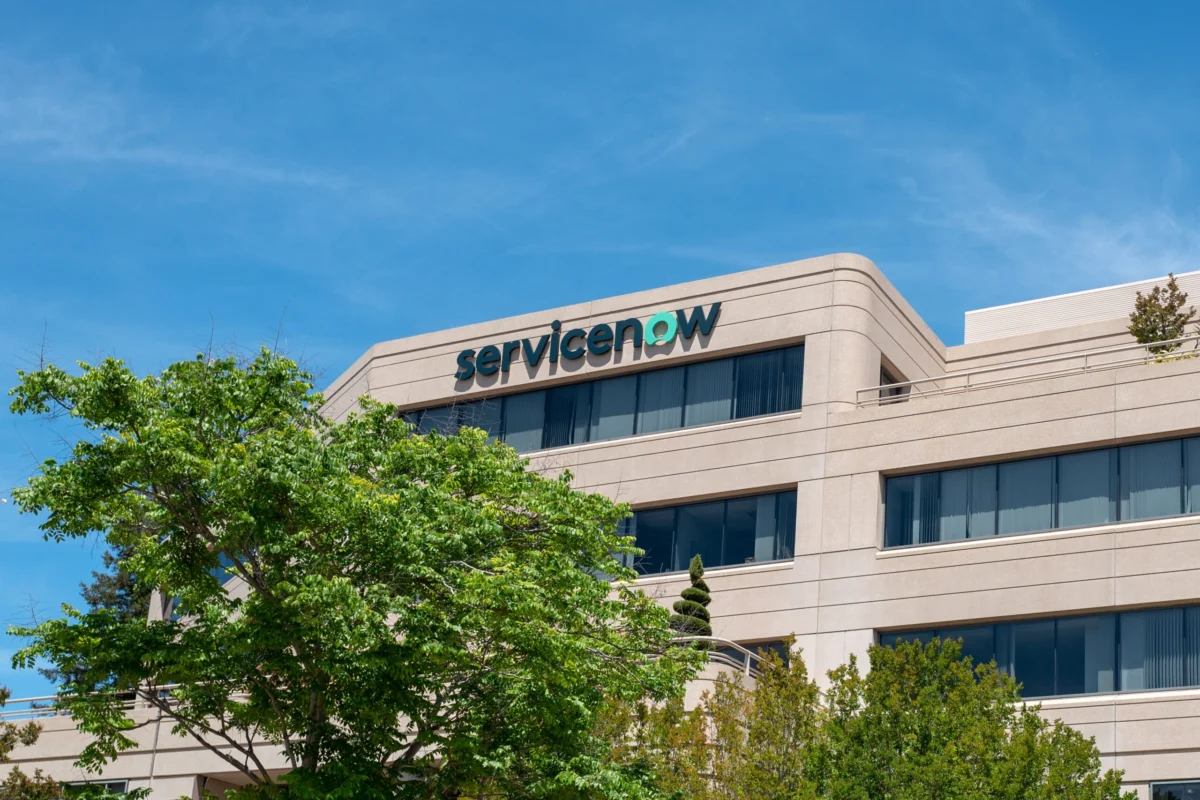
In a move that signals a seismic shift in the enterprise software landscape, ServiceNow, the U.S.-based digital workflow powerhouse, has announced a $40 million strategic investment in BusinessNext, an Indian banking software specialist. This deal, which values the 24-year-old Noida-based firm at approximately $700 million, grants ServiceNow a roughly 5% stake in the company. More importantly, it serves as a bridge for ServiceNow to deepen its footprint within the global financial services sector, an industry currently undergoing a frantic, AI-driven transformation.
The partnership is not merely a financial transaction; it is a tactical alignment of two distinct but complementary technological ecosystems. By integrating BusinessNext’s specialized, AI-native banking workflows with ServiceNow’s robust back-office automation architecture, the two companies aim to capture a larger share of the lucrative financial services market, where institutions are pivoting from digital experimentation to full-scale, AI-led operations.
The Strategic Anatomy of the Deal
At its core, the collaboration is designed to leverage ServiceNow’s massive global sales infrastructure—or as BusinessNext CEO Nishant Singh aptly describes it, the “go-to-market machinery”—to scale BusinessNext’s reach into markets where it previously held only a peripheral presence.
For ServiceNow, the investment is a strategic play to mitigate the growing pressure on traditional SaaS (Software-as-a-Service) providers. As enterprise clients increasingly scrutinize the value of legacy SaaS tools in an era of rapidly evolving, AI-native alternatives, ServiceNow is proactively expanding its portfolio to ensure it remains indispensable. By embedding BusinessNext’s AI-driven banking capabilities into its platform, ServiceNow provides its banking clients with a more holistic, intelligent solution that addresses both the front-office customer experience and the back-office operational requirements.
A Chronology of Growth: From CRMNext to BusinessNext
The trajectory of BusinessNext is a study in calculated evolution. Founded in 2002, the company initially operated under the name CRMNext, establishing itself as a provider of customer relationship management solutions for the financial services industry.
- 2002–2010: Foundations: The company spent its early years building a reputation for reliability, focusing on the complex, highly regulated Indian banking environment.
- 2011–2020: Regional Expansion: Leveraging its success with major Indian institutions like the State Bank of India and HDFC Bank, the company began its foray into Southeast Asia and the Middle East. During this period, it secured over $60 million in funding from prominent investors, including Norwest Venture Partners, Avataar Ventures, and Ascent Capital.
- 2021: The Strategic Pivot: As artificial intelligence began to dominate the technological discourse, the leadership team initiated a fundamental shift. They recognized that the future of banking was not just about managing customer data, but about "autonomous banking."
- 2022: Rebranding: Marking a new chapter, the company rebranded as BusinessNext. This was more than a cosmetic change; it represented a complete overhaul of its software stack to ensure AI was the core, rather than a modular add-on.
- 2024: The ServiceNow Milestone: The $40 million investment serves as a validation of the company’s long-term strategy, valuing the firm at $700 million and signaling its transition from a regional player to a global contender.
Supporting Data and Market Position
BusinessNext’s growth has been both consistent and profitable, a rarity in the high-growth software sector. In its most recent financial year, the company generated approximately $32 million in revenue. Perhaps most impressive is its geographic diversification: nearly half of its revenue is now derived from markets outside of India.
The company currently services more than 70 banks globally, including critical financial infrastructure entities like the Reserve Bank of India. Its platform is designed to handle the rigorous demands of banking:
- Autonomous Workflows: Using AI agents, the platform automates complex banking tasks, reducing human error and increasing operational speed.
- Data Sovereignty: Recognizing the regulatory landscape, BusinessNext has engineered its platform to keep sensitive customer data on private AI infrastructure, ensuring compliance with strict global privacy standards.
The firm’s valuation has seen a meteoric rise, jumping from $181 million in 2021—as reported by market intelligence firm Tracxn—to its current $700 million valuation. This growth underscores the market’s increasing appetite for industry-specific, AI-ready enterprise software.
Official Perspectives: The Synergy of Vision
The leadership teams from both organizations have framed this partnership as a turning point for the financial services sector.
Nishant Singh, Founder and CEO of BusinessNext, emphasized that the partnership was about "borrowing" the scale that ServiceNow has meticulously built over two decades. “Think of it as a strategic partnership, which is cemented with funding,” Singh noted in an interview. He highlighted that BusinessNext chose ServiceNow over traditional financial investors because the primary objective was not just capital, but market acceleration. “We actually renamed our company and we kind of rewrote our stack to put [AI] fundamentally at the core,” he added, explaining that their approach to AI is integrated from the ground up, not layered on top of existing processes.
Kulmeet Bawa, ServiceNow’s Group Vice President and Managing Director for India and SAARC, provided the perspective from the investor’s side. He noted that the financial sector is currently at an “inflection point,” where the transition from experimental AI to full-scale implementation is becoming a competitive necessity. “The partnership combines ServiceNow’s enterprise workflow platform with BusinessNext’s deep-seated banking expertise,” Bawa said. By joining forces, the two entities can offer a "front-to-back" solution that covers everything from customer engagement to backend risk management and compliance.
Implications for the Future of Financial Services
The ServiceNow-BusinessNext deal has several profound implications for the global financial services sector:
1. The Rise of Industry-Specific AI
This partnership validates the trend that generic enterprise AI platforms are losing ground to specialized, industry-specific AI solutions. Banks require a level of regulatory compliance and data security that generalist tools often struggle to provide. BusinessNext’s "autonomous banking" model, built with privacy as a primary feature, is a direct response to this need.
2. A Shift in M&A and Partnership Strategies
For large software giants like ServiceNow, the strategy of "build versus buy" is increasingly being supplemented by "invest and integrate." By taking a 5% stake in BusinessNext, ServiceNow gains the benefits of an acquisition—deep product integration and strategic alignment—without the cultural and operational risks associated with full-scale corporate absorption.
3. Increased Competition for Legacy Banking Systems
Traditional, monolithic banking software providers are now facing a two-pronged threat: they are being challenged by both agile, AI-native platforms and the collaborative efforts of established giants like ServiceNow. This is likely to trigger a wave of modernization across the banking industry, as smaller, more efficient players use these new tools to offer services that were once the exclusive domain of global banking conglomerates.
4. The Global Ambitions of Indian Tech
The success of BusinessNext reflects a broader trend within the Indian technology ecosystem. Indian firms are increasingly moving up the value chain, transitioning from being service providers to becoming intellectual property creators. With half of its revenue now coming from outside India, BusinessNext is proof that Indian startups can develop sophisticated, globally competitive software products that satisfy the stringent demands of international financial institutions.
Conclusion
The $40 million investment by ServiceNow into BusinessNext is a strategic masterstroke that addresses the immediate needs of both companies. For ServiceNow, it secures a foothold in the complex world of banking through a proven, AI-native partner. For BusinessNext, it provides the global distribution network necessary to transition from a regional leader into a global standard-bearer for autonomous banking. As the financial sector continues its rapid evolution toward total AI integration, the synergy between these two companies will likely become a blueprint for how enterprise software firms will navigate the complexities of the next decade.