The ecommerce landscape is undergoing its most significant transformation in a decade. As the barrier between digital discovery and physical fulfillment continues to blur, merchants are increasingly turning to generative AI, autonomous logistics, and sophisticated data-driven personalization to maintain a competitive edge. This week’s roundup of service updates reveals a clear trend: the industry is shifting from simply "being online" to "being intelligent."
From Trustpilot’s landmark integration with Shopify to the rise of agentic commerce platforms, the following developments represent a pivotal moment for merchants looking to optimize every touchpoint of the customer journey.
I. Main Facts: The New Tools of the Trade
This week’s updates underscore a broad-based push toward automation. Whether through the lens of performance marketing, creative asset generation, or AI-powered search, the common denominator is the removal of manual friction.

Key developments include:
- Trustpilot & Shopify: A strategic partnership enabling direct management of verified customer reviews within the Shopify admin dashboard.
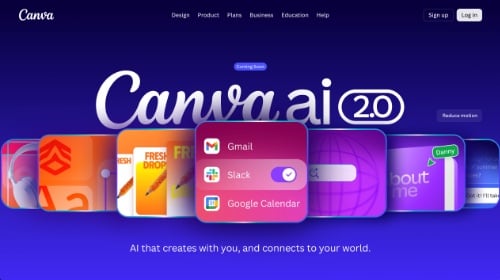
- Creative Automation at Scale: ImageKit and Canva (Grow 2.0) are pushing the boundaries of AI-driven design, allowing teams to generate thousands of on-brand variations for performance marketing instantly.
- Generative Engine Optimization (GEO): New entrants like CiteLens and Contentful’s "Palmata" are tackling the "black box" of AI search, helping brands understand how their business is represented by AI chatbots and answer engines.
- Agentic Commerce: With the launch of Nudge and AWS’s new Customer Experience designer, "agentic commerce"—AI that can perform tasks on behalf of the merchant or customer—has officially moved from theory to implementation.
II. Chronology: A Week of Rapid Evolution
The pace of innovation in ecommerce remains relentless. Here is how the announcements unfolded:
- Mid-Week Surge (June 23-24): The week began with a flurry of activity focused on content and AI representation. Contentful announced Palmata, while Albertsons Media Collective and Criteo introduced conversational search advertisements. Simultaneously, Redo secured an $81 million Series B, signaling massive investor confidence in the post-purchase experience.
- The Mid-Week Pivot (June 25-26): Focus shifted to marketing performance and creative operations. Canva launched Grow 2.0, and ImageKit introduced Creative Automation. During this window, Rokt mParticle launched its Performance Engine, aimed at maximizing the utility of first-party data.
- Weekend Consolidation (June 27-29): The week closed with logistical and operational infrastructure news. Neolix expanded its autonomous delivery fleet in Europe, while Seon and Domaine released a specialized fraud prevention app for Shopify, and Trustpilot finalized its integration agreement.
III. Supporting Data: Why Efficiency is the New Currency
The capital infusion into these sectors speaks volumes about where the money is moving. Redo’s $81 million raise is a testament to the fact that post-purchase experiences—returns, exchanges, and tracking—are no longer "side" features but core revenue drivers.

Furthermore, the rise of "agentic" systems is backed by tangible market needs. Nudge’s $1.1 million pre-seed round, while modest in size, is backed by heavyweights from the SaaS world (Miro, Datadog), suggesting that the infrastructure of AI commerce is being built by the same cohort that built the modern digital stack.
The shift toward AI-powered livestreams, spearheaded by Mobigital, also addresses a critical pain point: the high cost of human-led marketing. By enabling 24/7 virtual presenters, businesses can potentially reduce their operational overhead by double-digit percentages while simultaneously increasing their reach in non-native markets.
IV. Official Responses and Industry Sentiment
Industry leaders are framing these shifts as a necessary response to the "AI-ification" of the internet.
"We are moving from a world where you search for a link to a world where you ask for an answer," says a spokesperson from Contentful regarding their Palmata release. The sentiment across the board is that brands are currently flying blind when it comes to how platforms like ChatGPT, Perplexity, or Gemini describe their products.
Regarding the influx of creative automation tools, the consensus from platforms like Canva and ImageKit is that AI is not intended to replace designers, but to liberate them from the "drudgery of versioning." By standardizing brand assets through AI templates, companies can finally achieve the "scale" that has been promised by digital marketing gurus for years but rarely achieved in practice.
V. Implications: What This Means for Your Business
The cumulative effect of these announcements is a profound change in the daily life of an ecommerce merchant.
1. The Death of the "Static" Catalog
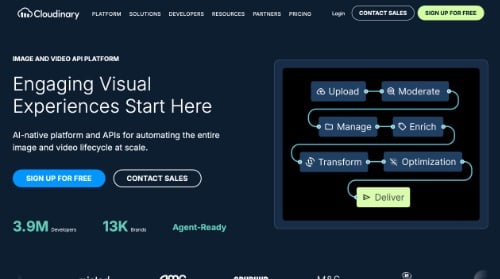
With Cloudinary’s Image to Video and ImageKit’s creative tools, static product pages are becoming obsolete. If your catalog is not easily transformed into video or dynamic social assets, you are essentially invisible to the current generation of mobile-first shoppers.
2. AI Search is the New SEO
For two decades, merchants optimized for Google. Now, they must optimize for the "Answer Engine." The emergence of CiteLens and Palmata indicates that brands need a dedicated strategy to manage their "AI visibility score." If an AI assistant recommends a competitor’s product because your metadata isn’t "readable" by their models, you have already lost the sale before the customer reaches your site.
3. The Automation of Trust
The partnership between Trustpilot and Shopify is a clear signal that trust is now a platform-level metric. Merchants who can display verified, high-quality reviews natively within their store and their social media channels are going to see higher conversion rates than those relying on fragmented, third-party plugin stacks.

4. Logistics as a Competitive Moat
The expansion of Neolix’s autonomous fleet in Europe demonstrates that "last-mile" delivery is being solved by robots. While this may currently be limited to larger urban centers, the implication for the average merchant is clear: the window for high-cost, slow-delivery models is closing. As autonomous delivery becomes a commodity, customer expectations for speed will shift accordingly.
5. First-Party Data is the "Fuel"
The launch of the Rokt mParticle Performance Engine highlights the ongoing struggle to use first-party data effectively. With the erosion of third-party cookies, the ability to analyze your own customer data and turn it into actionable segments is the only way to maintain precision targeting.
Conclusion: Preparing for the Agentic Future
The common thread running through these updates is that the ecommerce stack is becoming increasingly "agentic"—meaning systems are no longer just repositories of information; they are now active participants in the business. They make decisions on fraud, they design marketing assets, they answer customer questions, and they even negotiate delivery routes.

For the modern ecommerce merchant, the mandate is clear: Embrace the integration. The businesses that thrive in the coming years will not be those with the biggest budgets, but those that can most effectively stitch these automated, AI-driven tools into a cohesive ecosystem. The goal is to create a frictionless loop where data informs creative, creative drives traffic, and AI ensures the entire process is personalized, secure, and—above all—profitable.
Got an ecommerce product release? Reach out to the editorial team at [email protected] to ensure your innovations are featured in our next update.