By [Your Name/Staff Writer]
Published in Business & Entrepreneurship Insights
Main Facts: The Anatomy of a Sustainable Giant
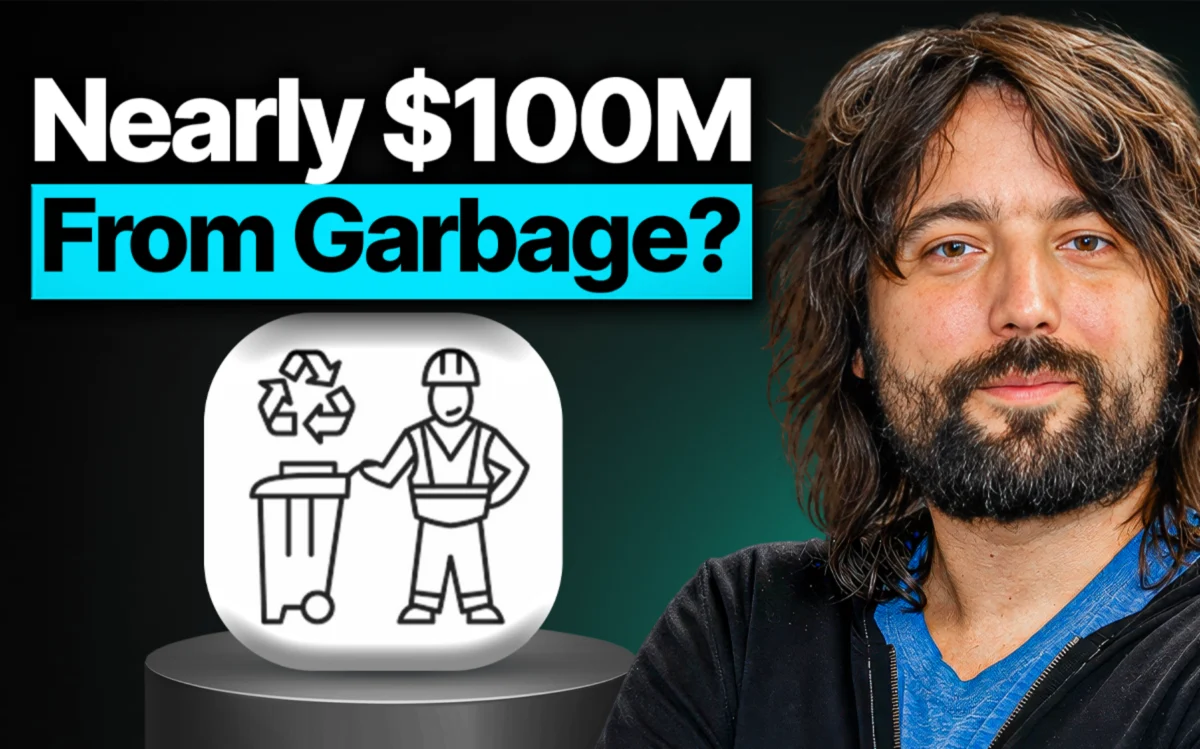
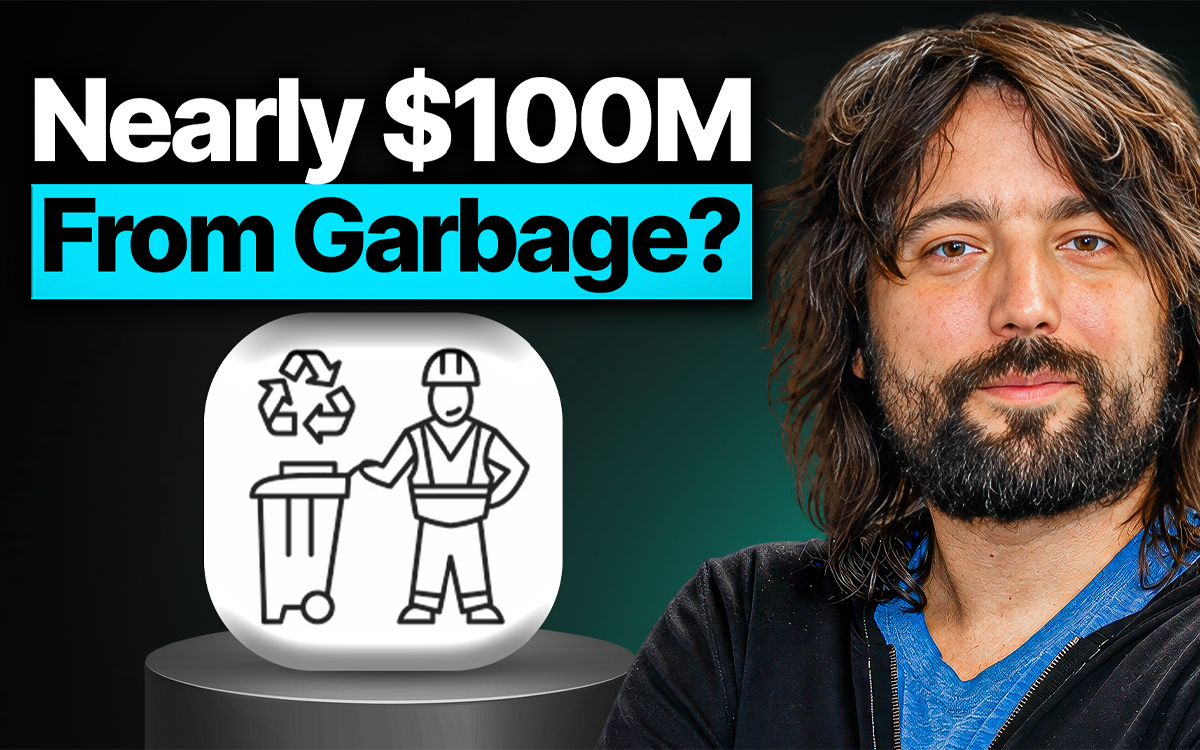
What begins as a casual conversation among college students rarely evolves into a multinational corporation with 500 employees, operations across dozens of countries, and an annual revenue skirting the $100 million mark. Yet, that is precisely the trajectory of TerraCycle, a company founded nearly 25 years ago by a freshman at Princeton University.
In a recent episode of the Niche Pursuits podcast, TerraCycle founder and CEO Tom Szaky sat down to unpack the mechanics behind his extraordinary entrepreneurial journey. The discussion offers a masterclass in modern business building, shedding light on how to transform seemingly insurmountable environmental issues—such as hard-to-recycle consumer packaging and commercial waste—into lucrative commercial ventures.
The core pillars of TerraCycle’s success rely on three distinct operational philosophies:
- Redefining Waste: Treating garbage not as a disposal problem, but as an untapped resource with inherent economic value.
- Economic Alignment: Solving environmental challenges by aligning them with corporate profitability rather than appealing solely to altruism or moral obligation.
- Negative Cost Marketing: Eschewing traditional, high-budget advertising in favor of cultivating an organic, media-worthy narrative that generates hundreds of thousands of global press mentions.
Chronology: From a 14-Year-Old’s Website to a Global Ecosystem
To understand how TerraCycle achieved its current market dominance, it is necessary to trace the timeline of Szaky’s entrepreneurial development, which began long before he ever set foot on a college campus.
Early Beginnings and the Princeton Spark
Szaky’s appetite for business manifested early. At just 14 years old, he launched a web-development and digital business that employed at least one person and generated five figures in annual revenue. This early exposure to commerce laid the groundwork for what was to come.
Upon arriving at Princeton University as a freshman, Szaky sought a venture that could merge profitability with large-scale problem-solving. A pivotal moment arrived during a conversation with friends who were experimenting with vermicomposting—using earthworms to break down organic waste. Observing how organic matter could be converted into high-value fertilizer, Szaky began collecting organic food waste, feeding it to worms, and packaging the resulting worm castings into reused soda bottles.
Transitioning to Complex Waste Streams
What began as a localized, dorm-room composting experiment quickly exposed a much larger market gap. Szaky realized that traditional recycling infrastructure was fundamentally limited by economics rather than technology. This insight prompted the evolution of TerraCycle from a niche organic fertilizer company into a global collector and processor of "non-recyclable" consumer goods, ranging from used toothbrushes and coffee capsules to cigarette butts and cosmetics packaging.
The Launch of Loop
As TerraCycle matured and cemented relationships with many of the world’s largest consumer packaged goods (CPG) companies, Szaky and his leadership team confronted a deeper question: Was recycling alone enough to solve the global waste crisis at its source?
This inquiry culminated in the launch of Loop, an ambitious circular-economy platform designed to transition consumers away from single-use packaging entirely. Instead of recycling materials after disposal, Loop introduced durable, reusable containers backed by a deposit system. Once emptied, consumers return the packaging to be professionally cleaned and returned to manufacturers for reuse—effectively mirroring the historical milkman model on a global scale.
Supporting Data: The Metrics Behind the Model
While environmental impact is central to TerraCycle’s public identity, the company’s internal metrics reveal a hyper-calculated corporate machine driven by hard data, strategic acquisitions, and calculated financial leverage.
- Revenue and Scale: TerraCycle operates with nearly 500 employees globally and generates just under $100 million in annual revenue.
- Earned Media Footprint: Over its operating history, the company has accumulated roughly 250,000 media mentions worldwide, including approximately 150,000 in the United States alone. This approach—dubbed "negative cost marketing"—allows TerraCycle to dominate search engine results and AI-generated summaries for key terms (such as "cigarette recycling") without relying on traditional paid advertising spend.
- Global Reach of Loop: More than 200 global consumer brands participate in the Loop platform. In markets like France, shoppers can choose from over 400 distinct reusable products available through the service.
- The Recycling Gap: According to Szaky, approximately 95% of consumer products are not economically viable to recycle through traditional municipal systems. TerraCycle bridges this gap by charging stakeholders—such as brand manufacturers and municipalities—for the collection and processing costs, rather than relying solely on the commodified value of the recycled material itself.
- Capital Strategy and Profitability: Although the company raised venture capital during its first decade, TerraCycle has operated as a profitable entity for over ten years. Today, outside capital is deployed strictly to accelerate strategic growth, such as acquisitions (e.g., absorbing a Connecticut-based light bulb recycling company to integrate it into TerraCycle’s broader service portfolio) rather than covering operating losses.
Official Perspectives and Industry Insights
Szaky’s philosophy on corporate partnerships challenges traditional notions of B2B sales and green marketing. During the podcast discussion, he emphasized that corporations do not make multi-million-dollar decisions based on altruism; they make them based on commercial incentives.
"Companies are motivated by business outcomes. Environmental impact opens the conversation. Commercial value closes the deal." — Tom Szaky, Founder and CEO of TerraCycle
Rather than approaching major brands with moral imperatives about landfill waste, TerraCycle frames its sustainability programs around concrete business metrics:
- Customer Acquisition & Retention: How can a recycling or reuse program attract eco-conscious consumers and keep them loyal to a brand?
- Brand Reputation: How can participation insulate a corporation from regulatory scrutiny and public backlash regarding plastic pollution?
- Store Traffic: How do take-back programs drive foot traffic back into retail locations?
Furthermore, Szaky addressed the realities of media relations in the digital age. With modern newsrooms operating under strict resource constraints, journalists are constantly searching for well-packaged stories, unique data, and reliable industry experts. By lowering the friction for reporters—providing clear data, responsive commentary, and compelling narrative angles—TerraCycle successfully engineered an engine for continuous, unpaid earned media.
Implications: Lessons for the Next Generation of Entrepreneurs
The evolution of TerraCycle offers profound strategic implications for founders, marketers, and business leaders operating across all sectors, far beyond the waste-management industry.
1. Monetize the Economic Bottleneck
Many entrepreneurs assume that broken industries require new technology. Szaky’s journey proves that the most resilient businesses often solve economic problems rather than technical ones. When evaluating an industry, entrepreneurs should ask: Why is this problem currently ignored? Is it technically impossible, or is it simply not profitable under the existing economic model? By redesigning who pays for the solution, entirely new markets can be unlocked.
2. Disrupt Yourself Before Someone Else Does
The creation of Loop serves as a prime case study in corporate evolution. Rather than protecting its core recycling business from outside disruption, TerraCycle cannibalized its own operational trajectory by pioneering a reuse model that addresses waste at its source. Business leaders must continually ask whether their current offerings will render them obsolete in a decade, and be willing to expand into adjacent markets while they still hold a position of strength.
3. Treat Failure as Tuition
Szaky openly embraces the heavy financial toll of past failures, reframing them not as setbacks, but as essential educational investments. In fast-moving, innovative sectors, the cost of experimentation is simply the price of admission to discovering what actually works.
4. Align with Intentions, but Target Incentives
For B2B companies trying to sell sustainability, social impact, or corporate governance (ESG) initiatives, Szaky’s advice is clear: stop appealing solely to good intentions. Map your offering directly to the predictable "chess moves" of your corporate buyers—lower costs, higher retention, risk mitigation, and market expansion. When sustainability aligns with the bottom line, widespread adoption inevitably follows.
Conclusion
Tom Szaky’s transformation of TerraCycle from a modest Princeton dorm-room experiment into a nearly $100 million global enterprise demonstrates the power of visionary pragmatism. By reframing waste as an economic asset, mastering the art of earned media, and courageously expanding into adjacent circular markets, TerraCycle has redefined what it means to build a sustainable, long-term business. For entrepreneurs navigating crowded modern markets, the ultimate takeaway is clear: look for the problems that everyone else has accepted as unsolvable, find the hidden economic incentive, and build a system that turns friction into fuel.