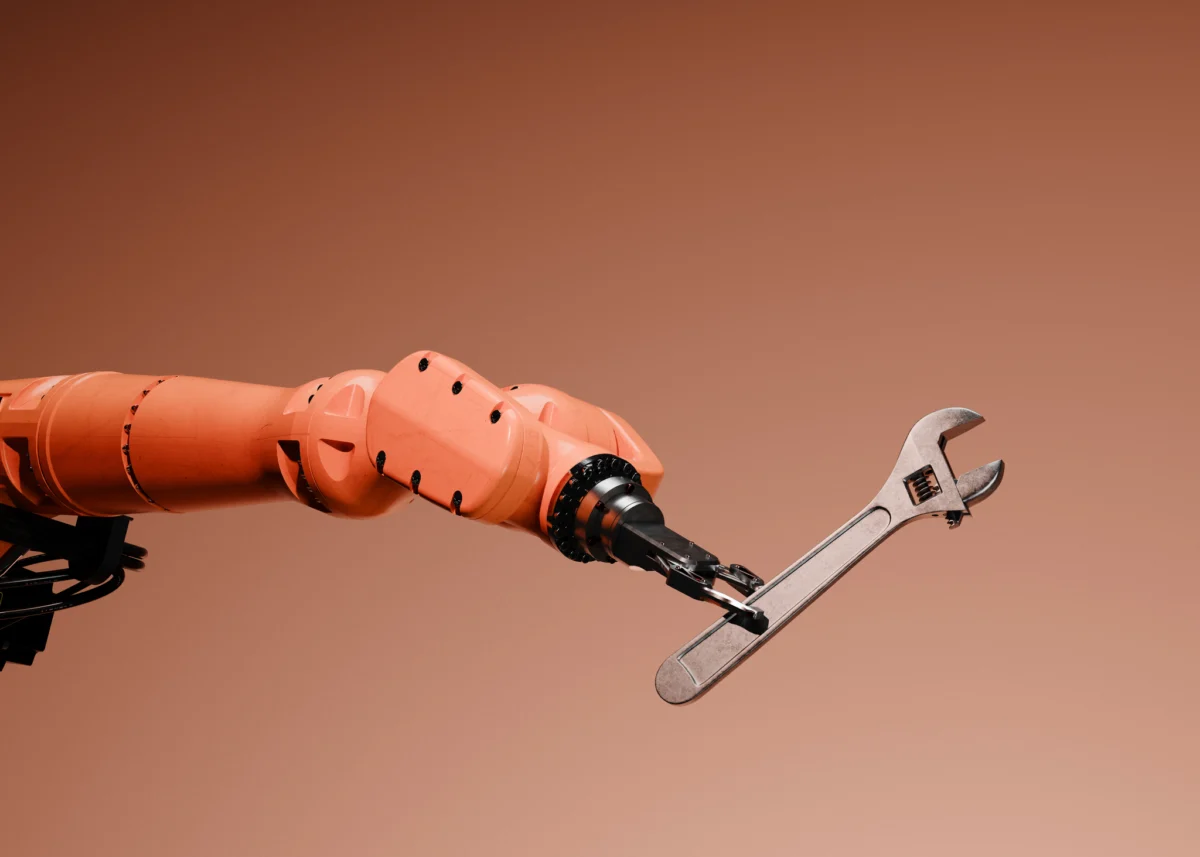
In the high-stakes arena of artificial intelligence, the narrative has shifted from pure digital intelligence to the physical embodiment of machines. As developers race to perfect general-purpose humanoid robots, a new bottleneck has emerged: the scarcity of high-quality, real-world physical data. Mecka AI, a startup dedicated to capturing human motion to train these next-generation machines, is reportedly nearing a new financing round led by Sequoia Capital that would value the company at approximately $500 million.
According to sources familiar with the deal, the investment would represent a significant milestone for the young startup, which only emerged on the scene in 2024. This potential influx of capital comes just three months after the company secured $60 million in a round led by Framework Ventures, underscoring the frantic pace of investment in the robotics training space.
The Genesis of Mecka AI: Solving the Physical Bottleneck
The story of Mecka AI is one of cross-industry insight. Founded by a quartet of entrepreneurs—Canadians Josh Gao and Mogen Cheng, Jason Chong, and Duy Nguyen—the company was built by individuals who, notably, did not come from traditional robotics backgrounds.
Gao and Cheng previously navigated the complexities of the restaurant fintech space, while Chong brings experience from the high-velocity world of crypto, having joined Coinbase following the acquisition of his own exchange. Despite their lack of robotics pedigree, the founders identified a fundamental disconnect in the AI ecosystem. While Large Language Models (LLMs) were being fed the vast, digitized sum of human text and knowledge, the physical world remained largely unmapped for machines.
They realized that the primary obstacle holding back humanoid robotics wasn’t just hardware, but the "data deficit." To teach a robot how to manipulate a coffee mug, navigate a kitchen, or repair a mechanical part, developers need millions of examples of human beings performing those exact tasks in three-dimensional space.
Inspired by the "mecha" genre of fiction—where human pilots synchronize with giant machines—the founders launched Mecka. Their business model is deceptively simple: they pay individuals to perform everyday chores while wearing body sensors and utilizing smartphone-based motion capture technology. By recording these "egocentric" movements, Mecka builds the digital equivalent of a training manual for the robots of tomorrow.
A Chronology of Rapid Growth
The trajectory of Mecka AI has been nothing short of meteoric, reflecting the broader "gold rush" mentality currently characterizing the robotics sector.
- 2024: Mecka AI is founded by Gao, Cheng, Chong, and Nguyen. The team sets out to bridge the gap between human kinetic data and machine learning.
- Early 2025: The company refines its "egocentric" data collection methodology, creating a platform that effectively treats physical movement as a data asset.
- June 2025: Mecka AI announces a $60 million fundraise led by Framework Ventures, with participation from heavy hitters including Menlo Ventures, SV Angel, and Kindred Ventures. At this time, CEO Josh Gao projects an ambitious annual run rate of $100 million by the end of 2026.
- September 2025: Reports emerge that the startup is already in advanced talks for a new financing round led by Sequoia Capital, valuing the firm at $500 million—a significant jump in valuation in just one quarter.
This pace of growth is emblematic of the current venture capital environment, where investors are eager to back "picks and shovels" companies—those that provide the necessary infrastructure for a larger trend. Just as Scale AI became the essential backbone for LLM development, Mecka is positioning itself to be the indispensable source of motion data for the embodied AI revolution.
Supporting Data: The Value of Human Motion
Why is there such intense investor appetite for Mecka AI? The answer lies in the nature of "embodied intelligence." Unlike software that lives in a browser, a humanoid robot must navigate the friction, gravity, and unpredictability of the physical world.
Currently, most robotics companies rely on two primary methods for training:
- Teleoperation: Humans manually control a robot to perform a task, which is labor-intensive, expensive, and difficult to scale.
- Simulation: While useful, simulated environments often fail to capture the nuance of real-world physics and human-object interaction.
Mecka’s approach—crowdsourcing "egocentric" data—sits in the middle. By using human actors to record real-world tasks, they generate high-fidelity datasets that represent human intent and physical dexterity. These datasets are then sold to robotics firms and AI labs, which integrate the information into their neural networks.
The market for this data is expanding rapidly. Last week, news broke that XDOF, a competitor in the physical data space, is nearing a Series B round at a $1.2 billion valuation, only months out of stealth mode. Similarly, established players like Scale AI and newer entrants like Micro1 are rapidly expanding their capabilities beyond text and images to include video and kinetic data. For investors, the race is to find the company that can build the most robust, diverse, and accessible library of "physical experience" for machines.
Official Responses and Market Context
As of the time of writing, Mecka AI has declined to provide an official comment regarding the reported funding round. Sequoia Capital, the lead investor in the potential deal, has similarly remained silent.
This reticence is common in the current venture landscape, where terms of deals are often fluid until the final signature is applied. While TechCrunch has not been able to independently verify the precise size of the new round or the specific terms of the agreement, the reports point to a strong market signal.
The silence from the companies involved also reflects the competitive nature of the field. In the race to build the first commercially viable humanoid robot, data is a proprietary moat. Companies are not just buying data; they are buying the edge that will allow their robots to outperform competitors in industrial, commercial, and eventually domestic settings.
Implications: The Future of Embodied AI
The rise of companies like Mecka AI carries significant implications for the future of work and technology.
1. The Democratization of Training Data
By creating a platform where individuals can earn income by contributing motion data, Mecka is effectively creating a new gig economy centered on AI training. This model mirrors the early days of labeling services for computer vision, but with higher technical requirements. As the market matures, we may see a standardization of motion data, much like the standards that exist for code or language datasets.
2. The Shift Toward General-Purpose Robotics
For years, robots were confined to cages in automotive factories, performing repetitive tasks with high precision but zero flexibility. The focus has now shifted to general-purpose robots—machines capable of handling tasks that require common sense and human-like dexterity. The capital flowing into Mecka is a bet that this shift is imminent, moving from theoretical R&D to mass-market utility.
3. Valuation and Market Sustainability
With valuations hitting half a billion dollars for companies that are effectively "data aggregators," questions regarding sustainability will inevitably arise. Are these valuations based on long-term revenue potential, or are they a reflection of the "AI hype cycle"? The fact that Mecka is projecting a $100 million run rate by 2026 suggests that the company is moving quickly to turn its data collection services into a recurring enterprise revenue stream. If they meet these targets, the $500 million valuation may eventually be viewed as a bargain.
4. Ethical and Privacy Considerations
As Mecka scales its operations, the collection of human motion data will inevitably face scrutiny. Capturing real-world interactions involves recording people in their homes, offices, and workshops. Issues surrounding data ownership, consent, and the potential for "data poisoning" (where malicious actors attempt to manipulate training data) will become central themes in the company’s growth. Ensuring that their datasets are not only vast but also secure and ethically sourced will be a primary challenge for the founding team.
Conclusion
Mecka AI stands at the intersection of human action and machine capability. By transforming the mundane, everyday movements of people into the building blocks of artificial intelligence, they have positioned themselves as a vital intermediary in the robotics supply chain.
As they move toward a $500 million valuation, the startup faces the dual challenge of scaling its data collection efforts while maintaining the quality required by top-tier robotics labs. Whether they succeed in becoming the "Scale AI of robotics" remains to be seen, but their rapid ascent is a clear indicator that the physical world is the next great frontier for the AI revolution. The coming months will be critical as the company looks to turn its ambitious projections into tangible industry impact.