Introduction & Main Facts
In the high-stakes, fast-paced world of technology startups and Software-as-a-Service (SaaS) enterprises, the conventional wisdom regarding corporate leadership has long been absolute: there can only be one captain at the helm. The traditional organizational chart dictates that a single Chief Executive Officer (CEO) holds the ultimate vision, bears the ultimate responsibility, and makes the final, unvarnished decisions required to steer a company through market volatility.
Yet, as the tech landscape matures, industry observers are revisiting long-held dogmas. A recent analysis published by SaaStr—a leading community and resource hub for B2B software executives—revisits the contentious debate surrounding the co-CEO model. While conventional corporate governance textbooks routinely caution against split leadership, empirical evidence from giants like Atlassian and Monday.com proves that dual leadership can, under very specific conditions, yield extraordinary results.
The core thesis emerging from modern executive coaching and venture capital circles is nuanced: having co-CEOs is historically rare and fraught with organizational risk, but it is not an inherently fatal strategy. Rather, its success depends entirely on why the structure was adopted. When implemented out of genuine partnership, complementary skill sets, and profound mutual respect, a co-CEO structure can unlock executive "superpowers." Conversely, when adopted to massage founder egos, avoid difficult conversations, or resolve a stalemate during early-stage formation, it almost invariably leads to operational dysfunction.
Chronology: The Evolution of Thought on Dual Leadership
To understand the current standing of the co-CEO model, it is helpful to trace how expert opinion has evolved alongside the maturation of the global tech ecosystem.
Phase One: The Era of Skepticism (Late 1990s – Early 2010s)
During the dot-com boom and the subsequent rise of Web 2.0, venture capitalists and institutional investors universally frowned upon dual-CEO structures. The primary concern was accountability. In a crisis, investors wanted a single neck to choke. Early-stage boards actively discouraged co-founders from retaining equal titles, forcing one to take the CEO mantle while the other settled for Chief Technology Officer (CTO), Chief Operating Officer (COO), or President. The prevailing narrative was that split authority breeds employee confusion, slows down decision-making, and creates internal political factions.
Phase Two: The Exception That Proved the Rule (2010s – 2020s)
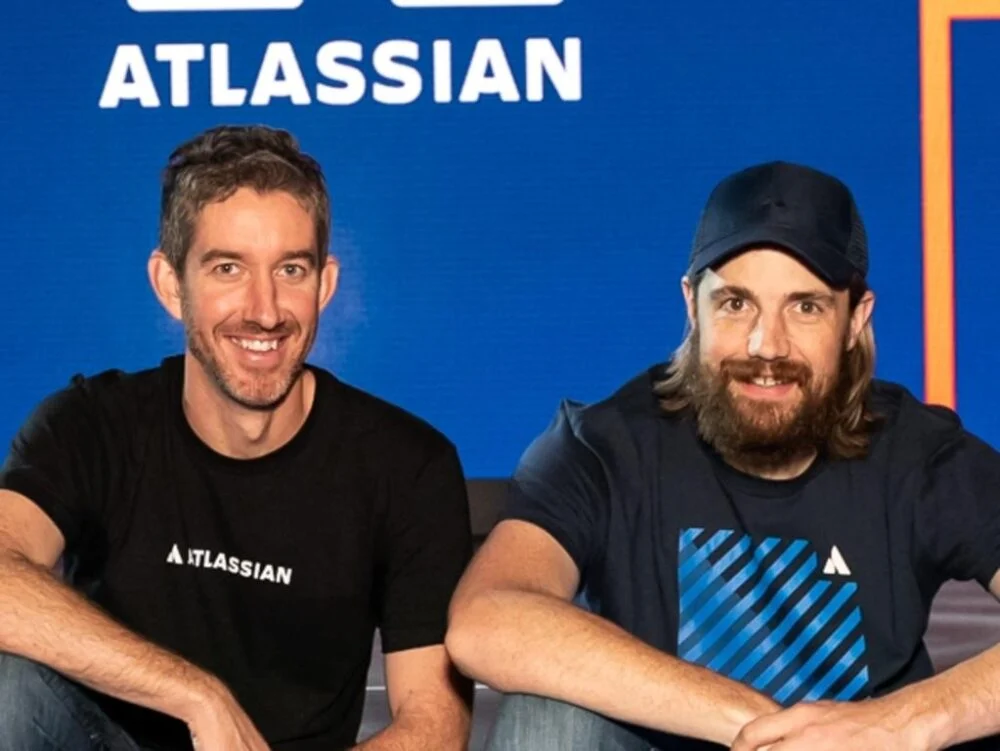
As software companies scaled to unprecedented heights, a handful of high-profile exceptions began challenging the status quo. Atlassian, co-founded by Mike Cannon-Brookes and Scott Farquhar in 2002, stubbornly maintained a co-CEO structure all the way through their massive public offering and beyond, defying decades of Wall Street orthodoxy. Similarly, Monday.com thrived under dual leadership. Even tech monoliths like Salesforce and Oracle flirted with variations of the co-CEO model during leadership transitions, demonstrating that split leadership could at least be managed temporarily, if not permanently.
Phase Three: The Nuanced Reappraisal (Present Day)
Today, thought leaders like SaaStr founder Jason Lemkin have shifted from outright condemnation to conditional acceptance. The modern consensus acknowledges that while the structural drawbacks of co-CEOs are massive and immediate—such as employees questioning the chain of command and the potential for public disagreements—the model can be highly effective if treated as a lifelong business marriage. The focus has shifted from whether the model works to the psychological and structural prerequisites that make it viable.
Supporting Data and Real-World Case Studies
While the majority of Fortune 500 and high-growth SaaS companies operate under a singular CEO, the track record of those that successfully employ co-CEOs offers compelling data points.
The Success Stories
- Atlassian: Co-founders Mike Cannon-Brookes and Scott Farquhar famously ran the Australian collaboration software giant as co-CEOs for over two decades. Their longevity together is an outlier in corporate history. They managed to scale the enterprise past a multi-billion-dollar valuation by clearly dividing their external and internal focuses while maintaining a united front at the board level. (Note: Scott Farquhar’s recent transition to a board role marks the natural evolution of a long-standing partnership rather than a structural failure.)
- Monday.com: The work OS platform has similarly leveraged a co-CEO structure (Roy Mann and Eran Zinman) to scale rapidly through its IPO and sustained public market growth, proving that dual leadership can successfully manage hyper-growth phases without stalling innovation.
- Enterprise Giants: Salesforce famously utilized a co-CEO structure with Marc Benioff and Bret Taylor (though Taylor later stepped down), and Oracle paired Safra Catz and Mark Hurd for several years. While these arrangements often serve as transitional phases or hybrid administrative divisions, they illustrate that even complex, multi-billion-dollar corporate machines can function under joint command.
The Hidden Costs: Why It Usually Fails
Despite these glittering examples, the vast majority of co-CEO experiments fail quietly in the seed and Series A stages. The friction points are well-documented:
- Organizational Ambiguity: Employees frequently report confusion regarding reporting lines. When two leaders hold equal rank, subordinates may engage in "forum shopping"—taking a proposal to the more lenient or sympathetic co-CEO to secure approval.
- Diluted Accountability: In moments of existential crisis—such as a failed product launch, a missed revenue quarter, or a public relations disaster—the lack of a single, definitive decision-maker can paralyze the executive team.
- Interpersonal Strain: Running a company is profoundly stressful. When two individuals share that burden, any underlying cracks in their personal relationship are magnified under the heat of board meetings, cash-flow crunches, and rapid scaling.
Official Perspectives and Industry Insights
Industry veterans and venture capitalists frequently weigh in on the mechanics of dual leadership. The overarching message from experienced executives is clear: context is everything.
According to recurring insights within the SaaStr community, working in an environment where two co-founders are treated as absolute equals can be disorienting for the broader team. As one executive observation notes: "I’ve worked in a 2-founders-are-equal environment, and it is confusing. No doubt. I often wasn’t sure who my boss really was."
However, proponents of the model argue that this confusion is merely a symptom of poor communication, not an incurable disease of the structure itself. Drawing a parallel to family dynamics, seasoned founders note that hierarchy is not always explicitly clear even in traditional households ("It’s also not always clear who the boss is with your parents"), yet children thrive through implicit cooperation and shared values.
For a co-CEO dynamic to function without descending into corporate chaos, specific conditions must be met:
- True Partnership: The co-founders must view each other as genuine partners for the long haul—ideally for decades.
- Deep Mutual Respect: Ego must be entirely checked at the door. There is no room for competitive jockeying over who gets the spotlight.
- Shared Stress Tolerance: Both individuals must possess the psychological fortitude to handle the immense pressures of the CEO role without transferring that stress onto each other or the organization.
When these conditions align, the company gains what can only be described as executive superpowers: the ability to divide and conquer massive workloads, leverage vastly different skill sets (e.g., one focusing heavily on product and engineering while the other masters enterprise sales and investor relations), and provide mutual emotional resilience against the loneliness of the top job.
Implications for Founders and Boards
For early-stage entrepreneurs, venture capitalists, and corporate boards evaluating leadership structures, the modern consensus on co-CEOs offers a practical framework for decision-making.
1. Diagnose the Motivation
The single most critical warning for any founding team considering a co-CEO structure is to interrogate their own motives. Is the title split being requested because both founders genuinely complement each other and possess distinct, necessary executive capabilities? Or is it being used as a diplomatic band-aid to avoid an uncomfortable conversation about who is better suited for the top job?
If the motivation stems from ego, fear of conflict, or an inability to compromise, the board must intervene. As industry consensus dictates: Just make sure it’s truly for the right reasons, not ego, and not to defer an argument. If those negative drivers are present, one CEO is almost always plenty.
2. Establish Clear Functional Boundaries
Even when a co-CEO arrangement is built on the right intentions, operational clarity is paramount. To prevent employee confusion and "forum shopping," co-CEOs must establish distinct operational domains of final authority. While major strategic decisions should be made jointly, day-to-day execution must have clear ownership. One leader must have the final word on product and engineering, while the other holds definitive authority over go-to-market strategies, finance, and human resources.
3. Maintain Alignment with the Board
Boards of directors must remain vigilant. A co-CEO structure requires active governance to ensure that the leadership team presents a unified front. If board members detect policy disagreements or passive-aggressive friction between the co-CEOs, they must address it immediately before it trickles down into middle management and destabilizes the company culture.
Conclusion
The debate over co-CEOs is unlikely to be settled definitively, largely because leadership is deeply contextual. While the traditional single-CEO model remains the path of least resistance and the preferred choice for the vast majority of institutional investors, the co-CEO structure is not an automatic disqualifier for success.
As proven by enduring tech titans, dual leadership can work brilliantly—provided it is forged in mutual trust, supported by complementary skill sets, and driven by a shared mission rather than individual ambition. For founders contemplating this path, the ultimate rule is simple: enter into it with eyes wide open, absolute transparency, and the rigorous self-awareness required to ensure that two heads truly are better than one.