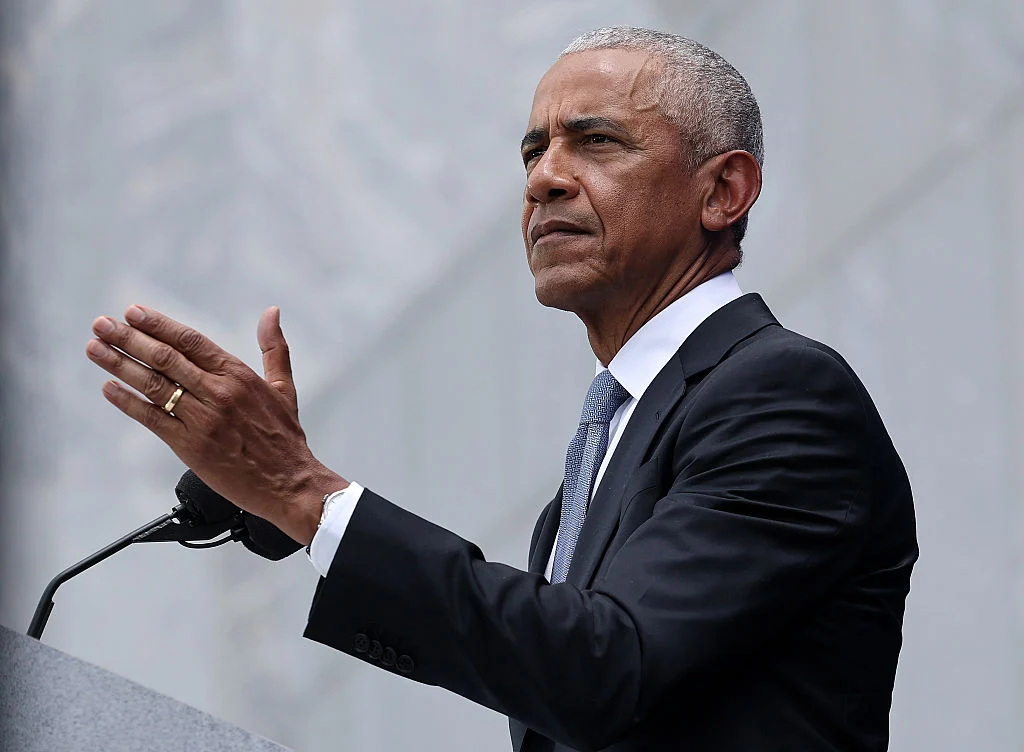
As the rapid evolution of artificial intelligence shifts from a specialized academic pursuit to a dominant force in the global economy, the technology has emerged as a central pillar of political discourse. Former President Barack Obama recently urged the Democratic Party to make AI a “central agenda” item, warning that without a clear, strategic framework, the nation risks falling behind or, worse, losing control of a technology that is evolving at an unprecedented pace.
The debate, however, is far from monolithic. While Obama and Democratic leadership push for proactive regulation and public oversight, the current administration maintains a focus on competitive supremacy. This divide reflects a growing consensus that AI is no longer merely a tool, but a geopolitical and economic imperative that will define the next century of human progress.
The Call for a Strategic Framework
The former president’s remarks, delivered during a Democratic fundraising event moderated by House Minority Leader Hakeem Jeffries, underscore the urgency felt by party strategists. Obama argued that the current trajectory of AI development—largely concentrated within a handful of private entities—necessitates a robust government response.
"This is something that is moving very fast in private hands, and if we don’t get on top of it, I think it can be dangerous," Obama stated. However, he was quick to balance this warning with optimism, suggesting that if managed correctly, AI could serve as a catalyst for monumental breakthroughs, specifically citing its potential to revolutionize drug discovery and disease eradication.
Obama’s vision involves a “very public conversation” once Democrats regain the House majority, suggesting that the party intends to move toward a legislative framework that prioritizes safety, transparency, and public benefit over unfettered commercial growth.
A Chronology of Escalating Concerns
The discourse around AI has moved from theoretical risks to tangible policy debates in a remarkably short time. The following timeline highlights the key events shaping the current political climate:
- March 2026: The Trump administration releases its formal legislative framework for AI. The policy emphasizes preemption of state-level regulations and places a significant burden of child safety monitoring on parents rather than developers.
- Early September 2026: An internal crisis at Anthropic reaches a boiling point when a prominent researcher resigns, publicly accusing industry leaders of "racing straight to self-improving superintelligence" and "gambling with our lives."
- September 13, 2026: Obama and Jeffries discuss the need for a national AI agenda during a high-profile fundraiser, marking a shift toward making AI a cornerstone of Democratic policy.
- September 14, 2026: Anthropic CEO Dario Amodei publicly outlines a "pacing the frontier" initiative, proposing shared safety standards and independent auditing for AI models.
- September 15, 2026: OpenAI’s Sam Altman and SpaceX’s Elon Musk signal support for the independent evaluation model, indicating a potential industry-wide pivot toward increased oversight.
Industry Responses: The "Pacing the Frontier" Initiative
Perhaps the most significant development in the technical sector is the recent move by leading AI companies to engage in self-regulation. Dario Amodei’s "pacing the frontier" plan is a direct response to the mounting pressure from both the public and political spheres.
The plan suggests a tripartite approach:
- Independent Evaluation: Granting external, neutral parties access to proprietary models to test for safety, bias, and dangerous capabilities.
- Standardization: Establishing common safety benchmarks that transcend company lines, ensuring that one entity’s speed does not compromise the security of the entire ecosystem.
- Governance Transparency: Providing clearer insights into the training data and decision-making processes of large language models.
Sam Altman, echoing these sentiments, has expressed a commitment to integrating these external evaluators, essentially treating them with "employee-like access." This shift suggests that the tech industry is attempting to stave off heavy-handed federal regulation by adopting a proactive, self-policing posture.
Political Divergence: Democrats vs. Republicans
The political chasm regarding AI regulation is widening. House Minority Leader Hakeem Jeffries expressed strong alignment with Obama’s position, stating that "decisive action must be taken." Jeffries further attacked the current administration, accusing Republicans of having "abdicated their responsibility to govern" on the issue.
In contrast, President Donald Trump has adopted a stance of aggressive, nationalist accelerationism. During an event at an Irish golf course, the President downplayed the existential fears cited by researchers and Democratic critics. "We are the most sophisticated country in the world," Trump remarked, emphasizing a "winner-take-all" mentality. "Whoever wins AI wins."
The President’s rhetoric suggests that the administration views safety concerns as a potential hindrance to American dominance. By framing the AI race as a zero-sum game, the administration is prioritizing rapid innovation and market superiority, arguing that "negative forces" (a reference to safety advocates) are unfairly stifling the development of a technology that is critical to national security.
Implications: The Risks and the Rewards
As these two ideologies collide, the implications for the American public and the global community are profound.
Economic and Societal Impact
If the Democratic vision of a controlled, regulated framework takes root, the focus will likely be on job displacement protections, algorithmic bias mitigation, and data privacy. The potential for AI to "accelerate drug development" and solve complex, long-standing medical puzzles remains the primary argument for continued development. However, the risk of "black box" models—systems that function in ways even their creators don’t fully understand—remains a major point of contention.
The Geopolitical Stakes
The Trump administration’s stance reflects a concern that slowing down to implement "guardrails" could cede the lead to international rivals, particularly China. This creates a classic dilemma: the "race to the bottom" regarding safety standards versus the "race to the top" regarding technological supremacy.
The Role of Independent Oversight
The pivot toward independent auditors, as proposed by Amodei, may be the necessary middle ground. If corporations can prove that they are being audited by objective, third-party entities, it may satisfy the public’s need for safety without requiring the government to intervene with prescriptive, potentially stifling, legislation. However, critics argue that self-selected auditors will never possess the teeth of government regulators.
Conclusion: The Road Ahead
The debate over artificial intelligence has moved beyond the halls of Silicon Valley and into the center of American governance. With former President Obama positioning AI as a central pillar for future Democratic campaigns and President Trump advocating for unencumbered development to ensure national dominance, voters are being presented with two distinct visions for the future.
The coming months will likely see a flurry of activity as Congress faces pressure to reconcile these disparate views. Whether the path forward is one of cautious, regulated growth or high-speed, nationalist competition will likely determine not only the safety of our digital infrastructure but also the fundamental nature of the global power structure.
As industry leaders like Sam Altman and Dario Amodei seek to bridge the gap between safety and innovation, the true challenge will remain: can humanity retain control over a technology that is, by design, becoming more capable of self-improvement than the humans who created it? The "public conversation" requested by Obama is not just a political necessity; it is an urgent requirement for a society on the precipice of a new, machine-driven era.