ZURICH — In a clear signal of the shifting priorities within the European cybersecurity landscape, Swiss enterprise email security specialist xorlab has successfully closed a €5 million Series A+ funding round. Announced on September 1, 2026, the capital injection was spearheaded by existing backer Spicehaus Partners, with continued participation from a robust syndicate of regional investors, including Grapha Holding, EquityPitcher Ventures, and ZKB Start-up Finance.
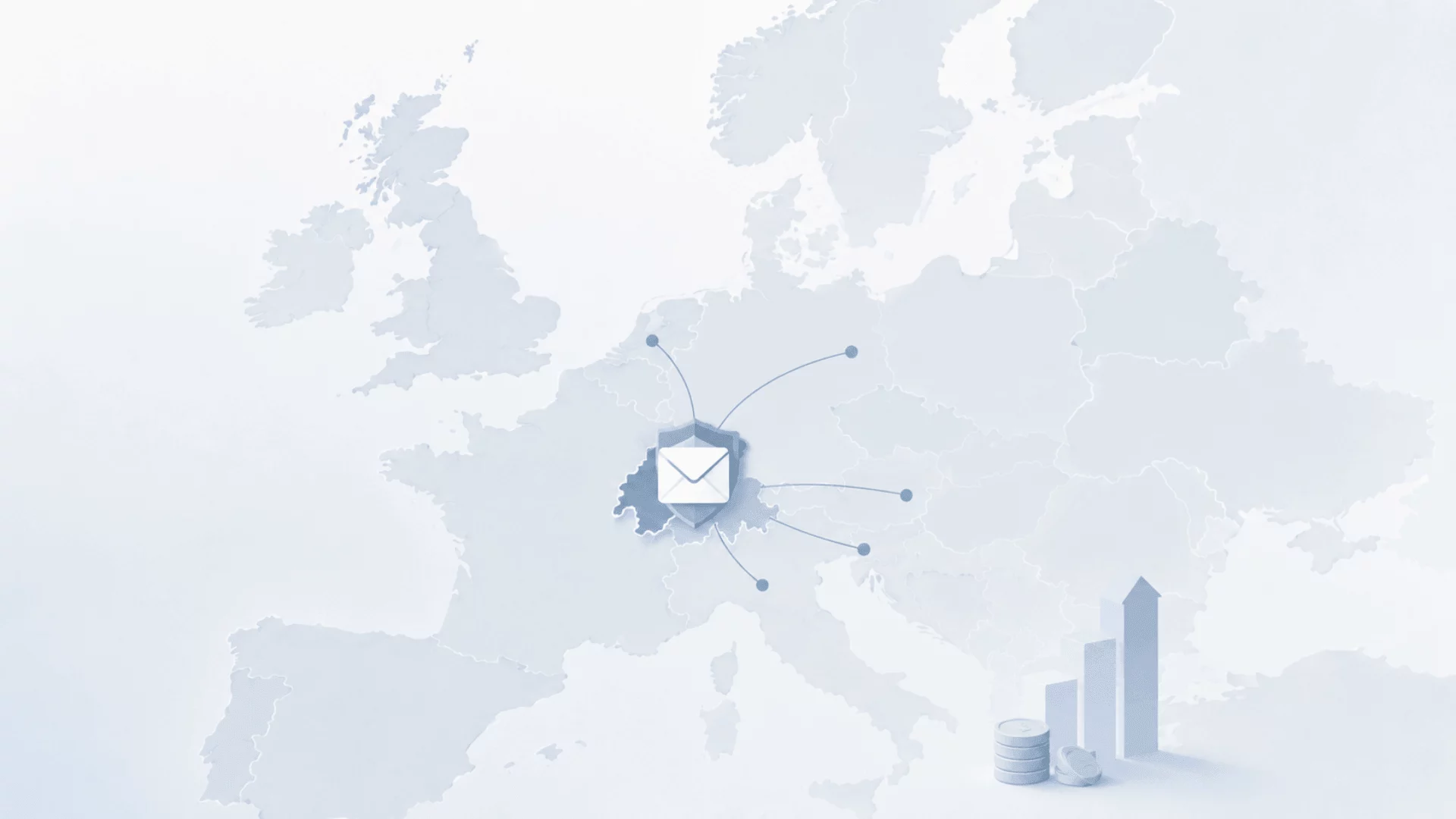
The fresh capital arrives at a critical juncture for the cybersecurity industry. As geopolitical tensions rise, data privacy regulations tighten, and organizations across the continent grow increasingly wary of extraterritorial data surveillance, xorlab is positioning itself as the premier European alternative to dominant US-controlled security infrastructure. The company plans to deploy the €5 million to accelerate its commercial footprint across Europe, targeting the DACH region (Germany, Austria, and Switzerland), Benelux, and the Nordic countries as its primary vectors for growth.
Main Facts
At its core, xorlab operates as an advanced inbound email security provider tailored specifically for complex, high-stakes enterprise environments. Founded in 2015 by Antonio Barresi and Matthias Ganz, the Zurich-headquartered firm specializes in neutralizing sophisticated, socially engineered cyber threats—most notably targeted phishing campaigns, zero-day exploits, and Business Email Compromise (BEC).
Unlike legacy email security solutions that rely heavily on static signatures and reactive indicators, xorlab’s platform utilizes contextual threat detection and artificial intelligence to analyze communication patterns, sender behaviors, and linguistic nuances. This allows security operations centers (SOCs) to catch sophisticated attacks that bypass traditional perimeter defenses.
However, beyond its technical efficacy, xorlab’s primary market differentiator is its uncompromising stance on digital and data sovereignty. In an era where European enterprises are legally and operationally constrained by stringent legislative frameworks, xorlab offers absolute data control. The company provides flexible deployment models—ranging from fully on-premises infrastructure with localized processing and storage to hybrid frameworks and sovereign cloud environments hosted entirely within European data centers and operated exclusively by Europe-based personnel.
The €5 million Series A+ round fortifies a balance sheet that has already attracted some of the most security-conscious institutions in the world. xorlab’s client roster features heavyweights such as private banking giant Julius Bär, telecommunications titan Swisscom, investment firm Vontobel, digital payment and security firm G+D Netcetera, and the renowned European Organization for Nuclear Research (CERN). Impressively, the company claims a commanding market share in its home country, securing six of the ten largest Swiss banks as clients.
Chronology of Growth
The trajectory of xorlab reflects a methodical, deliberate climb from an academic spin-off to a mature enterprise software player capable of competing on a continental scale.
- 2015: Founding and Inception. Dr. Antonio Barresi and Matthias Ganz establish xorlab in Zurich, emerging from research environments with a vision to fundamentally rethink email security through the lens of human behavior and context-aware analytics.
- 2021: The Series A Milestone. After successfully validating its product-market fit within the Swiss financial sector, xorlab closes a CHF 6.1 million Series A funding round. Led by EquityPitcher Ventures, this capital enables the company to refine its core engine, scale its engineering team, and build a commanding presence across the Swiss enterprise market.
- 2021–2025: Enterprise Penetration and Regulatory Tailwinds. Over a four-year period, xorlab solidifies its footprint among high-value institutions, onboarding critical national infrastructure providers, tier-one banks, and scientific institutions like CERN. During this period, the European Union rolls out landmark regulatory frameworks—specifically the Digital Operational Resilience Act (DORA) and the revised Network and Information Security Directive (NIS2)—which dramatically elevate the legal liabilities of corporate boards regarding third-party software and data residency.
- September 1, 2026: Series A+ Extension. xorlab announces its €5 million Series A+ round. Led by Spicehaus Partners with ongoing support from Grapha Holding, EquityPitcher Ventures, and ZKB Start-up Finance, this bridge-to-expansion round provides the financial runway required for a coordinated European offensive, bypassing the need for a premature or dilutive Series B stage.
Supporting Data and Market Dynamics
An analysis of xorlab’s latest funding event and market strategy reveals several key data points concerning the health of Europe’s B2B software ecosystem and the macroeconomic forces shaping enterprise IT spend:
- Financial Structure: The €5 million Series A+ round is notable for being an internal, syndicate-led extension rather than a newly injected venture tier. While company leadership and investors chose not to disclose the post-money valuation, the reliance on existing backers—Spicehaus Partners, Grapha Holding, EquityPitcher Ventures, and ZKB Start-up Finance—signals strong internal conviction and alignment on the company’s long-term growth roadmap.
- Geographic Expansion Vectors: The immediate post-funding deployment focuses on three distinct European sub-regions:
- DACH: Capitalizing on existing brand recognition and cultural proximity to expand deeper into German and Austrian enterprise verticals.
- Benelux: Targeting highly regulated financial and institutional hubs in Belgium, the Netherlands, and Luxembourg.
- Nordics: Engaging mature digital economies characterized by strict data protection expectations and high vulnerability to sophisticated spear-phishing.
- Regulatory Drivers (DORA & NIS2): Compliance is no longer a back-office checkbox; it is a primary driver of enterprise software procurement.
- DORA (enforced heavily across the EU financial sector) mandates rigorous ICT risk management, third-party risk monitoring, and incident reporting.
- NIS2 extends stringent cybersecurity obligations across a vastly expanded list of critical infrastructure sectors—including energy, transport, health, and digital infrastructure.
- xorlab’s sovereign architecture directly addresses the compliance mandates of these directives by ensuring that communications data never leaves European jurisdiction or falls under the legal reach of foreign intelligence acts (such as the US CLOUD Act).
Official Responses and Stakeholder Perspectives
The strategic rationale behind the Series A+ round underscores a broader, continent-wide ambition to reclaim technological autonomy. Executives from both xorlab and its investing partners have framed the funding not merely as a financial transaction, but as a strategic alignment with Europe’s digital sovereignty agenda.
Representatives from lead investor Spicehaus Partners highlighted the company’s proven ability to capture high-value, risk-averse accounts. Securing institutions of the caliber of Julius Bär and CERN is widely viewed by the investment syndicate as definitive proof of enterprise-grade reliability. Spicehaus noted that xorlab’s technological moat—combining deep behavioral analysis with flexible, localized deployment architectures—places the company in an elite tier of European cybersecurity firms capable of challenging established American tech goliaths.
EquityPitcher Ventures, a long-term stakeholder that also quarterbacked the 2021 Series A round, emphasized the evolution of the threat landscape. In official commentary surrounding the September 2026 announcement, the venture firm pointed out that email remains the primary vector for corporate espionage, ransomware deployment, and financial fraud. As threat actors leverage generative AI to craft hyper-realistic, socially engineered attacks at scale, static security filters have been rendered obsolete. xorlab’s contextual machine learning engine has consistently demonstrated its capacity to outpace these evolving tactics.
While company founders Antonio Barresi and Matthias Ganz have maintained a measured public posture following the announcement, internal communications emphasize that the €5 million will be channeled directly into scaling go-to-market teams, strengthening channel partnerships across the DACH, Benelux, and Nordic regions, and accelerating product development tailored to the unique compliance burdens of European enterprises.
Implications for the European Cybersecurity Ecosystem
The successful closing of xorlab’s Series A+ round carries profound implications for the broader European technology landscape. For years, the enterprise cybersecurity market has been heavily lopsided, with American multinationals—leveraging massive economies of scale and venture capital—dominating the procurement budgets of European corporations.
However, a confluence of geopolitical and regulatory events has permanently altered this dynamic. The weaponization of supply chains, concerns over foreign government data access, and the rigorous enforcement of DORA and NIS2 have created a systemic shift. European CISOs and board members are increasingly viewing cybersecurity not merely as a technical purchase, but as a critical component of national and economic security.
By offering a native, sovereign alternative that does not compromise on detection capabilities, xorlab is proving that European startups can successfully defend the enterprise perimeter against advanced threats while strictly adhering to local legal frameworks. If xorlab successfully executes its expansion strategy across the DACH, Benelux, and Nordic regions over the coming 18 to 24 months, it could serve as a blueprint for a new wave of sovereign European enterprise software companies—proving that local compliance and global-grade technical excellence are not mutually exclusive, but rather the ultimate competitive advantage in the modern threat landscape.