By the Global Digital Trends Desk
Published: May 2024 / Updated for the 2026 Horizon
Main Facts: The End of the "Ten Blue Links" Era
The digital information ecosystem is undergoing its most radical structural transformation since the inception of commercial search engines. For over two decades, search engine optimization (SEO) was governed by a predictable formula: reverse-engineer keywords, optimize metadata, build backlinks, and secure a spot in the coveted "ten blue links" on a search engine results page (SERP).
That playbook is officially obsolete.
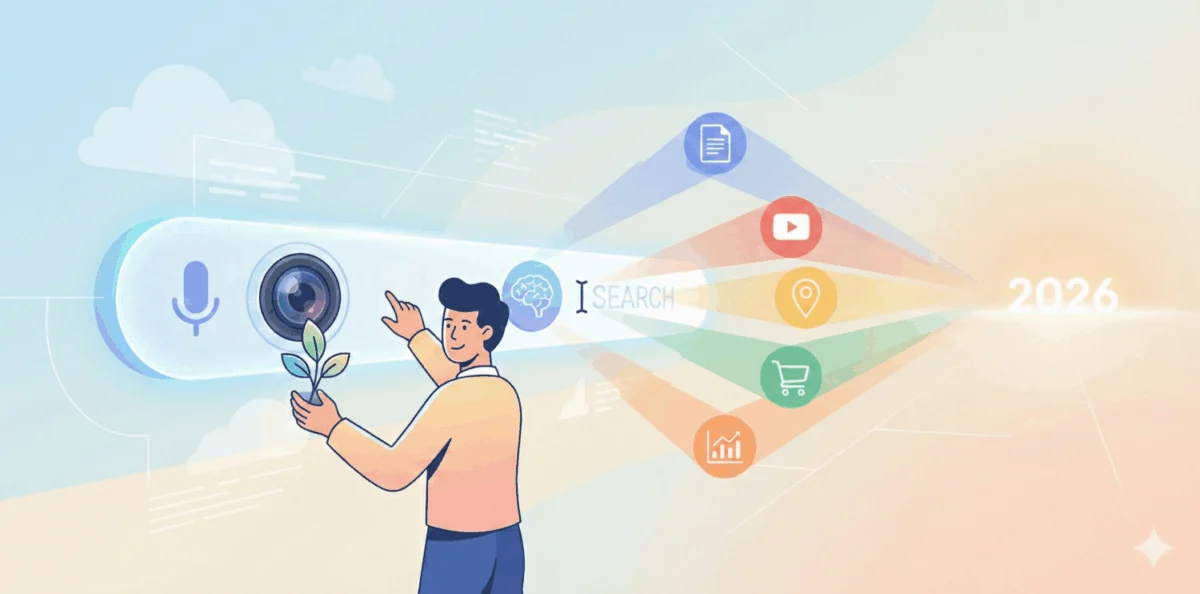
Today, consumers are increasingly bypassing traditional search engines altogether. Instead, they are turning to generative artificial intelligence (AI) systems—such as OpenAI’s ChatGPT, Google’s AI Overviews, Anthropic’s Claude, and Perplexity—that do not merely point users toward information; they synthesize it. These systems answer complex queries directly, retaining conversational context from one prompt to the next and assembling bespoke insights drawn from a myriad of disparate web sources.
For brands, marketers, and publishers, this transition represents a seismic disruption. Visibility is no longer secured simply by ranking first on a results page. Instead, survival in the 2026 digital economy requires content to be structurally retrievable, intellectually rigorous, and inherently trusted by Large Language Models (LLMs) acting as intermediaries between brands and consumers.
Chronology: How We Arrived at the AI-Driven Discovery Era
To understand the magnitude of the current landscape, it is vital to trace the developmental milestones that accelerated this paradigm shift over the past several years:
- Late 2022: The public launch of ChatGPT initiates a cultural and technological tipping point, demonstrating that conversational interfaces can answer complex queries fluidly without requiring users to browse multiple websites.
- 2023–2024: Major search engines integrate generative summaries into their core products. Google introduces AI Overviews (formerly Search Generative Experience), drastically reducing organic click-through rates for informational queries as users find what they need directly on the results page.
- 2025: Persistent user-level memory and advanced context windows become standard across major conversational platforms. AI agents begin predicting user needs proactively, effectively collapsing the boundary between deliberate search and automated recommendation.
- 2026 (The Current Horizon): AI answer engines emerge as the default gateway for online discovery. Traditional search engines continue to operate, but play a secondary, supportive role. Attribution models built entirely on click streams break down completely, forcing a wholesale reinvention of digital marketing metrics, key performance indicators (KPIs), and content strategies.
Supporting Data & Ecosystem Analysis: The Mechanics of Modern Visibility
The mechanics of how information travels across the web have fundamentally changed. According to recent research from digital marketing analysts and tracking firms, referral traffic patterns from traditional search engines have shifted dramatically. A growing percentage of web interactions now terminate inside the AI interface, meaning brand assets, product specifications, and publisher content routinely influence buyer decisions and consumer sentiment without ever generating a direct click.
The Multi-Source Synthesis Model
When an AI system answers a prompt, it does not copy and paste a single webpage. It evaluates a web of inputs—including publisher articles, brand-owned knowledge bases, third-party review sites, and academic repositories—weighing their credibility before generating a synthesized response.
This multi-source model alters the mathematical reality of digital reach:
- Indirect Influence: Content can heavily influence an AI-generated answer without being the primary source cited.
- Zero-Click Dominance: Informational queries are increasingly satisfied in-line, altering top-of-funnel acquisition metrics permanently.
- Algorithmic Gating: Trust and information provenance serve as strict filters; if content fails to meet automated threshold standards for clarity and factual accuracy, it is systematically excluded from the model’s generation phase.
Official Perspectives and Industry Responses
As the corporate world grapples with this transformation, industry leaders, compliance officers, and economic analysts are responding to the erosion of traditional digital marketing channels.
The Rise of Human Expertise and Storytelling
Corporate demand for verifiable, high-signal content has skyrocketed. A widely discussed Wall Street Journal report highlighted a dramatic corporate scramble to hire specialized human "storytellers," subject matter experts, and credentialed professionals. Companies are realizing that synthetic, AI-generated filler content creates an echo chamber of commoditized information, driving algorithms—and discerning users—toward primary research and authentic human insights.
Compliance and Regulatory Pressures
For heavily regulated sectors—such as finance, healthcare, and legal services—the stakes are even higher. Compliance teams can no longer rely on anonymous or unvetted content generation. Leading industry providers, such as Contently, report an unprecedented surge in demand for content backed by verified credentials—such as CFAs (Chartered Financial Analysts), MDs (Medical Doctors), JDs (Juris Doctors), and FINRA-registered reviewers. In the era of AI hallucinations and strict search engine quality guidelines, human editorial oversight is no longer a luxury; it is a foundational compliance requirement.
Implications: Five Definitive Predictions for Marketing in 2026
As this discovery shift becomes permanently embedded in everyday consumer behavior, marketing teams are being forced to restructure their operations across five critical dimensions.
1. AI Answer Engines Will Become the Default Search Experience
While the "ten blue links" of traditional search engines will persist, they will play a secondary, fallback role. Consumers will increasingly rely on platforms like ChatGPT, Gemini, and Perplexity for their primary information discovery.
- The Marketer’s Action Plan: Visibility will depend entirely on being retrievable and trusted as an input source. Structured data (Schema markup), transparent sourcing, and robust digital PR footprints will move from "best practices" to absolute table stakes.
2. Search and Recommendation Will Collapse Into a Single Discovery System
The historical distinction between active "search" and passive "recommendation" is dissolving. Platforms like YouTube, TikTok, LinkedIn, and Amazon already anticipate user needs based on behavioral histories and contextual signals before a single keyword is typed.
- The Marketer’s Action Plan: Brands must design for moments of inferred need rather than explicit keyword demand. Content must be tailored to native platform formats, ensuring it is structurally legible to automated discovery algorithms across multiple channels.
3. Personalization Will Get a Long-Term Memory
With persistent conversational history becoming standard, two users entering the exact same query into an AI platform will receive entirely different answers based on their past interactions, saved preferences, and demonstrated expertise levels.
- The Marketer’s Action Plan: Static, one-size-fits-all content strategies must be replaced with modular content architectures. Organizations must build multi-tier content libraries—ranging from beginner explainers to advanced technical breakdowns—equipped with explicit signals that help AI systems route the right piece of content to the right user profile.
4. Attribution Models Will Break, and New KPIs Will Emerge
Last-click attribution models are rapidly failing. Because many user journeys now culminate within AI-generated summaries, marketers are losing visibility into traditional click paths.
- The Marketer’s Action Plan: Teams must transition away from relying solely on click-through rates (CTRs) and last-touch conversions. New KPIs are taking their place, including citation frequency (how often an AI references your brand), model recall rates, excerpt usage patterns, and "share of answers"—a competitive benchmark measuring how frequently your brand dominates AI responses relative to competitors.
5. Authority Signals Will Displace Traditional SEO Ranking Factors
As Large Language Models grow increasingly cautious about misinformation and data contamination, hard authority signals—trust, factual accuracy, and verifiable expertise—are replacing keyword optimization as the primary determinant of visibility.
- The Marketer’s Action Plan: Substance will consistently beat scale. Original research, primary data, named expert authors, rigorous editorial review processes, and clear citation trails will separate high-performing brands from those publishing low-value, aggregated SEO filler.
Frequently Asked Questions (FAQs)
If clicks are declining across the web, how can marketing teams prove their content is working?
Measurement is fundamentally shifting from direct web traffic to brand and message influence. Metrics such as citation frequency, excerpt reuse within AI summaries, and "share of answers" provide a clearer picture of how content shapes consumer decisions upstream—even when traditional analytics platforms cannot trace a direct click.
What specific types of content perform best in AI-driven discovery environments?
Content that is clear, highly specific, structurally organized, and intellectually defensible performs exponentially better than broad or generic material. AI systems favor structured explanations, verifiable claims, named expert commentary, and well-defined thematic scopes over thin keyword-stuffed articles.
How should content teams adapt their editorial strategies for personalized AI memory?
Teams should embrace modular content design rather than isolated assets. By creating tiered content paths—where entry-level explainers logically connect to intermediate guides and advanced technical documentation—brands provide AI systems with the exact contextual signposts needed to serve the right content to the right user based on their historical interactions.
Are you ready to future-proof your brand’s digital presence against the AI search revolution? Ensure your content strategy meets the rigorous verification standards required by modern search algorithms and compliance teams alike.