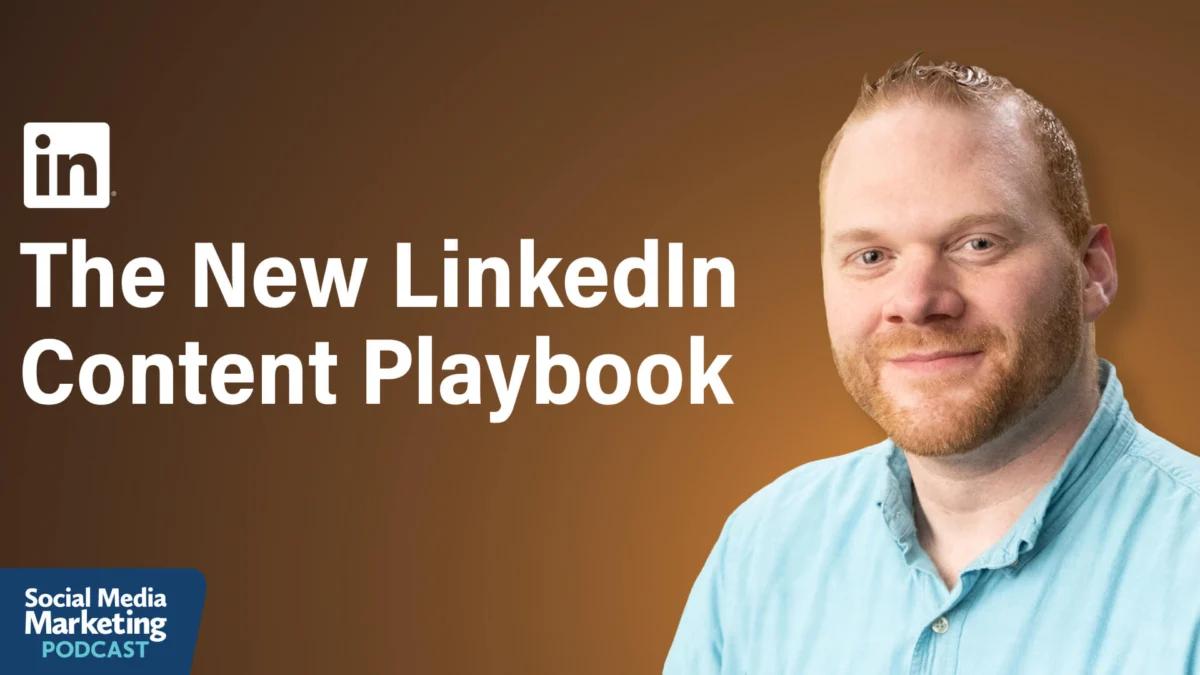
As digital feeds grow increasingly saturated, LinkedIn is undergoing a major evolution. Platform updates are fundamentally reshaping how brands, marketers, and creators build reach, establish authority, and connect with new audiences. Co-created by digital marketing strategist AJ Wilcox alongside Michael Stelzner and Jerry Potter, a comprehensive new content playbook has emerged to address these shifts.
From stricter algorithmic penalties on low-quality artificial intelligence content to the rise of collaborative posting features and AI-powered people search, professionals must adapt to stay visible. This report breaks down the primary developments, their chronological context, underlying data dynamics, official platform responses, and the long-term implications for digital marketing strategies.
1. Main Facts: The New Pillars of LinkedIn Strategy
LinkedIn’s recent platform updates center on five distinct developments designed to combat feed fatigue while empowering authentic creators and forward-thinking brands:
- The Crackdown on "AI Slop": LinkedIn is actively suppressing low-quality, generic AI-generated content that lacks a clear, human perspective. Content flagged as low-value is restricted primarily to immediate networks, limiting viral or out-of-network growth.
- Collaborative Posts: Profiles and company pages can now co-author and publish a single post together. This requires explicit opt-in from all parties, displaying multiple creators at the top of the feed item.
- AI-Powered People Search: Rolled out broadly to US users, LinkedIn’s search engine now uses natural language processing, allowing professionals to search by intent rather than rigid keywords. Verification badges and AI summaries provide immediate trust signals.
- The Creator Marketplace and Thought Leader Ads: Integrated directly into Campaign Manager, the marketplace connects brands with creators. Brands can use "Thought Leader Ads" to amplify high-performing organic content from third-party creators using paid budgets.
- Out-of-Network Analytics Metric: A new analytics feature distinguishes between in-network views (followers and connections) and out-of-network impressions (driven by algorithmic recommendations and search), giving creators a clearer picture of true audience expansion.
2. Chronology: The Shift From Keyword SEO to Intent-Based Algorithms
To understand where LinkedIn is today, it helps to review the timeline of how professional networking content has evolved over recent years:
- Phase 1: The Keyword Era: For over a decade, LinkedIn optimization mirrored traditional search engine optimization. Profiles and posts were stuffed with industry buzzwords, titles, and exact-match keywords to rank in basic directory searches.
- Phase 2: The Native AI Integration: LinkedIn introduced native text-generation capabilities directly into the compose box, encouraging users to leverage machine learning tools to draft and enhance posts quickly. This led to an initial boom in publishing volume.
- Phase 3: The Saturation and "Slop" Problem: As AI adoption became universal, feeds flooded with formulaic, predictable phrasing. User engagement plummeted as professionals grew tired of repetitive, low-value text.
- Phase 4: The Algorithmic Correction (Current State): LinkedIn pivoted away from raw volume, updating its distribution models to penalize generic AI-generated text. Concurrently, the platform rolled out native collaboration features, conversational AI search, and advanced out-of-network metrics to reward distinct, human-led perspectives.
3. Supporting Data and Platform Dynamics
While LinkedIn does not publish exact algorithmic weights, industry observations and platform behavior highlight clear operational patterns across organic and paid channels:
- The Organic Reach Barrier: Historically, corporate company pages struggle to achieve organic reach through standard updates and reshares. Collaborative posts bypass this roadblock by merging corporate messaging with individual employee networks.
- Ad Performance Discrepancies: On the paid advertising side, LinkedIn does not automatically restrict ad delivery based on whether AI was used to generate the copy or imagery. However, marketing data consistently shows that ads feeling overly robotic or generic suffer from lower user engagement, neutralizing return on investment.
- Micro-Targeting Economics: Sponsoring a creator post as a Thought Leader Ad remains one of the most cost-effective methods on the platform. Brands can target audiences as specific as 300 employees at an enterprise company, with high-end CPMs averaging around $80, offering unprecedented precision for B2B account-based marketing.
4. Official Responses and Industry Perspectives
The tension between leveraging efficiency tools and maintaining content quality has sparked substantial dialogue among industry leaders.
The Human-First AI Balance
AJ Wilcox acknowledges the initial irony of LinkedIn promoting AI compose-box features while simultaneously penalizing generic output. However, he views the correction as essential for platform survival: "If every post on the platform reads like AI-generated filler, nobody stays. The feed becomes unusable, and LinkedIn loses its value as a professional network."
Rather than abandoning artificial intelligence entirely, successful marketers are redefining their workflows. Michael Stelzner shares that after initially experimenting with AI-generated drafts based on his writing style, he realized algorithms and human readers easily spot formulaic phrasing and predictable structures. His current workflow involves writing completely from his own perspective first, then utilizing AI solely as a consultant to sharpen hooks and identify logical weak spots.
Redefining Corporate and Creator Partnerships
Collaborative posts offer a psychological shift in how brands approach messaging. Wilcox notes that corporate announcements traditionally rely on mandatory employee reshares, which perform poorly. By inviting credible internal experts or external thought leaders to co-author content, brands instantly secure trust-based distribution.
Furthermore, the integration of the Creator Marketplace solves a persistent B2B bottleneck: getting executives to write content. By surfacing creators who have organically mentioned a brand, marketing teams can easily request permission to scale those authentic conversations through paid amplification.
5. Strategic Implications for Marketers and Creators
As these features roll out universally, professionals must adapt their execution strategies across search, content creation, and paid amplification.
Optimizing for AI People Search
With natural language search replacing simple keyword queries, personal profile optimization is evolving into conversational SEO. Instead of packing a summary with resume jargon, professionals should articulate their expertise, goals, and professional narratives in clear, natural language. Creators and executives are encouraged to test their profiles by running self-searches, reviewing the AI-generated summaries, and refining their copy until the platform accurately reflects their core value proposition.

Leveraging the Out-of-Network Metric
The introduction of the out-of-network impressions metric transforms how content performance is evaluated. Previously, aggregate view counts failed to indicate true audience growth. By tracking which topics reliably cross over into non-follower feeds, content strategists can establish a continuous feedback loop. Marketers can identify subjects that travel organically and double down on those themes, shifting away from content that remains trapped within existing echo chambers.
A New Value Exchange for Brand Partnerships
For creators, securing brand partnerships no longer requires massive follower counts. Mentioning a brand thoughtfully in a public post or breaking down a company’s strategy can land an account inside the Creator Marketplace. When brands sponsor these posts via Thought Leader Ads, the creator receives significant profile exposure. Wilcox points out that for many micro-creators, this massive visibility boost represents a far more valuable exchange than a nominal flat fee.
Summary Action Plan
To thrive in this updated LinkedIn ecosystem, marketers and creators should implement the following steps:
- Act as the Brain: Use AI for outlining and refinement, but let original human experiences, recent insights, and distinct viewpoints drive the final copy.
- Embrace Collaboration: Partner with non-competing industry peers, internal subject matter experts, and advocates to co-author trust-building posts.
- Write Naturally for Search: Optimize profiles for intent-based, natural language searches rather than legacy keyword stuffing.
- Monitor Out-of-Network Reach: Use the new analytics metric to isolate which topics successfully attract new audiences and adjust content calendars accordingly.
- Utilize Creator Marketplace Synergies: Brands should sponsor organic advocate content via Thought Leader Ads, while creators should proactively tag and analyze target brands to attract partnership opportunities.