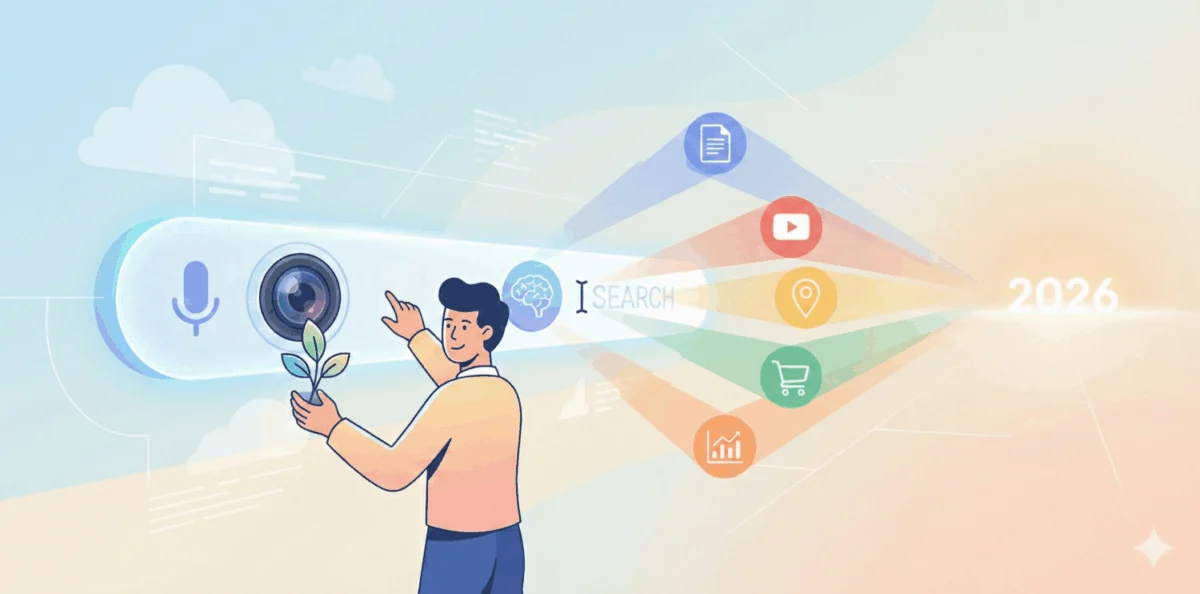
When the current landscape of content marketing began taking shape roughly fifteen years ago, the disciplinary scope was tightly bound to a predictable, albeit limited, set of assets. Practitioners churned out standard blog posts, static website copy, weekly email newsletters, and the occasional e-book or quirky infographic. Today, that playbook looks quaint. Driven by the "TikTok-ification" of the internet, short-form video has transformed from an experimental tactic into a table-stakes requirement for any brand looking to capture attention.
Yet, the expansion of formats is only part of the story. More importantly, "content" has broken out of the marketing department entirely.
Once confined to owned-and-operated channels designed strictly for lead generation, content now spills into every microscopic corner of the digital customer experience. It dictates product user interface (UI) copy, powers customer support scripts, structures help-center knowledge bases, guides checkout flows, triggers push notifications, and anticipates whatever buzzy new platform will inevitably debut next quarter.
As digital touchpoints multiply, organizations are discovering that traditional content marketing is no longer enough to manage the sprawling architecture of modern brand messaging. A seismic shift is underway—one driven by the rise of artificial intelligence, plummeting consumer trust, and an urgent mandate for unified brand orchestration.
Chronology: From Static Silos to Universal Infrastructure
To understand how the content landscape reached its current inflection point, it helps to trace the timeline of its evolution over the past decade and a half:
- The Single-Channel Era (Early 2010s): Content marketing operated as an isolated acquisition engine. Brands focused heavily on SEO-driven blog posts, gated downloadable assets, and email campaigns. Content creation was largely centralized within marketing and communications teams, with little structural overlap between what a customer read on a landing page and what they experienced inside a software product or a customer service call.
- The Social & Multi-Platform Boom (Mid-to-Late 2010s): The proliferation of social media networks forced brands to fragment their messaging across Instagram, Twitter, LinkedIn, and eventually TikTok. Content volume exploded, but consistency often suffered as different agencies, regional teams, and departments produced assets in isolation without a unified governance model.
- The Experience Economy & Product-Led Growth (2020–2023): As software-as-a-service (SaaS) and direct-to-consumer (DTC) brands matured, companies realized that the customer journey didn’t end at conversion. Product UI copy, transactional emails, and self-service help docs became critical brand touchpoints. However, these assets were still frequently managed by product and support teams with little input from editorial or brand strategists.
- The AI Search & Automation Disruption (Present Day): The mainstreaming of Large Language Models (LLMs) and AI-powered search engines fundamentally altered how users discover and evaluate brands. Simultaneously, companies began formalizing new leadership roles—such as "Head of Content Experience" and "Director of Content Design"—to stitch together the fractured components of the modern customer journey into a single, cohesive ecosystem.
Supporting Data: The Cost of Inconsistency in an AI-Driven Era
The expansion of content touchpoints is happening against a backdrop of shifting consumer expectations and technological disruption. Brands can no longer afford the friction caused by disjointed messaging, particularly as consumer trust hits historical lows.
Recent research underscores the urgency of structural alignment:
- Consumer Expectations for Consistency: According to data from Salesforce, 69% of customers expect consistent interactions across departments. When a brand’s short-form video ad promises one experience, but its customer support scripts or checkout flows communicate an entirely different tone or policy, the resulting friction damages credibility.
- The Trust Deficit: Trust in major corporations is reaching unprecedented lows. Nearly three-quarters (72% of consumers) report that they trust brands less than they did a year ago. In this climate of skepticism, organizational inconsistencies—such as conflicting product policies, tone shifts between marketing and support, or broken user journeys—further erode consumer confidence.
- The AI Visibility Factor: The rise of AI search engines has introduced new stakes for content consistency. LLMs and AI-driven search experiences typically synthesize answers by pulling from authoritative, widely corroborated sources across the web. Brands with consistent, high-quality coverage across multiple digital touchpoints are significantly more likely to be cited in AI-generated outputs. Unified messaging across the entire digital ecosystem is no longer just a branding preference; it is a technical prerequisite for discoverability.
Official Perspectives: Redefining Organizational Roles
As the scope of content expands, enterprise org charts are evolving to reflect a new philosophy: treating content not as a collection of standalone marketing assets, but as essential digital infrastructure.
Industry analysts and organizational leaders emphasize that modern content leadership requires orchestrating existing assets rather than simply producing more of them. In the past, marketing teams focused primarily on what to say and where to publish it—landing pages, campaign banners, and downloadable PDFs. Today, the mandate is far more ambitious: design the entire content journey so that every touchpoint feels frictionless.
This evolution has given rise to specialized roles that bridge the traditional gaps between marketing, product design, and customer support:
- Head of Content Experience: Focuses on the macro-level orchestration of brand storytelling. This leader ensures that high-level editorial vision translates seamlessly across channels, unifying marketing campaigns, product workflows, and support resources.
- Director of Content Design: Works closely with UX and product teams to embed clear, accessible, and brand-aligned language directly into product interfaces, user flows, and operational touchpoints.
- Content Strategists and UX Writers: Collaborate to build modular, reusable components that can be deployed across multiple platforms without sacrificing tone, voice, or clarity.
Rather than working in rigid silos, mature teams are embedding content leaders within shared UX or centralized content organizations. These teams act as vital liaisons between marketing, product development, and customer support, creating a cyclical feedback loop where high-level strategy informs tactical design, and user-level feedback refines overall strategy.
Implications for Brands and Content Practitioners
The transition toward holistic content experience has profound implications for how companies allocate resources, structure their teams, and measure success.
1. Shifting from Volume to Cohesion
For years, content strategies were dominated by volume—publishing more blog posts, pushing more social updates, and launching more campaigns to capture fleeting attention spans. Content experience flips this paradigm. The objective is no longer to shout louder, but to speak more clearly. When a customer moves from an ad to a landing page, signs up for a trial, navigates the product UI, and eventually opens a support ticket, the transition should be completely invisible.
2. Democratizing the Content Mindset
Not every organization has the budget or scale to hire a dedicated "Head of Content Experience." However, companies of any size can adopt the underlying mindset by implementing structural changes:
- Map End-to-End User Journeys: Trace top customer tasks—such as signing up for a trial, upgrading a subscription plan, or resolving a technical issue—across the website, documentation, product UI, and support channels. Identify language gaps, redundant steps, and tonal mismatches.
- Integrate Content Standards into Design Systems: Work with design and development teams to bake voice, tone, terminology, and content patterns directly into the repositories where visual components are stored (such as Figma or centralized CMS design files).
- Cross-Functional Reviews: Bring marketing, UX, and product teams into the same room to critique live user flows. Collaborative walkthroughs quickly surface the tone shifts and clarity issues that siloed departmental reviews inevitably miss.
- Build a Unified Reference Guide: Create a concise, single-page "language patterns" guide covering brand voice, tone, and preferred terminology. Providing a shared source of truth ensures that everyone—from copywriters to customer success agents—speaks the same language.
3. Future-Proofing Against Technological Disruption
The digital ecosystem will continue to evolve at a rapid pace. New social platforms will emerge, search algorithms will shift, and artificial intelligence will continue to redefine how consumers discover and evaluate products.
Ultimately, the best way to future-proof a brand’s message is to ensure it is robust, consistent, and user-centric everywhere it appears. Content experience thinking provides the structural scaffolding necessary to achieve that resilience—transforming content from a marketing afterthought into the bedrock of modern customer trust.