Main Facts: Unlocking Enterprise Data Through AI
In a significant leap forward for workplace productivity and AI interoperability, business software giant Zoho has announced the official launch of Connected Apps for Google Gemini. Rolled out on August 25, 2026, this integration bridges the gap between Google’s powerful generative AI assistant and Zoho’s vast suite of enterprise applications.
By leveraging the Model Context Protocol (MCP), the integration allows users to seamlessly grant Gemini direct, authorized access to critical business data housed across multiple Zoho platforms, including:
- Zoho Mail
- Zoho CRM
- Bigin (Zoho’s pipeline-centric CRM for small businesses)
- Zoho Desk (customer support ticketing)
- Zoho Projects (project management and collaboration)
Rather than forcing users to manually copy, paste, and context-switch between disparate applications and AI chat windows, Connected Apps embeds Zoho’s data ecosystem directly into Gemini’s user interface. Users can authorize specific Zoho connections via Gemini’s native settings menu. Once linked, the AI assistant can draw upon live business metrics, customer relationship histories, support tickets, project updates, and email threads to generate precise, highly contextualized responses.
For instance, a sales professional can now prompt Gemini to analyze a client’s latest email thread in Zoho Mail alongside their active deal status in Zoho CRM to automatically draft a comprehensive, data-backed follow-up strategy. This eliminates hours of manual searching, synthesizing, and formatting.
However, despite the massive potential for enterprise efficiency, initial availability is staggered. The turnkey Connected Apps integration is currently restricted to organizations hosted on Zoho’s Indian data centers, with global rollouts for other regional servers promised at an unspecified future date. Nevertheless, technical users and organizations outside India can still leverage Zoho Mail MCP by configuring custom server connections through tools like the Gemini CLI.
Chronology of the Integration: From Protocol to Production
To understand the magnitude of Zoho’s latest release, it is essential to trace the timeline of how Model Context Protocol and inbox automation have evolved over recent years:
- Late 2024 to 2025 (The Rise of MCP): As large language models (LLMs) matured, the artificial intelligence industry faced a fundamental bottleneck: AI models were brilliant at reasoning but historically isolated from proprietary enterprise databases and localized tools. To solve this, open standards emerged. The Model Context Protocol (MCP) was popularized to provide a universal, standardized language enabling AI applications to interact safely and securely with external services, files, and data sources.
- Throughout 2025 (Email Vendors Embrace MCP): Email and communications infrastructure providers began aggressively experimenting with MCP servers. Companies across the tech landscape started exposing internal application programming interfaces (APIs) as AI-readable tools. Innovations ranged from ZeroBounce integrating email validation directly into AI workflows to various assistant platforms competing to manage the modern digital inbox.
- Early 2026 (Zoho’s Infrastructure Expansion): Zoho laid the groundwork for this announcement by deploying its own proprietary MCP infrastructure. The company released comprehensive documentation regarding its Zoho Mail MCP server, allowing developers and administrators to expose API methods as actionable tools for compatible AI assistants, secured via OAuth 2.0.
- August 25, 2026 (The Official Google Gemini Integration): Zoho formally announced Connected Apps for Google Gemini. Moving beyond developer-focused command-line setups, this milestone transitioned MCP integration into mainstream, consumer- and enterprise-friendly graphical user interfaces. Users could now activate Zoho connections simply by toggling options within Gemini’s native Connected Apps configuration menu.
Supporting Data and Technical Architecture
The technical architecture underpinning the Zoho-Gemini integration relies on robust security standards and modular API exposure.
1. The Power of Model Context Protocol (MCP)
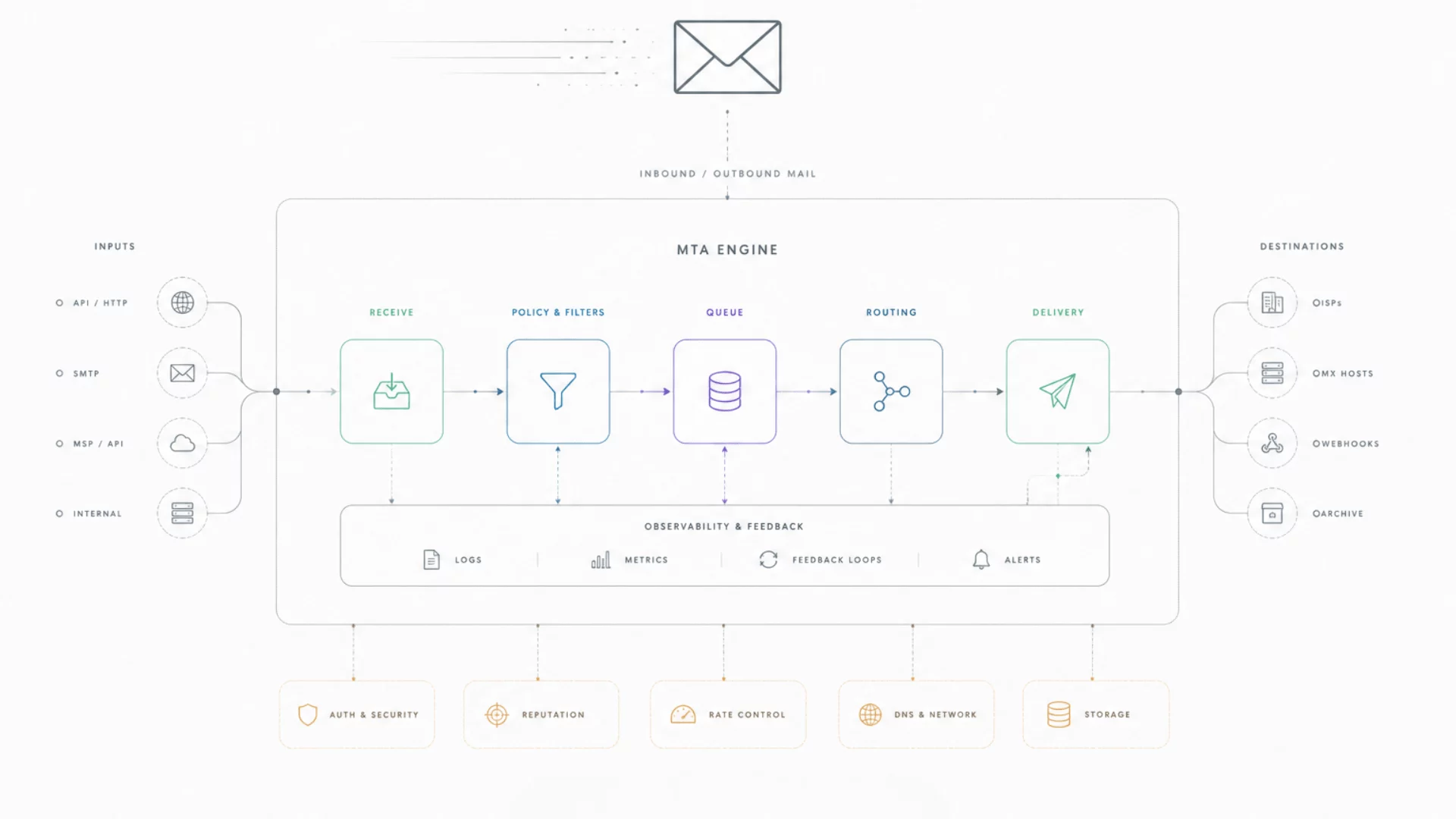
MCP acts as the universal translator between Google’s Gemini and Zoho’s software ecosystem. Instead of requiring custom, brittle integrations for every single software combination, MCP establishes a standard protocol where an AI client can query a server for available "tools," receive structured descriptions of what those tools can do, and execute them dynamically based on user prompts.
2. Security and Authentication via OAuth 2.0
Access is strictly governed by OAuth 2.0 protocols. When a user connects Zoho applications to Gemini, granular permissions dictate precisely which information and operational functions the AI is permitted to access.
- User-Level Tasks: Empower Gemini to read messages, draft replies, and send communications on behalf of the user.
- Admin-Level Tasks: Governed strictly by organizational permissions, encompassing domain configurations, spam filters, and overarching security and compliance policies.
3. Current Regional Availability Matrix
| Deployment Feature | Availability Status | Scope / Restrictions |
|---|---|---|
| Turnkey Gemini Connected Apps | Limited Availability | Restricted to organizations hosted on Zoho’s Indian data centre. Global rollout dates pending. |
| Zoho Mail MCP Server | Widely Available | Supported across all global Zoho data centres. Can be connected manually via Gemini CLI. |
| Google Custom MCP Servers | Conditional Availability | Requires Gemini Spark access, personal Google accounts, US-based users aged 18+. Work/school accounts currently excluded. |
Official Responses and Industry Context
The release arrives at a pivotal juncture for Google Workspace and competing AI ecosystems. Google has been aggressively expanding Gemini’s Connected Apps architecture to ingest a wider variety of third-party enterprise services.
Google’s platform also accommodates connections to custom third-party MCP servers, though with significant caveats. Google maintains a hands-off policy regarding custom servers, explicitly stating that it does not control, monitor, or secure third-party custom MCP endpoints. Consequently, the burden of trust rests entirely on the individual user or organization. By partnering directly to establish a native integration through recognized enterprise software like Zoho, users bypass the security risks and configuration hurdles associated with unverified custom endpoints.
Zoho’s strategic move underscores an ongoing shift in how software vendors view AI. Rather than attempting to build isolated, closed AI ecosystems that trap users within a single product suite, leading enterprise SaaS providers are opting for open interoperability. By plugging Zoho’s rich data vaults directly into Google Gemini, Zoho acknowledges that modern professionals utilize diverse toolsets and demand unified AI experiences that transcend individual brand boundaries.
Furthermore, the email management landscape is undergoing a structural transformation. For the past year, inbox vendors have raced to define how autonomous agents interact with daily correspondence. While early iterations required technical expertise—such as pasting obscure endpoints into custom clients—the Zoho-Gemini integration establishes a new benchmark for user experience. It shifts the connection process directly into the assistant’s settings screen, democratizing advanced AI workflows for everyday business users.
Implications for Enterprise Productivity and the Future of Work
The launch of Zoho Connected Apps for Google Gemini carries profound implications for enterprise workflows, data security, and the future evolution of software interfaces.
1. The Death of Context-Switching
The single greatest productivity drain in the modern workplace is context-switching—the constant mental friction of jumping between email clients, customer relationship management systems, project trackers, and document repositories. By unifying these platforms under Gemini’s conversational interface, users can query disparate databases in natural language. A project manager no longer needs to open Zoho Projects to check milestone statuses, open Zoho Desk to check support ticket backlogs, and open Zoho Mail to brief a stakeholder; a single compound prompt to Gemini synthesizes the entire operational landscape.
2. Elevating AI from Chatbot to Autonomous Agent
Historically, generative AI tools operated in a vacuum, relying solely on parametric memory or manually uploaded files. By plugging directly into live enterprise databases via MCP, Gemini evolves from a passive conversational chatbot into an active, context-aware operational agent. It reads live contracts, updates CRM pipelines, drafts contextually accurate email replies based on historic negotiations, and organizes project timelines with real-time accuracy.
3. Security, Governance, and Trust in the Age of AI
As AI systems gain read-and-write access to sensitive corporate communications and customer data, security governance becomes paramount. Zoho’s reliance on OAuth 2.0 permissions and structured administrative controls provides a reassuring framework for Chief Information Security Officers (CISOs). Unlike unsecured custom third-party MCP configurations—which Google explicitly disclaims responsibility for—native enterprise integrations ensure that corporate data governance policies remain intact.
4. A Template for the Software Industry
Zoho’s integration serves as a bellwether for the broader software-as-a-service (SaaS) industry. As open standards like the Model Context Protocol gain universal acceptance, proprietary silos are rapidly losing their defensive value. Companies that embrace interoperability and allow their data to flow freely into best-of-breed AI assistants will thrive, while those that attempt to lock users into closed, proprietary AI islands risk obsolescence.
As Zoho rolls out support for its remaining international data centers, and as Google continues to refine its third-party app ecosystem, the boundary between applications and AI assistants will continue to blur, ultimately reshaping how human beings interact with enterprise software.