AMSTERDAM — In an era dominated by hyper-scaled, US-headquartered cloud conglomerates and venture-backed monopolies, a quiet rebellion is brewing across the European Union. As developers grow increasingly weary of extraterritorial data reach and corporate acquisitions that disrupt reliable tooling, two Dutch technologists have done the unthinkable: they built a fully independent, open-source transactional email service provider (ESP) from scratch, bootstrapping the entire operation without a single euro of venture capital.
Meet Lettermint, a Netherlands-based transactional email provider carving out a distinct niche. Pitched as a sovereign alternative to US heavyweights like Postmark and Resend, Lettermint serves developers who require critical communications—such as password reset links, two-factor authentication codes, and e-commerce order confirmations—to remain strictly within the legal and physical boundaries of the European Union.
While vendor-published case studies from their infrastructure partners paint a triumphant picture of rapid scaling, a deeper dive into the human story behind the project reveals a bootstrap journey born out of frustration, fueled by open-source innovation, and sustained by a stubborn commitment to absolute data sovereignty.
Main Facts: What is Lettermint?
At its core, Lettermint is a transactional email service designed for developers who value jurisdiction as much as deliverability. Running entirely on European soil, the platform bypasses the major hyperscalers—such as Amazon Web Services and Google Cloud Platform—that have traditionally underpinned nearly all modern European SaaS applications.
The Infrastructure Stack
To achieve true independence, Lettermint relies on a tightly curated, European-centric technology stack:
- Mail Transfer Agent (MTA): Powered by KumoMTA, a high-performance, programmable open-source MTA.
- Deliverability & Monitoring: Managed via the Postmastery Console, offering deep visibility into bounces, blocklists, and sending reputation.
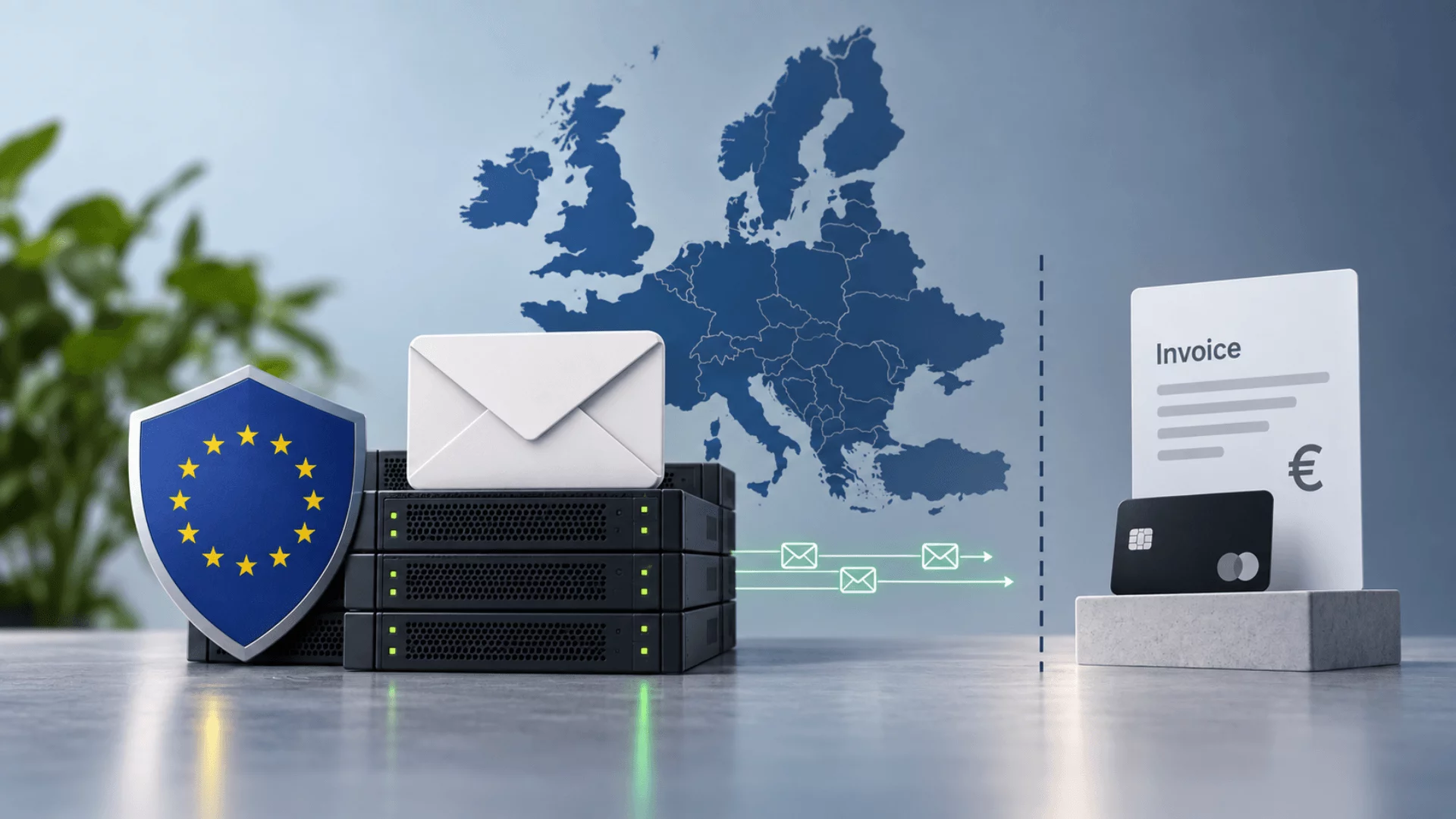
- Compute & Hosting: Hosted by UpCloud, a Finnish cloud provider, operating within a secure datacenter physically located in the Netherlands.
- Backups & Redundancy: Secured using OVHcloud, a prominent European cloud and hosting provider headquartered in France, with servers residing in Germany.
- Network & IP Reputation: Lettermint maintains its own independent IP space and runs its own autonomous network, ensuring that sending reputation remains entirely under its own control.
The sole non-European exception in Lettermint’s supply chain is Stripe, which handles credit card processing and billing. Co-founder Bjarn Bronsveld openly acknowledges this compromise, noting that no European billing provider yet matches Stripe’s developer experience and reliability. However, data compartmentalization is strictly enforced: Stripe receives nothing beyond basic billing contacts and invoices. No customer email data, payload contents, or recipient lists ever cross that Atlantic threshold.
Chronology: From an Industry Joke to Sovereign Reality
The genesis of Lettermint reads less like a traditional Silicon Valley startup narrative and more like a classic developer lore story.
Phase 1: The Joke That Refused to Die
The underlying idea for Lettermint sparked out of widespread industry discontent following ActiveCampaign’s acquisition of Postmark. Developers within Bronsveld’s professional community were deeply unhappy with the corporate consolidation, fearing price hikes, deteriorating support, and shifting priorities. Initially, the idea was tossed around as a running joke: “We should just build our own email provider.”
“That’s of course a bigger challenge than you always think,” Bronsveld reflects. Recognizing the staggering complexity of maintaining global inbox placement, managing reputation, and handling compliance, the idea was quickly parked.
Phase 2: Geopolitics and the Push for Sovereignty
The concept resurfaced with renewed urgency as the 2024 US presidential election approached, amplifying broader European conversations around digital sovereignty and extraterritorial data exposure (such as the US CLOUD Act). By November 2024, the two co-founders stopped joking and started coding.
“When the inauguration took place in January [2025], we were like, well, there’s really something for this,” Bronsveld recalls. While European email alternatives already existed, Bronsveld noted a glaring caveat: almost all of them relied on US-owned infrastructure like AWS or Google Cloud, rendering their "European" status superficial under strict legal scrutiny. Lettermint officially launched to the public at the end of May 2025.
Phase 3: The Postfix Pivot and KumoMTA Adoption
Operating on a bootstrapped budget with zero external funding, the founders initially launched their MTA using Postfix, the ubiquitous open-source mail server. It proved to be a bottleneck. Postfix struggled to scale effectively for high-throughput transactional traffic, dragging down development velocity.
In early 2025, Bronsveld discovered KumoMTA. In an unusual feat for a modern developer, he read the entire documentation site from top to bottom. Impressed by its architecture and programmability via Lua, the co-founders spent a single intensive day in the office standing up the system—complete with feedback loops—and successfully dispatched their first production message. They launched directly on KumoMTA and have deepened the integration ever since.
Phase 4: Integrating Postmastery and Privacy-First Tracking
By September 2025, as volume began to climb, manual inspection of bounces and complaints—though invaluable for early-stage debugging—became unsustainable. Lettermint integrated the Postmastery Console to automate monitoring and deliverability analytics.
Shortly thereafter, responding to strict regulatory stances taken by French and Italian data protection authorities regarding tracking pixels, Lettermint engineered a granular privacy control: open and click tracking are off by default. Senders can enable or disable tracking on a per-message basis via the API or custom SMTP headers, drawing a direct parallel to the ubiquitous European cookie consent banners.
Supporting Data & Technical Architecture
Lettermint operates as an ultra-lean, micro-scaled entity. Neither founder draws a salary from the company yet; both maintain separate day jobs, pouring their spare hours into codebase maintenance and customer support.
Defining True Digital Sovereignty
In the world of cloud computing, "European hosting" is frequently misunderstood. Bronsveld’s definition of sovereignty is uncompromising: All customer data must reside within a single jurisdiction, and that jurisdiction must be the European Union.
This distinction is vital. As highlighted in follow-up analyses by the KumoMTA team regarding Europe’s burgeoning sovereign IT movement, storing data in a Frankfurt datacenter owned by a US-incorporated corporation offers cold comfort. Such entities remain legally vulnerable to subpoenas and data requests under the US CLOUD Act.
By contrast, Lettermint’s primary compute partner is UpCloud (Finland), operating out of Dutch physical infrastructure, with backups managed by OVHcloud (France/Germany). If a local subpoena or legal inquiry is ever issued, it must navigate the sovereign laws of Finland, Germany, the Netherlands, and the overarching legal framework of the EU—completely shielding foreign entities from backdoor access.
Scalability and Open-Source Synergy
While Lettermint remains a private, closely held entity without publicly audited financial statements, infrastructure partner case studies point to explosive organic adoption. KumoMTA’s case documentation highlights a hundredfold growth trajectory, pushing daily message volumes to approximately 200,000 messages a day—a testament to the resilience of a small team leveraging world-class, programmable open-source infrastructure.
Bronsveld’s commitment to the open-source ecosystem goes beyond utilization. He makes a monthly personal financial donation to the KumoMTA project via Discord, with plans to scale corporate contributions once Lettermint generates enough revenue to sustain full-time salaries.
When asked what would happen if KumoMTA vanished tomorrow, Bronsveld remains unfazed. Because the software is open source, the codebase cannot disappear. Having read the source code intimately and contributed bug fixes, the founders understand the MTA’s inner workings deeply. Any hypothetical migration to a commercial alternative—such as PowerMTA—would purely come down to calculating commercial license fees against their operating budget.
Official Responses and Industry Perspectives
The journey of building Lettermint highlights a growing friction point in modern software development: the tension between absolute convenience and regulatory compliance.
The Challenge of Earning Trust
While writing Lua scripts for KumoMTA proved straightforward for Bronsveld (who had years of prior experience modding video games), and standing up the infrastructure took mere days, earning market trust has proven to be a multi-year endeavor.
“Nobody hands critical infrastructure to a company with a short track record,” Bronsveld notes. Transactional email is, by definition, mission-critical infrastructure. If a magic login link fails to arrive in a user’s inbox, user acquisition stalls, onboarding halts, and business stops.
Initially, Lettermint’s customer base consisted primarily of agile freelancers and small web development agencies willing to take a chance on an indie stack. Over time, larger enterprises began knocking on the door—many bearing exhaustive compliance questionnaires and non-negotiable demands for certified sovereign data handlers. However, Bronsveld is pragmatic: the vast majority of users do not ideological-plead their way to his doorstep; they simply want a transactional email platform that works reliably, fast, and without friction.
Transparency in Gaps
Uniquely among modern SaaS startups, Lettermint is refreshingly transparent about its structural limitations. While many companies obscure their reliance on foreign subprocessors behind dense legal jargon, Bronsveld openly addresses the Stripe compromise. They refuse to hide the one US supplier left standing on their balance sheet, even as they work continuously to minimize data exposure across that boundary.
Implications: The Future of Independent European SaaS
What does Lettermint’s existence mean for the broader software engineering landscape?
- The Renaissance of Lean Infrastructure: Lettermint proves that high-performance, high-volume communications infrastructure no longer requires millions of dollars in venture capital or massive engineering teams. By combining modern open-source foundations (KumoMTA) with specialized monitoring tools (Postmastery) and lean European cloud providers (UpCloud, OVHcloud), small teams can punch well above their weight class.
- Sovereignty as a Core Product Feature: Compliance is no longer just an enterprise checkbox handled by legal departments; it is becoming a foundational product differentiator. As regulatory scrutiny increases under frameworks like GDPR, NIS2, and the EU AI Act, developers are increasingly building compliance-first architectures from day zero.
- The Open-Source Reciprocity Model: Lettermint exemplifies a sustainable symbiotic relationship between commercial entities and open-source projects. By actively contributing financial support, filing bug reports, and feeding real-world production metrics back into upstream projects, bootstrapped startups help fortify the very open-source tools they rely upon.
Would Lettermint have ever been born if not for the geopolitical winds and shifting corporate landscapes of 2024 and 2025? Bronsveld admits he is unsure if it would have launched when it did. But looking at the momentum today, one thing is certain: he would build it now regardless. For this Dutch developer, building sovereign infrastructure isn’t just a business strategy—it’s an immensely satisfying craft.
Disclosure: KumoMTA is an emailexpert enterprise member and Postmastery is a strategic partner. This article has been adapted from interviews conducted with Lettermint co-founder Bjarn Bronsveld.