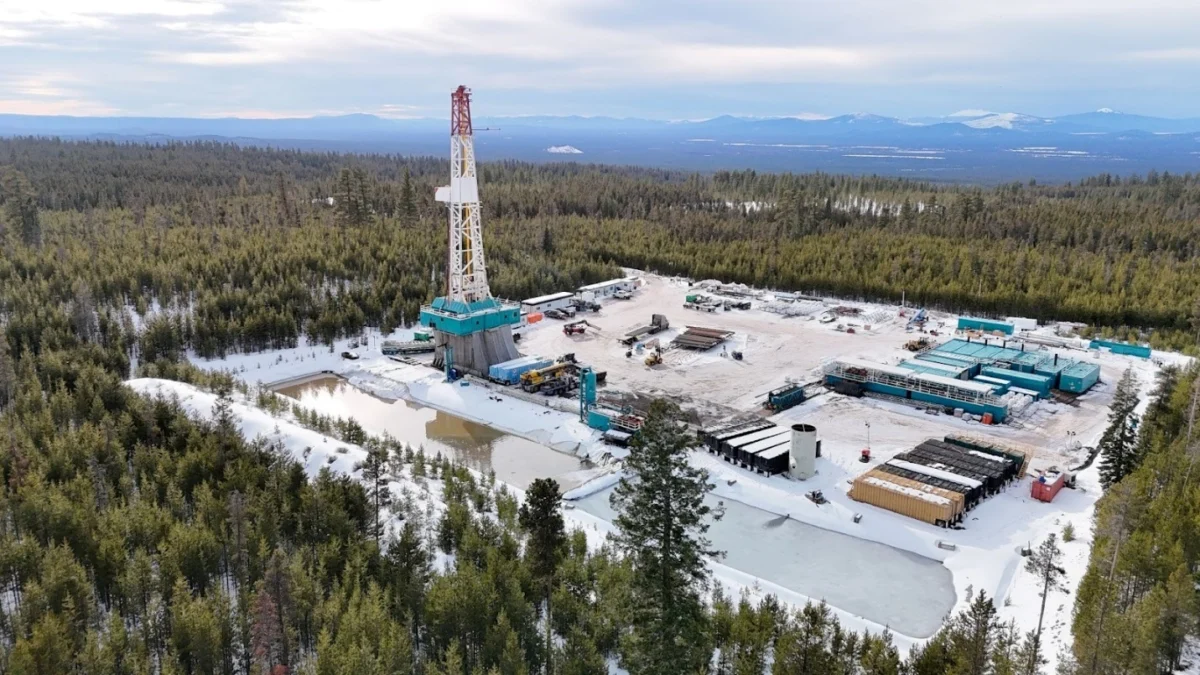
In a landmark development for the global energy transition, geothermal startup Mazama Energy announced this Thursday that it has successfully closed an oversubscribed $135 million Series B funding round. As the race to power energy-hungry AI data centers and industrial grids intensifies, Mazama’s technology—which drills deeper into the Earth’s crust than ever before to tap into “super-hot” rock—is increasingly viewed as a potential game-changer for 24/7 carbon-free electricity.
The massive capital injection signals a growing appetite among institutional investors for “enhanced” geothermal systems (EGS). By leveraging horizontal drilling techniques adapted from the oil and gas industry, Mazama is positioning itself to provide a scalable, baseload power source that could eventually rival natural gas and nuclear energy in reliability and output.
The Core Facts: A Shift in Energy Density
The core promise of Mazama Energy lies in its ability to access temperatures previously deemed unreachable or uneconomical. While traditional geothermal plants rely on naturally occurring hydrothermal vents, Mazama utilizes advanced drilling to reach depths of 15,000 feet, where rock temperatures soar to 750°F (400°C).
At these depths, water injected into the rock behaves as a “supercritical” fluid—a high-pressure state that is neither liquid nor gas. This state allows the fluid to absorb significantly more thermal energy than standard steam, enabling each well to generate up to 15 megawatts (MW) of electricity. This is a tenfold increase in power density compared to conventional geothermal technologies, fundamentally altering the unit economics of the industry.
A Chronology of Growth and Vision
Mazama Energy’s ascent from a venture-backed startup to a major industry player has been swift, defined by rapid technical milestones and evolving site assessments.
- Incubation: The company was incubated at Khosla Ventures, benefiting from the firm’s deep focus on “tough tech” and climate-focused infrastructure.
- Early Estimates: Just last year, investor Vinod Khosla highlighted the company’s Oregon site as a massive asset, estimating its potential output at 5 gigawatts (GW).
- The Revision: Following further geological surveys and drilling trials, Mazama has doubled its own expectations for that same Oregon site, which is now projected to have the capacity to produce 10 gigawatts of electricity.
- Current Progress: Mazama has successfully demonstrated its drilling prowess, reaching depths of 10,000 feet in just 15 days, a velocity that makes the prospect of deep-crust geothermal commercially viable.
- Series B Closing: With the $135 million round, the company has secured the runway necessary to transition from exploration to full-scale pilot production, with the first electricity generation slated for 2025.
Supporting Data: The Global Potential of Super-Hot Rock
The math behind Mazama’s strategy is compelling, particularly when viewed through the lens of global energy requirements. According to research from the University of Twente and the Clean Air Task Force, the Earth’s crust holds an almost limitless supply of thermal energy.
By tapping into just 1% of the world’s super-hot rock resources, the global grid could theoretically generate over 63 terawatts of electricity. To put this in perspective, total global electricity consumption is currently estimated at roughly 25 to 30 terawatts.
Mazama’s current roadmap reflects a phased approach to tapping this resource:
- Pilot Generation (2025): The company aims to begin initial power generation at its Oregon facility.
- Infrastructure Scaling (2030): The company expects to complete the development of its first major site, reaching an output of 200 megawatts.
- Future Expansion: With land already secured for a second site, Mazama is building the infrastructure to transition from a single-site developer to a regional energy producer.
Official Responses and Investor Confidence
The Series B round was led by Centaurus Capital and Doerr Capital, reflecting a diverse mix of climate-focused venture capital and industry stalwarts. The participation of ConocoPhillips and Shell Ventures highlights the strategic interest that traditional oil and gas giants have in “repurposing” their drilling expertise for the renewable sector.
Existing investors, including Khosla Ventures and Gates Frontier, also participated, signaling continued confidence in the startup’s leadership and technical roadmap. New investors in this round included SiteGround Capital, H. Barton Asset Management, and the Jeffrey and Marieke Rothschild Foundation.
The breadth of these investors suggests that Mazama is being viewed as a multi-faceted asset: a tech disruptor for the AI industry, a tool for energy independence for oil majors, and a critical component of the decarbonized grid for climate-focused foundations.
Implications: The Dark Horse of the AI Era
The timing of Mazama’s success coincides with a pivotal moment for the energy grid. As tech giants like Microsoft, Amazon, and Google scramble to secure reliable, 24/7 power for their energy-intensive AI data centers, the debate has largely centered on natural gas and small modular nuclear reactors (SMRs).
However, enhanced geothermal is rapidly emerging as the “dark horse” in this competition. Unlike solar or wind, which require massive battery storage to overcome intermittency, geothermal provides baseload power—the constant, reliable energy that is essential for the continuous operation of compute-heavy AI infrastructure.
The Technological Edge
The primary obstacle to geothermal in the past has been geography; you had to be near a volcano or a hot spring. Mazama’s approach removes this constraint. By drilling deeper, they effectively bring the “heat source” to the project rather than needing to find it at the surface.
This technical shift has profound implications:
- Grid Stability: Geothermal can replace retiring coal and gas plants with minimal disruption to the existing electrical distribution network.
- Land Efficiency: Because the power is generated underground and at high density, the physical footprint required for a 200MW geothermal plant is significantly smaller than that of an equivalent solar or wind farm.
- Workforce Transition: The techniques employed by Mazama—horizontal drilling, high-pressure casing, and subsurface mapping—are remarkably similar to those used in the fossil fuel industry. This allows for a “just transition” for energy workers, who can apply their existing skills to a climate-positive mission.
Challenges Ahead
Despite the optimism, Mazama still faces significant hurdles. Drilling 15,000 feet into high-temperature, high-pressure rock is an engineering feat fraught with risk. Equipment failure, casing integrity issues, and unpredictable subsurface geology remain major threats to project timelines and budgets.
Furthermore, the company must navigate complex regulatory environments and environmental impact assessments, which have historically slowed the deployment of large-scale infrastructure projects. As the company moves toward its 2030 goal, the scrutiny from regulators and the public regarding groundwater protection and seismic activity—standard concerns for any deep-drilling operation—will likely intensify.
Conclusion: A New Horizon for Baseload Power
The success of Mazama Energy’s $135 million round is more than just a financial milestone; it is a validation of the “super-hot rock” thesis. By successfully marrying the aggressive drilling techniques of the oil industry with the carbon-neutral goals of the tech sector, Mazama is charting a path that could redefine the energy mix of the 21st century.
As the company enters the next phase of its growth, the industry will be watching its Oregon site closely. If the company can prove that its 10-gigawatt potential is not just a theoretical figure but a deliverable reality, Mazama may well lead the charge in making geothermal a cornerstone of the global energy transition, providing the steady, reliable heartbeat required to power the next generation of digital and industrial progress.